
A rotten-egg smell is a symptom, not a complete diagnosis. The source may involve hydrogen sulfide, sulfur-related chemistry, iron or manganese interactions, microbial activity, or a problem isolated to the hot-water system. A treatment budget therefore starts with testing and a scope check. A current US specialist orientation for whole-home treatment is roughly $1,200–$3,600 for many systems, but a sulfur-specific project can be simpler or more complex and the range is not a Canadian benchmark.
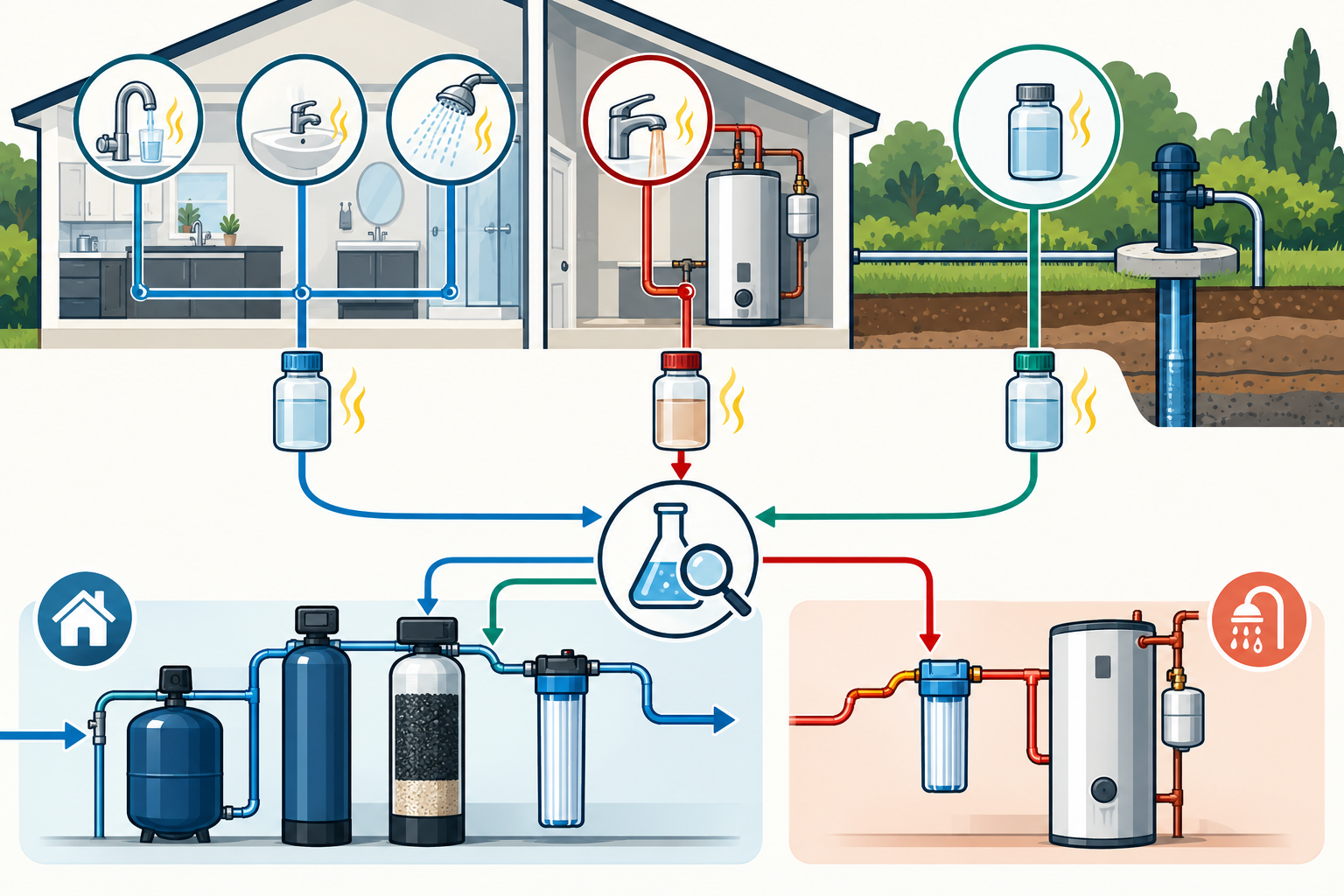
Check where the odor occurs
If cold and hot fixtures smell, investigate the well water and distribution system. If only hot water smells, the water heater and its plumbing become a separate diagnostic path; do not automatically buy a whole-home well treatment system. A sample from the appropriate point helps distinguish the paths.
Odor intensity does not establish concentration or health risk. Test for the relevant chemistry and follow local guidance. EPA recommends additional private-well testing when taste, odor, or color changes.
What testing and inspection may cost
The first budget may include a water-quality sample, a professional well or plumbing inspection, and a review of recent repairs, treatment, and water-heater work. The right panel depends on the property and symptoms. A broad but irrelevant panel can add cost without clarifying the remedy.
If the odor began after a well repair, flood, or casing or wellhead problem, source inspection and microbial testing may matter more than a sales visit. If it is isolated to hot water, the investigation belongs partly to the water-heater and interior-plumbing scope.
Treatment paths
The treatment depends on the test result and flow. Possible professional system families include oxidation followed by filtration, activated carbon or specialty media in an appropriate application, softening where hardness and a limited form of iron are involved, or disinfection when a microbial issue is established. Some systems combine stages.
No one technology should be selected from odor alone. Oxidation can require air or chemical equipment, contact time, filtration, a backwash drain, and controls. Media adds replacement and service costs. Disinfection is an event intervention and does not replace source correction when contamination persists.
Installed and ownership cost drivers
- whether the problem is well-wide or hot-water-only;
- tested concentration and chemistry;
- iron, manganese, sediment, pH, hardness, and flow;
- whole-home versus point-of-use scope;
- pretreatment, oxidation, tanks, valves, and backwashing;
- plumbing, drain, electrical, space, access, and freeze protection;
- media, filters, chemicals, electricity, and service;
- verification testing after installation.
The cheapest device can be a poor value if it needs frequent replacement or creates pressure loss. A larger system can be unnecessary if the cause is at the water heater or a repairable source condition.
Three scenarios
Hot-water-only odor: A water-heater or interior-plumbing diagnosis is priced before well treatment. This preserves the category boundary and avoids treating all household water for a localized problem.
Tested sulfur-related chemistry: A whole-home treatment system is selected from the result, with pretreatment, flow, backwash, media, installation, and maintenance stated.
Recurring or post-event odor: Wellhead inspection, microbial or chemistry testing, source correction, disinfection where directed, and follow-up testing may precede or replace a permanent treatment device.
Maintenance and verification
Backwashing, carbon or specialty media, chemical feed, filters, controls, and electricity create recurring expense. The actual interval depends on raw water, flow, use, and product design. Keep a service record and test treated water when the treatment objective or authority guidance calls for verification.
NSF describes certification categories but warns that certification is not a ranking and does not cover every contaminant. Check the exact claim for the actual device rather than accepting “sulfur filter” as a performance guarantee.
Questions to ask
- Is the odor present in cold water, hot water, or both?
- Which test result supports the proposed treatment?
- What source or water-heater problems were ruled out?
- Which stage addresses sulfur, iron, manganese, sediment, or microbes?
- What flow, pressure, drain, and electrical assumptions apply?
- What are the media, service, chemical, and testing costs?
- What is the plan if the odor returns?
US treatment prices should not be converted to CAD. Request a local quote that treats the symptom as a diagnosis problem first. The economically sound solution is the one that fixes the actual source or chemistry instead of paying to filter an unrelated water-heater condition.
Normalize the diagnosis before the equipment quote
Ask for samples from the relevant cold and hot points, a history of when the odor appears, and a statement of what the provider is ruling out. A well-wide odor, a hot-water-only odor, and an odor that began after a flood or repair lead to different scopes. The inspection may be more valuable than a treatment recommendation when the source is unclear.
Then compare the full treatment train. Identify oxidation, contact time, media, backwash, carbon, softening, disinfection, plumbing, drain, electricity, and maintenance as separate functions. If two proposals use different stages, ask what measured condition each stage addresses and what result would show that it is unnecessary. This prevents a “sulfur filter” label from hiding an unpriced chemistry assumption.
Ownership decision
For a long-term owner, compare the cost of media, service, water, power, and testing with the cost of correcting the well or water heater. For a short-term owner, avoid discretionary whole-home upgrades but preserve the treatment or repair needed for the actual problem. Odor recurrence should trigger diagnosis rather than an automatic larger filter.
Use an evidence-based scope
Have the quote state the sample point, test results, proposed treatment stage, design flow, and replacement signal. A sulfur-related system may need oxidation, filtration, softening, or another stage; each adds a different operating cost. If the odor is hot-water-only, the treatment quote should be withdrawn or narrowed until the water heater is evaluated.
Record whether the odor changes after a repair, disinfection, seasonal shift, or treatment maintenance. That history can separate a recurring source problem from an exhausted media or a hot-water condition. It also keeps the owner from buying a larger system when the original one was simply being used outside its design load.
The final treatment choice should state the sample result, treated flow, equipment stages, maintenance signal, and verification plan. If the smell returns, compare a new test and source inspection with additional media or equipment. Repeating a purchase without learning whether the odor is in the well, plumbing, or water heater is usually the expensive path.
Price the symptom and the cause separately
An odor-only complaint can lead to a modest correction, but the same smell may accompany a treatment load that affects fixtures, corrosion, iron, manganese, or bacteria. Ask whether the quote is addressing appearance and odor, a tested chemical condition, or a broader source problem. Those are different scopes with different verification costs.
For a treatment comparison, include the required contact time, flow capacity, pretreatment, drain or backwash needs, media replacement, power, and service access. If the system is effective only at a specified flow or water chemistry, make that limitation visible. A cheaper unit that is regularly overloaded may create repeated service calls and make the owner believe the source is worsening when the design was never matched to actual use.
Also decide whether the odor is present at every cold-water outlet, only with hot water, or only after a property has been vacant. That observation helps determine whether the next expense belongs to well testing, treatment, or an interior water-heater investigation. It is a clue, not a diagnosis, and should not be used to select a chemical or device without appropriate testing.
The most useful quote connects the observed pattern to a test, the proposed treatment to a defined claim, and the maintenance plan to the actual household flow. Keep source inspection and water-heater work visible as alternatives rather than hiding them in an odor-treatment allowance.