
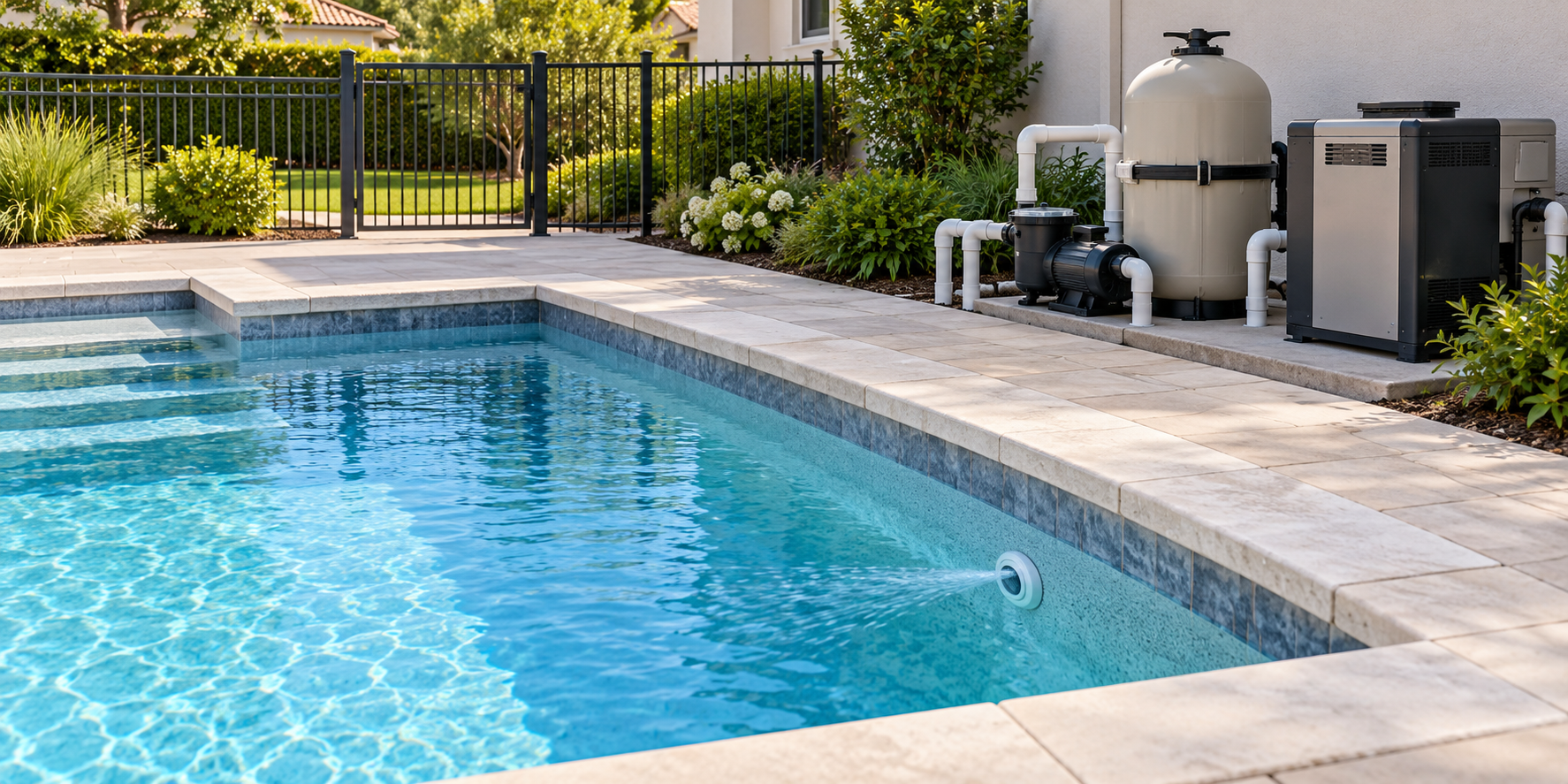
“Pool repair” is a routing phrase, not one job. A water-loss problem, a failed pump, a damaged finish, a heater fault, and a barrier issue have different diagnosis, risk, and quote structures.
Safety and specialist boundaries
Pool electrical, gas, suction, structural, and chemical-treatment work needs appropriately qualified professionals and current product or local requirements. A repair quote should identify those interfaces rather than bury them in a generic labor line.
Cost orientation
A single pool-repair average hides the decision. Current U.S. specialist observations in this category include roughly $700–$4,000 for pump replacement, $250–$2,000 for filter installation, $1,864–$4,348 for heater installation, and $100–$1,000 for leak detection. These are different scopes, not a menu to add together. Use the relevant signal only after the failure type, access, testing, and restoration assumptions are known, and obtain local Canadian pricing separately.
Route the symptom before comparing prices
“Pool repair” is not yet a defined job. Tell the provider what changed, when it occurs, whether it varies with equipment operation, and which area appears affected. Water loss, weak flow, no heat, a noisy pump, a tripped protective device, loose tile, or damaged access equipment each calls for a different first assessment. The routing table below is a way to describe the symptom and possible next scope; it does not diagnose the cause.
A practical routing table
| What the homeowner knows | Likely first scope | What can expand the quote |
|---|---|---|
| Water is dropping or a leak is suspected | Leak observation or professional detection | Buried lines, draining, excavation, shell, liner, and restoration |
| Flow is weak or equipment is noisy | Pump, filter, valve, and hydraulic diagnosis | Replumbing, electrical work, multiple failed components, and access |
| The pool will not heat | Heater and control diagnosis | Fuel or electrical work, plumbing, exchanger, controls, and replacement |
| Finish, tile, coping, or liner is damaged | Surface or perimeter assessment | Drain/refill, substrate, shell movement, deck, and broader renovation |
| A light, drain, cover, or barrier is damaged | Pool-specific safety or equipment assessment | Product compatibility, inspection, local requirements, and restoration |
This is a routing aid, not a diagnosis. The same symptom can have several causes, and the table does not authorize a homeowner to test live electrical equipment, alter suction systems, or handle chemicals beyond current product directions.
Price the investigation and the work separately
Ask whether the service call includes diagnosis, what testing is included, whether the provider will give a written cause or only a recommendation, and whether the fee is credited against repair. A useful proposal separates parts, labor, water handling, equipment removal, electrical or fuel work, excavation, surface restoration, startup, testing, cleanup, and warranty.
For a component repair, request model and part information and ask why the proposed work addresses the confirmed cause. For a replacement, include removal, disposal, plumbing or controls, commissioning, and compatibility. For buried or structural work, keep an allowance until testing or access confirms the condition. Agree which step needs renewed owner approval before the provider proceeds beyond the diagnosed task.
Minor, coordinated, and major repair patterns
A minor pattern is an isolated accessible fitting, seal, valve, or serviceable component with a clear cause. A coordinated pattern combines several related tasks during one shutdown, such as a pump and plumbing adjustment or finish work with fittings and tile. A major pattern includes excavation, shell or soil concerns, extensive restoration, multiple failed systems, or a transition into renovation or reconstruction.
Do not compare a minor repair invoice with a replacement product price. Compare complete scopes and the expected future exposure. A lower immediate cost can be poor value if the same failure returns, the surrounding system is obsolete, or the repair creates a warranty conflict.
Understand what a repair estimate buys at each stage
A homeowner may receive a service-call amount, a diagnostic amount, a repair proposal, or a complete project estimate. These prices are not interchangeable. A service call may only identify a symptom. A diagnostic scope may include specific tests and a written result. A repair quote assumes the failure is known and may exclude refill, startup, cleanup, or restoration. A project estimate may include multiple trades and conditional allowances.
For each line, ask whether the charge is due if the repair is declined, whether the diagnostic fee is credited, what test result supports the part replacement, and what completion check follows. If a technician needs to open a component, lower water, excavate, or remove a finish, the owner should know where the included work ends. A not-to-exceed amount can be useful only when it names the actual task and stop point.
The category’s component cost observations can orient one part of a decision, but they cannot price the rest of the work or the effect of an unrelated failure. Keep quotes tied to the pool’s model, diagnosis, access, currency, year, and included work. If those are different, compare the scopes before comparing totals.
Key points
- Classify the failure before comparing prices.
- Separate diagnosis, repair, startup, and restoration.
- A generic average has low value without a failure type and access assumptions.
- Use specialist assessment for electrical, gas, suction, structural, and buried-system questions.