
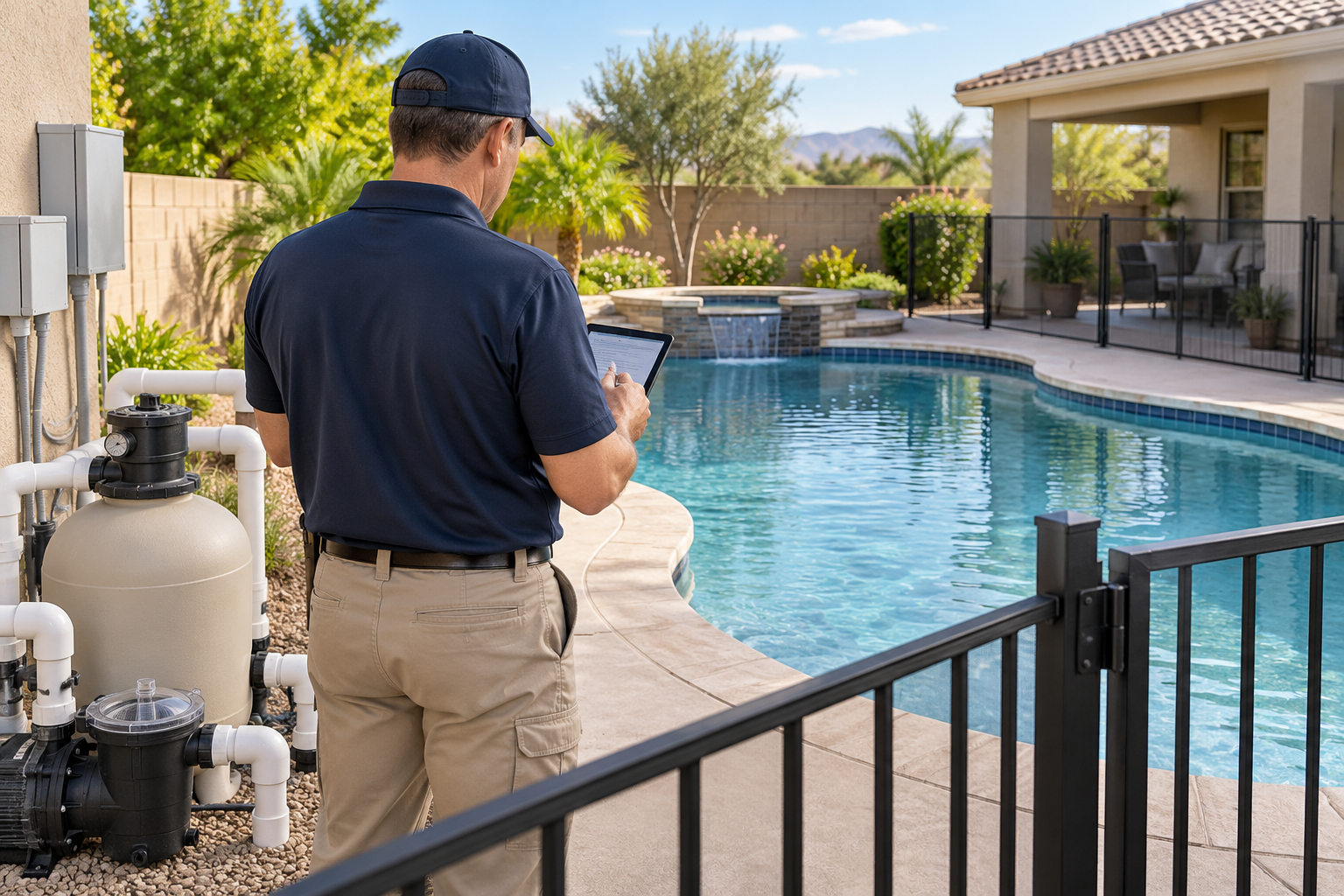
A pool inspection is a paid condition assessment, not a promise that every buried line, shell defect, or future failure will be found. It is most useful when you need a structured view of the system before buying, repairing, renovating, or reopening it.
Tests that may be separate
Leak detection, pressure testing, underwater inspection, destructive opening, structural engineering, electrical evaluation, gas or fuel assessment, water-quality testing, and code or permit review may require different professionals, equipment, and fees. A basic inspection should not be represented as proof of hidden plumbing integrity or structural soundness.
Cost drivers
Inspection pricing varies with pool or spa type, travel, access, equipment count, integration with a home sale, documentation, reporting depth, and whether a specialist test is added. Ask whether a written report, photos, model identification, safety observations, and follow-up call are included.
Cost orientation
Inspection should appear as a separate diagnostic line, not as an implied percentage of the repair budget. A practical budget may pair an inspection with a separately priced leak-detection service; a current U.S. specialist observation for pool leak detection is about $100–$1,000, depending on testing and access. That is not an inspection price and does not include repair. Ask which visual checks, tests, written findings, and specialist referrals are included before comparing bids.
Choosing an inspector and reviewing the result
Ask about relevant pool experience, credentials, insurance, the equipment the inspector will operate, and whether a written report with photographs is included. Check whether the provider is independent of the repair recommendation or clearly discloses any sales relationship. A useful report identifies observed facts, limitations, recommendations, and priorities without promising certainty beyond the inspection scope.
Use the report to request quotes that repeat the same assumptions. If a contractor proposes additional work, ask which observation or test supports it. If the report identifies a material unknown, budget the next diagnostic step rather than silently assigning the most expensive interpretation.
Choose the inspection for the decision ahead
The right inspection depends on why the owner is paying for it. A pre-purchase review should document the visible vessel, equipment, safety arrangements, site, service history, and issues that need a specialist before closing. A renovation assessment should create a system map: what can be retained, what is likely to be replaced, and what must be resolved before finish, deck, or equipment work. Water loss, heating, circulation, electrical, suction, shell, or soil concerns may need targeted services instead of a broad visual inspection.
Ask the provider to state the scope, access, operating assumptions, tests, written report, photographs, model identification, limitations, credentials, insurance, and any sales relationship. “Inspection” does not automatically include pressure testing, leak location, destructive access, electrical testing, structural calculations, water-quality analysis, code research, or a certification of local compliance. Those exclusions define when an additional professional is needed.
Turn findings into comparable next steps
For every material finding, record whether it is observed, tested, suspected, not evaluated, or recommended for further review. That distinction prevents a worn component from being treated as a confirmed failure and prevents an unknown concealed condition from being labeled acceptable. Ask what evidence supports the recommended repair and what would change the scope.
The report can be converted into a project list with four priorities: immediate safety or use restriction, diagnostic follow-up, confirmed repair or replacement, and maintenance or optional improvement. A damaged drain cover, unsafe electrical condition, active leak, or compromised equipment has a different priority from cosmetic tile or a service recommendation. Keep each item tied to the professional or authority responsible for the next decision.
Match the inspection scope to the system inventory
Before booking, list the pool and spa features the owner expects the inspector to assess: vessel and finish, tile and coping, pump and filter, heater, visible plumbing, lights, automation, sanitation, cover, barrier, and attached water features. Ask which items will be operated, visually observed, identified by model, or left untested. A report that names only the pool as a whole may not answer whether the equipment package or access arrangement is ready for a planned renovation.
A useful written report separates observed condition from operation and from specialist referral. For example, it may note visible leakage without locating its source, identify an equipment warning without diagnosing the part, or describe a barrier feature without determining local approval. The owner should see whether a component was inaccessible, disconnected, winterized, or excluded. Those limits help prevent both false reassurance and an unnecessary replacement recommendation.
If the inspection is part of a purchase, agree whether a return visit is possible after utilities, water level, or equipment access changes. If it precedes a renovation, ask for photos and model identification that can help bidders price the same system. Additional leak, structural, electrical, fuel, or code review should remain a separately priced service with the responsible professional identified.
Key points
- Read the inspection scope and limitations before comparing its price.
- A general inspection does not prove buried plumbing or structural integrity.
- Safety, electrical, gas, water-quality, leak, and engineering questions may need specialists.
- Use the report to separate urgent action, confirmed repair, further diagnosis, and optional improvement.