
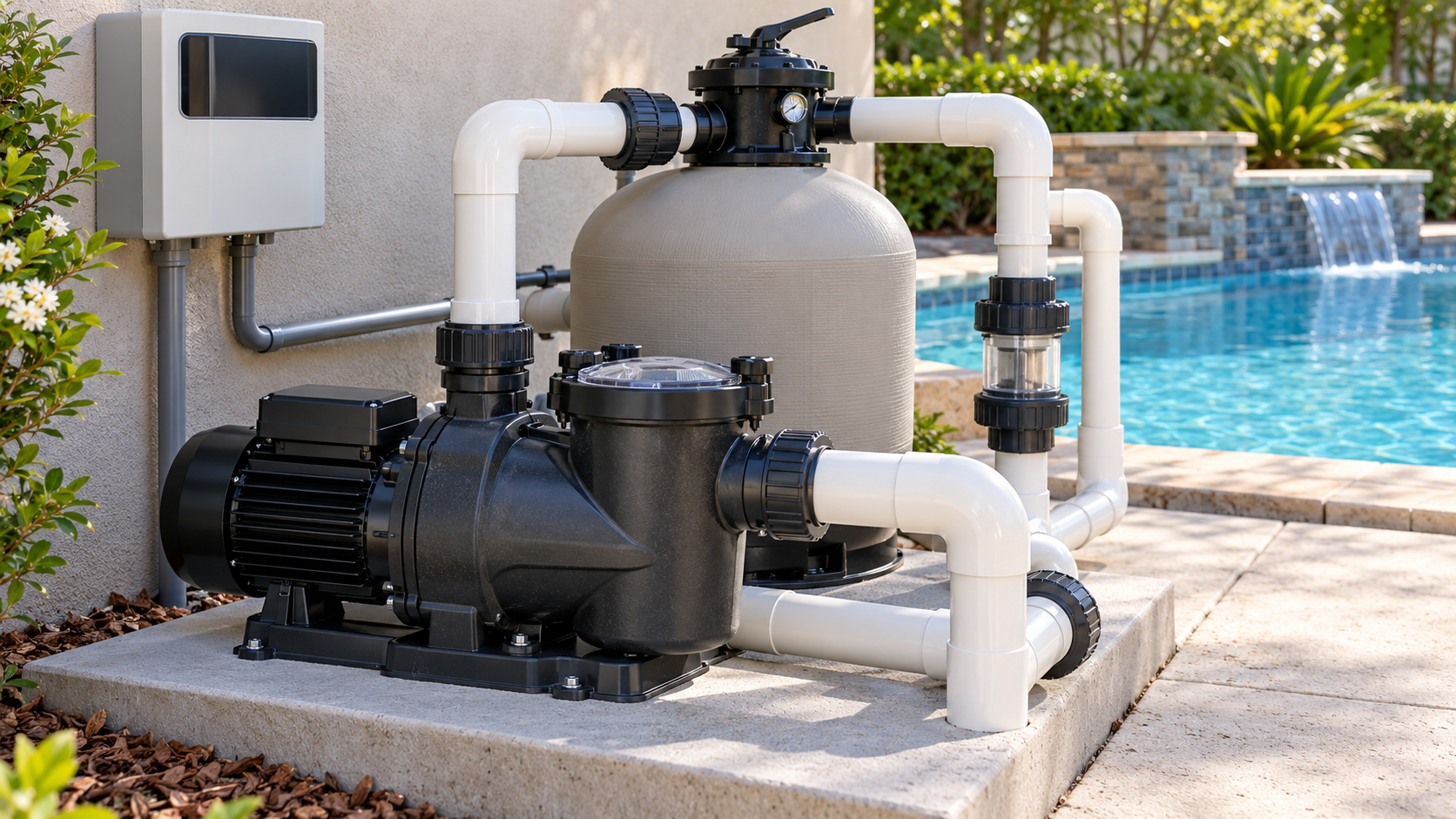
A pump replacement should begin with a diagnosis and a defined hydraulic and electrical scope. A noisy, low-flow, or stopped pump can reflect the motor, wet end, seal, controls, valves, filter condition, blockage, or another system issue. Replacing the assembly before identifying the cause can leave the original problem in place.
Choose among repair, assembly replacement, and upgrade
A repair may fit when the failed component is identifiable, compatible parts are available, and the remaining pump is in suitable condition. Replacing the complete assembly may be more appropriate when the motor and wet end are both deteriorated, the product is obsolete, or repair labor and warranty make the total comparison poor. A variable-speed upgrade adds an operating-cost question and may need revised plumbing, controls, settings, or installation work.
Ask the service professional to report the symptom, tests performed, confirmed failed part, model and horsepower, compatibility, warranty, labor, and what was not assessed. Pump sizing and replacement depend on the actual pool, filter, plumbing, water features, and required flow; do not treat a larger motor as an automatic improvement. Electrical connections and changes belong with qualified professionals.
A blocked or damaged filter, stuck valve, air leak, low water level, or an obstruction can also resemble a pump failure. Request a diagnosis that distinguishes pump condition from the rest of the circulation path. A cost article cannot provide a safe procedure for opening pressurized equipment or testing electrical components.
Build a comparable quote
Separate diagnostic visit, motor or pump assembly, seal or other parts, labor, valves or plumbing changes, controls, electrical work, removal and disposal, startup, testing, warranty, and any related filter work. Ask whether the price assumes the same pump model, a compatible replacement, or a system redesign. A motor-only price is not directly comparable with a complete installed assembly.
Then compare the operating case. Use the actual utility rate, planned run schedule, pool use, climate, and verified equipment data. A higher-efficiency or variable-speed model may reduce energy in some conditions, but the savings depend on settings, hydraulics, runtime, and rates. Do not use a published energy claim as a household savings guarantee.
A quote that changes the pump, filter, controls, or piping at the same time should identify why the dependent work is required. Keep optional automation or efficiency upgrades separate from repair needed to restore operation.
Regulatory context depends on product and date
In the United States, the Department of Energy identifies dedicated-purpose pool pumps as a regulated product class. DOE’s 2026 enforcement policy clarifies a limited delay for certain small-size pump motors manufactured from September 28, 2027 through March 25, 2029; this concerns distribution in commerce, not whether an existing installation is compliant or a replacement fits the system. Verify current applicability for the exact product.
Canada’s Energy Efficiency Regulations also prescribe certain pool-pump product classes. For sections 4, 5, and 810, a pump is not treated as an energy-using product unless manufactured on or after January 1, 2026; the definitions include product-specific classes and exclusions. This is not a blanket direction to retrofit an existing pump. Verify model, class, manufacture date, and current regulation with the supplier or qualified installer. Energy Efficiency Regulations, section 809
A rule about manufacturing or distributing a covered pump is not automatically a retrofit requirement for the pump already installed at a home. A current replacement can also be subject to different requirements from a unit made or sold earlier. Ask the supplier to identify the exact product class and manufacture date in writing, and keep that answer separate from the installer’s separate confirmation of fit and safe operation.
Treat variable speed as a measured operating case
A variable-speed pump can operate at different speeds, but the practical energy comparison depends on the pool’s required flow, how many hours each task runs, control compatibility, utility rate, and owner or service settings. Ask the provider for the assumptions behind any savings estimate: old and new pump data, daily operating schedule, required flow for filtration or features, local rate, and any control or plumbing changes. If those inputs are unknown, describe the potential rather than promising a dollar reduction.
A repair may preserve a working system at lower project scope, while a new pump can introduce warranty, control, and efficiency options. Compare first cost, expected service support, electrical compatibility, and operating schedule over the owner’s likely horizon. Include the possibility that automation, heater, filter, or water-feature settings need adjustment after installation.
Check the incentive before subtracting it from the quote
Some utilities and program sponsors offer a one-time discount for qualifying pumps, but eligibility is local and can depend on the customer account, model, participating dealer, purchase or installation date, funding, and application. Rochester Public Utilities lists $100 for an ENERGY STAR variable-speed pool pump, capped at 50% of cost; its separate application carries the full terms. RPU’s rebate listing
Mass Save describes an instant discount for qualifying new ENERGY STAR pumps bought through participating dealers by eligible residential customers, but its page does not state the discount amount. In Prince Edward Island, a page still displays a $200 pump amount while also saying instant product rebates were paused as of April 15, 2026; that displayed amount alone does not show that a rebate is currently available. Check the applicable program directly before purchase and show any confirmed incentive on a separate line. Do not reduce an installed-price comparison, project price, or energy-savings estimate by an unconfirmed offer. Mass Save’s terms · Prince Edward Island program status
Plan for installation interruptions and closeout
Ask whether the pool must be drained or shut down, how long circulation will be unavailable, and whether parts or weather affect scheduling. The quote should identify removal, disposal, model-specific unions or adapters, wiring and controls, startup, leak check, operation test, and documentation. If the equipment pad is crowded or below deck level, include access and restoration before work starts.
After installation, retain the old diagnosis, new model, settings, control communication, warranty, installation record, and operating schedule. A later energy comparison should use actual utility bills and operating conditions rather than the sales estimate. Keep U.S. and Canadian regulations separate and verify current product scope before purchasing an affected model.
Ask whether the pool will be out of circulation during the work and how startup will be confirmed before normal operation resumes. The owner should receive the final model, settings, control connection, test or leak-check result, warranty, and any open recommendation. Keep electrical and plumbing invoices with the pump record so a future service provider can see what was changed.
Key points
- Diagnose the pump and surrounding flow path before replacing parts.
- Compare repair, like-for-like replacement, and upgrade with the same site assumptions.
- Efficiency claims depend on verified system settings and local utility costs.
- U.S. and Canadian product rules have different scope and dates.