
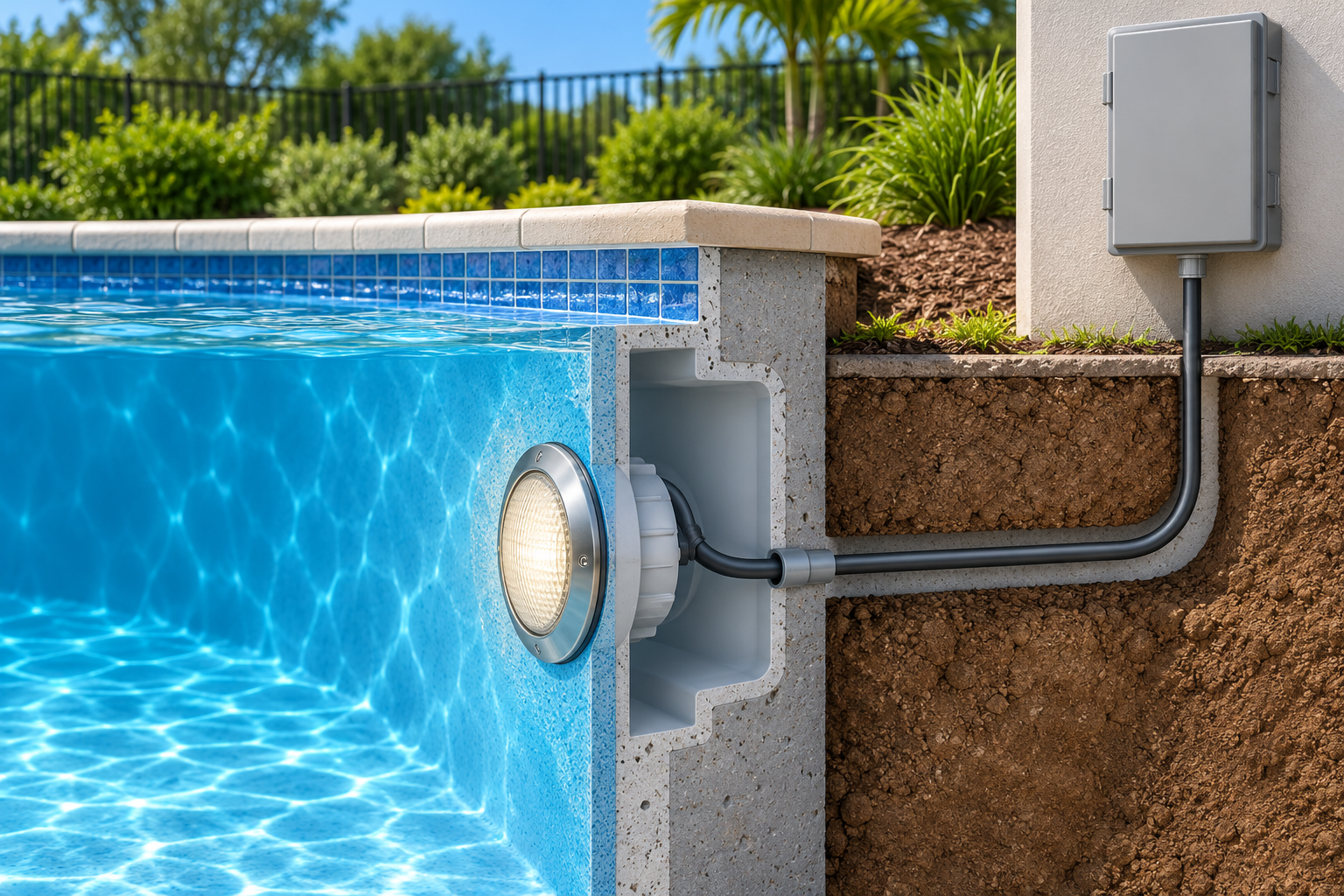
Underwater and wet-location lighting combines a fixture or module with a niche, cable, transformer or control, sealing components, access, and electrical-safety requirements. It should not be priced like an ordinary indoor light fixture.
Cost orientation
Pool-light work should be priced by fixture, niche, cable, transformer, controls, access, and required electrical inspection—not by a generic bulb price. A responsible scenario separates a fixture or lamp decision from any cable, niche, transformer, bonding, or control work and from water handling or restoration. Current local code and product compatibility control the quote; no universal price or Canadian conversion is established here.
Identify the complete lighting assembly
The visible light is not the whole cost. A service provider should identify whether the problem is a replaceable lamp or module, a complete wet-location fixture, niche or mounting issue, cable or conduit, transformer, controller, or a broader supply and bonding concern. The existing fixture dimensions, cable, power arrangement, color-control system, and automation can determine whether an upgrade is a simple replacement or a coordinated project.
Access and water handling should be explicit. Some work may require lowering the water, working from the deck, restoring a niche, or coordinating with resurfacing. The quote should state the assumed water level, access method, restoration, testing, disposal, and what happens if the niche or cable is not suitable. Do not allow an equipment-only price to conceal the condition of the installation around it.
Repair, replace, or coordinate
A supported fixture with a clear lamp or module failure may fit a focused replacement. A fixture with moisture intrusion, degraded seals, cable damage, or an incompatible control may need a broader electrical or lighting scope. If the niche, coping, finish, or deck is already being renovated, coordinate the work so the new light is not installed into a condition that will immediately be disturbed.
Lighting controls add another decision boundary. A color-changing or automated system may require a compatible transformer, controller, power supply, or communication method. Ask which functions are retained and which are being added. Similar wattage, connector appearance, or marketing language does not establish compatibility or electrical safety.
Safety and local review
Underwater lighting combines water exposure with electrical equipment, so the risk is higher than an ordinary fixture replacement. Ontario ESA material is a local example that addresses grounding, bonding, clearances, GFCI protection, and use of a Licensed Electrical Contractor for applicable pool and hot-tub work. It is not a Canada-wide checklist. The responsible professional should determine the actual jurisdiction, inspection, and approval requirements.
For a like-for-like replacement, compare fixture, seals, access, testing, and restoration. For an LED or control upgrade, add transformer, controller, compatibility, programming, and commissioning. For a damaged niche or cable, keep the electrical and structural or finish scopes visible as separate contingencies. Ask for model numbers, warranty, testing, exclusions, and the condition that would trigger added work.
Make the electrical handoff explicit
The written proposal should name the party responsible for fixture and niche assessment, cable or transformer, circuit and protection, grounding or bonding interfaces, inspection, final testing, and restoration. Keep those responsibilities visible when a pool contractor coordinates a qualified electrical professional.
Record the installed model, reused components, test result, warranty, water-level assumption, and any limitation on the niche or cable. If the work is part of a drained-pool project, state who protects the exposed opening and who confirms the fixture before refill. A lamp or LED claim alone does not establish that the complete wet-location installation has been assessed.
A lamp and a complete fixture are different purchase decisions
A lamp or module is a limited replacement scope when the existing fixture, seal, niche, cable, and power arrangement remain appropriate and the exact product allows that service. A complete fixture replacement changes more of the wet-location assembly and may require compatibility, access, water handling, and electrical assessment. Ask the provider to name what will be reused and what will be supplied; a bulb price cannot be compared with an installed fixture price.
An LED conversion can involve more than light output. The existing transformer, controls, color functions, fixture dimensions, and any automation may affect fit and operation. Ask what features are retained, whether the new unit is supported by the exact installed arrangement, and whether a control or transformer change is included. Product family or connector similarity does not establish compatibility.
If the fixture is associated with a visible moisture or cable concern, keep diagnosis separate from a lamp upgrade. The electrician or qualified pool-light professional should state what was evaluated and what remains unknown. Do not open, energize, or test underwater equipment from the article; the electrical risk and applicable inspection belong to the professional responsible for the work.
Confirm the old installation before selecting a substitute
The service provider should identify the fixture, niche, cable, transformer, controls, and any visible condition that changes reuse. Pool-light products may differ in physical fit, electrical requirements, sealing, control capability, and manufacturer instructions even when marketed for the same pool. The exact installed model and the proposed replacement matter more than a broad bulb type.
If the existing records are missing, ask whether the provider needs an inspection before ordering. This can prevent a part mismatch or a second trip after discovering a damaged cable, incompatible niche, or control that cannot support the desired function. Do not rely on a lamp label or a visual fit to establish the complete wet-location installation is safe.
A complete closeout should retain the product model, replaced and reused parts, electrical professional, test and inspection results, warranty, and any limitation on the existing cable or niche. If other trades will work near the pool finish, specify who protects the fixture and confirms the system after the project.
Key points
- Pool-light pricing depends on fixture, niche, cable, transformer, controls, and access.
- Wet-location electrical work requires qualified professional assessment.
- Ontario guidance is jurisdiction-specific and does not replace current code or inspection.
- A bulb or LED upgrade is not automatically compatible with the existing system.