Pools, Spas & Recreational Water Systems

Project cost and decision guide

Compare pool covers by function, installation, shape, anchors or tracks, energy and debris benefits, safety limitations, and lifecycle cost.

On this page

Pool Cover Cost: Solar, Winter, Safety, Manual, and Automatic Options

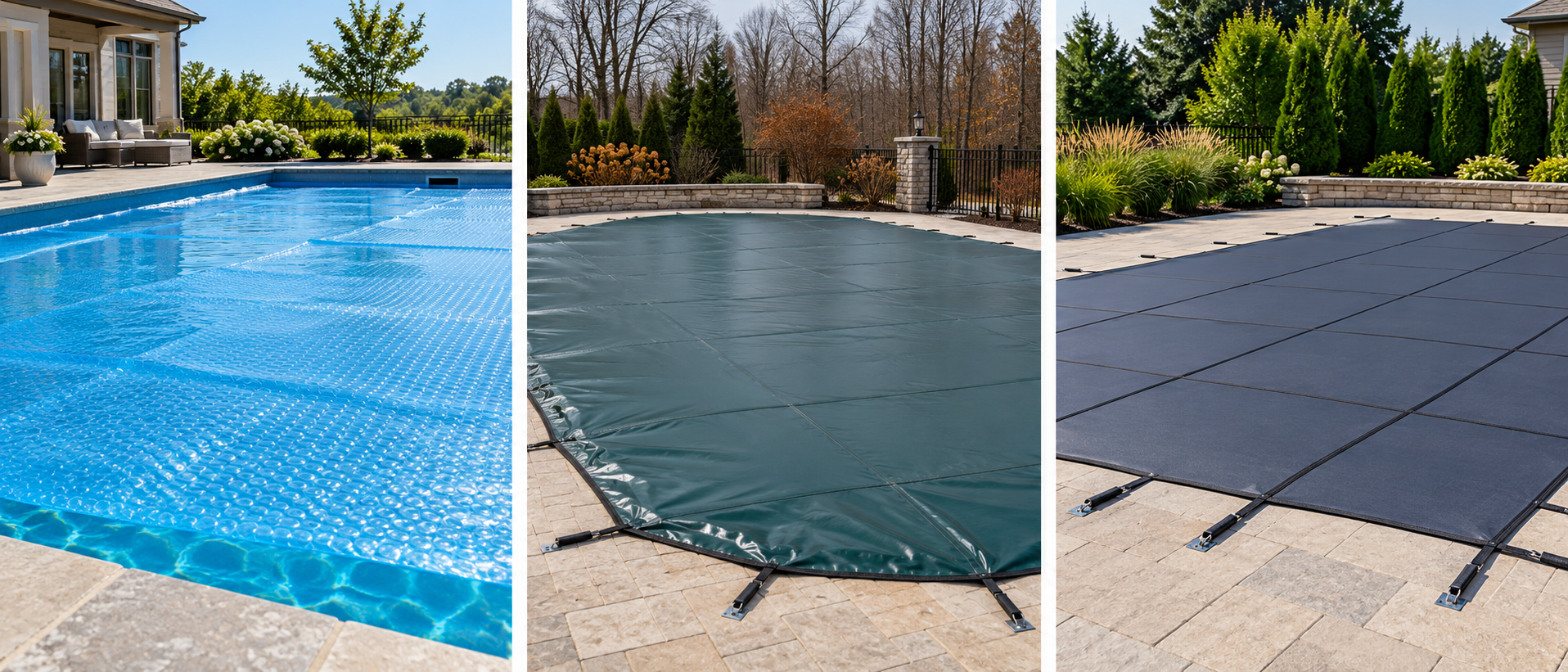
Pool covers are not interchangeable. A solar or bubble cover, winter or debris cover, safety cover, manual cover, and automatic cover can serve different functions and have different installation, maintenance, and safety expectations.

Match the cover to the job

Cover type Main purpose to compare Important limitation
Solar or thermal Reduce heat loss and evaporation during use periods Not automatically a barrier or a child-safety device
Winter or debris Reduce debris and protect during shutdown Safety performance depends on the specific product and designation
Safety cover Restrict access as one layer of protection Verify product performance and local requirements
Manual or reel system Simplify handling and storage Mechanical assistance does not itself establish safety performance
Automatic cover Integrated opening, closing, and track or reel system Retrofit shape, deck, electrical, and safety classification need verification

The CPSC guidance describes covers as one layer of protection and says to keep controls away from children. It is not a mandatory standard by itself. Confirm local law, product certification, and the actual use of the cover.

Cost drivers

Ask whether the price includes custom measurement, cover fabric, anchors, tracks, reel or motor, deck changes, electrical work, installation, storage, repair, and warranty. Shape, steps, benches, spas, water features, deck condition, and retrofit access can materially change the scope.

Energy and ownership

A cover can affect evaporation, heat loss, cleaning, water use, and heater runtime. Model those benefits using the owner’s climate and actual use. Replace damaged or degraded covers based on their function and product requirements; do not assume a worn cover remains a safety barrier.

Cost orientation

A cover quote is a product- and function-specific project, not a fixed percentage of pool cost. For scale, U.S. market observations place above-ground pools around $1,000–$6,000 and inground pools around $44,300–$86,500, but neither figure prices a cover. Request separate pricing for the cover, anchors or tracks, deck work, motor or controls, installation, storage, and safety-related product verification. Canadian pricing requires local quotes.

Decide what the cover must accomplish

The first question is functional: is the cover intended to reduce evaporation and heat loss, limit debris during a shutdown, provide a specified safety function, simplify daily handling, or coordinate with an automatic system? One product may help with more than one objective, but its name does not prove that it meets every objective. Keep the energy, seasonal, access-control, and safety decisions visible when comparing products.

Shape and surrounding conditions matter. Steps, benches, spas, water features, unusual corners, coping, deck slopes, drainage, trees, and nearby doors can change measurement, anchoring, storage, and installation. A cover that is easy to use is more likely to be used consistently, while a cover that is difficult to remove or store can lose its practical value. Ask the installer how the proposed product will be handled by the actual household.

Safety is a separate verification

The CPSC guidance describes barriers and covers as layers of protection and notes that supervision remains important. It is not mandatory by itself. A solar or thermal cover should not be represented as a child-safety barrier. A winter or debris cover should not be called a safety cover without the product’s tested designation and local confirmation. Health Canada material gives a Canadian reference point for barriers and covers but directs owners to local town or city rules.

If access control is part of the goal, ask what the product is tested to do, what openings or edges exist, where controls are located, and what other layers remain necessary. Keep local legal conclusions with the authority having jurisdiction rather than translating general guidance into a universal promise.

Compare lifecycle scenarios

For a seasonal thermal cover, compare custom measurement, fabric, handling, storage, cleaning, replacement, and expected effect on heater runtime. For a winter cover, compare anchors, deck condition, installation, removal, storage, and the consequences of snow, wind, or water accumulation under the product. For a safety or automatic system, add track or anchor verification, controls, testing, and any electrical or deck work.

The quote should identify product, dimensions, function, certification or designation, anchors or tracks, reel or motor, installation, deck changes, storage, warranty, maintenance, and exclusions. Canadian owners should obtain local pricing in CAD; U.S. market context is not a currency conversion or a local quote.

Decide the cover’s primary function

Start by stating whether the cover is intended to reduce evaporation and heat loss, limit debris during shutdown, provide a specified safety function, simplify daily handling, or integrate with an automatic system. A product may serve more than one objective, but its name does not prove that it meets all of them. Keep energy, seasonal protection, access control, and safety decisions visible in the comparison.

Shape and surroundings affect the installed price. Steps, benches, spas, water features, corners, coping, deck slopes, drainage, trees, doors, and storage can change measurement, anchoring, handling, and access. A cover that is difficult to remove or store may deliver less practical value than its brochure suggests. Ask the installer how the household will handle it and where it will be stored.

Verify safety separately

CPSC guidance presents barriers and covers as layers of protection and does not make every cover a universal safety barrier. A solar or thermal cover should not be represented as a child-safety device. A winter or debris cover should not be called a safety cover without the product’s tested designation and local confirmation. Health Canada material gives a Canadian reference point but directs owners to local municipal rules.

If access control is part of the objective, ask what the product is tested to do, how controls are located, what openings or edges exist, and what other layers remain necessary. Keep legal conclusions with the authority having jurisdiction.

Compare lifecycle cases

For a seasonal thermal cover, compare custom measurement, fabric, reel or handling, storage, cleaning, replacement, and expected effect on heater runtime. For a winter or debris cover, compare anchors, deck condition, installation, removal, storage, wind or snow assumptions, and water accumulation. For a safety or automatic system, add tracks, controls, testing, deck, electrical, and barrier coordination.

The quote should identify product, dimensions, function, designation, anchors or tracks, reel or motor, installation, deck changes, storage, maintenance, warranty, and exclusions. Use local quotes in the actual currency; Canadian owners need local CAD pricing rather than conversion.

Include handling, storage, and replacement

The owner should understand how the cover is removed, cleaned, dried, stored, restrained, and inspected. A cover that is too heavy, lacks a practical storage space, or is difficult to use may not deliver the expected reduction in heat loss or debris. Ask whether the quote includes reels, lifters, anchors, tracks, storage, seasonal installation, removal, and future service.

The installed condition also affects the result. Deck, coping, drainage, steps, benches, water features, unusual shapes, and neighboring doors may determine the measurement and safety arrangement. A cover should not be treated as a substitute for a fence or other barrier unless the product designation and local authority support that function. Keep safety, energy, and convenience as separate decisions.

Keep the cover’s function documented

Retain the product, dimensions, function, anchors or tracks, reel or lifter, safety designation if applicable, installation record, warranty, storage instructions, and maintenance responsibility. A future owner or service provider should be able to tell whether the cover is thermal, debris, winter, safety, manual, or automatic rather than relying on its appearance.

Review the cover after a season of use. Note handling, damage, waterlogging, energy or cleaning effect, access issues, and whether the household uses it consistently. A practical ownership result may justify a different storage or handling arrangement before a full replacement. Keep local rules and Canadian CAD pricing separate from broad U.S. market context.

Keep function and maintenance records

Retain product, dimensions, function, anchors or tracks, reel or lifter, safety designation if applicable, installation, warranty, storage, and maintenance instructions. After a season, note handling, damage, waterlogging, energy or cleaning effect, and access issues. A cover’s practical performance depends on consistent use as well as its specification.

Key points

  • A cover’s name does not establish its safety function.
  • Separate energy, debris, winter, access-control, and automatic-system decisions.
  • Custom shape, anchors, tracks, deck, electrical, and installation change cost.
  • Use current local rules and product documentation for safety performance.

Research notes

Sources used for this guide