
Squirrel removal from an attic often costs a few hundred to about $1,000 U.S. when access is straightforward. Roofline work, young animals, several visits, exclusion, contaminated insulation, chewed wiring, and fascia or soffit repair can raise the total. Canadian homeowners should obtain local CAD pricing and verify provincial or municipal wildlife rules.
Start with inspection, not a hole or noise
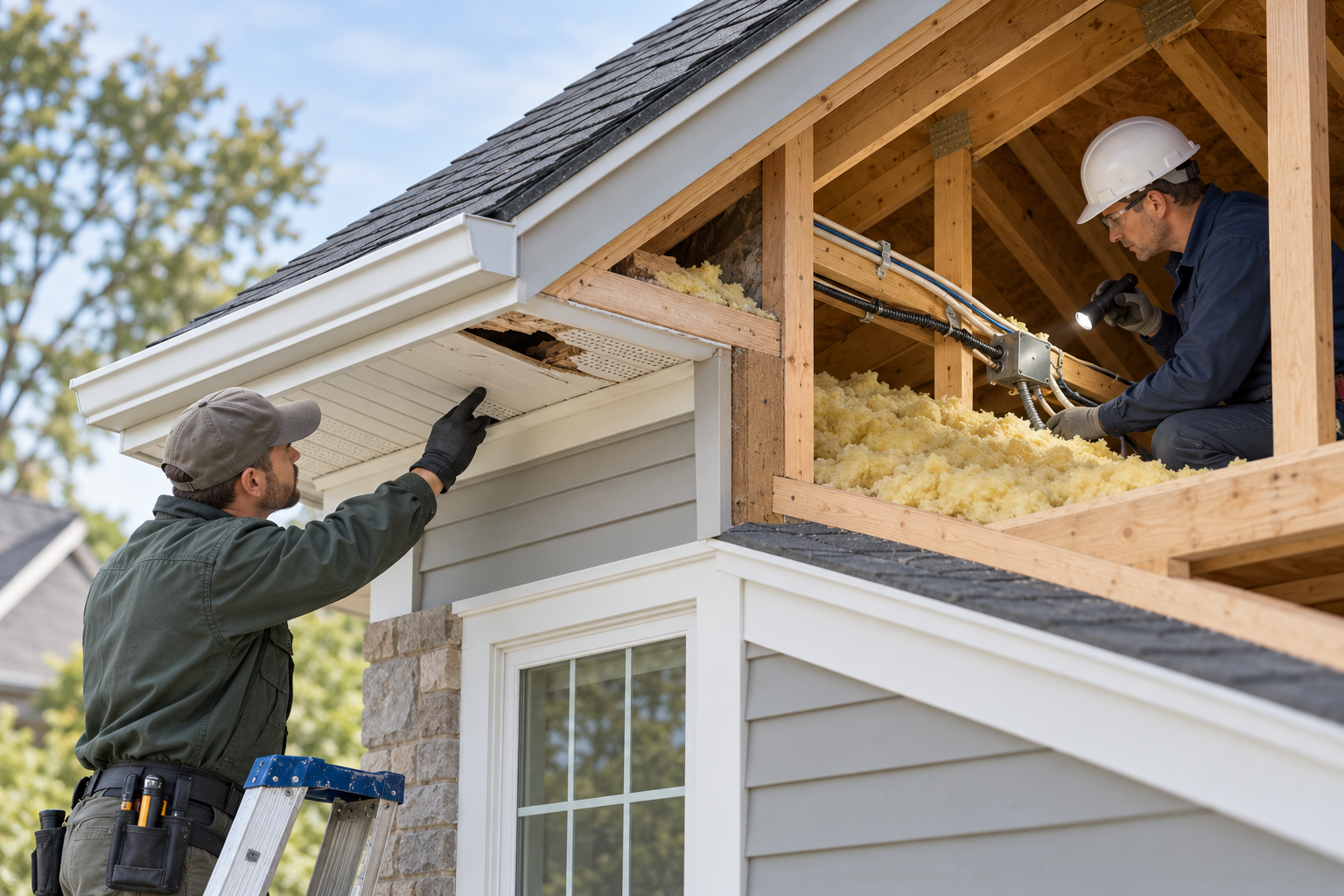
The provider should confirm that squirrels are present, identify the roofline or wall entry, inspect for nesting and young, and look for damage to screens, soffits, fascia, insulation, and wiring. A noise at dawn or a hole near a tree does not establish the whole project.
Squirrels can enter through roof edges, vents, soffits, or damaged assemblies. Tree access, recent roof work, and the condition of the opening can change the exclusion scope. Ask for photographs or a location description rather than an unexplained “animal removal” price.
What the price may include
| Scope | Typical cost driver |
|---|---|
| Inspection | Roof access, attic entry, species confirmation, and young-animal assessment |
| Control or removal | Method, local law, number of animals, and number of visits |
| Exclusion | One-way or other qualified method, screening, and timing after the space is clear |
| Access repair | Roof, soffit, fascia, vent, siding, or trim work |
| Damage assessment | Wiring, insulation, wood, and nesting contamination |
| Cleanup | Removal of nesting material, odor, or affected insulation |
| Follow-up | Monitoring and confirmation that the route remains closed |
The pest or wildlife provider may exclude electrical, roofing, finish, or insulation work. Make those exclusions explicit before approving the work.
Young animals and local timing
Ontario guidance advises removing some small animals in autumn after young have left the den, and cautions against sealing animals inside. This is an Ontario example, not a universal rule for every squirrel species or jurisdiction. Local season, species, wildlife status, and permitted methods control the actual sequence.
Do not close the visible hole until a qualified provider has assessed whether animals remain inside. Do not improvise with smoke, poison, or trapping instructions copied from another location. Ask the professional how the method handles young, an inaccessible nest, and a return route.
Check for wiring and building damage
Ontario’s guidance notes that squirrel activity around exposed wiring warrants checking smoke detectors and arranging an electrician’s inspection where needed. A wildlife-removal invoice does not certify electrical safety. If the animal entered through a roof, the roofer or building-envelope contractor should assess the surrounding assembly; if the opening affects structural wood or finished surfaces, another trade may be needed.
Contaminated insulation and nesting material also create a separate cleanup decision. Read rodent-contaminated attic or crawlspace cleanup cost for the cost structure and safety boundary; the actual wildlife contamination scope remains site-specific.
Exclusion is the long-term decision
Removing the squirrel without correcting the entry route can produce another service call. Ask whether the proposal includes screening, roofline repair, tree-access observations, follow-up, and a warranty. A whole-home exclusion is not automatically necessary, but a small patch may be inadequate when the opening is part of a damaged roof edge or soffit. If a branch is only a possible route, ask whether inspection supports trimming; price any tree work with a qualified arborist.
Price the repair based on the material and access, not just the animal. A few dollars of screen may require a lift, temporary protection, finish matching, or a roofing repair to install correctly.
The estimate should link the proposed exclusion to the route found during inspection. A small opening in an accessible vent, a damaged high soffit, and a roof edge affected by recent work are not equivalent repairs. Ask for a marked photograph, the material and dimensions assumed, whether temporary weather protection is needed, and who warranties the building repair. If several routes are possible, have the provider explain why it is treating each as active rather than pricing a whole-roof exclusion without evidence.
Compare tree-related recommendations with the building findings. If a branch only provides a possible route, ask whether closing a confirmed soffit or vent opening is sufficient. If the tree itself needs pruning, use a qualified tree professional and price that work separately. The wildlife quote should not quietly combine animal removal, tree work, roofing, and siding into an allowance whose outcome cannot be checked.
Compare quotes safely
Ask for the species, location, young-animal assumption, removal method, number and purpose of visits, exclusion sequence, access equipment, cleanup, repair boundaries, and local-rule assumptions. Ask who verifies the attic is clear before closure and what finding changes the price. An inspection-only first visit or a conditional allowance may be preferable when the nest or opening is not yet confirmed.
If a person or pet may have had direct contact with wildlife, use local public-health or medical guidance. Removal cost and exposure management are separate questions.
Compare the most common attic project scopes
Three proposals may describe the same problem differently. Use the inspection to determine which cost path fits:
| Project condition | Main cost variables | Related work to confirm |
|---|---|---|
| One animal, accessible opening, no young observed | Inspection, removal or exit confirmation, and a small exclusion repair | Who installs and warranties the vent or trim repair. |
| Nest at a high soffit or roof edge | Safe roof access, number of visits, temporary weather protection, and repair dimensions | Roofing, fascia, insulation, and finish restoration. |
| Nesting material or suspected wiring damage | The area inspected, wildlife follow-up, and whether insulation must be removed | Electrician assessment before concealment and separate cleanup pricing. |
The table is not a guarantee that a particular condition is present. Ask the provider to identify what it observed and what it cannot inspect. If the opening is hidden behind a finish, agree whether an inspection-only phase or conditional price is more useful than an all-in estimate based on an unverified assumption.
Compare the work by visit and endpoint
A first visit may only identify the animal and likely opening. A later visit may be needed to confirm the attic is clear, install or remove a professional exclusion device, repair the route, or check for new activity. Ask which task each visit performs and whether the quote charges per visit, as a package, or under a callback promise. A lower initial fee can lead to a higher total if the price excludes the return needed before closure; a package is not automatically better if it includes work the inspection does not support.
Set the endpoint for each phase. The removal phase may end when the animal leaves or is removed, while the building phase ends after the opening is closed and weather protection is restored. Cleanup and insulation replacement may remain separate, and exposed wiring needs an electrician before concealment. The completion note should record the area checked, the route addressed, inaccessible spaces, and any repair still outstanding. That record helps the homeowner avoid paying a second wildlife provider to rediscover the same facts.
Roofline access and repair can outweigh the animal count
One opening at ground level and one at a high soffit may involve the same animal but very different access. Ask whether ladders, lifts, roof protection, temporary weather closure, and landscaping protection are included. A repair quote should identify the actual material and area—such as a vent, fascia, soffit, trim, or roof edge—and state whether matching finish work is included. A whole-roof or whole-attic allowance needs a marked inspection boundary so it can be compared with a targeted repair.
If the provider observes more than one possible route, ask which ones show current evidence and which are only potential access. Price confirmed repair separately from a broader inspection or prevention option. This keeps an expensive access setup tied to the work being done and avoids treating every nearby branch, vent, or roof junction as an active squirrel opening without evidence.
For a seasonal or vacant home, ask whether the provider can verify the result before the property is closed up and whether a later monitoring visit requires another access charge. A quote that assumes daily homeowner observation may not fit a building that is unoccupied; tell the provider about access dates and any caretaker before comparing service plans.
Bottom line
Plan on a few hundred to about $1,000 U.S. for a straightforward project, with roof access, young animals, visits, exclusion, cleanup, wiring, and repair expanding the scope. Buy a written removal-to-repair sequence and get Canadian pricing and local-rule confirmation from a qualified provider.