
Rodent cleanup can cost from several hundred dollars for a small, accessible area to several thousand dollars when insulation, contaminated materials, odor, disposal, or difficult attic and crawlspace access are involved. U.S. specialist wildlife-removal observations provide only broad orientation; Canadian pricing and disposal requirements must be obtained locally in CAD.
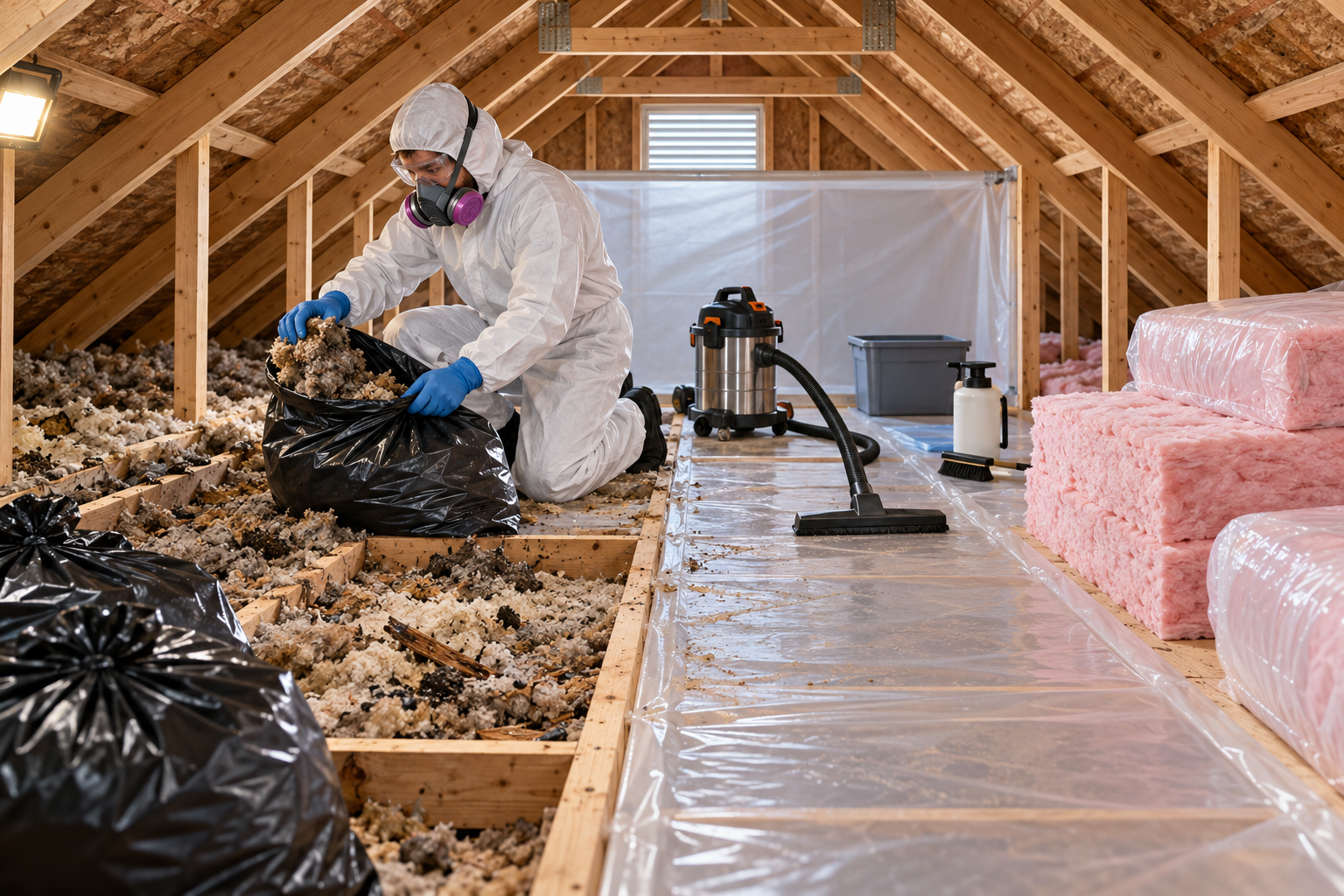
Control the infestation before restoring the space
Cleanup should be planned after the active rodent problem is controlled or as part of a coordinated professional sequence. Removing contaminated material without correcting entry routes can lead to another cleanup. Rodent exclusion cost covers the building-access question; this article focuses on contamination and restoration.
Ask the provider to distinguish droppings and nesting debris from contaminated insulation, damaged ducts, chewed wiring, stained framing, or affected finishes. Those conditions may require different trades and different safety controls.
What changes the price
| Cost driver | Why it matters |
|---|---|
| Contamination extent | A few localized areas differ from widespread material throughout an attic or crawlspace. |
| Insulation | Bagging, removal, disposal, and replacement can dominate the invoice. |
| Access | Low clearance, narrow hatches, finished ceilings, and long carry paths increase labor. |
| Moisture and condition | Damp material, odor, or damaged wood can require another assessment. |
| Disposal | Local waste rules, packaging, travel, and load volume affect cost. |
| Follow-on repair | Wiring, ducts, drywall, air sealing, and finishes are separate potential scopes. |
| Verification | A contamination or odor check may be needed after cleaning. |
An attic with loose insulation, limited access, and widespread nesting is not comparable with a bare crawlspace where the affected surface is easy to reach.
Safety is part of the scope
CDC advises against sweeping or vacuuming dry rodent waste before disinfection and says contaminated exposed insulation should be bagged for removal. When rodents have accessed heating or cooling ventilation, CDC refers homeowners to a professional rodent service and notes that duct-cleaning firms understand the associated risks. Ask the provider to state whether these materials and HVAC areas are in scope; heavy or enclosed contamination still calls for qualified assessment, not a generic do-it-yourself method. These are U.S. public-health boundaries, not a complete remediation specification.
If there may have been direct contact with wildlife or an exposure concern, use public-health or medical guidance. A cleanup quote does not answer a health assessment. In Canada, provincial and local requirements may add to federal public-health guidance.
Removal, cleaning, and replacement are different lines
A complete proposal may contain:
- controlled access and setup;
- removal and packaging of affected insulation or debris;
- cleaning and disinfection of suitable surfaces;
- odor treatment where the provider can explain its limits;
- disposal and transport;
- new insulation or air-sealing work;
- repair of damaged wiring, ducts, framing, drywall, or finishes;
- exclusion and follow-up.
Ask which lines are included. “Attic cleanup” can mean only removal, or it can include restoration. If the provider recommends replacing a large quantity of insulation, request the basis for the recommendation and a separate installation quote.
Building and trade boundaries
Chewed wiring should be evaluated by a qualified electrician. Damaged ducts, ventilation, roof penetrations, moisture, structural wood, drywall, and finishes belong to the appropriate trade. The pest or cleanup contractor may identify the problem without owning that repair.
If the attic or crawlspace also has mold, asbestos, lead, or another environmental-health concern, the project may move into a specialized abatement scope. Do not mix a rodent-cleanup allowance with an unverified hazardous-material assumption.
Compare proposals
Provide each contractor with the same access information and ask for photographs, affected-area assumptions, material quantities, disposal, protection of occupied areas, odor expectations, exclusion sequence, and restoration exclusions. Ask how the provider will determine that cleanup is complete and what happens if contamination is found after insulation is removed.
The cheapest proposal may omit disposal, replacement, or follow-up. The most expensive may include a whole-attic restoration when only a localized cleanup is justified. Compare the defined area and deliverables rather than the label “sanitization.”
A staged cleanup budget
The first stage is control and exclusion. The second is access, protection, and removal of affected material. The third is cleaning, disinfection, disposal, and odor work. The fourth is replacement insulation or other restoration. Wiring, ducts, structural wood, drywall, and finishes may create separate trades. Ask the contractor to price those stages independently so that you can see which condition drives the total.
For a small accessible area, removal may be limited. For widespread contamination, insulation removal and disposal can dominate. A low crawlspace, narrow attic hatch, long carry path, or occupied home can add labor even when the affected material is not extensive. Ask whether the quote assumes loose-fill, batt, or another insulation type and whether replacement is included.
What “clean” should mean
The provider should describe the surfaces and materials it will address, the contamination boundary, the disposal method, odor limitations, and the check after work. No cleaning process can promise that every odor or hidden condition will disappear without opening material. If the source remains, the cleanup is not a substitute for exclusion.
CDC guidance should control safety-sensitive cleanup choices. Do not add dry sweeping, vacuuming, chemical mixing, or respirator assumptions from a generic article. Heavy or enclosed contamination deserves qualified assessment and, where applicable, environmental-health coordination.
Restoration and future performance
New insulation or air sealing can affect ventilation, moisture, and energy performance. Have the responsible building-envelope or insulation professional confirm the replacement scope. If wiring or ducts were damaged, obtain those inspections before covering the area. A cleanup quote should not silently include or exclude a system repair that changes safety or performance.
Questions about insulation replacement
Ask whether replacement is required because the material is contaminated, damaged, inaccessible to clean, or simply easier to remove. The answer may differ between a small localized area and widespread nesting. Request the estimated quantity, removal and disposal method, replacement type, access protection, and any air-sealing or ventilation assumptions.
New insulation should not conceal unresolved wiring, moisture, roof, or entry problems. Have the responsible professionals inspect before restoration closes the area. If the space has another hazard such as mold, asbestos, or lead, stop treating it as ordinary rodent cleanup and obtain the appropriate assessment.
A cleanup proposal should define the endpoint
Ask whether completion means removal of specified materials, cleaning of accessible surfaces, reduced odor, replacement of insulation, or a post-cleaning inspection. Those are different endpoints. Ask how the provider handles material discovered after insulation is removed and whether the price includes disposal, transport, replacement, and protection of occupied areas.
The final budget should also show exclusion and building repair. Otherwise a cleaned attic can remain open to another infestation or contain unsafe wiring, damaged ducts, moisture, or structural material. Keep those follow-on decisions visible and use the appropriate specialist before covering them.
Do not close the attic before the handoff is clear
Before new insulation or finishes are installed, confirm that active rodents are controlled, entry routes are addressed, wiring and ducts are assessed, and the cleanup endpoint is documented. A clean-looking surface is not proof that the full building problem is resolved.
Document the area before work
Ask for photographs or a marked area, material quantities, the proposed disposal path, and the reason for replacement. That record helps compare bids and helps the insulation, electrical, roofing, or environmental contractor understand what was exposed after removal. It also prevents a broad attic allowance from hiding a small or very large actual condition.
Define the clean area and the handoff
Ask the provider to mark the accessible attic area, identify materials to be removed or cleaned, state the disposal method, and describe what verification is available after work. Keep active rodent control and entry correction ahead of insulation replacement or finish closure. If wiring, ducts, or structural members are exposed, assign those questions to the qualified trade rather than assuming the cleanup company has certified them. A scoped endpoint is particularly important when the attic is tight, contaminated, or partly inaccessible.
Confirm what “clean” means
Ask whether the service removes contaminated material, cleans accessible surfaces, treats odor, replaces insulation, or only documents the condition. The provider should identify inaccessible areas and any testing or public-health questions that remain. Active rodents and entry routes should be addressed before the attic is closed. Keep electrical, HVAC, structural, and envelope decisions with the appropriate trades, and retain photographs so later work can be priced from the same condition.
Bottom line
Plan for hundreds to several thousand U.S. dollars depending on contamination, access, insulation, disposal, and restoration. Control the rodents, correct the entry path, and use a qualified cleanup process. Keep public-health, electrical, environmental, and building-repair questions visible instead of treating the work as a simple attic service call.