
Dead-animal work can cost a few hundred U.S. dollars when the carcass is accessible, but locating an animal inside a wall, ceiling, attic, crawlspace, chimney, or duct can make access and restoration the main expense. Broad wildlife-removal observations are only planning context. Canadian disposal rules and local pricing should be confirmed in CAD.
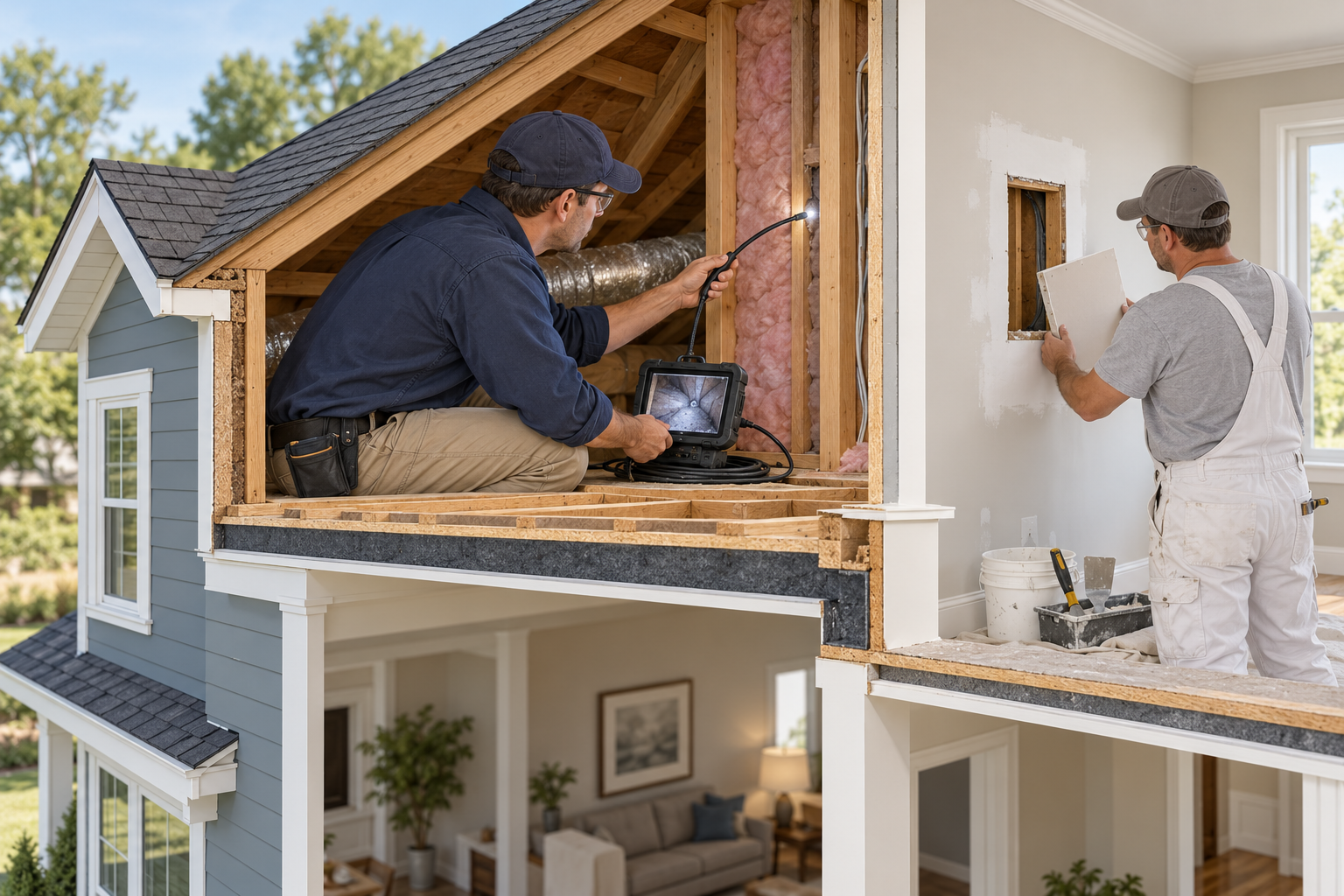
The location often matters more than the carcass
An odor can come from a visible carcass, a concealed cavity, contaminated nesting material, or another source. A provider may need to locate the source before it can price removal. Ask whether the inspection is included and whether the quote assumes an accessible animal.
Possible locations include attic insulation, a wall or ceiling cavity, a crawlspace, a chimney, a garage, or an area around ductwork. Opening a wall or finish may cost more than removal. The quote should say who closes and repairs the opening.
Break the job into lines
| Scope | Possible work |
|---|---|
| Locate | Inspection, odor tracing, access review, and photographs |
| Remove | Safe handling, packaging, and transport of the carcass |
| Clean | Disinfection of suitable surfaces and removal of nesting material |
| Deodorize | A bounded odor-treatment step with stated limitations |
| Dispose | Municipal or other lawful disposal requirements |
| Close | Screening, sealing, chimney or vent protection, and exclusion |
| Restore | Drywall, insulation, flooring, paint, siding, roofing, or trim |
Do not assume deodorization guarantees that an odor disappears immediately or permanently. Ask what material is removed, what treatment is used, and whether porous insulation or finishes must be replaced.
Health and exposure limits
CDC guidance treats dead rodents and contaminated materials as a cleanup concern, not ordinary household dust. A heavily contaminated, poorly ventilated, or inaccessible area may require a qualified cleanup provider. Use local public-health guidance for disposal and exposure questions. If a person or pet may have been exposed to a bat or other potentially rabid mammal, contact the appropriate public-health or medical service promptly; removal pricing does not answer that question.
Wear and access requirements should come from the qualified provider. Do not dry sweep, vacuum, handle an unknown carcass bare-handed, or pour chemicals into a chimney or cavity based on a generic online instruction.
Prevent a repeat event
Removal addresses the immediate source. The building may still have a gap, damaged screen, roof or chimney opening, crawlspace route, or food and shelter condition. Ask for a separate exclusion recommendation and read home pest-proofing and exclusion cost or the species-specific wildlife guides where relevant.
If the animal is a raccoon, squirrel, bird, bat, or another protected or regulated species, the provider may need to identify the species and follow local disposal or wildlife requirements. A dead animal does not eliminate those obligations.
Compare a removal quote
Ask whether the price includes locating, access openings, removal, cleaning, odor work, disposal, exclusion, and repair. Confirm whether the provider assumes one carcass, an accessible area, or additional contamination. Ask what happens if the source is not found or if a second source appears after the first removal.
For a wall or ceiling opening, obtain a repair allowance from the responsible finish contractor. For roof, chimney, siding, electrical, or insulation work, keep the follow-on proposal separate. This makes the total visible without asking a wildlife provider to price a trade it does not perform.
Three levels of access difficulty
An accessible carcass in a garage or unfinished area may be a short removal and disposal service. A typical attic or crawlspace job may add locating, protected access, cleaning, odor work, and a screen or entry repair. A complex wall, ceiling, chimney, or duct location may require an opening, temporary protection, multiple trades, and finish restoration.
Ask which level the quote assumes. A provider may charge for an inspection before it can locate the source, and a fixed removal price may change if the animal cannot be reached without opening the building. This is a normal scope issue, not necessarily an unreasonable change order, but it should be stated before work begins.
Odor is not a single line item
Odor can remain in porous insulation, wood, drywall, duct material, or nesting debris after removal. Ask what material will be cleaned, what material may be replaced, and what the provider can reasonably promise. Deodorization can reduce a symptom without correcting contaminated or damaged material, and no generic treatment can guarantee a permanent result in every cavity.
If a chimney or duct is involved, the appropriate trade may need to assess function and safety. Do not pour chemicals, smoke, or fragrances into an inaccessible route. If the animal could be a bat or other wildlife with exposure implications, use local public-health guidance separately.
The prevention decision
The final budget should state how the animal entered and who will close the route. A screen, chimney cap, roof repair, crawlspace door, or trim repair may cost more than the carcass removal. If the provider cannot determine the route, record that uncertainty and plan a follow-up inspection rather than assuming the event cannot recur.
When an inspection-first price is better
If the location is unknown, odor is the only symptom, or several rooms are affected, pay for a locating inspection before accepting a fixed removal price. The inspection can identify whether the source is a carcass, nesting material, moisture, a drain, a duct, or another condition. It can also prevent an unnecessary opening in a finished wall.
Ask how the provider charges if the source is not found, if it is inaccessible, or if a second carcass is discovered. Ask for a photograph or location record and a plan for temporary closure if the building must remain open before restoration.
Build the prevention step into the total
The final quote should say what allowed the animal inside and who will correct it. That may be a screen, roof edge, chimney cap, crawlspace access, vent, siding repair, or a broader wildlife-exclusion project. Do not assume a carcass removal company has priced the repair.
Access and restoration are often the real quote
Ask whether the provider can locate the source without opening a finished surface and whether the price includes temporary closure, debris handling, disinfection, odor treatment, and final repair. If the carcass is inside a wall, ceiling, chimney, or duct, request an inspection-first price or a clearly defined change-order unit.
The provider should also state whether it assumes one animal, no widespread contamination, and no hazardous material. If insulation, wiring, ductwork, or finishes are affected, the appropriate specialist should inspect before the space is closed.
Keep health questions separate from price questions
If a person or pet may have contacted a bat or other potentially rabid mammal, seek local public-health or medical guidance promptly. A provider’s removal price cannot determine exposure risk, prophylaxis, or testing. That separation is part of a responsible project scope.
Keep inaccessible areas on the list
If the provider could not inspect a cavity, attic edge, duct, or chimney, record that limitation. A later odor or new sign may come from the unresolved area rather than a failed cleaning. A clear limitation is more useful than a false promise that the whole building was checked.
Ask for a scope that can survive uncertainty
The quote should state the accessible area, likely source, number of animals, contamination assumption, disposal, odor limits, exclusion, and repair. If any of those are unknown, price an inspection or a defined change-order rather than treating the uncertainty as zero.
Set the cleanup endpoint
Ask the provider to state whether the work ends with locating and removing the animal, cleaning accessible contamination, treating odor, repairing the entry, or some combination. A dead animal in a wall, duct, chimney, or inaccessible cavity may require a different investigation or a limited result. The quote should identify disposal assumptions, protective measures, contents or insulation handling, and the conditions that require another trade. Do not approve broad deodorizing or demolition without understanding the suspected source and the area that will actually be opened.
Confirm the odor and contamination boundary
Ask whether the quote includes locating the source, opening an accessible area, removing the animal, cleaning, disposing of contaminated material, treating odor, and repairing the entry. Odor treatment cannot prove that an inaccessible source is gone. If feces, fluids, insulation, ducts, or occupied areas are involved, ask what protective and public-health assumptions govern the work. Keep the completion note with any later pest-control, repair, or cleanup proposal.
Bottom line
Use a few hundred U.S. dollars as an accessible-removal starting point, then expect more for locating, access, contamination, disposal, exclusion, odor, and restoration. Request local Canadian pricing and treat public-health, species, and disposal requirements as separate verification questions.