
Pipes below a manufactured home can freeze when insulation is wet or missing, the belly is open, cold air reaches the underfloor space, skirting changes airflow, or the home is vacant during cold weather. Freeze protection is a system decision. Adding a heating product without correcting water entry, air leakage, or damaged plumbing can move the risk rather than solve it.
Find the vulnerable parts first
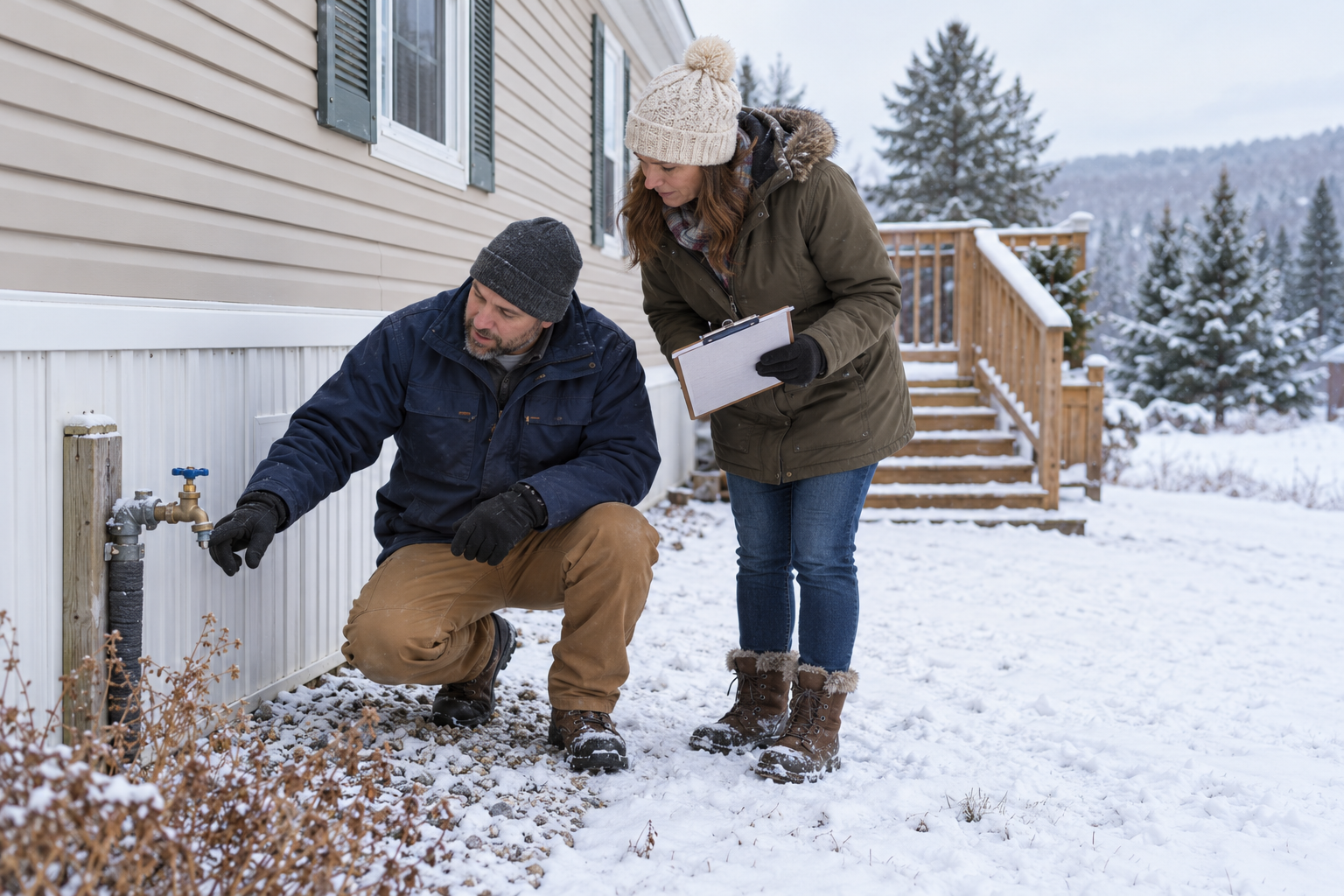
Ask for an inspection of pipe routing, belly material, insulation, skirting, exterior hose connections, water-heater connections, site plumbing, crawl access, and signs of previous freezing. Note which lines froze, the weather, occupancy, power status, and whether a thaw caused a leak. A frozen pipe may split in a concealed location and reveal itself only after water is restored.
DOE’s manufactured-home job aids support specialized inspection and weatherization work, including the belly and related insulation. They are installer guidance, not a universal prescription. Climate, home design, manufacturer instructions, utility routing, and local requirements determine the appropriate scope.
Compare prevention strategies
The project may combine belly or insulation repair, air-sealing, skirting or enclosure work, pipe relocation or insulation, controlled heat, monitoring, and seasonal shutdown. A vacant home may need a professionally designed drain-down or other winterization plan. An occupied home may need a different approach that preserves water service and safe access.
Heat cable or heat tape is not a generic fix. Product listing, installation method, electrical protection, surface compatibility, temperature limits, and thermostat or control requirements must be verified for the exact product and pipe. Do not wrap a cable, bury it under insulation, or connect it to an improvised circuit based on a general online instruction.
Price prevention and recovery separately
Request separate lines for inspection, belly access, insulation or barrier repair, skirting, pipe insulation, approved heating equipment, electrical work, plumbing repair, leak detection, drying, disposal, and restoration. Ask what happens if frozen plumbing has split, insulation is wet, wiring is damaged, or the source of cold air is outside the original scope.
Keep U.S. and Canadian prices separate. There is no universal safe heat-tape, skirting, or winterization package for every home, climate, or jurisdiction. The best comparison is a documented prevention scope against the likely cost and disruption of a freeze-related plumbing and underbelly repair.
Compare prevention with recovery
For a U.S. planning example, a seasonal prevention scope might include $500 for inspection, $1,200 for insulation or belly correction, $700 for approved freeze protection, and $600 for shut-down or restart service: $3,000. A separate Canadian model might use CAD 650 + CAD 1,600 + CAD 900 + CAD 800 = CAD 3,950. These are illustrative assumptions, not a universal winterization package. A freeze-related leak, sewage event, or inaccessible underfloor space can cost more than the prevention work.
Ask which pipes and cavities are covered, what the product instructions require, who verifies operation, and what happens after a power failure. Price plumbing recovery and water damage separately from prevention; they are different decisions with different safety limits.
Use qualified help for difficult conditions
Electrical heating products, fuel systems, plumbing, confined underfloor access, and water-damaged insulation can create serious hazards. Use qualified professionals for the design and installation, and confirm seasonal-home requirements with the manufacturer and local authority. If a pipe has frozen, shut off water when safe and arrange a professional assessment before assuming no concealed damage occurred.
Match the plan to occupancy and exposure
A home occupied through winter needs a different strategy from one left vacant for months. Record the coldest exposure the home is expected to face, whether power and heat remain on, which pipes are outside conditioned space, how the belly and enclosure are assembled, and whether the property can be checked during a storm. Ask the manufacturer or qualified professional how the home’s design manages pipes. A vacant-home shutdown may require draining parts of the system and protecting traps or appliances; an occupied home may need continuous service and monitoring.
For a seasonal property, decide who will visit, what happens after a power outage, where a leak would be noticed, how water can be isolated, and what backup arrangement is permitted. A remote alarm or thermostat may help an owner notice a problem but does not replace insulation, water shutoff, or a safe plan for loss of power. Include communication, access, and emergency response in the budget when the home is far away.
If a pipe has frozen or burst, treat it as a repair and water-damage event before planning prevention. A professional should find the leak, assess hidden damage, and restore the belly or insulation only after drying. Keep recovery cost separate from preventive improvements so the owner can understand whether the same vulnerability remains.
Compare prevention options on their requirements
Options can include repairing a damaged belly, restoring insulation, reducing air leaks, improving an enclosure, protecting or rerouting exposed pipe, a listed heat cable installed as directed, controlled space heat, monitoring, or seasonal drain-down. These are not interchangeable products. The right combination depends on pipe location, home design, temperature, occupancy, electrical service, manufacturer instructions, and local rules.
Before approving heat cable, ask the contractor to identify the product listing, compatible pipe surface, length, thermostat or controller, circuit and protection, installation method, and relationship to insulation. Ask whether the work will be inspected and how operation is verified. Never assume the cable can be buried under insulation, crossed, cut, or attached to every pipe. Have a qualified professional resolve those questions from the exact product instructions.
Compare prevention with a repair event
A small accessible prevention job may restore insulation or seal an opening. A broader project could involve belly access, pipe relocation, electrical work, enclosure changes, water monitoring, or seasonal service. Recovery from a freeze can add leak detection, pipe repair or repipe, drying, underbelly and floor restoration, and water-damage cleanup. These are cost scopes, not universal price ranges; get bids for the actual home and climate.
Use the article’s existing planning model as a structure, then ask local professionals to separate inspection, insulation, pipe work, approved heating equipment, electrical, seasonal service, testing, and restoration. If the quote is a packaged price, ask what is included and which risk remains. Include the cost of periodic visits or monitoring in an unoccupied-home plan rather than comparing only installation prices.
Create a written winter checklist
Record shutoff locations, equipment instructions, service contacts, thermostat or monitoring settings, and the steps the household or caretaker is authorized to take. Identify actions that must be left to a plumber, electrician, or HVAC technician. Keep photographs of vulnerable pipe routes and the underfloor repair. Confirm that a local person can access the site and that the owner knows what to do if monitoring fails.
After a cold event, check the home for leaks and note any temperature or outage issue. If the line froze, revise the plan based on the exact location and conditions. A winterization invoice does not guarantee that every concealed pipe will stay above freezing. The owner should understand both the equipment limits and the backup plan.
Avoid false confidence from enclosure alone
Skirting, belly insulation, and heating products affect different parts of the underfloor environment. A new enclosure may reduce wind exposure but can also change moisture and access conditions; its effect should be evaluated for the specific design. Do not seal vents or openings based on a generic recommendation. Check the home instructions and local requirements, then coordinate any enclosure work with moisture, plumbing, and electrical professionals.
Include the cost of a failed prevention plan
Ask the professional what the proposed system cannot protect against, including a prolonged outage, unusually cold conditions, vacant-home monitoring failure, or a concealed leak. Decide who can respond and how quickly water can be shut off. Insurance coverage for freeze damage depends on policy terms and owner actions; check the current policy directly and do not assume a heat cable or alarm changes coverage.
Keep the product instructions, installation date, test result, circuit information, and seasonal service record. Before each winter, have the responsible professional inspect any system that requires testing. The ongoing service and response plan are part of the cost of using the home through freezing weather.
Coordinate the house and site plumbing
Pipes under the home and lines between the home and source may freeze for different reasons. Ask the plumber to identify the boundary between interior distribution and buried service, then have the right contractor address each section. A home can have a protected belly and still lose water because the service line is shallow or exposed; conversely, site work may not protect pipes inside the enclosure.
Include shutoffs and drain points on the site plan and mark which valves a caretaker may operate. Verify that a seasonal drain-down does not leave water in appliances or traps. Follow the manufacturer and professional procedure for the actual system rather than a generic winterization checklist.
Review the plan after occupancy changes
A home that changes from year-round occupancy to seasonal vacancy needs a new winter plan. Reassess heat, water shutoff, monitoring, site access, and who can respond before the owner leaves. Do not assume that a prior winterization remains suitable after a remodel, pipe reroute, or enclosure change.