
Drip irrigation is a low-pressure, low-flow method that delivers water near plant root zones. Its installed cost depends less on lawn area than on the number of planted zones, plant density, tubing or emitter layout, filtration, pressure regulation, and how much of an existing system can be reused.
New system or retrofit?
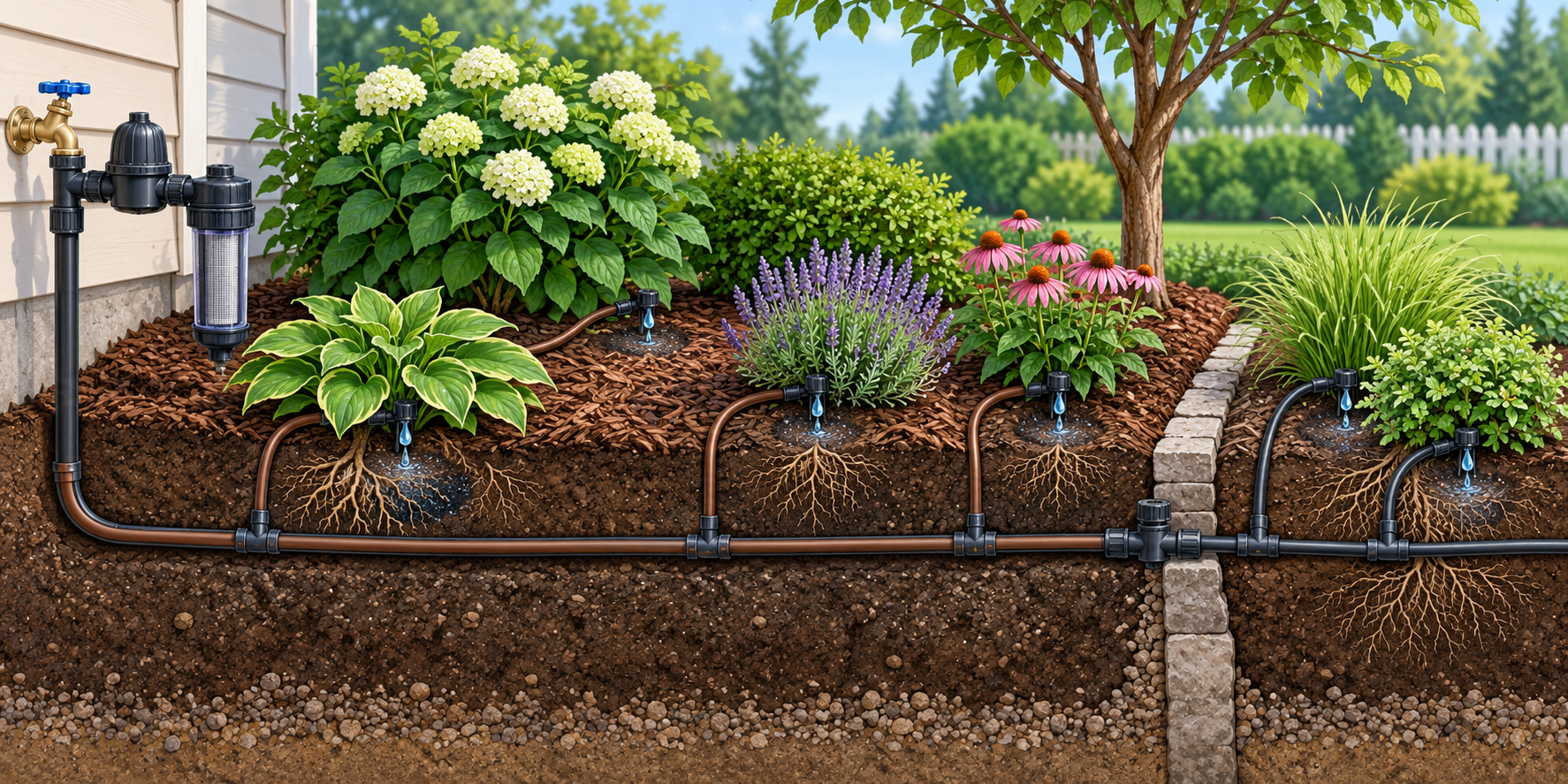
A new drip installation may include a dedicated valve, filter, pressure regulator, distribution tubing, emitters or inline dripline, flush provisions, controller programming, and support for the plant layout. A retrofit may reuse the controller and valve box, but the installer still needs to confirm that the existing zone can supply the new configuration and that old spray equipment is removed or isolated appropriately.
Ask for the proposal to identify reused parts. “Drip conversion” can mean replacing heads and adding short runs, or it can mean redesigning a whole zone with new pressure and filtration components. Those are different budgets.
What changes the quote
- Planting pattern: Closely planted beds, isolated shrubs, trees, containers, and irregular borders require different tubing lengths and emitter layouts.
- Zone and elevation needs: Slopes and separate watering needs can require additional zones or controls.
- Filtration and pressure regulation: Microirrigation components can need protection from debris and controlled pressure. The exact configuration is system-specific; a generic shopping list is not a design.
- Existing infrastructure: Valve condition, wiring, controller compatibility, buried lines, and access determine whether this is a retrofit or a partial replacement.
- Surface and restoration work: Removing spray heads, crossing paths, working through established beds, and repairing disturbed planting areas add labor.
EPA describes microirrigation as a root-zone delivery approach and reports 20% to 50% less water than conventional sprinklers in its stated context. That is not a promise for a particular property. Savings depend on the previous schedule, leaks, weather, plant demand, soil, controller, and maintenance.
Maintenance and controls
Filters, flush points, emitters, tubing, and connections need inspection. Clogging, damage from gardening or animals, and plant growth can change coverage. A weather-based or soil-moisture-based WaterSense-labeled controller may help schedule watering, but it cannot correct a leaking line, poor zone separation, or an unsuitable hydraulic design.
The quote should state who will set schedules, verify coverage, inspect for leaks, and return for adjustments. If a rebate is part of the payback calculation, verify the current utility program, eligible equipment, application deadline, and whether professional installation is required.
A realistic comparison
The evidence does not establish a comparable current U.S. and Canadian installed-price range. Keep each market in its own currency and compare like with like: new installation, retrofit labor, filtration and regulation, controller work, restoration, startup, and warranty. Ask the installer to price a base retrofit and any full-zone redesign separately so the apparent savings from reuse can be tested.
A bounded quote example
For a retrofit serving six planted beds, ask for one price to reuse the valve and controller and another to add a dedicated zone with filtration, pressure regulation, tubing, startup, and bed restoration. The comparison is meaningful only when both quotes state emitter layout, access, reused components, and follow-up adjustments; it does not require an unsupported per-square-foot average.