
A professionally installed in-ground sprinkler system is priced as a small water-delivery network, not simply by lawn area. The same-size yard can need different pipe runs, zones, pressure controls, trenching, restoration, and permits. A useful budget starts with a defined design and an itemized quote.
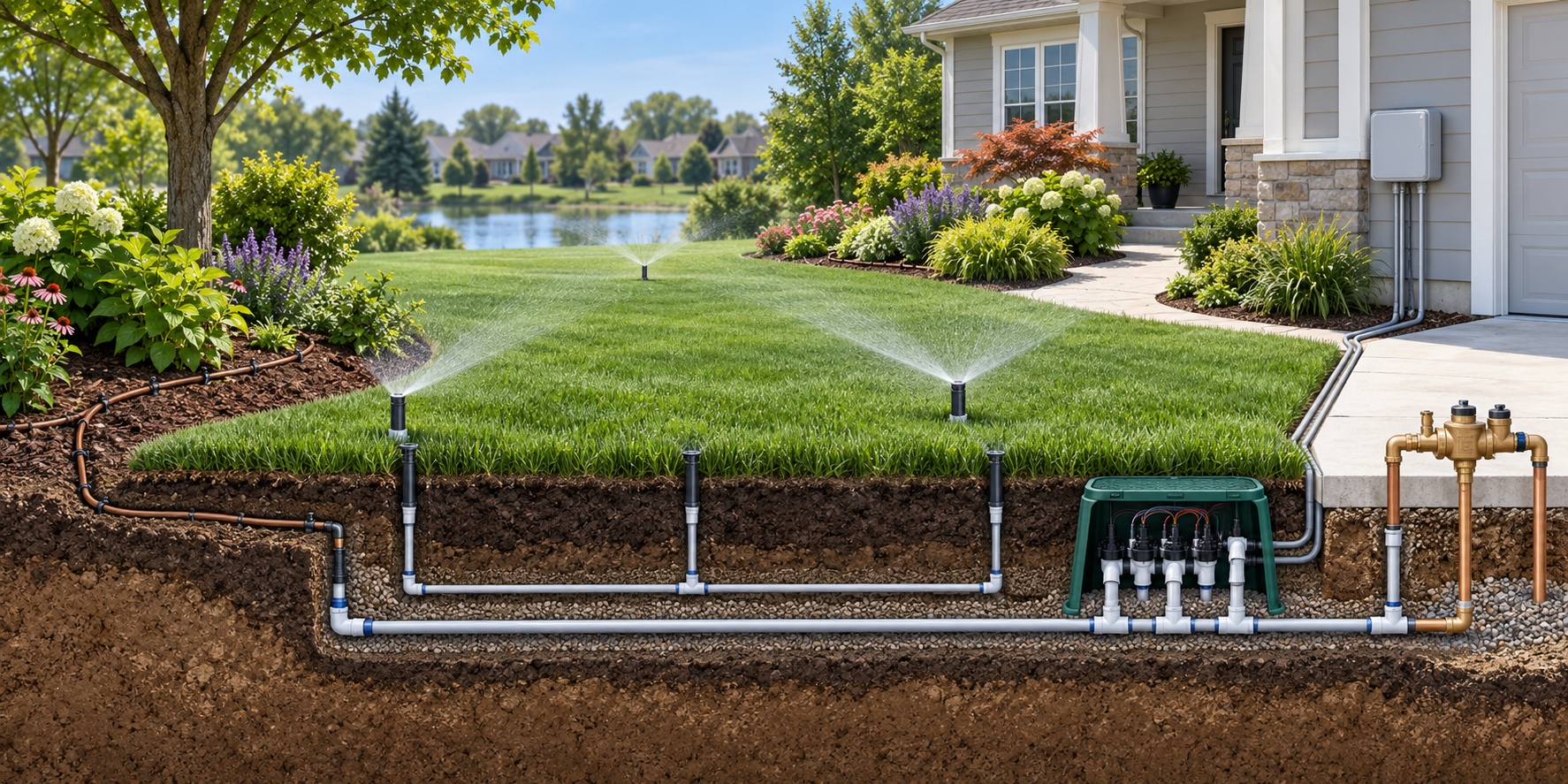
What an installation may include
Ask whether the proposal includes the water-supply connection, backflow-related work, controller, valves, lateral and mainline piping, spray or rotor heads, sleeves under hardscape, trenching, wiring, programming, testing, and cleanup. Lawn or bed restoration after trenching may be a separate allowance. A quote that lists only heads and zones is not a complete scope.
EPA WaterSense describes qualified irrigation professionals as people who can design, install, maintain, repair, and audit systems. That supports using a professional who can explain zone-specific needs and check for leaks and overspray; it does not establish one license or credential requirement for every jurisdiction.
The main cost drivers
- Irrigated area and planting layout: Lawn, trees, shrubs, and beds may need different application patterns and schedules.
- Zone count and water supply: Available flow and pressure can determine how many zones and valves are needed. A larger area is not the only reason a system grows more complex.
- Site access: Rock, slopes, mature roots, narrow side yards, existing hardscape, and limited equipment access increase labor and restoration.
- Controls and efficiency features: A standard timer, weather-based controller, soil-moisture control, rain shutoff, or mixed spray-and-drip design has a different equipment and programming scope.
- Local requirements: Backflow protection, utility locating, permits, inspections, watering rules, and water-efficiency programs vary by authority.
New installation versus retrofit
A new system may require more trenching and restoration but gives the installer freedom to design zones around the landscape. A retrofit may reuse valves, wiring, sleeves, or a controller, but unknown buried conditions and incompatible components can erase that advantage. Have the quote identify reused components and the testing performed on them.
Drip or microirrigation can be appropriate for planted beds and root-zone delivery, while spray or rotor coverage may remain more practical for functional turf. EPA reports lower-water use for microirrigation in its source context, but the result depends on design, maintenance, plant needs, and operation. Do not treat a technology label as a guaranteed saving.
Compare quotes by scope
Request the following in writing:
- a simple zone map and list of areas served;
- design assumptions for pressure, flow, and plant types;
- equipment brands or performance specifications where material;
- trenching, sleeves, hardscape crossings, and surface restoration;
- controller, sensors, backflow work, permits, and inspection responsibilities;
- commissioning, programming, warranty, and first-season adjustments;
- exclusions for grading, drainage, landscaping, utility conflicts, and concealed conditions.
U.S. and Canadian market guides should be read in their own currencies and scope definitions. The active evidence does not establish a comparable North American installed-price range, so local quotes with matching inclusions are more useful than a converted average. Budget annual water, inspection, repair, and seasonal-service costs alongside installation.
A bounded quote example
For a five-zone installation serving lawn and planted beds, compare a quote that separately prices the water connection, controller, valves, piping, trenching, sleeves, testing, and surface restoration. A second quote that reuses an existing controller should show the tested zones and any excluded repairs. This makes the two proposals comparable without pretending that yard area alone establishes a market price.