
A smart controller can improve scheduling, but it cannot repair a leaking line, fix poor hydraulic design, or make an unsuitable zone work. The upgrade budget should therefore include compatibility checks, installation, programming, sensors where used, and any system repairs found during commissioning.
What “smart” can mean
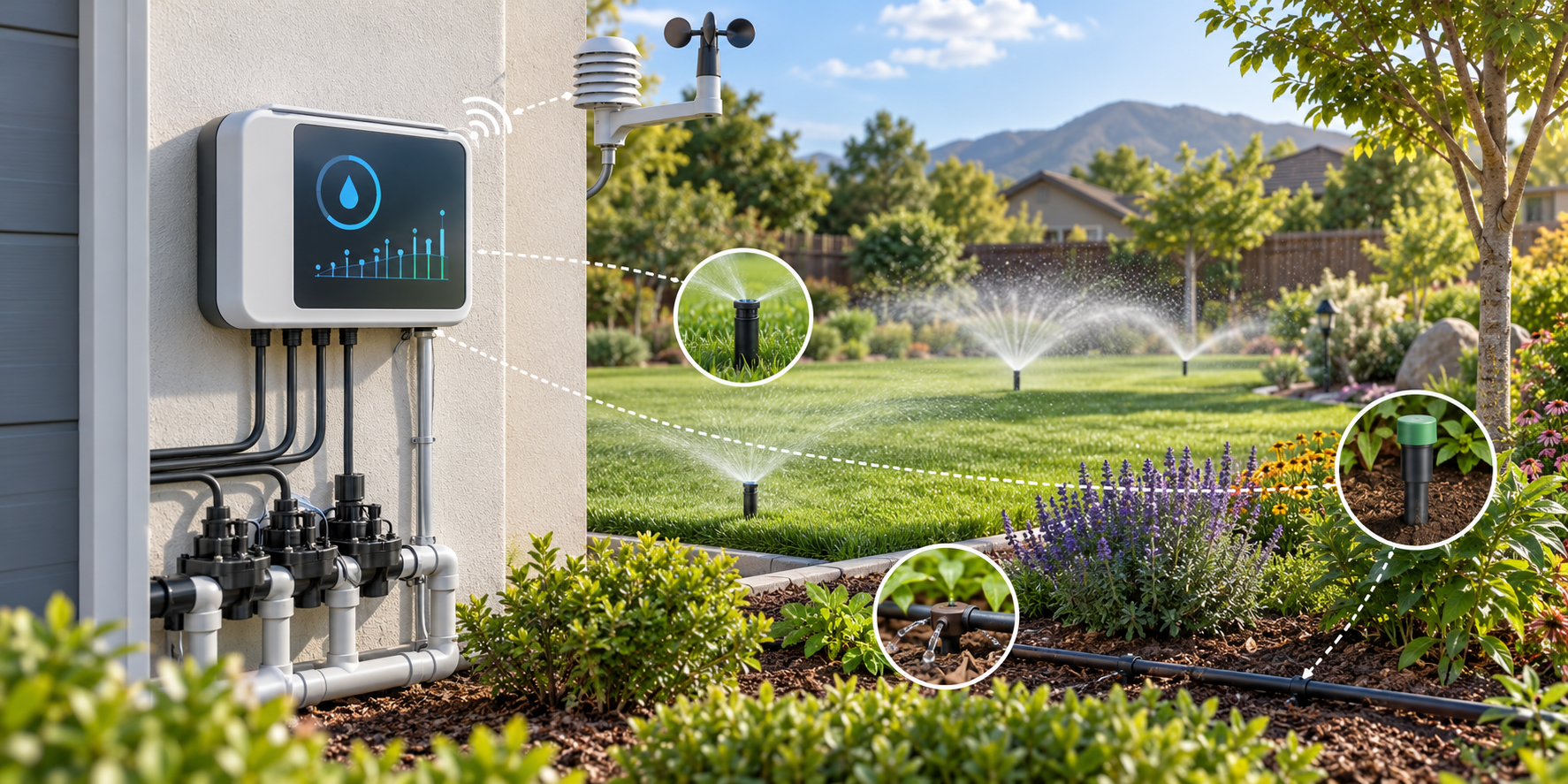
EPA WaterSense recognizes weather-based and soil-moisture-based controller types. A weather-based controller adjusts schedules from weather or evapotranspiration information; a soil-moisture-based controller responds to measured soil conditions. Product features and required sensors vary, so the quote should identify what is actually being installed.
Controller-only replacement may be appropriate when the existing valves, wiring, enclosure, transformer, and zone layout are known to work. Additional labor may be needed for damaged wiring, incompatible voltage or terminals, enclosure changes, sensors, Wi-Fi setup, or programming. Ask whether the contractor will test every zone rather than assume the old system is sound.
Cost and payback drivers
- number of zones and condition of the existing controller wiring;
- sensor type, number, placement, communications, and enclosure requirements;
- programming for different plant groups, slopes, soil, and seasonal conditions;
- site access and whether a repair or audit is bundled;
- local water rates, seasonal pricing, baseline overwatering, and the length of the watering season;
- rebates, which are controlled by individual utilities and can change.
Local rebate examples
Some programs offset only part of an eligible controller purchase, and their service areas and application rules are narrow. For example, the City of Little Canada, Minnesota lists up to $200 or 75% of eligible project cost, whichever is less, for an existing controller replacement, subject to approval and available funds. Stillwater, Minnesota lists the lesser of $150 or 80% of an approved controller’s cost, excluding tax and installation, for existing water customers. In British Columbia, the Regional District of Nanaimo lists a maximum $100 smart-controller rebate for qualifying properties; Okotoks lists 50% up to $300 for an eligible WaterSense controller installed by a professional. These are separate local programs, not typical equipment prices or guaranteed awards. Check current eligibility, funding, pre-approval, and installation requirements with the program before including a rebate in a project budget.
EPA reports up to 15,000 gallons of annual savings for an average home replacing a standard clock controller, contingent on proper installation, programming, and maintenance. Treat that as source-context information, not a guaranteed bill reduction. Build a local scenario using baseline consumption, local rates, expected operating months, and a conservative range of reduction rather than promising a payback period.
When the upgrade is not the first fix
An inspection should come first when zones have poor coverage, pressure problems, leaks, broken heads, or plants with sharply different water needs. A smart schedule cannot compensate for water being delivered to the wrong place. If the landscape is changing, compare controller work with a zone redesign, drip retrofit, or water-wise conversion.
The active evidence does not establish a comparable current U.S. and Canadian installed-price range. Keep hardware, installation, sensors, repairs, programming, rebate assumptions, and ongoing service separate. Ask for the model, supported zone count, warranty, data or subscription requirements, training, and a return visit for schedule adjustment.
A bounded payback example
For an eight-zone system, calculate the upgrade from the controller, installation, programming, sensor or connectivity costs, and any repairs. Then compare that total with the property’s metered seasonal use at its own rate under a conservative savings assumption. Do not use the EPA source-context savings figure as a guaranteed bill reduction or a universal payback period.