
Running, leaking, rocking, or poorly flushing toilets can lead to very different bills. A flapper, fill valve, seal, or adjustment may be a focused repair. A cracked bowl, damaged flange, soft floor, failed supply connection, or repeated performance problem can turn the visit into removal, installation, and surrounding repair.
Screen for a silent leak
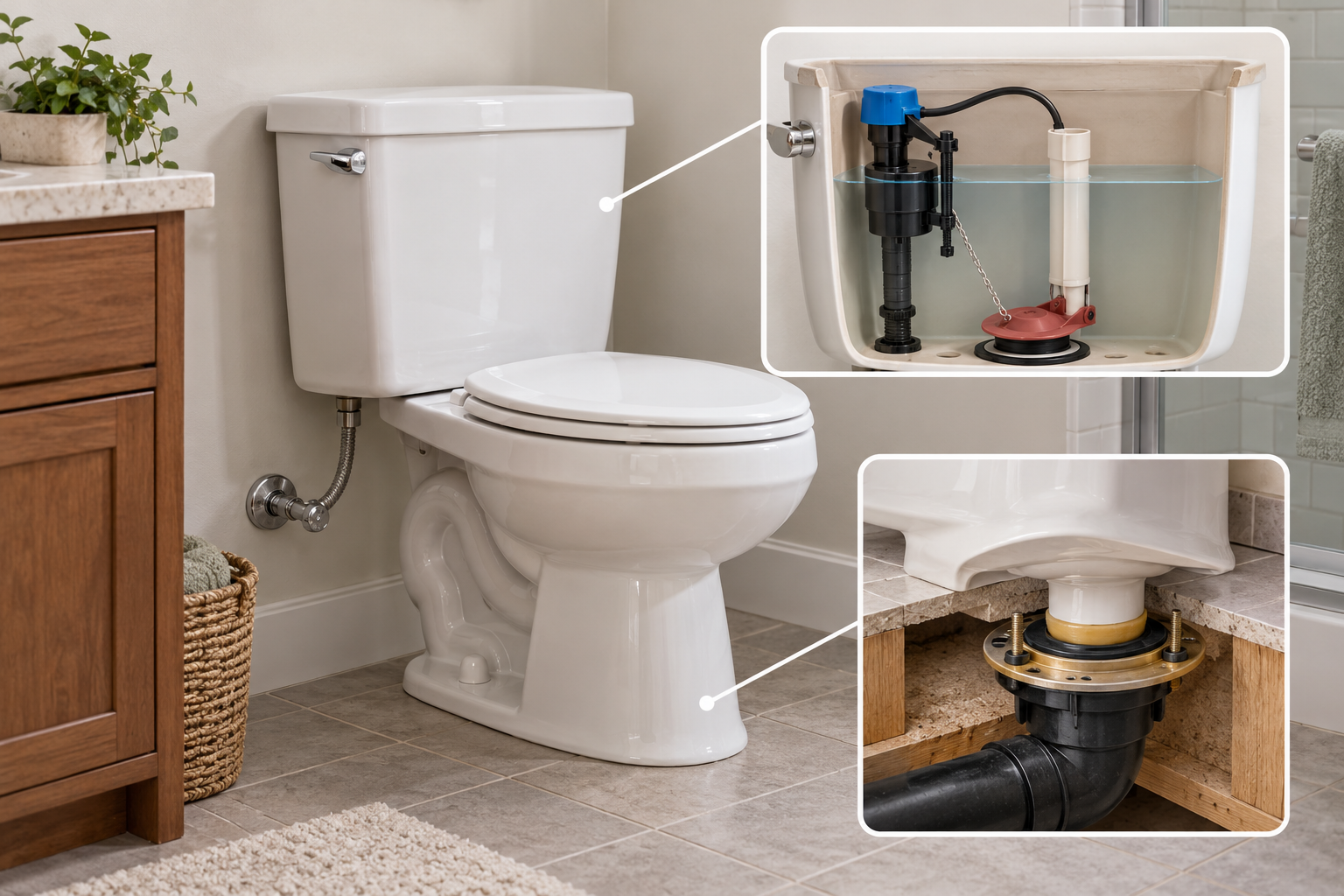
EPA WaterSense’s new-home verification sheet describes a toilet leak screen: add dye to the tank, wait 5–10 minutes, then check whether color appears in the bowl. It says to flush within 5–10 minutes to avoid staining. In an occupied home, this is only a screen for a leak past the flapper or flush-valve seal; it does not diagnose every toilet leak or replace an inspection of the fill valve, bowl, supply, seal, flange, or floor.
Common repair scopes
Repair may involve a worn flapper, fill valve, flush mechanism, handle, tank seal, supply line, or adjustment. The part itself may be inexpensive while the service minimum, shutoff, access, cleanup, and testing determine the bill. If the toilet is difficult to access or the shutoff cannot close, the quote should say so.
EPA identifies worn flappers and running toilets as common leaks and provides WaterSense-labeled replacement context. A replacement fixture can improve water efficiency or performance, but a label is not a guarantee that every bathroom or drain configuration will work without further review.
What replacement adds
Full replacement can include selecting the bowl and tank, removing and disposing of the old fixture, installing a new seal and supply connection, leveling and securing, reconnecting, testing, and cleanup. HomeStars reports an illustrative Canadian toilet-installation range of about $260–$683. Angi’s 2026 U.S.-oriented estimates place toilet repair at $150–$391 (reported average $271) and installation at $224–$533 (reported average $374). These are separate estimates rather than matched repair-and-replacement bids; Angi also lists existing-toilet removal separately at $50–$200, so confirm whether removal is included. None is a universal price or a diagnosis for a fixture in a particular home.
Price separately for a damaged flange, subfloor, finished floor, wall, supply valve, or independent drain blockage. The toilet itself may be functional while the support or waste connection is not.
Cost drivers
- part repair versus complete fixture replacement;
- fixture quality, dimensions, rough-in, and efficiency choice;
- a working or seized shutoff;
- removal, disposal, and access;
- flange, floor, or subfloor condition;
- supply connection and leak testing; and
- whether the apparent problem is downstream drainage rather than the toilet.
Repair, replace, or route elsewhere
Repair: Choose a focused repair when the bowl and tank are sound, the fault is identified, and parts are available. This is often the least disruptive path.
Replace: Replacement becomes more compelling when the fixture is cracked, unstable, repeatedly failing, difficult to source parts for, or no longer meets the homeowner’s performance or water-use needs. Include the support and connection condition in the decision.
Investigate the drain: A slow or backed-up toilet may involve a branch drain or sewer rather than the fixture. Do not pay for a new toilet to solve a blockage that remains downstream.
Scenario comparison
An accessible toilet with a failed flapper is a parts-and-labor repair. A replacement in a sound bathroom is a fixture and installation job. A rocking toilet with a damaged flange and wet floor is a plumbing-plus-finish problem. A recurring backup is a drain diagnosis. Those cases should not share one “toilet cost” number.
Quote questions
- What failed: internal component, seal, supply, support, or drain?
- Is the price a repair or a full removal and installation?
- Which fixture, rough-in, supply, shutoff, seal, and disposal costs are included?
- Has the flange and floor been inspected, and what is excluded if damage is found?
- Is water-efficiency labeling relevant to the selected model and use?
- Is a drain or sewer specialist needed instead?
Choose the smallest scope that reliably resolves the actual problem, but do not confuse a low parts price with a low finished-project cost.
Read the symptom before buying a fixture
A running toilet can be a flapper or fill-valve problem, but repeated movement, a wet floor, staining below, or a failed flush may point to a seal, flange, floor, supply, or drain issue. A toilet that clogs repeatedly may be the wrong fixture for the use, but it may also be connected to a downstream blockage. Ask what the proposed repair is expected to solve and what evidence supports that conclusion.
Include removal and support work
Toilet replacement can expose a corroded flange, uneven floor, damaged subfloor, or inaccessible shutoff. Ask whether the price includes a standard seal and supply connection and what happens when the support surface is not sound. If a floor must be opened, price plumbing, subfloor, flooring, and finish work separately. A new bowl does not restore a damaged floor or clear a branch drain.
Decision by ownership horizon
For a sound fixture with one worn internal part, repair generally avoids a new fixture and additional removal work. Replacement makes more sense when the bowl is cracked, performance is poor, parts are unavailable, or the homeowner is already paying for access. A WaterSense-labeled option may be relevant for a replacement, but compare the actual performance and fit rather than assuming the label alone makes the purchase economical.
For a purchase inspection or sale, request a documented diagnosis and leak test. For a long-term owner, include future service availability and the cost of repeated minimum charges. The best quote resolves the fixture problem without hiding a drain or floor problem underneath it.
Compare the complete fixture scope
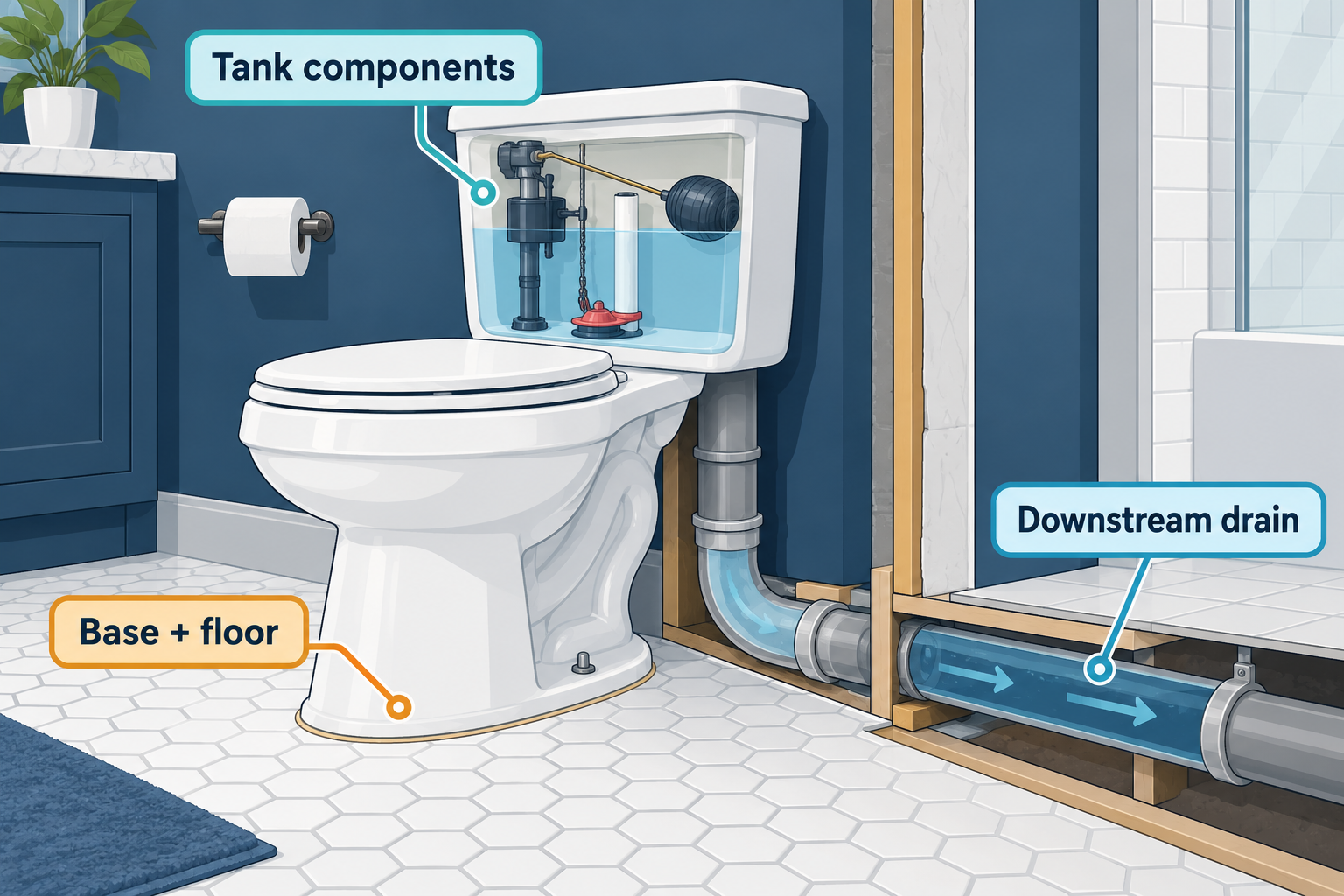
Choose the replacement model before the final bid when possible. Dimensions, rough-in, bowl height, flush performance, supply location, and floor condition affect fit and labor. Ask for removal, disposal, seal, supply connection, leveling, testing, and cleanup as included lines. If you supply the fixture, clarify warranty and fit responsibility.
For a long-term owner, a documented repair can be a better value than replacing a sound bowl. For a sale, a leak test and clear explanation of any remaining floor or drain issue support an honest decision. A new toilet is not a substitute for fixing a damaged flange, wet floor, or downstream blockage.
Diagnose the toilet and the room separately
Running, rocking, leaking, weak flushing, and repeated clogging can have different causes. The fill valve, flapper, flush valve, supply stop, bowl, wax or gasket connection, flange, floor, vent, or downstream drain may be involved. Ask the contractor to identify the observed failure and the tests performed before treating replacement as the answer. A new bowl cannot correct a damaged flange or a restricted building drain.
If the floor is soft or stained, include moisture assessment and finish repair separately from the toilet scope. If the toilet rocks, ask whether the cause is leveling, the flange, the floor, or the bowl. If flushing is poor, identify whether the symptom occurs on one fixture or across the drainage system. These distinctions prevent a fixture replacement from hiding a building condition.
Compare fit and use, not only style
Confirm rough-in, bowl projection, seat height, clearances, supply location, flush behavior, water connection, and access to the shutoff. A different model may be better for accessibility or cleaning but can conflict with a door, vanity, baseboard, or existing flange. If a bid includes a homeowner-supplied fixture, state who owns fit, defects, missing parts, and warranty claims.
For a rental or sale, a like-for-like replacement with a clear leak and flush test may be the most defensible scope. For a long-term owner, a better-fit model may justify added cost if the benefit is explicit. Keep a bathroom remodel, flooring replacement, or drain correction outside the fixture total unless the quote intentionally includes it.
Complete the handoff
Run the toilet through several flushes, inspect the base and supply connection, confirm the shutoff operates, and check the adjacent floor after use. Record the model, seal or connection used, any flange condition left in place, and the finish work performed. Dispose of the old fixture and remove debris if included.
The final record should say whether the project repaired the existing fixture, replaced it, corrected the connection, or referred a drain or floor issue. This makes a future leak or clog easier to diagnose and keeps a new toilet from being mistaken for a whole-room plumbing guarantee.
Compare water use with the actual complaint
If the goal is fewer clogs, better flushing, accessibility, cleaning, or reduced leakage, state that goal and test the related condition. A different bowl or flush design may change fit and performance, but it does not correct a blocked branch, poor venting, inadequate supply, or a damaged flange. Ask what observation would show that the fixture is the right scope.
For a repair, identify the part and the expected restoration. For replacement, include the seal, supply connection, shutoff condition, leveling, testing, disposal, floor protection, and finish boundary. If the old toilet is removed during a remodel, photograph the flange and floor before closure. A short record can prevent a later contractor from assuming that an unseen connection was new.
Keep the drainage boundary visible
If a toilet backs up, gurgles, or flushes poorly, observe whether another fixture shows the same symptom. A shared branch, vent, or building drain may need a different diagnosis from the toilet itself. Ask the contractor to state what was tested and whether the downstream system was included. This prevents a fixture replacement from being treated as proof that the drainage system is clear.
At handoff, retain the model, rough-in, seal, flange observation, flush test, and any floor or drain limitation. A future repair then starts with the actual installed condition instead of assuming that the new fixture corrected every nearby plumbing problem.