
Replacing a sink can be a plumbing-only job or a multi-trade project involving a faucet, countertop, cabinet, drain connection, wall finish, and disposal. A like-for-like replacement is usually easier to price than a change in size, mounting style, or location. The quote should make that distinction explicit.
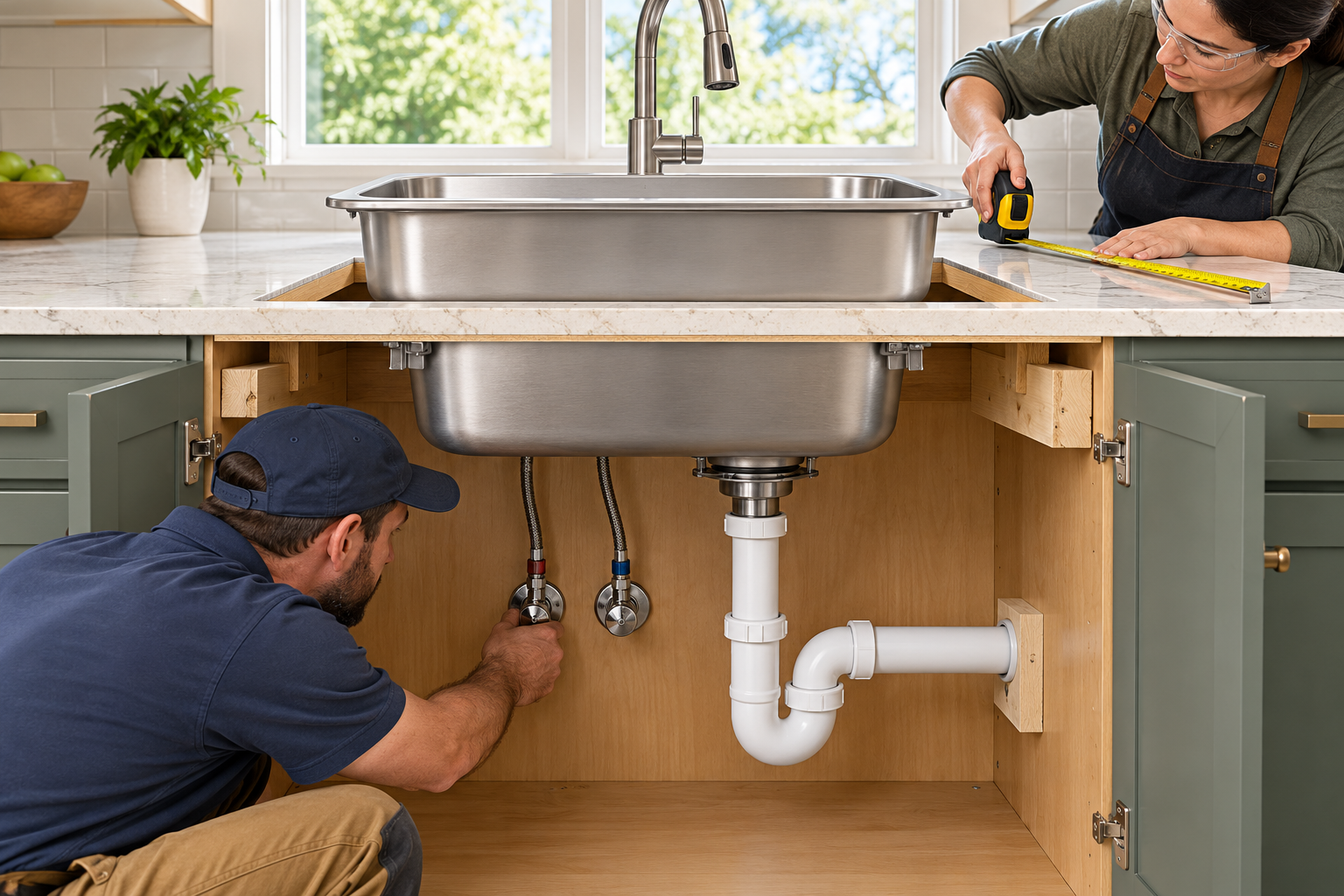
Like-for-like versus changed configuration
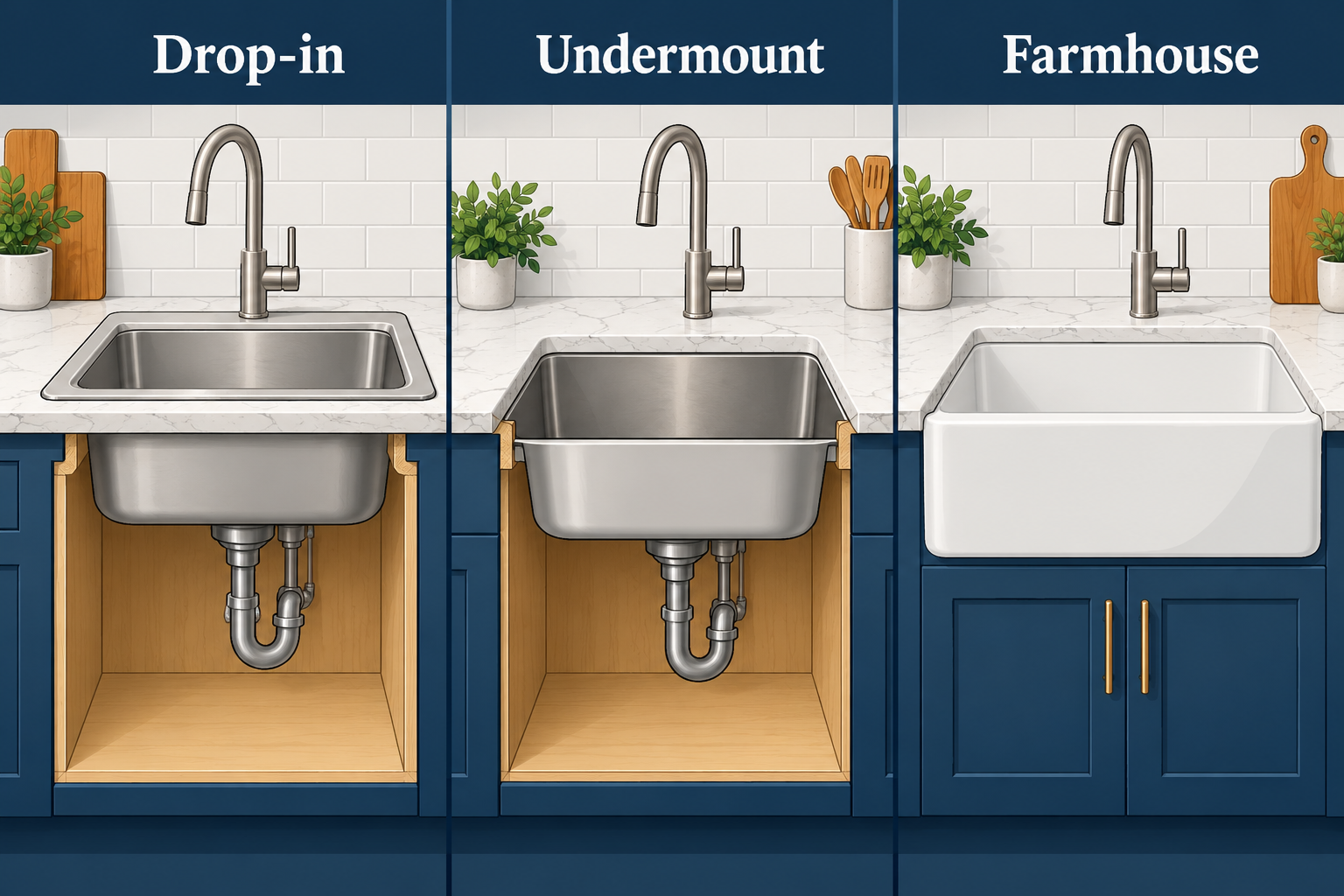
A like-for-like sink may reuse the opening, supply locations, faucet arrangement, and drain alignment. A new undermount, farmhouse, vessel, pedestal, utility, or differently sized sink can require countertop cutting, cabinet alteration, supports, new faucet drilling, supply changes, or wall/floor access. Those are not interchangeable installation scopes.
The plumber owns the water-side connections and incidental reconnection work. Cabinet, countertop, stone fabrication, painting, and room-level renovation may require other trades. A sink quote should say whether those trades are included, coordinated, or excluded.
Broad market context
HomeStars reports an illustrative Canadian sink-installation range of about $260–$683. Its guide does not establish whether the range includes the sink, faucet, cabinet, countertop, demolition, drain work, or finish restoration. Treat it as market orientation, not a complete installed estimate. Available market research does not establish a comparable national US range.
Cost drivers
- sink material, mounting method, size, and fixture price;
- removal and disposal of the existing sink;
- faucet holes and faucet or dispenser installation;
- shutoff, supply, and drain reconnection;
- cabinet, countertop, backsplash, and support compatibility;
- access and protection; and
- whether independent drain repair or a kitchen/bathroom renovation is involved.
Scenarios
Straight replacement: The new sink fits the existing opening, faucet, cabinet, and supply/drain layout. Price sink, removal, plumbing reconnection, testing, and cleanup.
Configuration change: The sink or faucet locations change. Add fabrication, cabinet or support work, new water-side routing, and a clear allowance for drain coordination.
Condition discovery: Corroded shutoffs, damaged cabinet, leaking drain connection, wet subfloor, or a cracked countertop changes the scope. Separate confirmed repairs from contingencies and route independent drain work to the appropriate category.
Fixture selection and water use
For covered private bathroom faucets, EPA WaterSense labeling can provide an efficiency and performance reference. It does not establish that every faucet or sink combination fits, nor does it replace product dimensions and installation instructions. Select the fixture before comparing installation prices so the contractor can price the actual connection and mounting conditions.
Quote questions
- Is the quote for plumbing labor, the sink, or a complete installation?
- Does the selected sink fit the existing cutout, cabinet, counter, faucet, and drain?
- Are removal, disposal, supply lines, shutoffs, drain reconnection, testing, and cleanup included?
- Who cuts or supports the countertop and modifies the cabinet?
- What happens if the shutoff, cabinet, counter, or concealed finish is damaged?
- Is this still a fixture replacement or part of a room renovation?
Compare complete scope. A low plumbing price can be accurate and still leave the largest cost—the counter, cabinet, or finish work—with another contractor.
Make the new fixture measurable
Before the plumber quotes, select or at least specify the sink’s dimensions, mounting method, number of faucet holes, drain location, depth, and material. A change in bowl depth can affect the trap and cabinet clearance; a farmhouse or undermount installation can require fabrication and support that are not plumbing tasks. The more exact the fixture, the less the quote depends on an open-ended allowance.
Coordinate the handoffs
Ask who removes the old sink, disconnects the faucet, cuts the counter, modifies the cabinet, installs the sink, reconnects plumbing, tests for leaks, and restores finishes. A plumber may do only the water-side work. If a countertop contractor must work before the plumber can reconnect, include sequencing and temporary protection. Leaking cabinetry or flooring should be assessed as a separate restoration issue.
Choose scope for the ownership horizon
A like-for-like replacement is often the best value when the cabinet and counter are sound. A configuration change may be justified for accessibility, capacity, or a planned remodel, but its additional fabrication and finish costs should be explicit. For a sale, document the final leak test and included repairs; for a long-term owner, include fixture serviceability and the cost of reopening a finished counter or cabinet later.
A simple bid checklist
Give each bidder the same fixture specification and photographs of the existing opening. Ask for a labor-only option if you are supplying the sink, then confirm who carries damage or fit risk. Ask whether the contractor will test both supply and drain connections under normal use and whether cleanup includes removing the old fixture.
If the counter or cabinet is being changed, schedule the trades before the plumbing quote is finalized. A plumber cannot guarantee a connection to a cutout that has not been measured, and a fabricator may need the exact sink before work begins. This coordination is often more valuable than a small difference in hourly rate.
Confirm the handoff condition
Specify whether the final installation includes the sink, faucet, supply connections, drain reconnection, leak testing, disposal, cabinet protection, and cleanup. If the counter or cabinet is unfinished, the plumber may not be able to complete the connection. Agree on sequencing and on who owns damage discovered under the old sink.
For a long-term owner, a like-for-like replacement often avoids fabrication and finish risk. A changed configuration can be worth the premium for accessibility or a planned remodel, but the benefit should be clear. Keep independent drain repair and full kitchen or bathroom renovation outside the fixture plumbing total.
Confirm the sink and counter relationship
Before delivery, verify whether the sink is drop-in, undermount, vessel, farmhouse, or another configuration; the opening and support may belong to a countertop or cabinet trade. Check bowl depth, faucet holes, overflow, drain position, backsplash clearance, and the space needed for the trap and shutoffs. A replacement that fits the cabinet but not the opening is not a plumbing-only problem.
If the counter is stone, solid surface, tile, or a custom material, ask who measures, cuts, supports, removes, and reinstalls it. If the sink is being changed during a remodel, sequence the plumbing rough-in with the counter template and final installation. Keep fabrication, sealant, cabinet modification, and finish repair visible instead of assuming they disappear inside an installation allowance.
Check the drain and cabinet before closing the quote
Water under a sink may come from the faucet, supply, strainer, trap, disposal, dishwasher connection, or cabinet plumbing. Ask the contractor to inspect the existing drain and shutoffs before committing to a like-for-like connection. If the new bowl is deeper or the drain moves, the trap and tailpiece may need a different arrangement. A replacement sink should not conceal an active cabinet leak or an unsupported waste connection.
For accessibility, identify knee clearance, reach, lever location, insulation or protection at exposed piping, and the operating space below the bowl. These details can change the cabinet scope and should be coordinated with the person using the sink. The product choice is part of the plumbing decision only when the surrounding room can support it.
Test and document the installed sink
At completion, run hot and cold water, fill and drain the basin, operate the stopper, check the faucet base and supply connections, and observe the trap and cabinet floor after use. Confirm dishwasher or disposal connections when present. Photograph the shutoffs and drain arrangement before contents return to the cabinet.
The handoff should identify the sink and faucet models, warranty boundaries, finish exclusions, and any old piping left in place. A clean installation quote states whether it includes removal, disposal, cabinet protection, leak testing, and cleanup so the final cost reflects a usable fixture rather than a box set on a counter.
Keep fixture changes separate from drain repairs
If the sink has been slow, backing up, or leaking, ask the contractor to identify whether the cause is the fixture, trap, branch drain, vent, or building drain. A new sink can make a room look finished while leaving a restriction below it. Price drain cleaning, repair, or access as a separate scope unless the project intentionally combines them.
For a kitchen, identify disposal, dishwasher, filtration, instant-hot, and air-gap or drain connections when present. For a bathroom, identify overflow, stopper, cabinet clearance, and the route of the trap. These connections can change when the bowl depth, drain position, or cabinet changes. A complete quote shows which accessories are included and which are homeowner-supplied.
If the sink is part of a larger renovation, agree on the testing point before the counter, cabinet, backsplash, or flooring closes access. Keep a photo record and model information. The finished decision should tell the next service person what was replaced, what was reused, and where the shutoffs and drain connections are located.
Check the completed room, not only the connections
Run hot and cold water, fill and drain each bowl, operate the stopper, inspect supply and waste connections, and look below the cabinet after use. If a disposal, dishwasher, filter, or instant-hot connection is present, test it within its own scope. Confirm that the cabinet contents, access panel, and shutoffs can be used without stressing the new piping.
For a rental or sale, retain the model and test record. For a long-term owner, keep the route photographs and warranty with the room file. If the project left an old drain, valve, or finish condition in place, state that limitation so a future service call starts with an accurate boundary.