
Paint is not automatically cheaper, and wallpaper is not automatically more expensive. The comparison depends on the wall condition, material grade, pattern and detail, labor, removal, repairability, and how often the finish is likely to change.
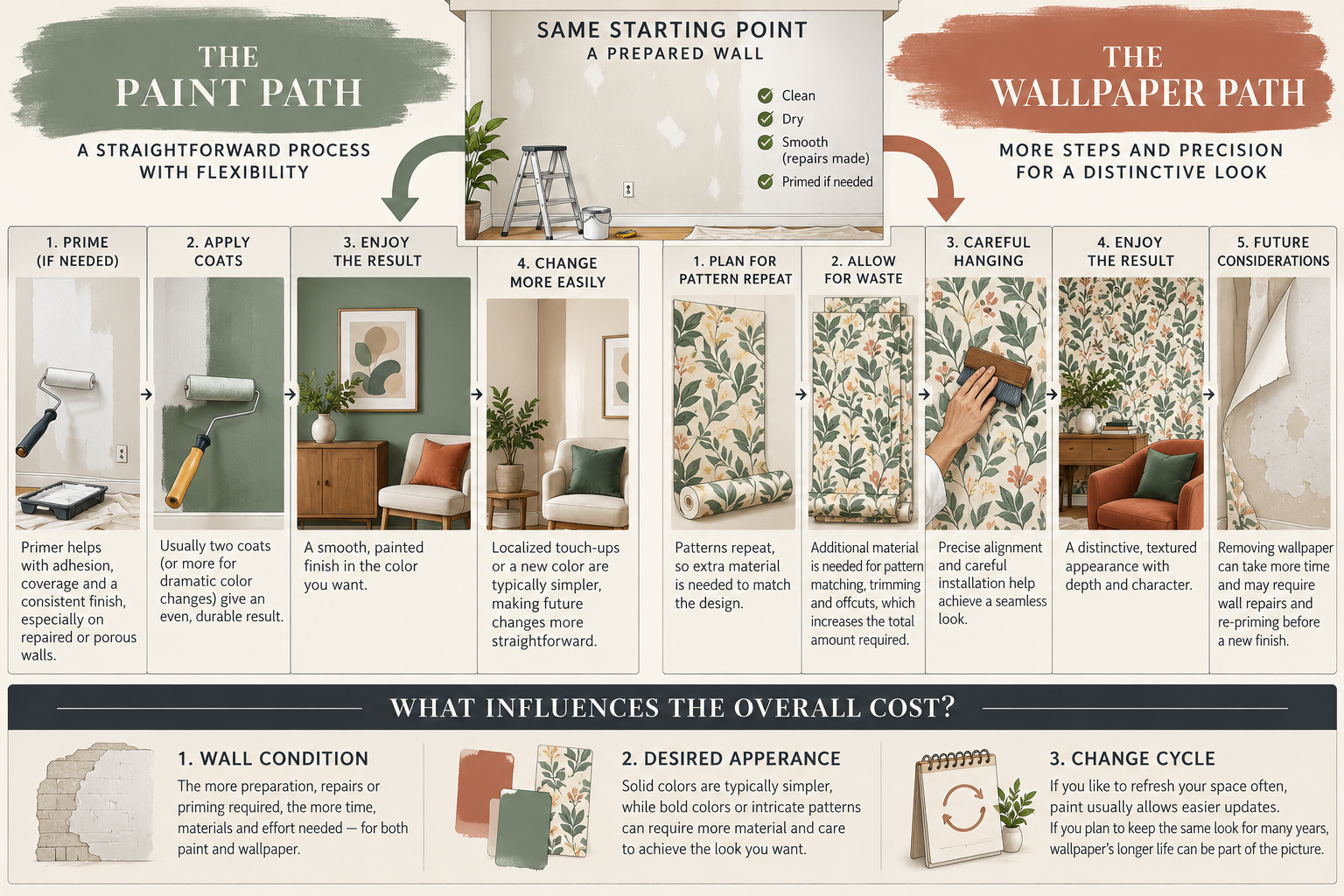
Upfront scope
Paint may include patching, sanding, primer, one or more coats, masking, furniture protection, and trim or ceiling work. Wallpaper may include wall preparation, primer, adhesive, pattern matching, waste, seams, and specialty installation. Removing an existing finish can be a major cost in either direction.
Canadian observations report roughly $2–$4 per square foot for interior walls and $3–$5 when ceilings and trim are included, while a separate Canadian source was consulted for wallpaper planning but did not preserve a complete price table. These sources use different scopes and do not establish a universal winner or a U.S. equivalent.
Long-term decision factors
Paint is usually easier to patch or change, but a high-quality result still depends on preparation and finish level. Wallpaper can make pattern or texture part of the intended design, while future removal may expose wall damage and require additional skim coating or primer. Material quality can reverse a simple price rule.
Make a fair comparison
Ask for paint and wallpaper bids with the same surface repairs, wall protection, furniture responsibility, coverage, and cleanup. Include the expected removal or change cycle if planning over several finish changes. Choose the option that fits the desired appearance and the wall’s condition, not a generic “paint is cheaper” assumption.
Compare the complete first project
Paint usually has a lower material entry point, but the completed cost depends on wall preparation, number of coats, color changes, trim, furniture, and labor. Wallpaper adds covering material, pattern waste, adhesive, layout, seam work, and often a higher preparation standard. A high-quality paint job on a damaged wall can cost more than a basic paper installation on a ready surface.
Start with the same wall condition and finish goal. Ask each contractor to price preparation, protection, installation, cleanup, and the final appearance. If one quote begins after the wall is ready and another includes patching or skim coating, their totals are not comparable.
Preparation and wall condition
Paint can show holes, texture, stains, and uneven repairs. Wallpaper can hide some variation but may telegraph ridges, loose coatings, or poor seams. Both systems need a clean, stable surface. Texture, old paper, moisture, recurring cracks, and peeling paint can add removal, repair, sanding, primer, or skim coating to either path.
Older coatings may raise lead or asbestos questions depending on the material and jurisdiction. Do not disturb a suspected coating on assumption. Correct moisture and assess recurring movement before covering the wall. A new finish should not be used as evidence that the source is gone.
Labor and material differences
Paint labor is driven by masking, cutting edges, patching, sanding, priming, coats, and room logistics. Wallpaper labor is driven by pattern repeat, waste, seams, corners, openings, adhesive, wall height, and the exact covering. Specialty or delicate paper can reverse a simple material-price comparison.
Paint may be easier to touch up or change, but repairs can remain visible when the color or sheen has aged. Wallpaper may provide a distinct visual result but add removal and preparation cost when the homeowner changes the finish later. Consider the likely change cycle rather than only the first installation.
Which option fits which budget situation
Paint is often more flexible when the homeowner expects color changes, needs localized future repairs, or wants to phase work by room. Wallpaper can make sense when the desired pattern or texture is central, the wall is suitable, and the owner expects to keep the covering long enough to offset installation and future removal.
Neither statement is universal. A premium washable paint, extensive wall repair, or difficult trim can make paint labor-intensive. A basic wallpaper product on a highly prepared wall can be a careful installation. Material quality, access, and the condition underneath can reverse the nominal ranking.
Lifecycle questions
Ask how each option will handle dents, stains, seams, repairs, cleaning, and future removal. Keep spare wallpaper and record the paint color, sheen, product, and wall location. If the wall is part of a future remodel or opening change, a lower-disruption finish may have more value than a premium first installation.
Quote checklist
Request matched scopes for surface preparation, primer, material, labor, pattern or coat assumptions, trim, furniture, protection, cleanup, removal, and the expected future change path. Treat “paint is cheaper” as a question to test with complete bids, not a rule.
Compare the same starting wall
Paint and wallpaper should be priced from the same substrate condition. Include removal of old coverings or loose paint, patching, skim coating, sanding, sealing, primer, and protection before comparing the finish material. A ready-to-paint wall can make paint look inexpensive, while a textured or damaged wall can make either option preparation-heavy.
Material and labor are different patterns
Paint usually varies with color, sheen, coats, coverage, cutting, and preparation. Wallpaper varies with roll size, pattern repeat, waste, adhesive, seams, corners, openings, and installation skill. A small room is not automatically cheaper to paper when it has many openings or a difficult pattern, and a large room is not automatically expensive to paint if the surfaces are ready.
Include ceilings, trim, doors, closets, built-ins, furniture, fixtures, access, and cleanup in both options. If one bid omits those interfaces, its lower total does not establish better value.
Consider future changes
Paint is often easier to recolor, but repeated color changes still require preparation and may reveal repairs. Wallpaper can provide a specific pattern or texture, but future removal can damage the substrate and create a second restoration project. Product durability, cleanability, repairability, and the likelihood of changing the room should be part of the decision.
Make the decision explicit
Choose paint when flexible changes, simple localized repair, or a particular sheen is the priority. Choose wallpaper when the pattern or surface effect justifies the material, layout, and future-removal commitment. Those are tendencies, not universal rules. Compare matched complete bids and state what condition would make the recommendation change.