
Wallpaper installation cost combines material, wall preparation, layout, adhesive, seam work, waste, and the time required to protect the room. Patterned or specialty coverings can make a modest wall area a detail-heavy project.
What changes the estimate
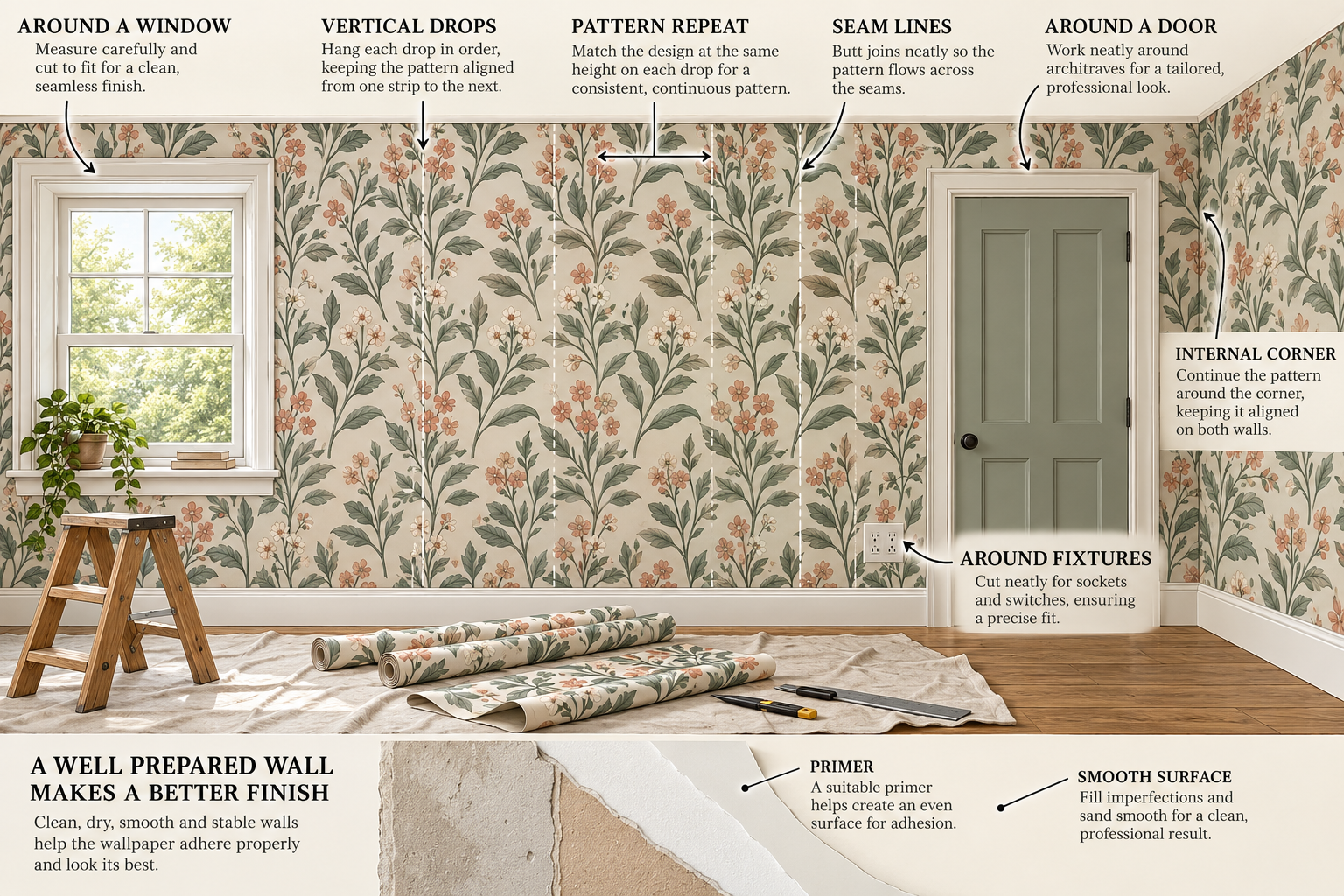
Pattern repeat, material width, waste, corners, windows, doors, outlets, room geometry, wall height, wall condition, old wallpaper, primer, adhesive, and the desired finish all affect labor. A smooth, sound wall can need less preparation than a textured, patched, stained, or previously papered wall.
The available sources do not provide a complete independently inspectable U.S. or Canadian wallpaper price table. A Canadian market source informs planning factors, but exact numerical claims require rechecking. Use a local bid that states the assumptions rather than a generic per-roll or per-room figure.
Include preparation
Ask whether removal, skim coating, sanding, priming, wall repairs, furniture, protection, adhesive, pattern matching, cleanup, and future touch-up material are included. If moisture or recurring cracks are present, correct the underlying condition before covering the wall.
Compare bids
Give each installer the same paper, pattern, wall measurements, preparation standard, and finish expectation. Distinguish ordinary paper from specialty or custom coverings. A lower installation price may simply exclude the surface work needed for a good result.
Material and installation are separate decisions
Wallpaper material can range from mass-market rolls to heavy, textured, vinyl-coated, grasscloth, mural, or bespoke coverings. Installation labor depends on the product as well as the wall. Confirm the exact paper, width, pattern repeat, direction, waste allowance, adhesive, and seam expectation before comparing bids.
Pattern repeat affects waste and layout. Corners, windows, doors, outlets, niches, stair walls, and irregular room geometry add measuring and cutting. Strong patterns may require more careful matching, while textured or natural materials may have appearance variation that cannot be eliminated.
Preparation often controls the result
Wallpaper performs best on a suitable, prepared surface. Texture, holes, cracks, stains, old adhesive, loose paint, and uneven joint compound may require patching, skim coating, sanding, priming, or removal of the previous covering. A lower installation price can simply exclude the preparation needed to make the seams and surface acceptable.
Moisture and recurring movement should be assessed before covering a wall. Wallpaper can conceal a stain or crack without correcting the source. If the wall has a moisture history, contamination, or a suspected hazardous coating, address that condition separately.
Specialty material and room logistics
Heavy or delicate coverings may require a specialist technique. A room with built-in furniture, many openings, high walls, or limited staging space can increase labor. Ask who moves furniture, protects floors, removes fixtures or plates, and cleans adhesive residue.
If existing wallpaper must be removed, include removal, disposal, wall repair, and primer before the new installation. Some walls may be better prepared for paint or a different finish than for another layer of paper.
Cost scenarios
A simple project has smooth walls, one accessible room, a forgiving pattern, and limited openings. A typical project includes preparation, primer, pattern matching, several corners, furniture protection, adhesive, and cleanup. A complex project includes multiple rooms, high walls, specialty material, difficult patterns, damaged substrate, old wallpaper, or a custom mural.
The available sources do not establish a complete independently inspectable U.S. or Canadian wallpaper price table. Use local bids with explicit assumptions rather than a generic per-roll or per-room number.
Quote checklist
Ask for paper and adhesive, roll width, pattern repeat, waste, wall measurements, preparation, old-covering removal, primer, seams, corners, openings, furniture, protection, fixtures, taxes, and cleanup. Confirm the expected appearance and how hidden wall damage is priced after a test area.
Material and layout drive the estimate
Wallpaper is priced through both rolls and labor. Width, pattern repeat, direction, color, texture, match type, waste, delivery, and the number of openings affect the usable quantity. A small room can require substantial cutting when it has many doors, windows, niches, or short walls. Put the selected product and pattern expectation in the quote.
Pattern matching can also affect where seams land and how much material is discarded. Ask whether the installer is pricing a straight match, drop match, random pattern, mural, or a product with special handling requirements. “Per roll” is not comparable without the roll dimensions and waste assumption.
Wall preparation is part of the finish
Wallpaper shows wall variation. The scope may include removing an old covering, repairing board or plaster, skim coating, sanding, sealing, priming, and allowing the wall to dry before hanging. Strong texture, moisture, loose paint, and recurring movement are not ordinary paper-installation conditions.
Corners, seams, outlets, trim, cabinets, fixtures, and transitions require a defined finish. Ask how the installer will treat difficult edges and what appearance is expected under normal lighting.
Compare the complete quote
Request material, adhesive, waste, preparation, primer, layout, hanging, furniture, protection, fixtures, cleanup, and the price boundary for concealed wall damage. Compare installation with the realistic next-finish path, including future removal or a change in room use. A detailed quote makes the paper choice, surface readiness, and visual expectation clear.
Confirm the material quantity and layout
Provide the exact product information before the installer measures: roll width and length, pattern repeat, match type, direction, and any batch or dye-lot requirements shown by the supplier. The installer can then explain the waste allowance and where seams are likely to fall. A mural or feature wall may require a different layout conversation from a small repeating pattern, even when both use similar wall area.
Ask whether the material is homeowner-supplied or included in the bid, who orders extra rolls, and what happens if a roll is damaged or a lot is unavailable. Keep an unopened remnant where practical for future repair. If the paper is delicate or has a pronounced texture, clarify how it will be handled around outside corners, windows, outlets, and transitions.
Agree on preparation and appearance
The room should be evaluated before the material is ordered. A test strip or sample can help confirm color and scale, but it does not establish that the wall is ready. Identify any old paper, texture, patching, stain, loose coating, or moisture history that may change preparation. Ask who decides whether a wall needs removal, sealing, skim coating, or a different finish after the first area is opened.
Define the expected seam and pattern appearance under ordinary room lighting. No installation can make a mismatched batch, irregular wall, or material variation disappear. A useful quote describes the product, wall surfaces, preparation, layout, adhesive, protection, cleanup, and the approval point for concealed damage. This lets the homeowner compare the complete finished-wall result with paint or another covering rather than comparing hanging labor alone.