
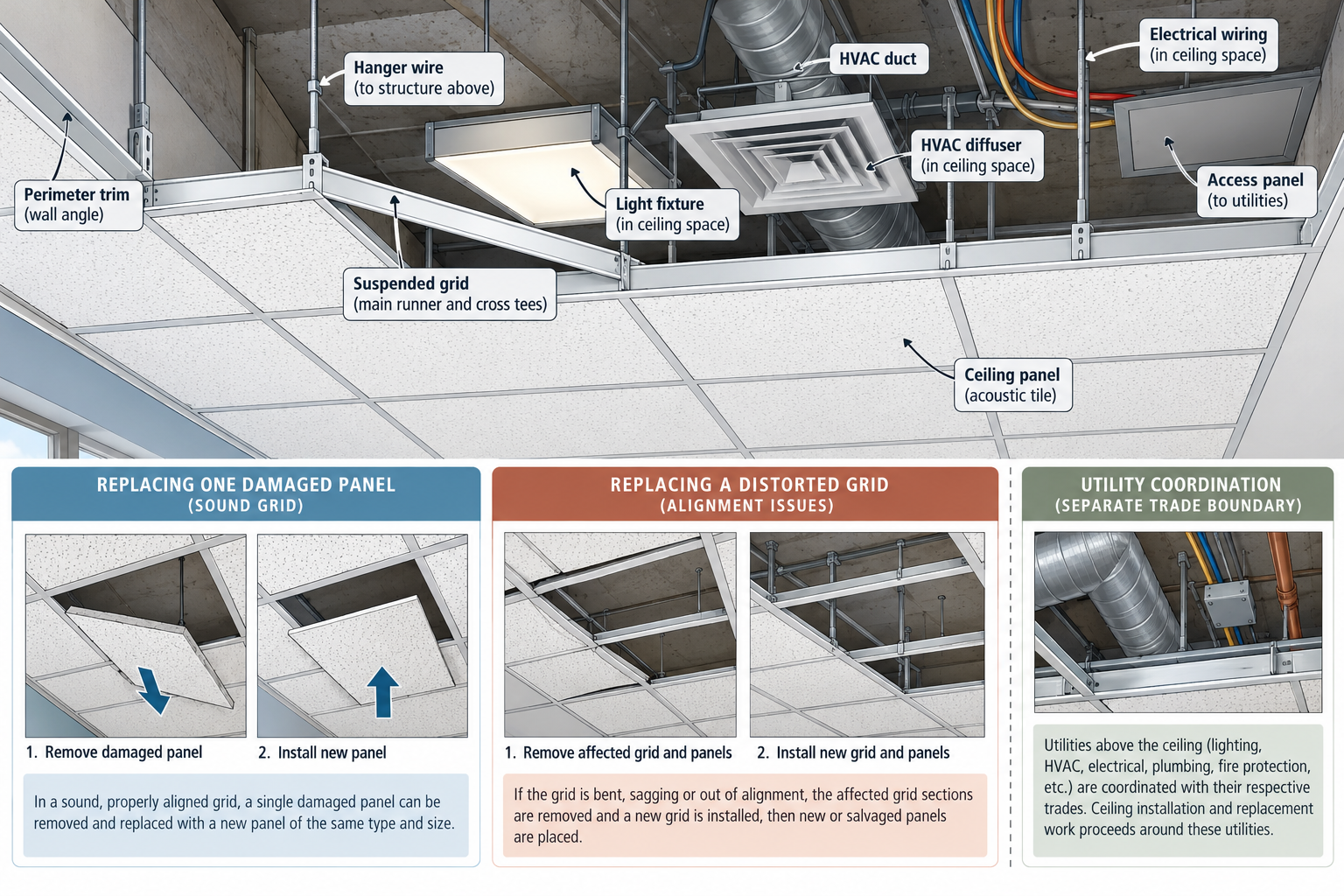
A suspended ceiling includes a grid, panels or tiles, perimeter details, access decisions, and often coordination with lighting, HVAC, wiring, or other utilities. Replacing a few damaged panels is a different project from replacing the grid and the complete ceiling.
What changes the quote
Room size and geometry, ceiling height, existing grid condition, panel type, access panels, utility conflicts, demolition, disposal, protection, and finish details affect labor. Utility changes may belong to electrical, HVAC, or another trade and can trigger local requirements.
Angi’s U.S. source reports about $2–$17 per square foot in a drop-ceiling tile replacement/material context, but its inclusions and applicability are not fully established. Treat it as a source-specific planning signal, not a universal installed rate. No Canadian comparison was established.
Legacy panels
Older ceiling tiles and related materials may create asbestos concerns. Do not remove or disturb them based on appearance. Obtain qualified local advice about testing, work practices, and disposal before demolition when applicable.
Compare scopes
Ask whether the quote includes grid repair or replacement, panels, perimeter trim, access panels, lights and diffusers, utility coordination, demolition, disposal, height-related access, protection, and cleanup. Price damaged-panel replacement separately from a full system if both are reasonable options.
What a suspended ceiling includes
A suspended or drop ceiling is a system of grid, perimeter trim, panels or tiles, hangers, access decisions, and interfaces with lights, vents, sprinklers, wiring, and walls. Replacing one damaged panel is a maintenance task. Replacing a warped grid or installing a new ceiling is a room project. The quote should identify which system is being priced.
Panel cost alone does not describe the work. Layout, room geometry, ceiling height, existing support, utility conflicts, access panels, demolition, disposal, and protection can control labor. A small room with many fixtures may require more fitting than a larger open room.
New installation versus replacement
New installation may require layout, perimeter attachment, suspension, utility coordination, panel cuts, access panels, and finish details. Replacement may add removal, sorting, disposal, repair of the existing grid, and investigation of why panels are damaged. If the damage is caused by a leak, condensation, impact, or utility change, correct that condition before installing new panels.
Ask whether the grid is being retained and how it will be assessed. A new panel in a distorted or corroded grid may not solve the appearance or access problem. Conversely, replacing an entire system may be unnecessary when the grid is sound and the issue is limited to matching panels.
Utility coordination
Lights, diffusers, access doors, wiring, plumbing, and fire-protection components can make a ceiling more than a finish project. The ceiling contractor should state what is moved or cut and which trade is responsible for the utility. Changes may have local requirements; do not assume that a finish quote authorizes electrical, HVAC, or fire-protection work.
Access is one of the system’s advantages, but it should be planned. Confirm the locations and sizes of access panels, the clearance needed above the grid, and whether the owner wants future service access. A lower ceiling can also affect doors, trim, lighting, and room proportions.
Legacy tile and safety boundary
Older ceiling tiles or related materials may raise asbestos concerns. Do not remove or disturb them based on appearance. If qualified testing, handling, containment, or disposal advice is needed, keep that work separate from ordinary replacement pricing. The material content and local requirements cannot be inferred from a product name or age alone.
Cost scenarios
A simple project replaces accessible panels in a sound grid. A typical project includes new panels, perimeter trim, several cuts, access panels, protection, and utility coordination. A complex project includes full grid replacement, high access, demolition, unusual geometry, damaged ceiling structure, or a safety assessment.
Angi’s U.S. source reports a broad $2–$17 per-square-foot signal in a drop-ceiling tile replacement or material context, but the inclusions and applicability are not fully established. Treat it as a source-specific planning observation, not a universal installed price. No matching Canadian range was established.
Quote checklist
Ask for the system type, panels, grid, hangers, perimeter, access panels, cuts, demolition, disposal, height, utility responsibility, legacy-material assumptions, furniture and protection, taxes, and cleanup. Compare damaged-panel, grid-repair, and full-replacement scopes separately.
Price the system rather than a tile
A suspended ceiling is a coordinated system: panels, grid, hangers, perimeter trim, access panels, edge cuts, transitions, and the structure above it. Replacing one stained panel may be a small finish task, while a sagging or corroded grid can require layout and support work. The panel count alone does not describe the project.
Room shape, soffits, columns, lights, vents, sprinklers, and perimeter conditions increase cuts and coordination. Ask whether the quote includes demolition, disposal, protection, delivery, and the exact panel performance or appearance required.
Utility coordination changes the scope
One value of a suspended ceiling is future access, but access panels and service clearance still need planning. Electrical, HVAC, plumbing, fire-protection, and other utility work should be coordinated with the qualified trades responsible for those systems. A ceiling installer’s price should state whether utilities are merely protected, temporarily moved, or excluded.
Ceiling height and the finished grid elevation can affect doors, trim, fixtures, duct clearance, and code or manufacturer requirements. Confirm the final elevation before approving a replacement that appears cheaper because it omits interfaces.
Legacy tile boundary
Older ceiling panels, adhesives, and other materials may require a local assessment before disturbance. Do not infer material safety from an intact panel or treat ordinary replacement pricing as hazard assessment, abatement, or regulated disposal. Put any required testing and special handling into a separate defined scope.
Repair versus replacement
Panel replacement is sensible when the grid is straight, supported, and compatible with the new panel. Grid repair or full replacement may be more coherent when panels fail repeatedly, the system sags, water has damaged the support, or the product is unavailable. Compare the complete system, including access, utilities, disposal, and finish expectations.