
Tile installation is priced as a system: tile, setting materials, substrate, layout, cuts, grout, movement accommodation, transitions, and cleanup. The visible tile price is only one part of the budget.
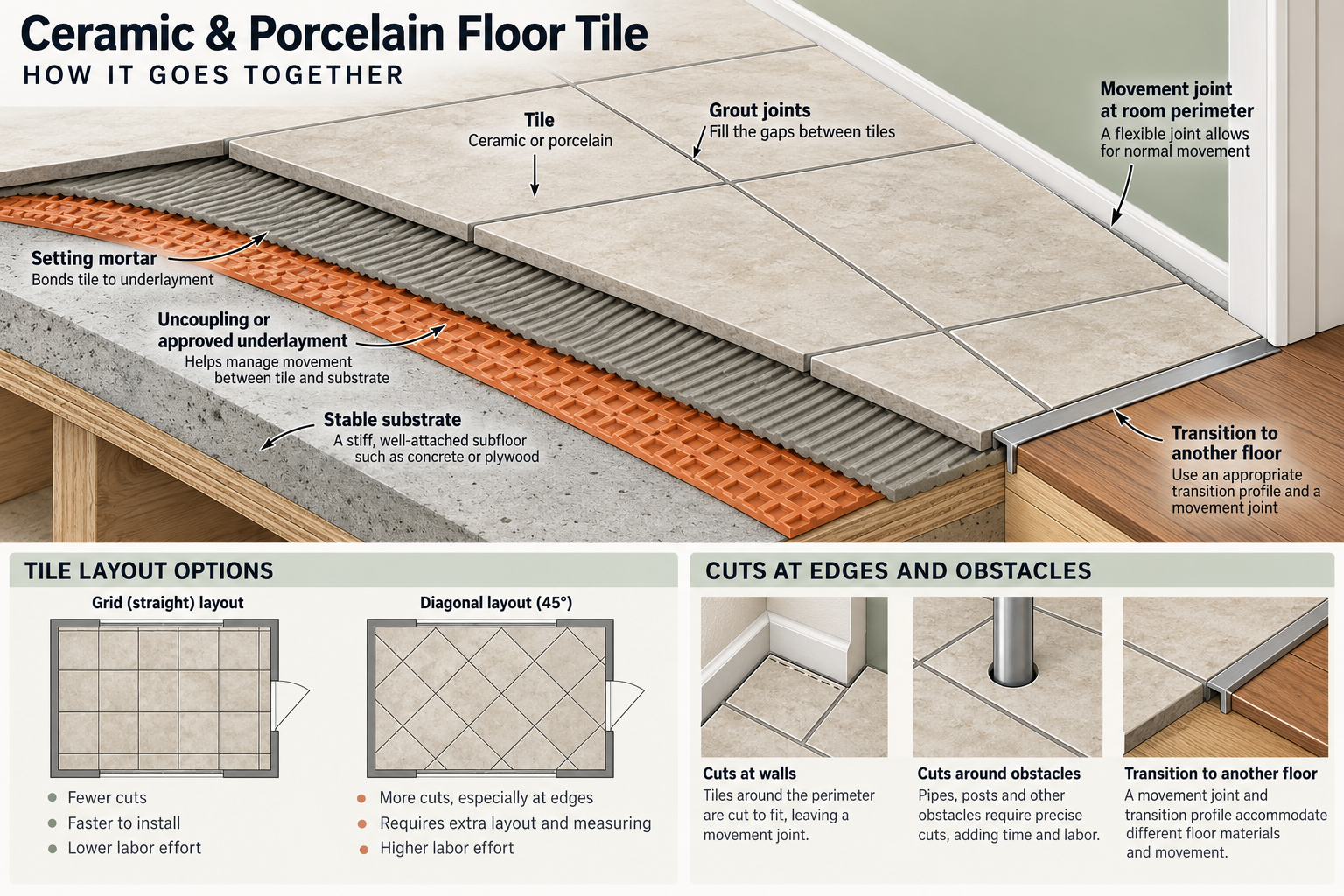
What changes the installation
Room geometry, tile size and pattern, penetrations, thresholds, stairs, furniture, old-floor removal, leveling, backer or underlayment, waterproofing where relevant, and the desired finish all affect labor. Ceramic and porcelain products also have different product characteristics; the installer should quote the named material and installation system.
TCNA guidance emphasizes matching setting materials to the tile, substrate, and location. It also identifies substrate movement, coverage, and movement-joint decisions as factors in cracked grout or tile. A low preparation allowance is not a substitute for a suitable substrate.
Canadian market context
A Canadian flooring guide reports about $2,075 for ceramic or porcelain in a 550-square-foot example. The figure reflects that source’s sample and inclusions, not a national rate. U.S. and Canadian observations use different markets and should not be combined or converted.
Quote checklist
Ask whether removal, disposal, substrate preparation, leveling, underlayment, setting materials, grout, movement joints, transitions, baseboards, furniture, tax, and cleanup are included. Ask how concealed deflection, moisture, or damaged framing will be handled.
If the project is in a shower, bathroom, or other wet-area assembly, use the room-level wet-area scope when waterproofing is the dominant decision. Ordinary interior floor tile remains here when the finish itself is the main project.
Tile is priced as an installation system
The tile is only one component. The installed system can include demolition, substrate repair, underlayment or membrane, mortar, tile, cuts, layout, grout, movement accommodation, transitions, trim, furniture handling, and cleanup. The room may be large while the detailed work is concentrated around doorways, closets, cabinets, drains, stairs, or irregular walls.
Ceramic and porcelain also cover many product constructions and sizes. Confirm the exact tile, thickness, format, edge, pattern, and finish. Large-format tile can change handling and substrate expectations; small or patterned tile can add layout and cutting labor. Do not use a generic square-foot allowance to hide a product change.
Why preparation controls the result
TCNA guidance emphasizes the relationship between tile, setting materials, substrate, coverage, movement, and location. Cracked grout or tile can be related to movement, deflection, poor coverage, moisture, or a damaged base. A low preparation allowance may make the quote attractive while leaving the most important condition unresolved.
Ask how the existing finish will be removed, how the base will be inspected, and what happens if it is not stable or flat enough. Leveling, subfloor replacement, structural correction, and moisture-source work are separate scopes. In a wet area, waterproofing may become the dominant assembly and belongs with the applicable room project when that is the homeowner’s primary decision.
Layout and labor scenarios
A simple installation has a clear room, ready substrate, ordinary tile format, limited cuts, and standard transitions. A typical project includes removal, disposal, preparation, underlayment, grout, baseboard or transition coordination, and furniture protection. A complex project includes patterns, borders, many penetrations, stairs, large-format handling, irregular rooms, substrate movement, or extensive demolition.
The Canadian 550-square-foot example cited in the current research is a source-specific planning observation, not a national rate. U.S. and Canadian observations use different labor markets, units, samples, and inclusions. Keep them separate and compare local bids in the relevant currency.
Repair and lifecycle questions
Tile is durable when the system is suitable, but a damaged tile may be hard to match if the product is discontinued or the surrounding tiles have aged. Keep spare tile and record the product, lot, layout, and grout color. A repair quote should identify whether it is replacing tile, correcting grout, opening the substrate, or investigating a broader failure.
Ask how movement joints, transitions, and adjacent materials will be treated. A visually clean installation can still be a poor value if the quote omits movement accommodation, preparation, or a moisture boundary required by the system.
Quote checklist
Request the exact tile and setting system, measured area, waste, removal, disposal, substrate inspection, leveling, underlayment or membrane, mortar, grout, movement details, layout, cuts, transitions, trim, furniture, tax, and cleanup. Ask how concealed deflection, moisture, framing, or damaged substrate will be priced.
The useful tile budget explains the base beneath the finish, the detail work required by the layout, and the conditions that could change the recommendation before installation begins.
Choices that should be fixed before pricing
Choose the tile format and layout before asking for comparable bids. A straight grid, diagonal layout, border, inset, or repeated pattern changes cutting and setup. The number of small pieces is not the only factor: large pieces can require more careful handling and a base that meets the selected system’s requirements. Provide the same room measurements, product, pattern, and transition points to each installer so the bids describe the same finished floor.
Clarify whether the estimate is for tile setting only or for the complete project. A setting-only price may assume a prepared base and homeowner-supplied tile. A finished-project quote may include delivery, waste, removal, disposal, substrate work, setting materials, grout, edge trim, transitions, protection, and cleanup. If one estimate contains a broad preparation allowance and another excludes preparation, compare the assumptions before deciding which is lower.
Sequencing and concealed conditions
Tile work has a decision point after removal: the installer can inspect the base and confirm whether the quoted preparation remains appropriate. Ask what condition triggers a change order, how the condition will be documented, and whether you approve extra work before it begins. Moisture, movement, or damage outside the finish layer can require separate investigation; do not treat an allowance for leveling as structural correction.
A useful bid also defines the stopping point at adjoining floors, cabinets, doorways, and stairs. Changes in finished height can affect door clearance and transitions. Confirm grout color, movement details, edge treatment, and whether replacement tile will be retained for future repairs. These details may not change the measured area, but they change the quality and completeness of the result you are buying.