
Treat a sounding carbon monoxide alarm as an immediate safety event. Carbon monoxide (CO) is an odorless, colorless gas that can cause sudden illness and death. The first decision is to get people and pets to fresh air and contact emergency services or the local fire department as directed by current local guidance. Source diagnosis and appliance repair happen only after occupants are safe.
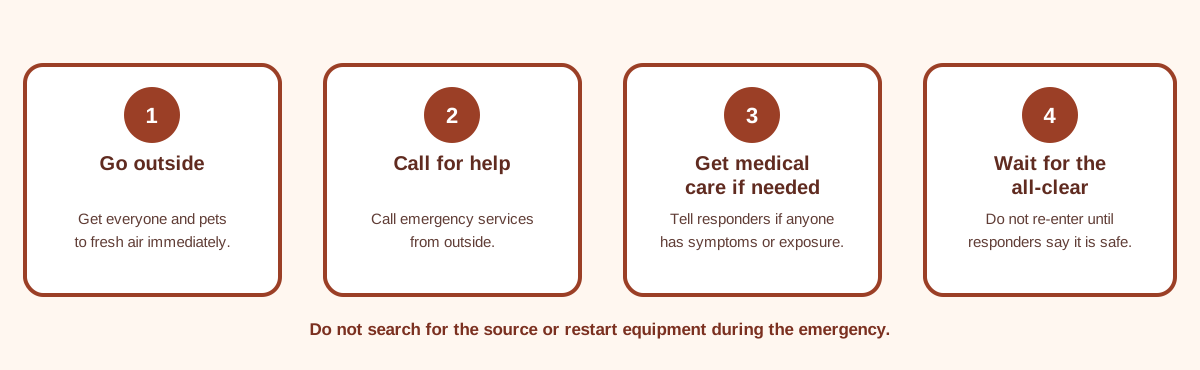
What to do immediately
If the alarm sounds:
- Get everyone, including pets, outside to fresh air immediately. Do not stop to search for the source or collect belongings.
- Call emergency services or the fire department from outside, or use the local emergency number. Tell them a CO alarm sounded and whether anyone has symptoms.
- Seek medical attention for symptoms or suspected exposure. Symptoms can include headache, dizziness, weakness, nausea, vomiting, chest pain, confusion, or other unusual illness; do not use a home meter to decide whether medical care is needed.
- Do not re-enter until emergency responders or qualified authorities say it is safe. This is the initial scene-clearance decision; Canadian return guidance also requires the CO problem to be fixed by a professional, as explained below.
- Do not restart fuel-burning appliances, vehicles, generators, grills, or other possible sources to “see if it happens again.”
Follow the instructions for the alarm and local emergency responders if they differ. A chirp for low battery or end-of-life can be different from an alarm pattern, but when you are uncertain, leave and call for help. Never silence a recurring alarm and continue normal occupancy.
Do not troubleshoot during the emergency
Opening a furnace, checking a flue, moving a vehicle, or testing a generator can expose you while the concentration is changing. CO can accumulate from fuel-burning furnaces, boilers, water heaters, fireplaces, stoves, dryers, portable generators, vehicles in attached garages, and other combustion equipment. Outdoor air or neighboring sources can also matter.
The alarm is not a complete diagnosis. It may detect CO at a location and time that does not identify the appliance or pathway. Conversely, the absence of an alarm does not make a malfunctioning appliance safe. Do not use the alarm display or a consumer air-quality monitor as permission to re-enter.
Symptoms change the response
People respond differently to CO exposure, and infants, older adults, pregnant people, and people with certain medical conditions can be more vulnerable. If anyone feels unwell after a possible exposure, tell medical responders that CO is suspected and describe the alarm event. Do not wait for everyone to develop the same symptoms.
This article cannot determine exposure dose, medical risk, or whether a person needs testing. Those decisions belong to emergency and medical professionals. Record the time, alarm behavior, occupants, symptoms, appliances operating, and whether anyone entered after the alarm, but only after doing so is safe.
What happens after the home is cleared
After emergency responders handle the immediate event, arrange a qualified investigation before anyone attempts to use suspected equipment again. Their scene clearance does not establish that the CO source has been repaired. The Canadian return-to-home condition and U.S. re-entry instructions are separate, as described below. A qualified investigator may consider:
- combustion appliances and their venting or chimney;
- attached garages and vehicle operation;
- generators, grills, or temporary heaters;
- blocked, damaged, disconnected, or back-drafted exhaust paths;
- building pressure, exhaust fans, and makeup air;
- installation, maintenance, and fuel supply; and
- the alarm’s location, age, power, and maintenance history.
Do not ask an alarm technician alone to certify an appliance or venting system unless they are qualified for that diagnostic work. A licensed fuel-burning appliance technician, chimney professional, HVAC professional, or other appropriately qualified person may be needed depending on the suspected source and local requirements.
Repair the source, then verify
Replacing the alarm may be necessary, but it does not repair a combustion or venting defect. The professional should identify the suspected source, correct the fault, check related equipment and venting, and explain what testing or retesting supports return to service. Ask for the written findings and any restrictions.
If the cause is not found, do not treat a quiet alarm as proof that the problem is gone. Intermittent operation, weather, wind, exhaust fans, occupancy, and appliance cycling can change the event. A follow-up plan may include additional diagnostic visits, appliance servicing, venting inspection, pressure evaluation, or alarm relocation by a qualified person.
Prevention after the event
Alarm-placement and routine-check recommendations differ between the United States and Canada, and local code and product instructions still apply:
- United States: CPSC recommends an alarm on every level and outside sleeping areas, monthly testing, and annual battery replacement. It advises against placing alarms in attics or basements unless there is a sleeping area there. Follow the alarm’s instructions for sealed-battery or hardwired models and for end-of-life replacement.
- Canada: Health Canada recommends at least one battery-backed CO alarm in a home that uses combustion equipment, with hallways outside sleeping areas as the most important placement. Choose an alarm certified for use in Canada, test it regularly, and replace its batteries and the alarm according to the manufacturer’s instructions. Health Canada does not set a fixed test interval or a per-floor count; local requirements may add both.
Never use a grill, camp stove, or fuel-burning generator indoors or in an attached garage.
Have fuel-burning appliances and chimneys professionally inspected and serviced on the local recommended schedule. Keep vents and flues unobstructed, and never rely on odor or symptoms to detect CO. For the investigation and repair path after the emergency, see carbon monoxide source investigation.
Returning to normal occupancy
Follow emergency responders’ directions about scene safety and ask what their clearance covers. In Canada, Health Canada says occupants should return only after a professional has fixed the CO problem; an initial all-clear does not replace that condition. In the United States, follow emergency responders and local fire-service instructions for re-entry. In either country, do not restart suspected fuel-burning equipment until a qualified professional has investigated it and explained when it is safe to return to service. Keep the written service findings, and arrange further evaluation if the source remains unknown.
After the event, check that alarms are installed, powered, tested, and maintained according to the country-specific guidance above, local code, and product instructions. Alarms do not replace appliance maintenance, chimney inspection, or safe generator and vehicle practices.
What to tell the investigator
After the emergency is over, provide the professional with the alarm model and location, event time, display or sound pattern, equipment operating, doors and windows, exhaust fans, weather, garage activity, and any service history. Note whether the alarm was new, repeatedly alarming, or giving a maintenance chirp. These details can make an intermittent source easier to evaluate without asking anyone to recreate the event unsafely.
Gather appliance names and fuel types, recent repairs, chimney or flue work, generator use, fireplace use, and any renovation that changed air sealing or ventilation. Do not enter a restricted area to collect this information. Use records or tell the professional what is unknown.