
Lead clearance is a post-work decision. It asks whether the defined work area has been cleaned and meets the applicable release criteria after lead-related work; it does not replace the initial inspection or prove that no lead remains anywhere in the home. The exact procedure, laboratory, sampling locations, thresholds, and documents depend on the project and jurisdiction.
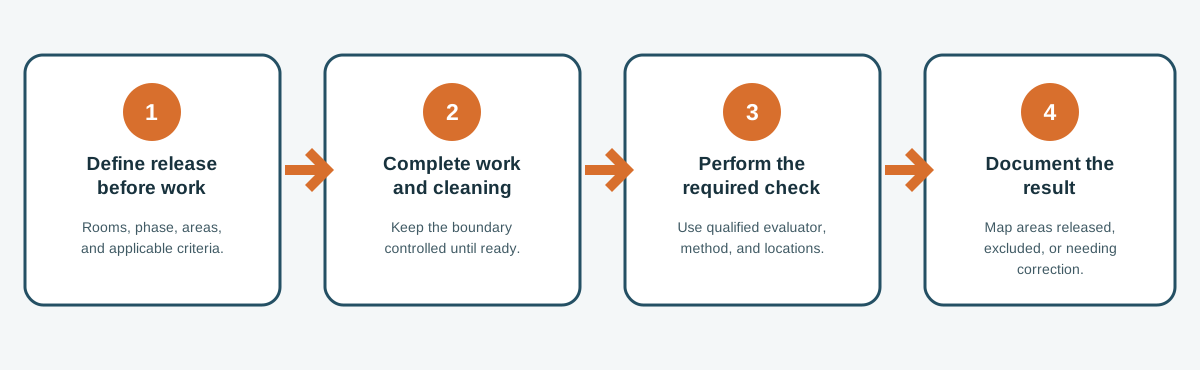
Define the release question before work begins
Before the project starts, write down what must be established before ordinary occupancy or the next trade can proceed. Identify the work phase, rooms or components, intended release, and whether the project calls for a formal clearance, a renovation-specific cleaning verification, or another qualified post-work check. Agree with the responsible professional on what will be inspected or sampled, what areas are outside the release, and which rule or project requirement controls.
This definition prevents a later “pass” from being treated as a whole-home conclusion. It also gives the contractor a clear target for cleaning, documentation, and any corrective decision without inventing a universal clearance procedure.
Why the initial inspection is not enough
An inspection describes painted components and hazards before work. Renovation can create dust, expose new layers, damage adjacent surfaces, or move contamination outside the original area. Clearance evaluates the result after the contractor has completed the work and cleanup.
The report should identify the area released, the work performed, limitations, visual condition, cleaning checks, samples or other verification, result, and any corrective action. A pass applies to the defined scope and release conditions. It does not silently cover a hallway, HVAC system, basement, exterior soil, or later renovation.
What clearance may include
Depending on the applicable program, a clearance process may include:
- a visual check for dust, debris, deteriorated paint, or unfinished work;
- confirmation that the work area is complete and ready for cleaning verification;
- cleaning and a second visual check when the first check finds a problem;
- dust-wipe sampling from defined floors, window sills, troughs, or other surfaces;
- laboratory analysis by an accepted method; and
- documentation of the result and any required re-cleaning or re-sampling.
EPA’s lead-safe renovation guidance describes cleaning and post-work verification steps for covered work. Abatement projects can have different clearance requirements from RRP renovation. Ask the person responsible for the project which rule and release standard applies.
A failed result is a process result
If visual inspection or dust sampling fails, do not simply paint over the result or move occupants back because the room looks clean. The contractor should identify the source, re-clean or correct the work, and repeat the required verification. The owner should receive the failed and final records rather than only a verbal assurance.
Possible causes include dust trapped in a window trough, debris on a floor edge, incomplete containment, a deteriorated adjacent surface, or dust tracked into a clean area. The corrective scope should state whether the original boundary expands. If a sample result is unexpected, ask the qualified professional or laboratory to explain the method and next decision.
Who should perform it?
The appropriate inspector, risk assessor, certified renovator, laboratory, or independent professional depends on the project and local rule. Independence can improve confidence, especially when a contractor is paid to declare its own work complete, but the legal requirement controls. Ask in advance who collects samples, who analyzes them, what accreditation applies, and who signs the release.
Do not use a consumer dust wipe, a handheld meter, or a visual walkthrough as a substitute for required clearance. A homeowner can inspect for obvious debris as part of communication, but that is not a regulatory or professional release.
Scope, timing, and occupancy
Clearance should occur after the defined work and cleaning are complete, before ordinary occupancy or unrelated trades disturb the area. Keep the area controlled while waiting for results. Coordinate HVAC operation, furniture return, floor finishing, and adjacent work with the professional’s release instructions.
Ask whether the result covers only the contained room or also pathways, common areas, exterior work, and equipment. A contractor’s cleanup obligation may extend beyond the room even when formal sampling is limited. Put the boundary in writing.
Records to retain
Keep the initial inspection or risk assessment, work plan, contractor and certification information, dates, photographs, cleaning records, sample locations, laboratory report, failed results, corrective actions, and final clearance. Record lead-painted components that remain so future work does not start from a false assumption that the home is lead-free.
Use lead paint inspection versus risk assessment to understand the starting report, renovating a home with lead paint for the work sequence, and lead paint abatement cost to keep verification visible in the budget.
Clearance does not close every lead question
A passing result applies to the sampled or inspected release area. Lead-painted components can remain in the home, and a later repair can create new dust. Mark retained components and keep the initial assessment with the clearance record. If occupants report symptoms or possible exposure, seek medical advice; a clearance result cannot diagnose or rule out an individual health effect.
Keep the release local and legible
A released bedroom, window, porch, or hallway should be named precisely. If a barrier, door, HVAC path, or clean route connects it to an active area, ask whether that connection is included in the release. The record should show the sample or inspection locations on a simple plan so the next contractor does not treat an unlabeled “pass” as a whole-home result.
If the work is followed by painting, flooring, cabinet, or electrical work, confirm that those trades will not disturb retained lead-painted components. A clearance record closes the defined phase; it does not remove the need for lead-safe planning when a later phase begins.
The owner should receive the release map and the final report before closing the project or returning belongings. Store them with the original assessment so future work can be scoped from evidence.
A final handoff should also identify who can answer a later question about the release and which components remain lead-painted or untested.
Decide who can accept the clearance result
Before work begins, ask who selects the clearance method, who collects samples or performs the check, and whose approval permits ordinary use or reconstruction. A contractor’s invoice, a visual check by the owner, and an independent clearance report answer different questions. Some projects or jurisdictions specify the accepted evaluator and method; others rely on the contract and local professional practice. Verify the applicable requirement for the actual job.
The report should identify the rooms and pathways checked, sample locations, method, laboratory, dates, and the work that had been completed before sampling. If some rooms or components are excluded, mark them on the record. A release for one room does not automatically include the rest of the house or a later phase.
If a result fails or is inconclusive, ask what corrective step follows and whether it is included in the contract. Additional cleaning, a revised boundary, another sample round, or a different assessment may add cost and extend temporary relocation. Price those possibilities before the work starts where feasible.
A clear release record helps the project team avoid two costly mistakes: rebuilding over an unresolved work area or holding the entire home out of service when only a defined portion remains open. It should say precisely what is ready and what still requires a professional decision.
Plan the result and any follow-up before work
Clearance should be tied to the work method and the contract’s defined release condition. Ask whether the professional will use visual review, dust sampling, or another accepted check, and whether the project or local rules prescribe the method. The answer differs between U.S. abatement, RRP renovation, and Canadian provincial or territorial practice; do not carry one country’s numeric value or procedure into the other.
If a sample result fails or the inspection finds visible debris, the contractor may need additional cleaning or correction before a new check. Clarify who pays for that return visit, whether the original area remains restricted, and how a repeat result is documented. A bid that includes “clearance” but omits the corrective path can leave the owner uncertain about both cost and schedule.
A clearance report should make the testing boundary visible. Ask for a simple location plan and a list of areas not sampled. If a room was not part of the work or the project remains active in an adjacent area, the report should say so rather than implying a full-home release. Keep the release record with the original assessment and work plan.
If the project is released in phases, ask whether each release is separately documented and whether later trades can still disturb retained paint. A clear phase map helps keep a passing result tied to the right room, date, and work scope.