
Lead-based paint is managed by controlling the exposure pathway, not by choosing the most aggressive-sounding method. The right option depends on paint condition, friction and impact, moisture, occupant contact, component durability, future renovation, access, and local requirements. A risk assessment should connect the hazard to the recommended control.
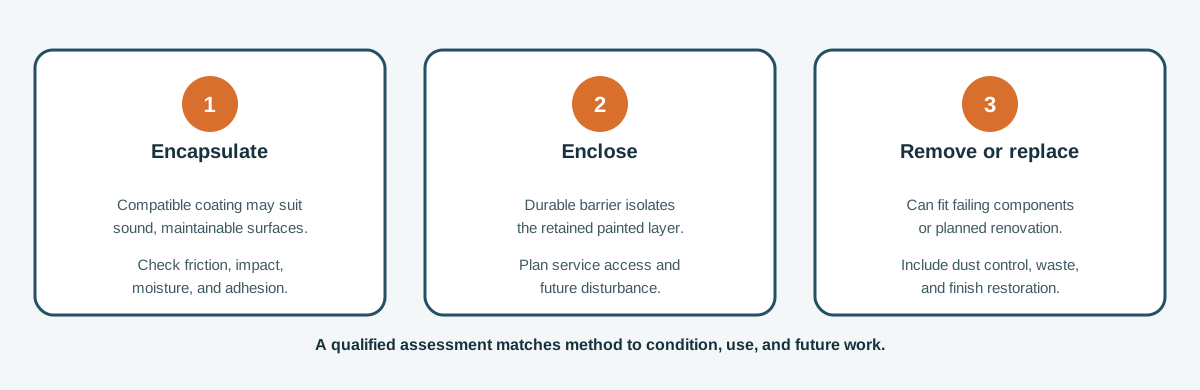
Stabilize the decision first
Do not dry-scrape, sand, heat, or power-tool lead-painted surfaces while comparing bids. Disturbance can create dust. Keep children and pregnant people away from active work areas as appropriate, and ask the professional to address deteriorated paint, dust, and the building cause of failure.
The same painted surface can have a different control need depending on whether it is a wall, window, stair, porch, door, or floor. A smooth wall that is intact is not the same decision as a window track that creates friction or a damp exterior trim board that keeps peeling.
Encapsulation
Encapsulation uses a compatible coating system intended to create a durable barrier over the lead-painted surface. It can be useful when the substrate is sound, the coating system is suitable, and the surface will not be subjected to incompatible friction, impact, moisture, or near-term demolition.
Ask how the contractor will prepare the surface without creating dust, repair the substrate, address moisture, apply the system, and inspect the result. The work record should identify the component, product or system, preparation, date, condition, and maintenance instructions. Encapsulation is not ordinary repainting, and a new color alone does not establish a lead-safe control.
Enclosure
An enclosure covers the lead-painted component with a durable barrier. It can be a practical design when the existing surface can remain behind a new wall, ceiling, panel, or other assembly and future access can be controlled. The enclosure must be attached without creating an uncontrolled dust hazard and must account for moisture, ventilation, fire, egress, and service access.
Enclosure reduces contact with the old surface but does not remove it. Future plumbing, electrical, window, or remodeling work may expose the retained paint. Mark the assembly and preserve the record so a future contractor does not treat the concealed layer as ordinary demolition.
Removal or replacement
Paint removal can eliminate the coating from a component, while component replacement removes the painted item and installs a new one. Both can create substantial dust and waste-control requirements. They should be performed with a method appropriate to the component and local rules, not as an invitation to sand or strip paint casually.
Replacement can be attractive for damaged windows, doors, trim, or siding when repair would be short-lived. It can also add flashing, weatherproofing, carpentry, and finish costs. Removal may be impractical or damaging for historic millwork, plaster, or complex assemblies. The professional should explain what is removed, what remains, and how adjacent surfaces are protected.
Compare the lifecycle
| Question | Encapsulation | Enclosure | Removal or replacement |
|---|---|---|---|
| Immediate disturbance | Lower than aggressive removal when suitable | Moderate during assembly installation | Often highest |
| Best fit | Sound substrate and compatible durable system | A planned barrier can isolate the component | Renovation, severe deterioration, or component failure |
| Future access | Coating must be maintained | Barrier must be tracked and opened carefully | May simplify future work in that component |
| Main uncertainty | Adhesion, friction, moisture, and maintenance | Hidden material and service access | Dust, waste, reconstruction, and scope |
The least expensive initial method can become poor value if the moisture cause remains, the surface is repeatedly impacted, or the component will be demolished next year. Conversely, removal can add unnecessary disturbance when the area can be safely isolated and maintained.
Plan the control’s future handoff
When a control leaves lead-painted material in place, make its future management part of the decision rather than an afterthought. The closeout record should tell a future owner or trade which components were encapsulated or enclosed, what condition should trigger reassessment, which materials remain behind a barrier, and which planned services or renovations could disturb them.
Before authorizing the option, compare its expected maintenance and access consequences with the home’s likely next projects. A later window repair, electrical opening, plumbing repair, finish replacement, or demolition may need a new lead-safe plan even if the earlier control remains intact. The retained assessment and closeout record help the qualified professional decide the next scope; they do not make future disturbance routine work.
Match the contractor and legal scope
In the US, EPA distinguishes lead abatement from renovation, repair, and painting work under the RRP program. A firm certified for one type of work is not automatically authorized for every lead-related activity, and state or local requirements can be stricter. In Canada, requirements vary by province and territory. Ask what credentials, notifications, waste handling, and verification apply to the actual job.
Request a written method statement, occupant controls, cleanup plan, disposal assumptions, and closeout documentation. Ask who performs clearance or dust verification and what happens if it fails. Keep the assessment and work records for future maintenance.
Choose by the next decision
Use lead paint inspection versus risk assessment when the hazard or condition is uncertain, lead paint abatement cost to compare complete bids, and renovating a home with lead paint before a project begins. After work, lead clearance testing explains why the initial inspection is not the same as release from the work area.
Match the control to how the component will be used
A lead-control choice depends on the part, its condition, and the next likely project—not just the amount of paint. A coating may be suitable on a sound surface that can be maintained; enclosure may work where a durable barrier can remain intact; replacement may fit a failing window or trim that would otherwise be opened repeatedly. The qualified professional should explain whether the material is sound, what preparation is required, and what would make the selected method fail.
Consider friction, impact, moisture, cleaning, and service access. A window that opens daily, a stair rail, an exterior trim board exposed to weather, and a flat wall behind furniture do not have identical maintenance demands. If plumbing or electrical work will cross the component, include that future access in the comparison.
Ask for both immediate and continuing costs: assessment, setup, control installation, cleanup, verification, ordinary repair, and any maintenance or future access required. If the home will be sold or renovated, the record of what remains may be as important as the first price. A later trade needs to know which surface is controlled and what work could disturb it.
Do not pick removal solely because it sounds permanent or encapsulation solely because its first quote is lower. The best value is the professionally supported option that controls the current condition, fits the planned work, and leaves a manageable handoff for the next owner.
Compare the component, not just the treatment name
A control proposal should identify each component and the condition that makes one option workable. A sound wall surface, a deteriorating window, a stair tread, and exterior trim face different contact, moisture, and maintenance conditions. “Encapsulate” or “remove” is not enough information to compare price or long-term usefulness.
| Component situation | Cost and maintenance question |
|---|---|
| Stable surface that will stay covered | What coating or barrier is specified, and how can a future owner inspect it? |
| Friction or impact area | Can the proposed control withstand repeated use, and what maintenance would it require? |
| Component planned for replacement | Does the estimate include carpentry, flashing, disposal, and finish restoration? |
| Historic or detailed material | What is the cost and risk of preserving it compared with replacing the component? |
| Area that may be opened for utilities | Will future service require a new lead-safe plan or removal of the current enclosure? |
Ask the professional to explain the substrate condition and any moisture or structural repair that must happen first. A coating over a failing surface can create repeat work; removing a component without budgeting for adjacent repairs can also make the initial price misleading.
If a home has several control options, request a base scope for the recommended method and alternates for other appropriate methods. Compare cleanup, verification, maintenance, and future access along with initial cost. This is a project decision, not a universal rule that one technique is always cheaper or safer.
The final price comparison should state how future service affects the selected control. A retained layer can make today’s work smaller while creating a documented duty for the next contractor. Removal may simplify access to one component while adding demolition and restoration now. Ask the assessor to describe both the work boundary and the record a later owner will need.