
A freezer replacement budget includes more than the chest or upright unit. Capacity, delivery, stairs, floor protection, placement temperature, electrical connection, leveling, operating energy, old-unit removal, and refrigerant disposal can all affect the total. Product and local service markets differ between the United States and Canada, so a U.S. figure should not be converted into a Canadian price.
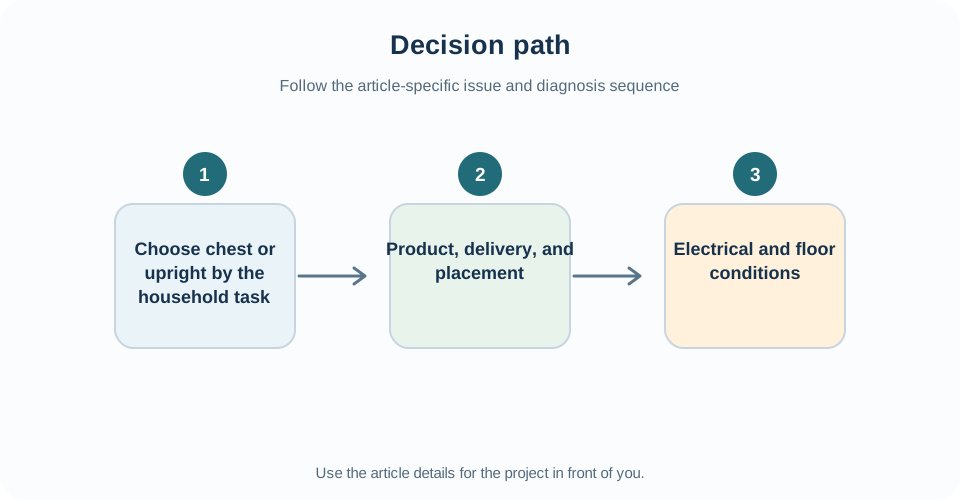
Choose chest or upright by the household task
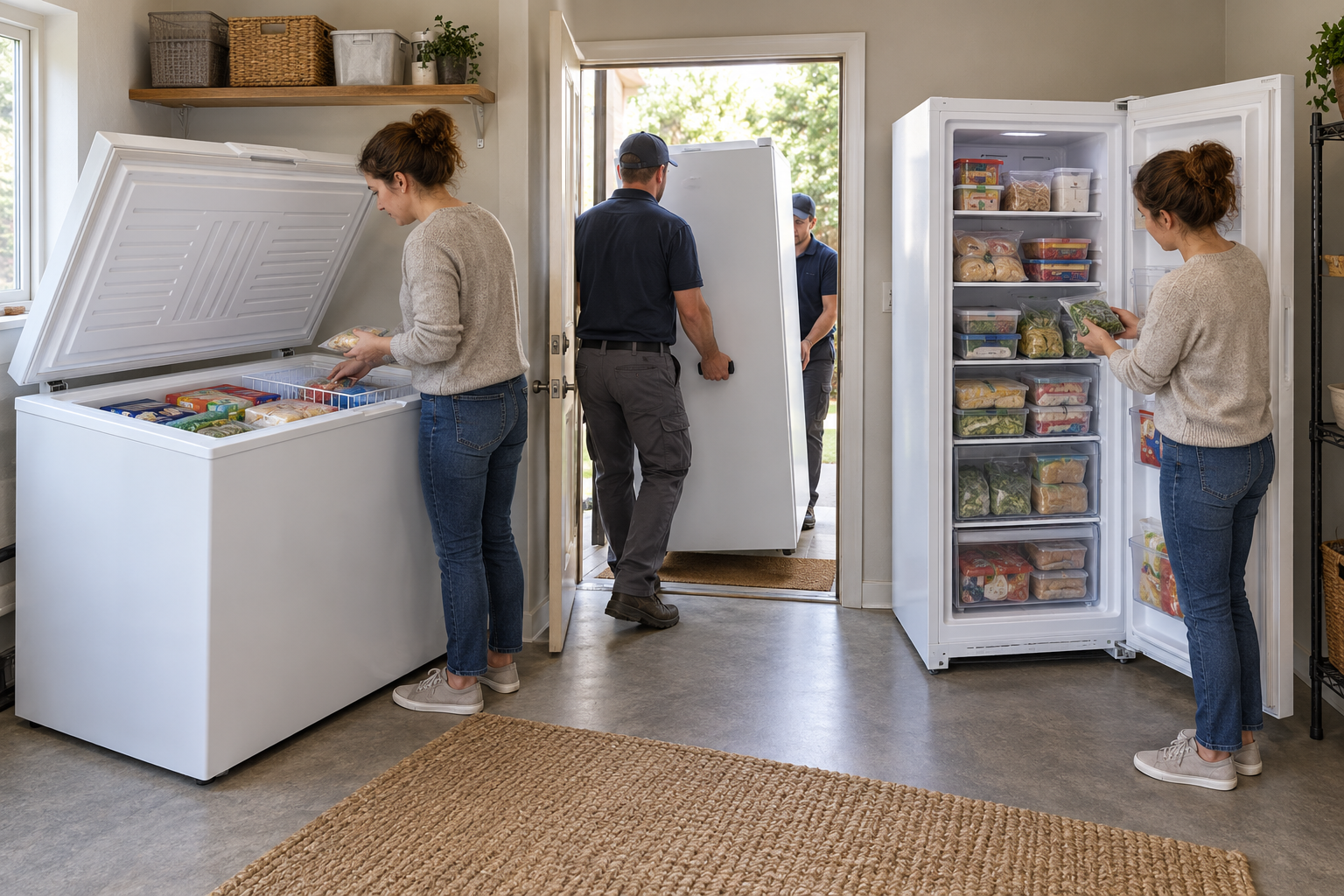
Chest freezers can suit bulk storage and may offer a large usable compartment, but items can be harder to organize and the lid needs overhead clearance. Upright freezers are easier to access and may fit a narrower floor plan, but door swing, shelves, and vertical clearance matter. The cheapest format is not necessarily the cheapest for the way the household stores food.
Record the current capacity, the amount of food actually stored, and the delivery path. Oversizing adds purchase and energy cost; undersizing can force a second appliance or more frequent shopping. Compare similar capacities and product classes on the label.
Product, delivery, and placement
Product cost varies by capacity, defrost method, controls, organization, and efficiency. Delivery may be curbside or inside. Ask whether the crew positions the unit, protects floors, removes packaging, and tests the appliance. A chest freezer may need a wide path and overhead clearance; an upright may need an unobstructed door swing.
Check the chosen model’s instructions for location and ambient-temperature limits. Do not assume every freezer is garage-safe or suitable for an unheated shed. Temperature range, ventilation, moisture, and service access can affect performance and warranty. A model-specific manual controls the decision.
Electrical and floor conditions
A replacement that uses the existing compatible connection may be a basic installation. A damaged outlet, new circuit, extension-cord dependence, or wiring correction is a separate electrical scope. Do not generalize a universal circuit requirement from another model or product listing.
The floor must support the appliance and the route must allow safe placement. Uneven floors can affect an upright door or an appliance’s stability. A freezer that has leaked may have damaged flooring or base trim; inspect before covering the area with a replacement.
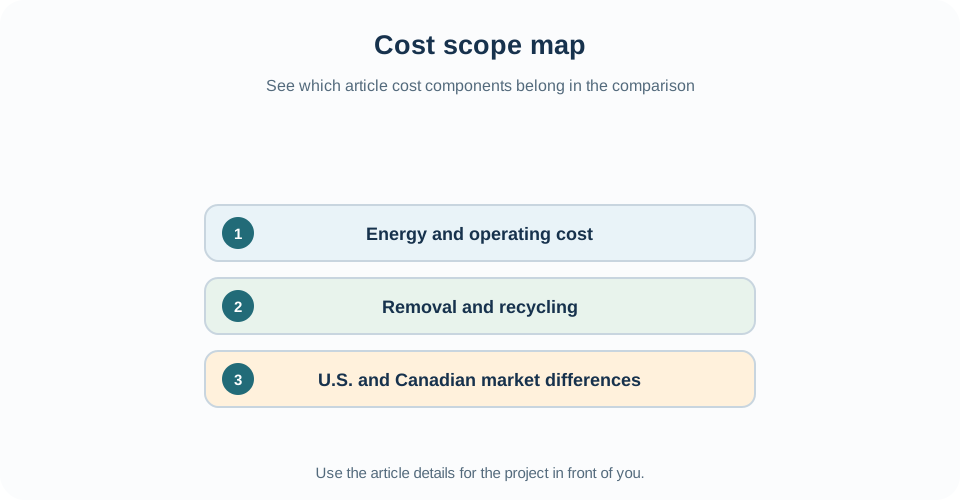
Energy and operating cost
Use the exact EnergyGuide or EnerGuide information for the model when available. Annual kWh can be multiplied by a representative local electricity price to compare operating scenarios. Actual cost changes with ambient temperature, door openings, frost, load, settings, utility tariff, and maintenance.
An older freezer may have higher operating cost, but replacement is not automatically economical. Model the purchase premium, installation, disposal, expected ownership period, and annual savings. A lightly used freezer with a small efficiency difference may not repay a large replacement premium. A frequently used older unit in a high-rate area may justify closer analysis.
Removal and recycling
Ask whether the retailer or installer includes removal. Confirm whether the old unit must be empty, defrosted, disconnected, and accessible. Stairs, a long carry, a narrow route, or a basement location may create an extra fee.
In the United States, household freezers entering the waste stream with refrigerant charge intact are subject to EPA safe-disposal requirements. Use a disposal channel that can explain recovery and recycling. Canadian municipal, utility, retailer, and provincial practices require separate verification. Do not vent or dismantle the refrigerant circuit.
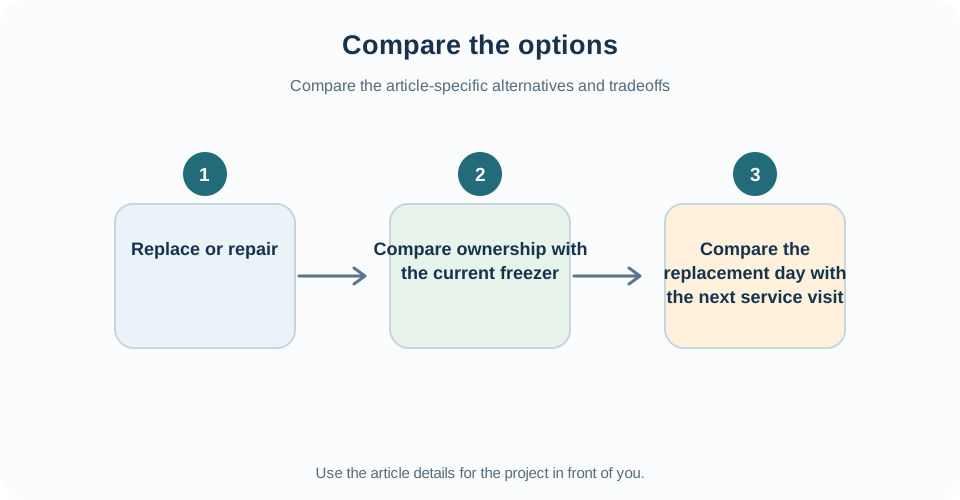
Replace or repair
If the existing freezer still operates, compare its confirmed repair with replacement. A gasket, fan, control, or other localized repair may preserve a good unit. A sealed-system problem, repeated failure, obsolete part, cabinet damage, or poor food-storage reliability may favor replacement. Include food loss and temporary storage in the household’s actual comparison.
U.S. and Canadian market differences
Retailer packages, taxes, delivery distances, product availability, recycling programs, and service costs vary by location. Canadian price and availability should be checked with Canadian suppliers and local programs. The label comparison can be shared conceptually, but the market and tariff assumptions cannot.
Compare ownership with the current freezer
If the existing freezer is being replaced, record its failure, service history, capacity, location, energy information, and removal condition. A new unit may be more efficient but still lose value if it needs a difficult carry, floor correction, different ambient conditions, or a new disposal path. Compare repair, replacement, and relocation only with the exact room and model requirements visible.
Make the room part of the ownership model
Check model-specific ambient conditions, ventilation, floor, moisture, door or lid clearance, drainage or water exposure, electrical access, and service space. A freezer intended for a basement, garage, shed, or seasonal room may have different suitability than one in conditioned living space. Do not assume that a low purchase price survives a poor location.
Compare the replacement day with the next service visit
Ask how the unit will be carried, leveled, connected, protected, tested, removed later, and disposed of. Preserve a clear route and record the packed dimensions. If a chest freezer needs top access or an upright needs full door swing, include that space in the room plan rather than treating the nominal footprint as sufficient.
Use the same scope for repair and replacement
If the current freezer is repairable, compare diagnosis, part, labor, access, warranty, food storage, and timing with the new-unit branch. If the replacement is selected, compare the exact model’s capacity, ambient suitability, delivery, removal, disposal, operating cost, and service. A replacement quote that excludes the old unit or the route is not comparable with a repair invoice.
Keep the installation reversible
Where practical, confirm the new unit, route, opening, and operating conditions before removing the old freezer. Record the packed dimensions, delivery assumptions, and disposal responsibility. This protects the household if the crew cannot complete the carry or the selected model does not suit the room.
Before ordering
Confirm capacity, chest or upright format, opening and route dimensions, lid or door clearance, model-specific ambient limits, electrical connection, leveling, warranty, delivery, removal, disposal, and operating data. Ask what happens if the unit cannot pass through the route or the old appliance contains damage.
The right replacement is the one that fits the household, the room, the route, and the local disposal path at a transparent total cost.
Choose by storage task, not only capacity
Chest and upright models solve different storage problems. A chest unit can be useful when the household stores large quantities for longer periods, but the top opening, baskets, and floor space affect access and organization. An upright may make shelves and drawers easier to reach, but door swing, vertical height, and a narrower delivery path can become limiting. Measure the space and identify how the freezer will actually be loaded before comparing products.
Include the capacity that is usable for the household rather than treating the largest advertised volume as the best value. A smaller unit that is easy to organize may reduce wasted energy and improve access; a unit that is too small may force extra trips or a second appliance. The choice should be based on the storage task, room, budget, and expected ownership period.
Model the operating-cost difference
Use the exact model’s annual energy information when available and compare similar capacity and configuration. A simple estimate is annual kWh multiplied by the local electricity rate. Run a low-use and high-use scenario when the tariff, ambient conditions, or door-opening pattern is uncertain. Energy data supports comparison; it does not guarantee a household bill.
Do not assume a garage, shed, basement, or seasonal room is suitable for every freezer. Check the model’s instructions for location and ambient conditions. A unit that operates poorly in the chosen space can erase an apparent purchase saving through food loss, service calls, or premature replacement.
Price delivery, removal, and the first day of use
Ask whether delivery is curbside or inside, whether the crew will handle stairs and doors, and whether leveling, packaging removal, old-unit removal, and disposal are included. Confirm the opening and route using the packed dimensions where available. A chest freezer may need a clear top and enough room to open the lid; an upright needs door swing and front service space.
For refrigerators and freezers entering the U.S. waste stream with refrigerant charge intact, use a disposal provider that explains the recovery process. Canadian programs and requirements need local verification. A complete replacement quote includes the appliance, delivery, placement, electrical readiness, operating assumptions, removal, disposal, taxes, and warranty—not just the sticker price.