
Dryer-exhaust cost depends on whether the project is a short replacement connection, a damaged or restricted existing route, or a new path through finished walls, ceilings, or a roof. The model, route, access, termination, local requirements, and restoration can matter more than the short piece of duct behind the dryer.
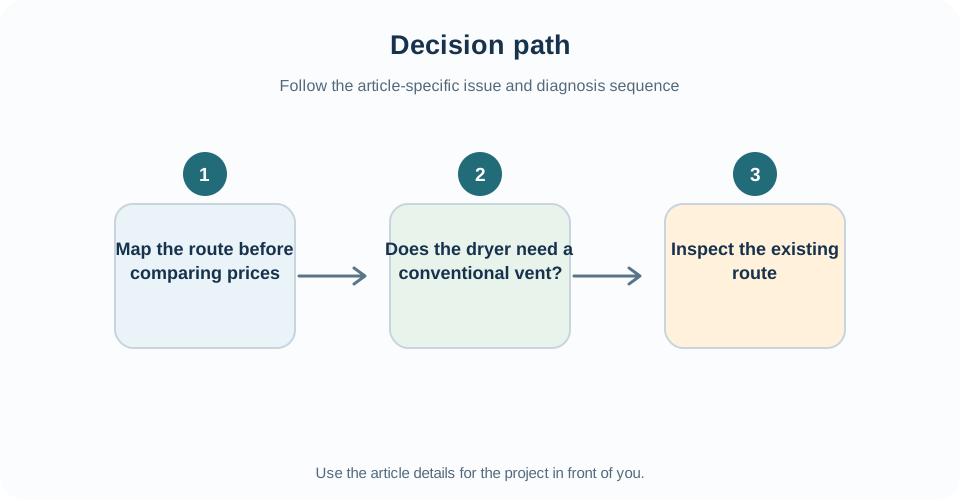
Does the dryer need a conventional vent?
Conventional electric and gas dryers exhaust warm humid air. ENERGY STAR describes heat-pump dryers as not requiring conventional exterior ventilation, although their electrical, clearance, condensate, and model-specific requirements still apply. Confirm the chosen dryer technology before budgeting a vent.
Do not assume a “ventless” model has no installation work. It may need a condensate tank or model-approved drain, and service access still matters.
Inspect the existing route
A technician should identify the route, material, joints, slope, termination, access, and condition. A long, restricted, crushed, disconnected, or poorly terminated path can cause poor drying and excessive heat. A short connection can be different from replacing the route through a wall.
Ask whether the quote covers inspection, cleaning, repair, replacement, termination, access, and testing. A cleaning service does not automatically repair a damaged or unsuitable route.
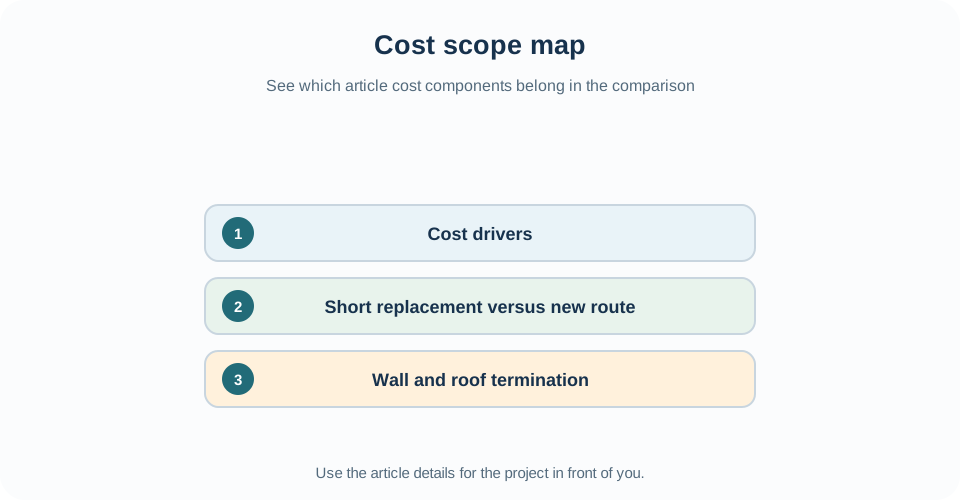
Short replacement versus new route
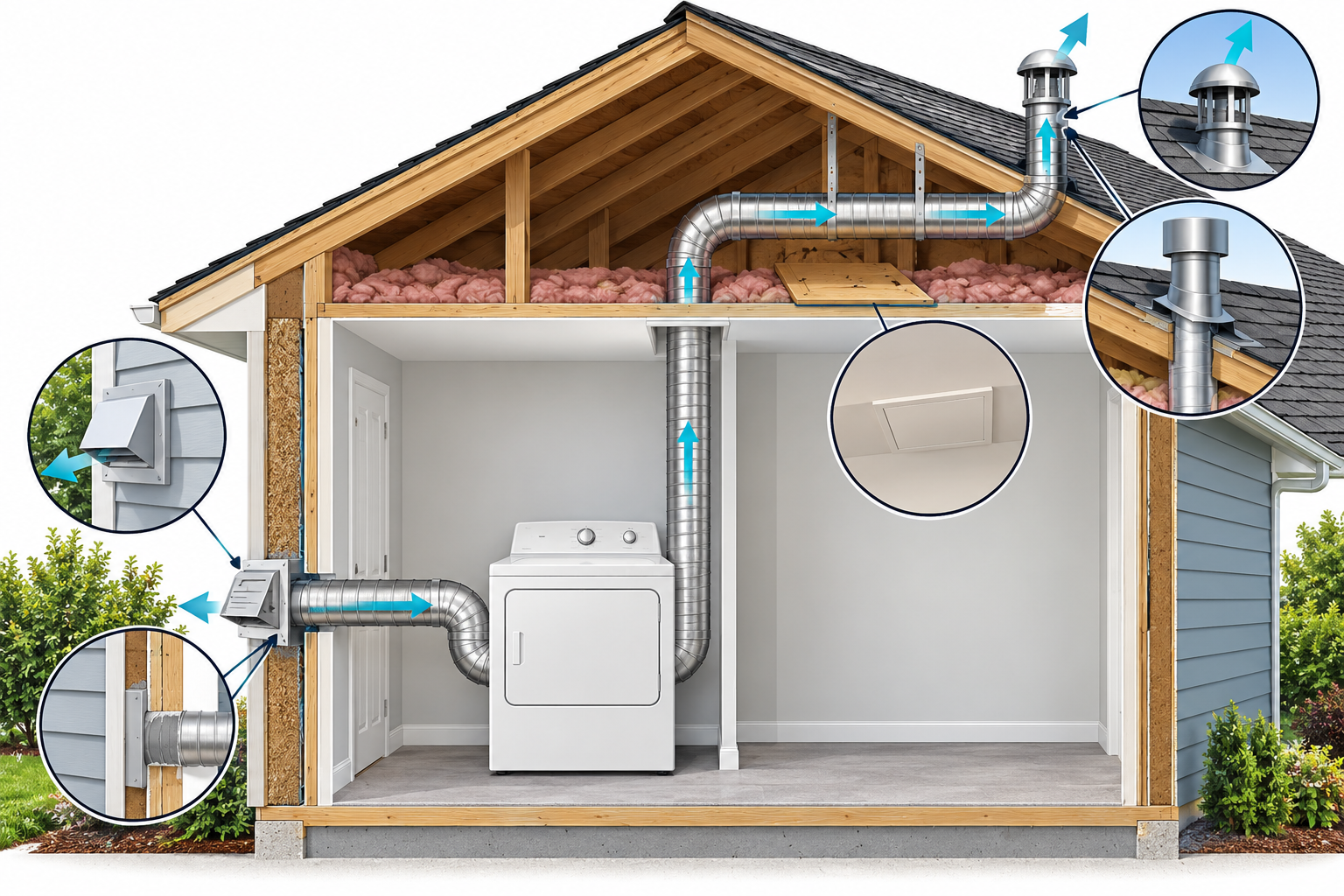
A short replacement may involve moving the dryer, protecting the floor, installing a model-compatible connection, and checking airflow. A new route can require drilling, framing, exterior termination, weather sealing, insulation or fire separation considerations, and finish repair. Roof or high-wall termination increases access and coordination.
The exact materials and routing requirements depend on the appliance manual and applicable local authority. Do not use a generic online maximum length or material claim as a universal code rule.
Wall and roof termination
Termination location affects labor, weather protection, access, exterior appearance, and local approval. A route through a roof or high wall may require a roofer, siding contractor, or access equipment. A termination near an obstruction can affect performance and maintenance.
Ask who owns exterior flashing, siding, roofing, firestopping, insulation, and interior finish. Keep any building restoration separate from appliance connection labor when the scopes are different.
Gas and electric dryers
Both conventional gas and electric dryers need an appropriate exhaust arrangement, but gas appliances also have fuel and combustion considerations. Gas connection work should be performed by the qualified provider required by the jurisdiction. Do not modify fuel or electrical systems based on this article.
The selected manufacturer’s instructions and local requirements control the installation. The appliance installer should identify whether the existing connection is acceptable or whether a separate ventilation, electrical, or gas project is necessary.
Cost drivers
The main drivers are route length and complexity, number of bends, wall or roof access, finished surfaces, exterior termination, crawl-space or attic conditions, height, inspection and permit needs, cleaning, and whether the dryer must be moved or stacked. A remote or occupied home can add scheduling and protection costs.
Ask for a scope with labor, materials, access equipment, termination, testing, disposal, and restoration. A low quote that covers only a visible connection may not solve an inaccessible route problem.
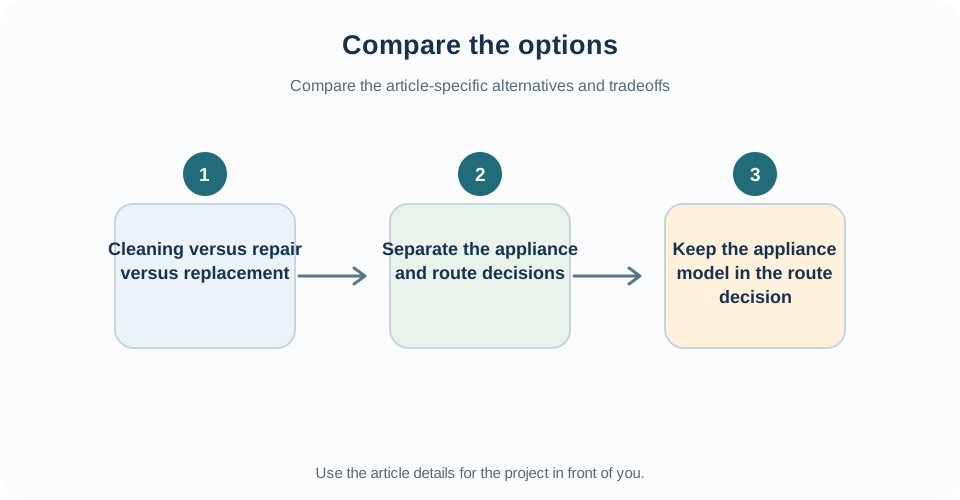
Cleaning versus repair versus replacement
Cleaning can be appropriate when the route is intact and only accumulated lint or debris is the issue. Repair may be needed for a crushed, disconnected, leaking, or poorly supported path. Replacement may be more practical when the route is inaccessible, materially unsuitable, or too costly to correct.
A heat-pump dryer may avoid a conventional exhaust route, but compare its equipment price, condensate, electrical, cycle, and service costs. This is a technology choice, not a reason to ignore a gas or electrical hazard.
Safety boundary
If the dryer produces smoke, a burning smell, gas odor, abnormal heat, or repeated overheating, stop using it and obtain qualified help. Do not bypass a safety device, insert improvised materials, or construct a new exhaust route from generic instructions.
U.S. and Canadian differences
Ventilation rules, building approvals, labor, taxes, access, and installation packages vary by jurisdiction. Canadian requirements need local verification. U.S. source material or contractor pricing should not be converted into a Canadian estimate.
Quote checklist
Ask whether the project is cleaning, repairing, or replacing; what route and termination are included; who verifies the model; how walls, ceilings, roofs, and siding are restored; whether gas or electrical work is separate; and how the system will be tested. The right dryer-vent budget follows the route from appliance to exterior, not just the first visible connection.
Map the route before comparing prices
Have the provider identify the dryer’s location, the full route, each bend or transition, the material, the termination, access points, and the surfaces that must be opened or restored. A visible short connector does not prove that the concealed route is intact. Ask whether the quote includes removing an abandoned section, supporting the route, sealing penetrations, protecting insulation, and restoring drywall, siding, ceiling, or roofing.
The route can also affect delivery and future service. A stacked dryer, tight closet, attic, crawl space, roof termination, or appliance behind finished cabinetry may turn a vent correction into an access project. If the dryer is gas, keep gas work separate and qualified. If the problem may be electrical, keep that diagnosis separate too. One contractor’s low visible-connection price is not comparable with a quote that includes the concealed route and restoration.
Decide whether to keep, correct, or change technology
Cleaning is a maintenance scope when the route is otherwise suitable. Repair is a correction scope when a connection is loose, crushed, disconnected, or damaged. Replacement is sensible when the route cannot be reliably accessed or corrected, or when the existing path does not suit the selected appliance. A heat-pump dryer may remove the conventional exhaust requirement described by ENERGY STAR, but it introduces equipment, condensate, electrical, cycle, and service comparisons. It does not automatically make every laundry room project simple.
Ask for the evidence behind the recommendation and the test that will confirm the result. The handoff should state whether the appliance starts and runs, the connection is secure, the termination operates as intended, and the surrounding finishes are protected. If smoke, a burning odor, gas odor, or repeated overheating is present, stop using the dryer and obtain qualified help rather than commissioning another cleaning visit.
Separate the appliance and route decisions
A dryer can be operating poorly because of the appliance, the exhaust path, or both. Ask the provider to say which observation supports each conclusion and whether the proposed work changes the route, cleans it, repairs it, or replaces it. If a heat-pump model is considered, compare its condensate and service requirements with the cost of correcting the conventional route.
Document the route for the next service visit
Keep the route, termination, access points, model, and restoration record with the appliance paperwork. If a wall, ceiling, attic, crawl space, or roof is opened, photograph the concealed work before closing it. Future cleaning, replacement, and troubleshooting are easier to price when the path and responsibility are known.
Keep the appliance model in the route decision
A route that suits one conventional dryer may not suit another model, stack, termination, or room. Confirm the exact model before approving a new path, and confirm whether a technology change removes or changes the conventional exhaust scope. The route should be priced with the appliance, not as an isolated construction line.
Keep the route serviceable
The completed work should leave the appliance, route, termination, and access conditions understandable to the next provider. Save photographs of concealed work, model-specific instructions, test results, and the responsibility for future cleaning or correction.
Budget for timing and ownership
Vent work can delay delivery, cabinetry, painting, or occupancy. Add access equipment, permits or inspection where applicable, temporary laundry, removal and disposal, and the cost of coordinating multiple trades. Keep U.S. contractor ranges and Canadian local quotes in their own market context; ventilation requirements and pricing are jurisdiction-specific.
Ask what success will be measured against
Before work begins, record the appliance model, route, termination, access conditions, and symptom. The provider should explain whether the work is intended to remove lint, correct damage, improve a route, or change the appliance technology. Ask what will be inspected after the work and what evidence supports the recommendation. A route that looks clean at the connection can still have a concealed restriction, failed termination, or access problem.
Include restoration and future service
Opening a wall, ceiling, roof, or exterior finish can create a restoration scope. Include patching, waterproofing, insulation, paint, siding, roofing, cleanup, and protection where applicable. Keep the route accessible enough for future inspection and appliance replacement. A quote that solves today’s airflow symptom but leaves the next service event impossible is not a complete ownership plan.