
A dishwasher replacement is inexpensive only when the opening, floor height, water supply, drain route, electrical connection, and access are already compatible. The project budget can include the appliance, delivery, removal, installation labor, hoses and fittings, leveling, a drain or air-gap change, electrical work, cabinet or floor correction, disposal, and taxes.
Confirm the replacement type
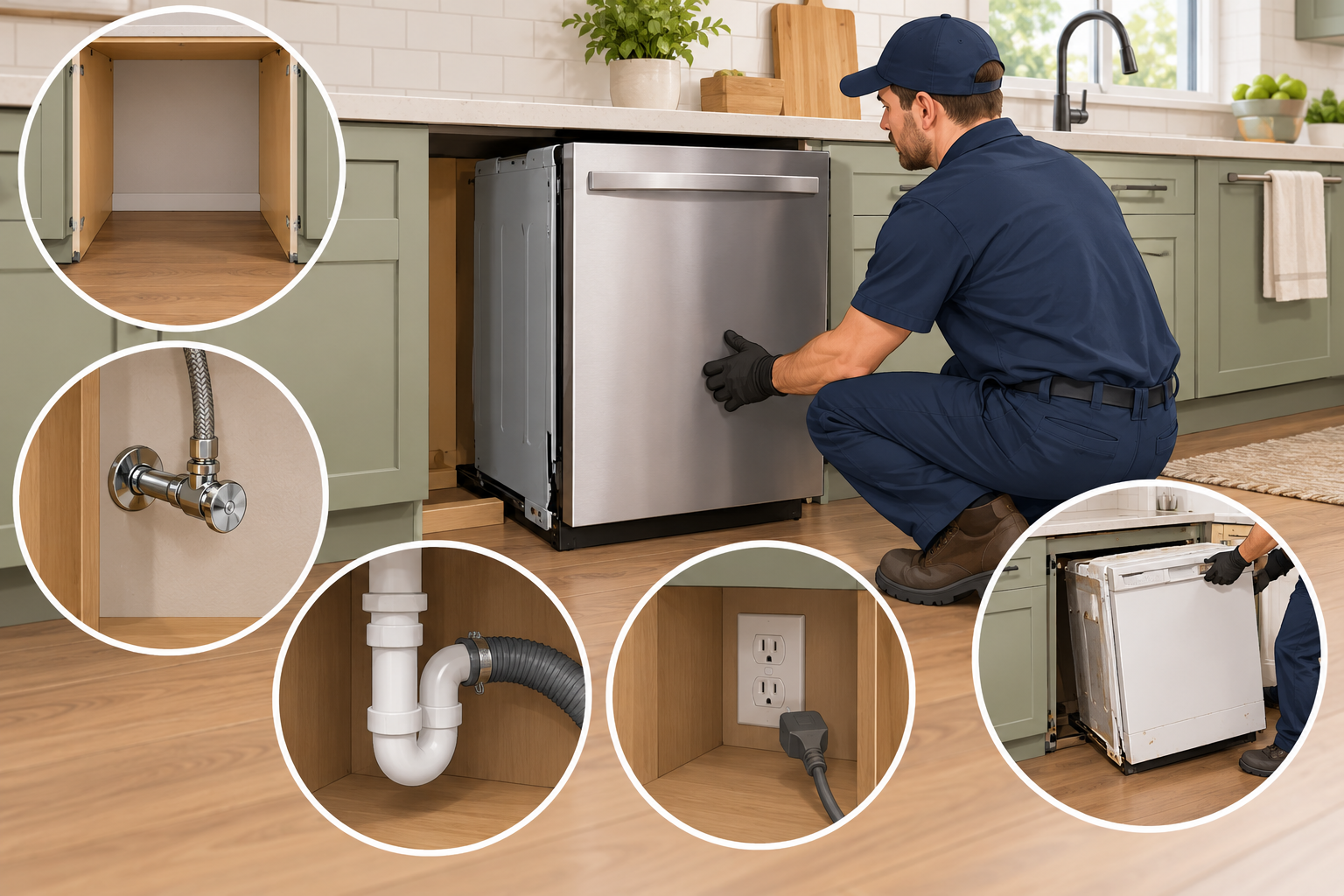
Start with the existing dishwasher’s width, height, depth, door clearance, control location, and opening condition. Measure the floor from the finished surface to the underside of the counter. A new floor layer or a previous remodel can leave too little height to remove the old dishwasher or fit the new one.
Record the existing water, drain, and electrical connections. A like-for-like replacement does not guarantee a like-for-like hookup. The new model may have different connection locations, an installation-kit requirement, or instructions that limit how the drain and power are arranged.
Appliance and basic labor
U.S. specialist market information reports dishwasher unit prices around $400 to $1,200 and replacement installation labor around $200 to $500, but those figures are source-specific and may omit delivery, materials, taxes, removal, or trade work. Canadian prices and packages must be obtained locally; do not convert the U.S. figures.
Ask whether the retailer’s installation price includes delivery to the kitchen, disconnecting the old unit, connecting existing compatible services, leveling, testing, packaging, and haul-away. A basic replacement package may exclude a new valve, drain correction, electrical conversion, cabinet modification, or difficult access.
Water supply and drain
The water supply needs an accessible, compatible connection. The drain path may connect through an air gap, a high loop, a disposal, or another arrangement permitted by the model instructions and local requirements. Do not treat one manufacturer’s manual or one retailer’s diagram as a universal configuration.
The exact installation requirements are model-specific. Check the current manual for the dishwasher being installed rather than relying on a search result or a generic connection diagram. A plumber may be needed when the valve, drain, disposal connection, or concealed piping is unsuitable.
Electrical connection
A present electrical connection may be usable only if it is compatible with the chosen model and local requirements. A damaged receptacle, missing circuit, wiring correction, or change in installation method is separate electrical work. Appliance installers should not improvise a circuit correction.
Ask who verifies the connection, who performs any electrical work, and whether an inspection is required. Do not publish or rely on a universal circuit, breaker, cord, or receptacle statement without the model’s instructions and jurisdiction-appropriate authority.
Removal and floor condition
Old dishwashers can be difficult to remove when the floor was raised, the unit is trapped under the counter, fasteners are inaccessible, or water damage has swollen surrounding materials. Ask whether removal is included and what happens if the old unit cannot be pulled out without cabinet or flooring work.
Inspect the floor and cabinet base after removal. A leak may have damaged subfloor, trim, or cabinets. Appliance installation does not include restoring a damaged building assembly unless the quote says so. Resolve hidden damage before sealing the new appliance in place.
Counter and cabinet implications
A standard opening may accommodate many models, but control placement, depth, door swing, trim, and countertop overhang can differ. A new model can leave a gap, hit the floor, or prevent access to the filter and connections. Ask the installer to verify the exact model rather than promising that all standard dishwashers fit.
Cabinet modification, counter work, and kitchen-layout changes belong to the kitchen-remodel scope. The appliance quote should identify them as dependencies, not silently include or exclude them.
Energy and water use
Dishwashers are distinct equipment classes in U.S. energy-efficiency standards and Canadian EnerGuide labeling. Use the exact model’s current information to compare annual energy and water use with similar capacity and cycle assumptions. The label is not a prediction of your bill; water rates, water-heating source, cycle choices, usage, and local electricity rates change the result.
An efficient unit may have a higher purchase price but lower ownership cost. Model the difference over the period you expect to own it, then include installation, repairs, filters or consumables, and disposal. Do not assume that the most efficient label automatically produces the lowest total project cost.
Repair or replace
Before replacing a functioning dishwasher, compare a confirmed repair. A localized pump, latch, seal, or control issue may be worth repairing when the tub and cabinet are sound. Replacement is stronger when the tub leaks, parts are obsolete, repairs repeat, the machine has poor cleaning performance, or the repair approaches the installed price of a suitable new unit.
U.S. and Canadian differences
Retailer installation packages, labor, taxes, plumbing practices, electrical requirements, disposal services, and appliance availability vary by market and region. A Canadian quote should be in Canadian dollars and state its inclusions. A U.S. online average cannot establish a Canadian budget.
Compare a ready replacement with correction work
A ready replacement assumes the measured opening, floor height, door clearance, carry route, water supply, drain, and electrical connection suit the exact model. Check the manual for fit and connection requirements. A correction project may add a shutoff, drain or wiring work, floor or cabinet repair, counter changes, or a separate removal crew. Keep each dependency as a separate quote line.
Retailer listings are dated service examples, not a market survey. Home Depot Canada lists basic installation at $189 plus tax and haul-away at $45 plus tax for an eligible purchase and prepared location. Best Buy Canada lists installation starting at $199.99 and same-day haul-away separately at $49.99; permit fees may apply. Neither page states an ISO currency code, and eligibility, included work, taxes, and service areas differ. Confirm current local terms.
During commissioning, check level, door movement, drainage, leaks, abnormal noise, controls, and the connection area. Ask who records the first-cycle check and handles a callback. Connecting the appliance may not include replacing a leaking shutoff, correcting a building drain, or repairing a wet floor or cabinet; name the responsible trade and restoration scope. Separate equipment, delivery, removal, hookup, correction, testing, taxes, and warranty in the final comparison.