A U.S. 2026 cost guide estimates about USD $400–$1,200 for a straightforward retrofit of a 4- or 5-inch media cabinet, with a midpoint of $750. If the return duct needs modification, the same guide gives USD $700–$1,800. Replacement media are estimated at USD $25–$100 each. These are one specialist guide’s planning figures, not a national survey or a quote for your system. Canadian listings are too incomplete and inconsistent to support a comparable installed range. The key question is whether the cabinet, filter, return, and blower work together after installation.
What the upgrade changes
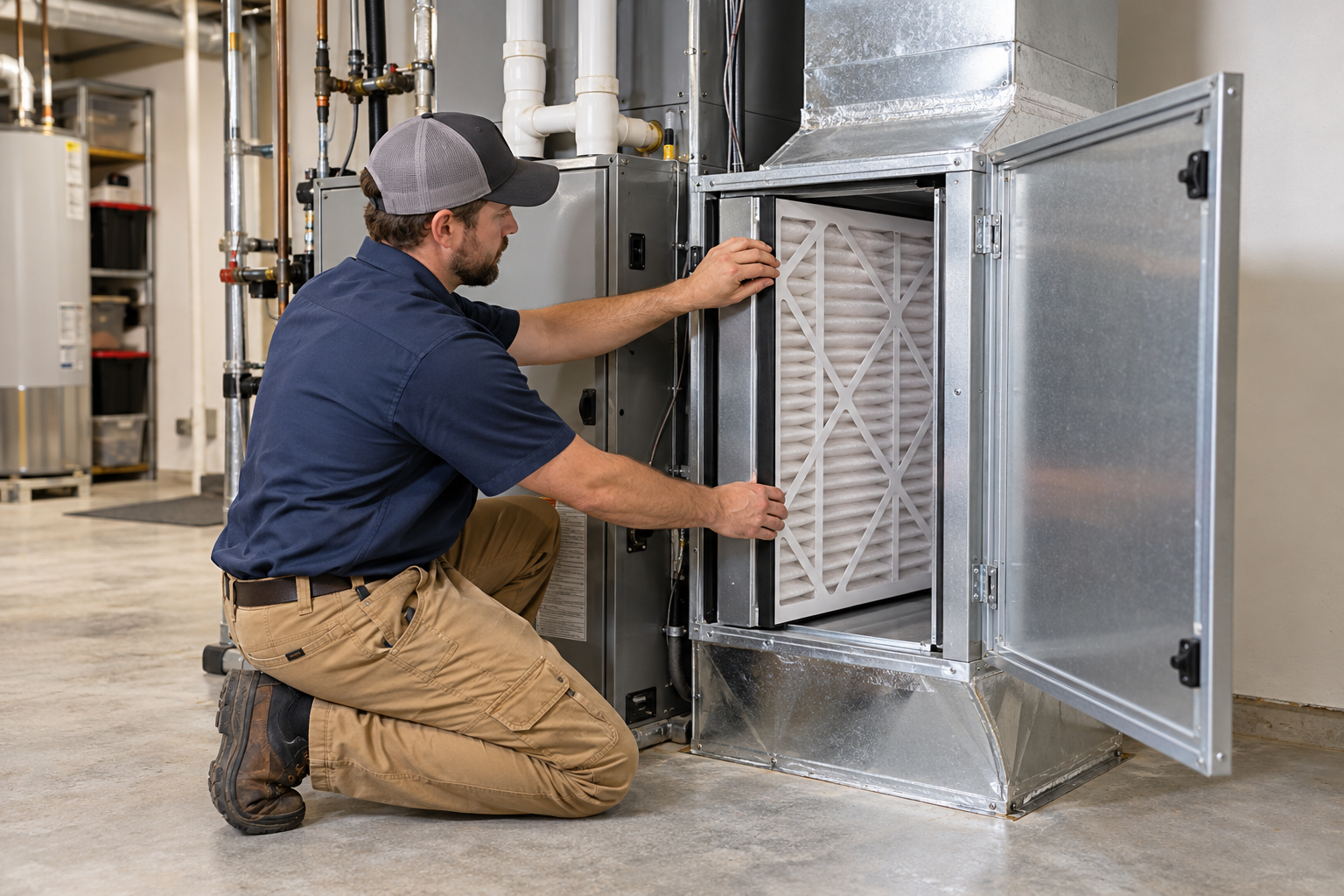
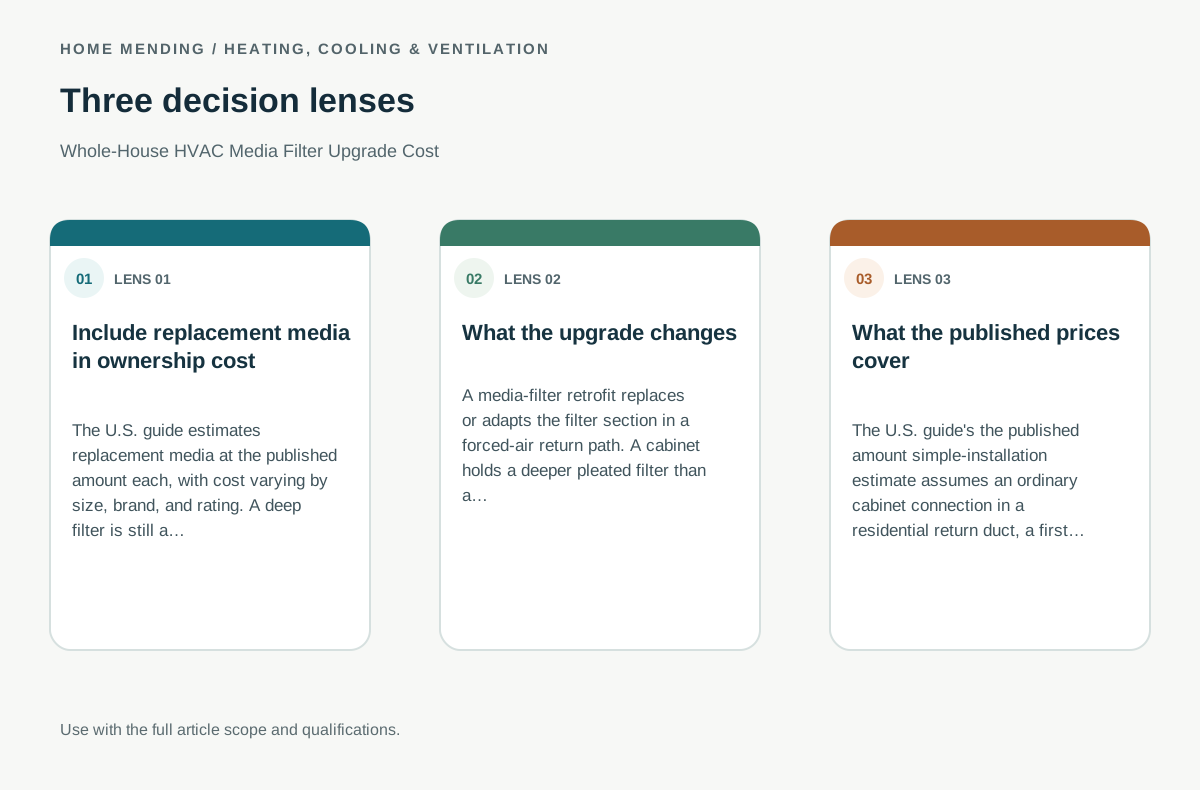
A media-filter retrofit replaces or adapts the filter section in a forced-air return path. A cabinet holds a deeper pleated filter than a typical thin disposable filter. The project may include the cabinet, a correctly sized filter, sheet-metal transitions, sealing, labor, and a check that the air path still meets the equipment’s requirements. It is different from buying a replacement filter for an existing cabinet, cleaning ducts, or adding a separate room air cleaner.
The term “whole-house” describes where the central system moves air. It does not mean every room receives equal airflow at every moment, and it does not mean a filter removes every indoor pollutant. The EPA’s home air-cleaner guidance describes filtration as one part of an indoor-air strategy alongside reducing pollutant sources and using ventilation when outdoor air is clean. A cabinet upgrade should solve a specific filtration need while preserving system operation.
What the published prices cover
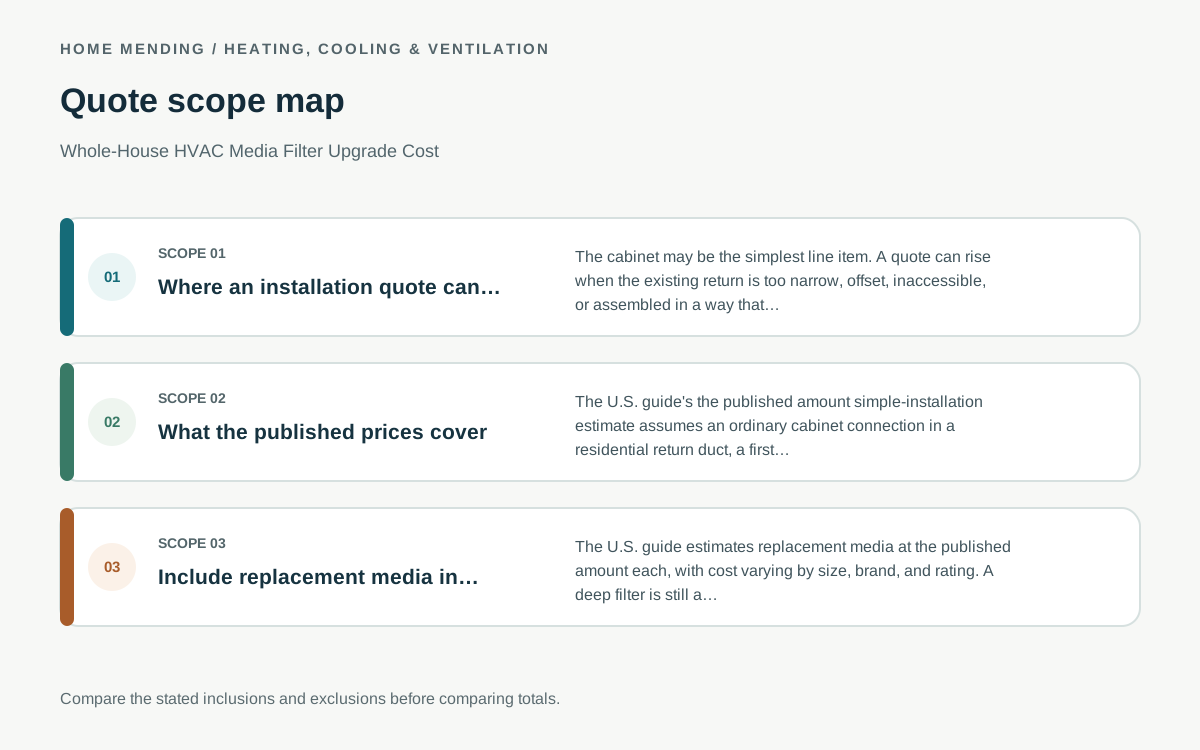
The U.S. guide’s USD $400–$1,200 simple-installation estimate assumes an ordinary cabinet connection in a residential return duct, a first filter, and basic labor. Its separate USD $700–$1,800 estimate covers jobs involving duct changes. The guide says return geometry, cabinet size, access, sheet-metal transitions, and equipment pressure-drop limits can affect the project. It does not disclose a transparent transaction sample, so treat the figures as a starting point for asking questions rather than a promised local range.
One Ottawa retailer lists a particular MERV 11 product at CAD $800 on sale and CAD $960 regular price under a title that says “with installation.” The page does not itemize labor, return modifications, commissioning, shipping, tax, service-area limits, or compatibility with a specific home. That single model offer is useful to ask about, but it is not a Canadian market range. Other Canadian pages show dollar amounts without identifying the currency or a complete scope; one Toronto contractor page also displays conflicting price representations. Those listings cannot responsibly be combined into a CAD estimate.
For a Canadian project, ask for a written local quote in the currency used for the contract. Confirm whether the amount includes the media cabinet, first filter, labor, duct adaptation, sealing, airflow or pressure checks, travel, shipping, tax, and any return visit. A product listing marked “installation” can omit work that a particular return layout needs.
Confirm airflow and equipment compatibility first
MERV is a particle-capture rating, not a universal measure of how suitable a filter is for a particular furnace or air handler. A higher-rated filter may create more resistance to airflow, depending on filter area, depth, construction, loading, and the system’s design. The EPA technical summary explains that pressure drop and airflow matter when selecting a central filter. A MERV 13 filter is not automatically compatible simply because it is available or recommended for a particular smoke-response use.
Ask the contractor to identify the proposed cabinet and exact filter model, then compare those specifications with the furnace or air-handler documentation. The return opening, blower capacity, coil, existing filter slot, and available cabinet space all matter. The person preparing the quote should explain how the selected filter’s resistance fits the equipment limits and what will be checked after the change. If a filter is intended for wildfire-smoke particles, follow the EPA and equipment manufacturer’s compatibility advice rather than treating the rating as a stand-alone instruction.
A filter that does not seal against its frame can allow air to bypass the media. A cabinet that reduces return area or is fitted poorly can also affect operation. Ask what the installer will verify about fit, leakage, airflow, and system performance, and whether the proposal includes documenting those checks. This is a contractor and equipment question, not a reason to alter the blower or duct yourself.
Where an installation quote can grow
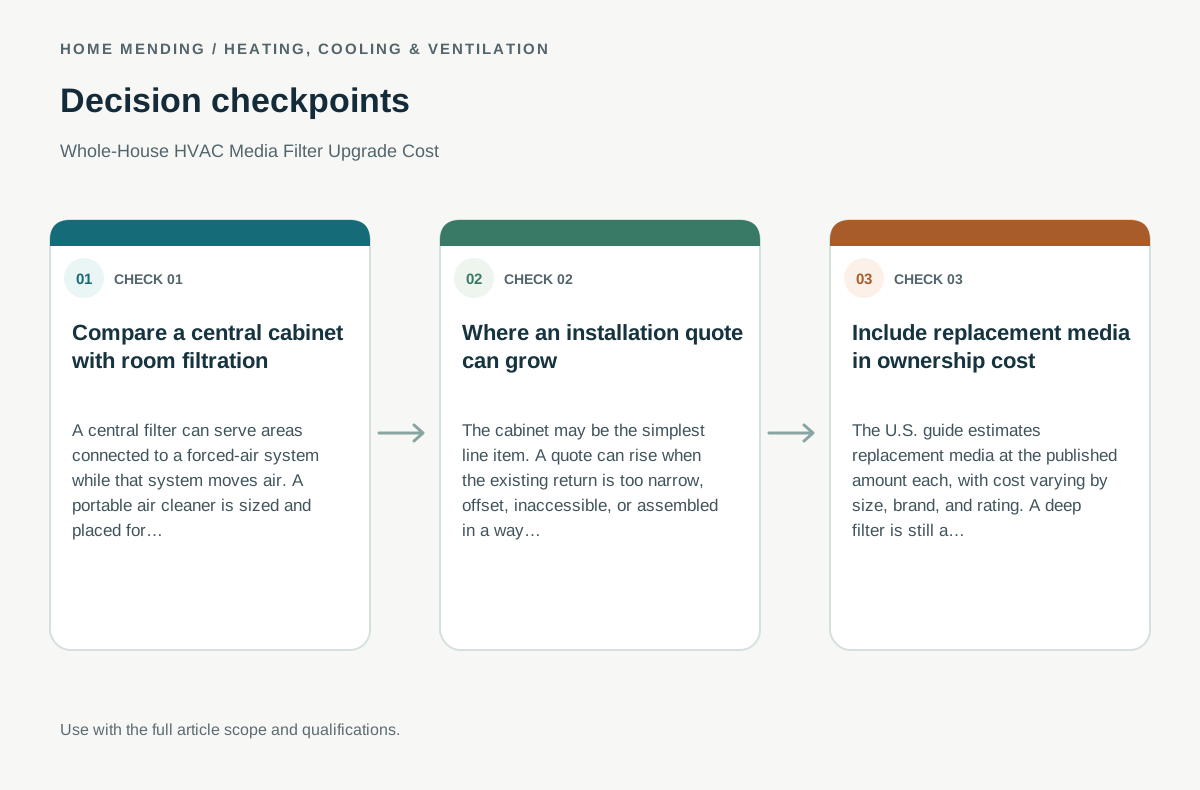
The cabinet may be the simplest line item. A quote can rise when the existing return is too narrow, offset, inaccessible, or assembled in a way that does not match the proposed cabinet. The contractor may need to adapt sheet metal, move nearby obstructions, provide space to remove the filter, seal connections, or restore a finished surface. A basement mechanical room and a crowded attic or closet do not have the same access conditions.
Include the first filter and identify the replacement size and model. Confirm whether the work changes the blower compartment, return grille, furnace cabinet, or another part of the system. Ask whether any required electrical, duct, or finish work is included, and who is responsible for permits if they apply locally. The media-filter job should remain separate from optional duct sealing, a new blower, UV equipment, or a full air-cleaner system so the base retrofit can be evaluated on its own.
Price the upgrade now and as part of a planned furnace or air-handler replacement. During an equipment replacement, the contractor may be able to select the cabinet and return arrangement with the new blower and coil. Bundling is worthwhile only if the proposal shows the cabinet’s incremental price and does not hide unrelated work inside a package total.
Include replacement media in ownership cost
The U.S. guide estimates replacement media at USD $25–$100 each, with cost varying by size, brand, and rating. A deep filter is still a recurring purchase. Confirm the exact replacement model, current local availability, price, and the manufacturer’s change guidance before comparing a cabinet with a lower-cost filter option. Filter life depends on the product and operating conditions; there is no universal interval that applies to every home.
Use the expected replacement schedule from the filter and system instructions to build your own annual budget. For example, if the exact product and household use call for more than one replacement a year, multiply that model’s local price by the expected number of filters. Do not turn a seller’s generic interval into a requirement for your system. Dust, pets, renovation debris, smoke events, system runtime, and filter loading can change when a filter needs attention.
If the system fan is run more often for filtration, ask about the operating effect on your equipment and electricity use. The amount depends on fan power, speed, runtime, and local electricity rates. Neither a MERV rating nor a general product comparison predicts a household’s bill. A contractor can identify fan settings that the equipment supports; compare the estimated runtime cost with the air-quality benefit you actually want. During cooling season, also ask whether a continuous fan setting could affect humidity or comfort with the home’s particular coil and controls. Do not assume the effect is the same in every system.
Compare a central cabinet with room filtration
A central filter can serve areas connected to a forced-air system while that system moves air. A portable air cleaner is sized and placed for one room and can be useful where the house has no central HVAC, where a room needs additional coverage, or where the central fan should not run continuously. The EPA’s wildfire filtration guidance says to use a central filter only at an efficiency the HVAC system can accommodate and emphasizes fit and operation. Its comparison of room units and central filtration is conditional, not a household price quote or guarantee of equal performance.
Consider the size of the area you need to serve, how often the central system runs, whether the filter fits the blower, and the purchase and recurring costs of each option. During poor outdoor-air conditions, ventilation choices change; filtration does not make an unsafe outdoor-air exchange appropriate. For a health concern, source control and qualified advice may matter more than installing a filter cabinet. This guide is about the cost and fit of a central HVAC retrofit, not diagnosis or a promise to remove a particular contaminant.
Questions to ask before approving the work
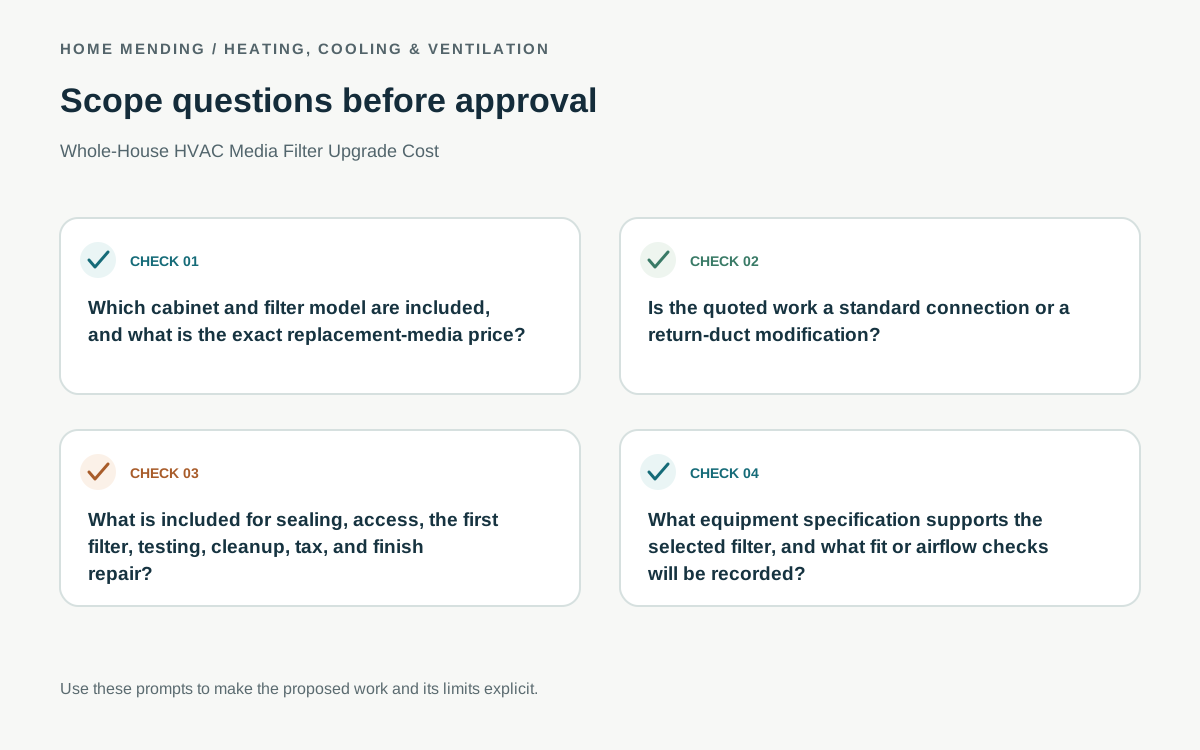
- Which cabinet and filter model are included, and what is the exact replacement-media price?
- Is the quoted work a standard connection or a return-duct modification?
- What is included for sealing, access, the first filter, testing, cleanup, tax, and finish repair?
- What equipment specification supports the selected filter, and what fit or airflow checks will be recorded?
- Which replacement schedule does the manufacturer specify for this model and use?
- What changes if the cabinet is installed during the next furnace or air-handler replacement?
- Are any permit, electrical, duct, or service charges excluded?
An upgrade is easier to evaluate when the reason for it, the system compatibility basis, and its recurring media price are visible. If a quote promises improved health, guaranteed smoke protection, lower bills, or universal MERV compatibility without explaining the home-specific conditions, ask for a narrower claim and a defined scope before paying for the retrofit.