
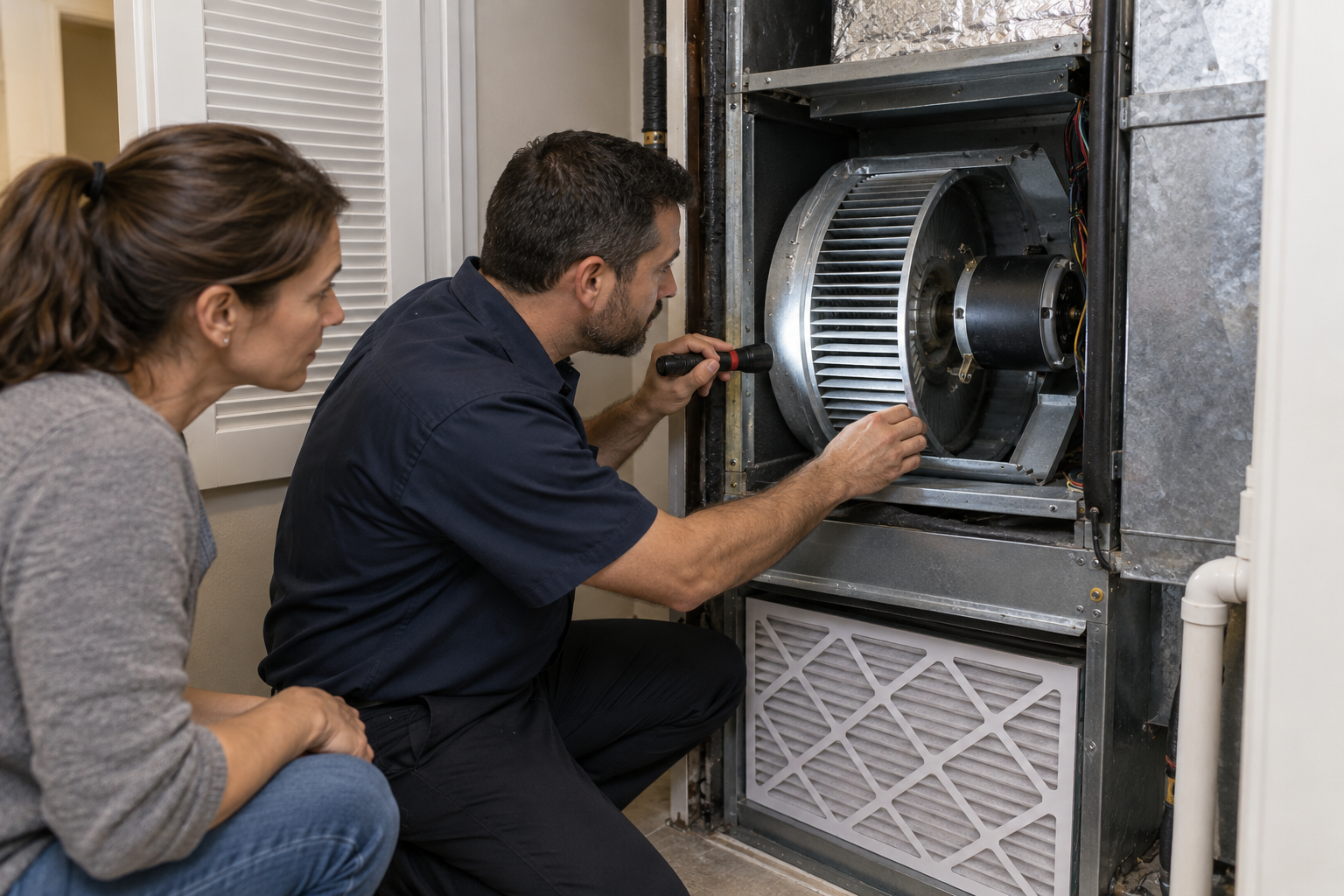
“The blower needs replacement” can mean a motor, wheel, capacitor or control, or an entire air handler. The blower may be integrated into a furnace, paired with a heat pump, or housed in a separate air handler. The active evidence does not support a universal component price, so the quote must identify the assembly and the airflow problem it is meant to solve.
Illustrative planning scenario (U.S. dollars, September 2026)
This is a scope-bounded example, not a market average: assume $250 for diagnosis, $650 for a replacement motor, and $450 for labor, setup, and testing. The illustrative total is $1,350 before tax; a control board, wheel, cabinet, or airflow correction would be a separately justified scope.
Decide whether the motor is the whole repair
Check the filter, blower wheel, cabinet, coil, controls, duct restriction, airflow, and access condition before treating the motor as an isolated failure. A motor can fail because of another condition, and a motor repair cannot solve a room-specific distribution problem. Ask what testing will be performed after replacement.
Compare part repair with an air-handler replacement when age, corrosion, coil condition, condensate, controls, or repeat failures change the risk. Include removal, equipment match, duct transitions, electrical, access, commissioning, warranty, and service. The best budget follows the complete failure pattern.
The blower moves conditioned air through the ducts. A noisy, weak, or non-running blower can result from the motor, control, wheel, filter, duct restriction, wiring, or a broader system problem. Uneven rooms can persist after a motor replacement if the return, branches, balancing, sizing, or envelope is the real issue.
ENERGY STAR recommends considering ducts, airflow, controls, sizing, and installation quality as part of system performance. A component quote should therefore state whether airflow was measured and whether related restrictions were found.
Repair scopes
Possible work includes motor or module replacement, wheel cleaning or replacement, capacitor or control repair, belt or bearing work where applicable, cabinet or coil access, wiring, filter or duct correction, and full air-handler replacement. Motor technology and compatibility are equipment-specific; do not assume one motor type is interchangeable with another.
Cost drivers
Access, cabinet configuration, motor type, parts availability, heat-pump or furnace integration, coil condition, controls, and testing affect the bill. An attic or tight closet can make access and protection significant. If the air handler contains a coil or controls that are also aging, compare a larger replacement.
Scenarios
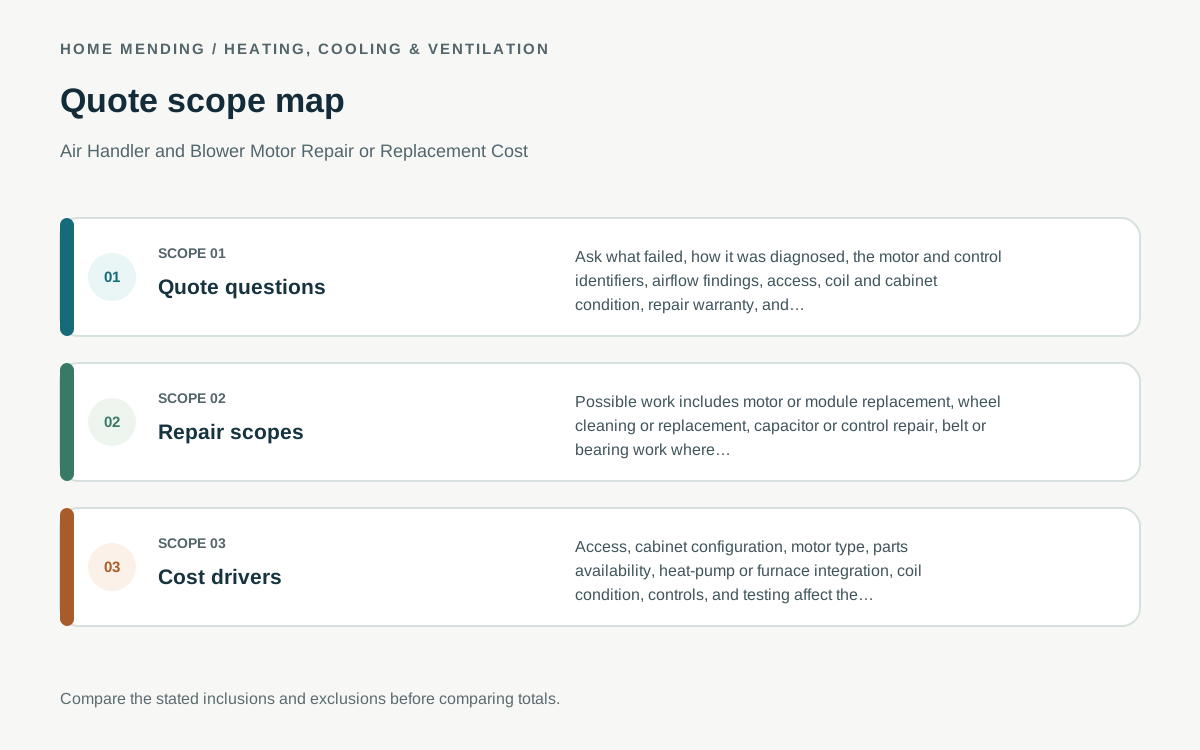
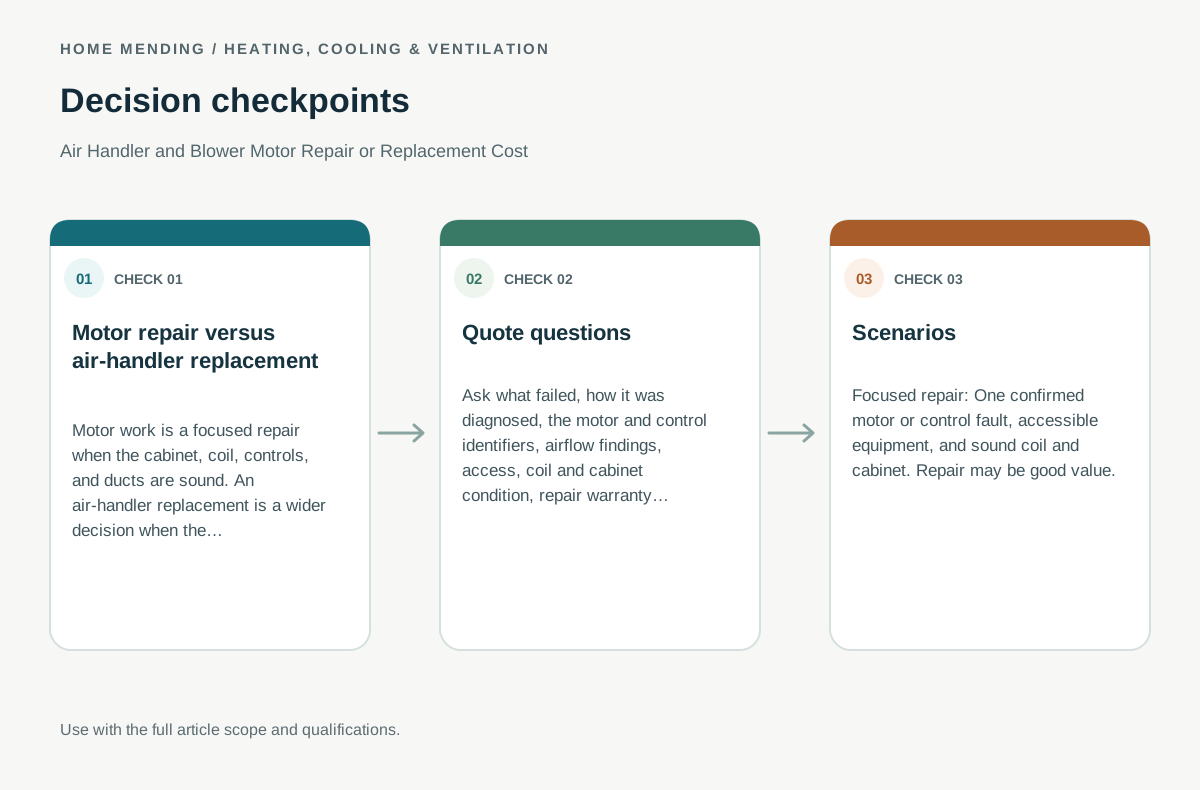
Focused repair: One confirmed motor or control fault, accessible equipment, and sound coil and cabinet. Repair may be good value.
Integrated repair: Motor work also requires wheel cleaning, airflow correction, control replacement, or access protection. Price the complete restoration.
Air-handler decision: The cabinet, coil, blower, and controls are aging together or incompatible with a proposed heat pump. Compare the air-handler replacement with a component repair and include line set, condensate, ducts, controls, removal, and commissioning.
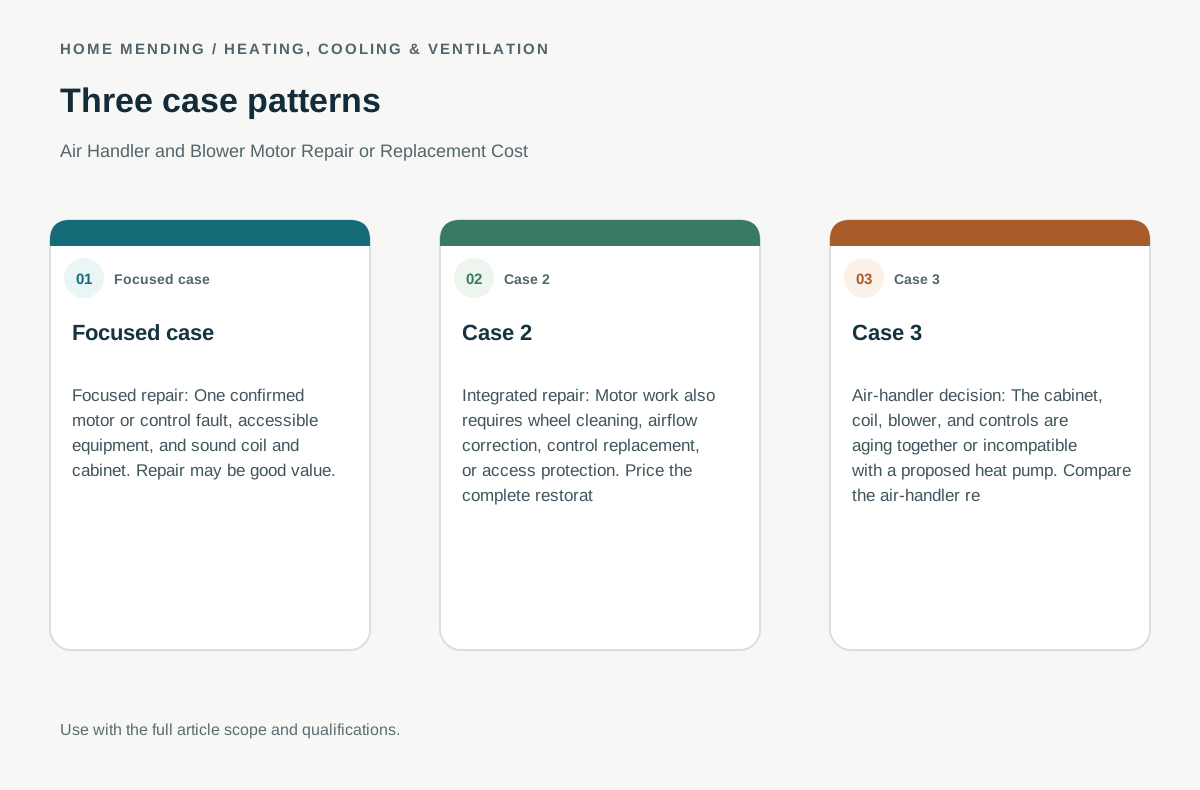
Quote questions
Ask what failed, how it was diagnosed, the motor and control identifiers, airflow findings, access, coil and cabinet condition, repair warranty, and the all-in alternative for replacing the air handler or paired system. Repair when the failure is isolated and the remaining equipment is sound; replace more when the component is part of a broader known system decline.
Motor repair versus air-handler replacement
Motor work is a focused repair when the cabinet, coil, controls, and ducts are sound. An air-handler replacement is a wider decision when the cabinet is damaged, the coil is leaking, controls are obsolete, the blower is integrated into a heat-pump system, or access will be opened once for several components. Ask what equipment is retained and how the indoor/outdoor match is verified.
Define airflow success
Ask whether the quote includes airflow or static-pressure observations, filter and return conditions, wheel inspection, and testing after the repair. A new motor can restore movement without correcting a crushed duct, poor return, or unbalanced zone. If the complaint is comfort rather than “no blower,” include duct or envelope diagnosis in the comparison.
Handle the access risk
Attic and crawl-space equipment can require protection, disassembly, lifting, and finish restoration. Request a defined access assumption and unit prices for concealed work. Compare the repair with a replacement that includes removal, condensate, controls, ducts, testing, and warranty.
Compare part replacement with cause correction
If a motor failed because of a blocked filter, damaged wheel, control fault, restricted airflow, or another condition, replacing the motor alone can shorten the repair’s value. Ask what will be checked before startup and what testing proves the system is operating normally afterward. A localized room complaint may need duct or balancing work instead of a blower repair.
For a long ownership horizon, compare the repair with a complete air-handler replacement when the cabinet, coil, controls, condensate, or blower wheel also show decline. Price access, removal, equipment match, duct transitions, commissioning, and warranty in the replacement option. The best scope restores the air path, not merely a spinning motor.
“No airflow” supports a motor or control investigation. “Poor airflow in one room” supports a duct, return, damper, or balancing investigation. “Noise after a repair” may involve the wheel, mount, cabinet, or control. Ask what the repair is expected to change and what it cannot change.
For a motor repair, record coil, cabinet, blower wheel, controls, filter, duct, and access condition. For an air-handler replacement, include indoor/outdoor match, condensate, controls, removal, duct transitions, testing, and commissioning. A motor covered by warranty can still leave substantial labor or access cost.
Compare the repair with the next likely failure
Repair is stronger when the motor or control fault is isolated, the blower wheel and cabinet are sound, parts are available, and access is straightforward. A broader repair or replacement quote is useful when the unit is old, the wheel is damaged, the coil leaks, the cabinet is corroded, or multiple symptoms are present. Do not use the motor price as a proxy for the condition of the air handler.
Ask what testing will confirm operation after the work: startup, airflow, noise, cooling or heating response, condensate behavior, and control operation as applicable. If the symptom is localized to one room, compare the repair with duct or balancing work. If the entire system is affected, keep equipment and distribution diagnosis separate so the cheapest-looking part does not obscure the actual decision.
Use the failure pattern to set the budget
One failed motor with a sound wheel, coil, cabinet, controls, and accessible unit is a bounded repair. A motor that failed after repeated overheating, a damaged wheel, blocked filter, poor airflow, or control fault may require cause correction as well as the part. A replacement air handler is a different project and should include equipment match, condensate, controls, duct transitions, removal, commissioning, and warranty.
Ask for the part and labor separately, the access assumption, the reason for failure, and the result expected after testing. If the unit is old or several components show decline, compare the repair with replacement before authorizing sequential work. The right choice is based on the condition of the complete air path, not on a motor price alone.