
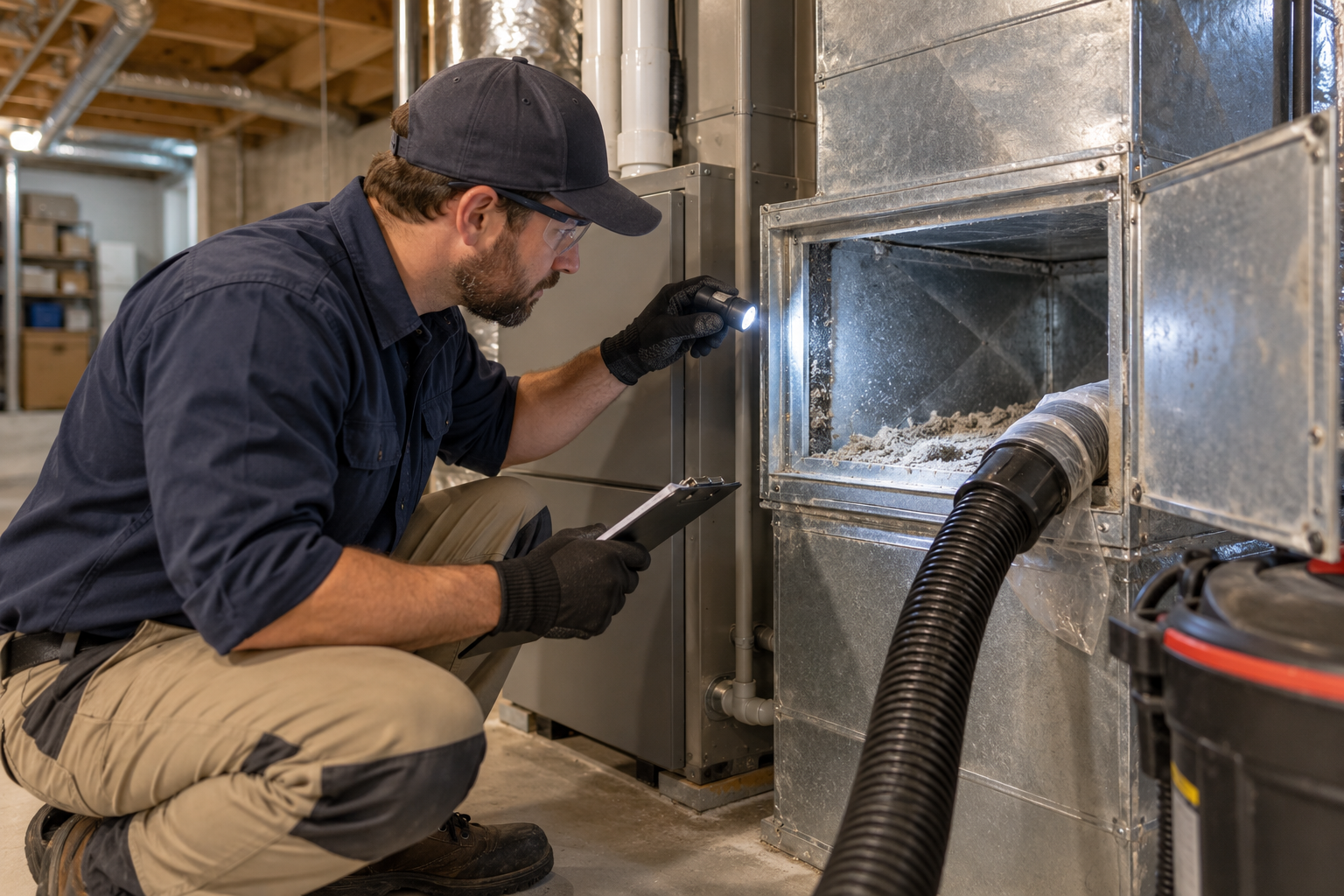
Duct cleaning is not a universal maintenance requirement. EPA says routine cleaning is generally not recommended because benefits are uncertain. It identifies circumstances that may justify investigation or cleaning, including visible mold on hard-surface ducts or HVAC components, vermin infestation, and excessive dust or debris released through supply registers. Wet or moldy fiberglass duct material should be removed and replaced rather than treated as ordinary cleaning.
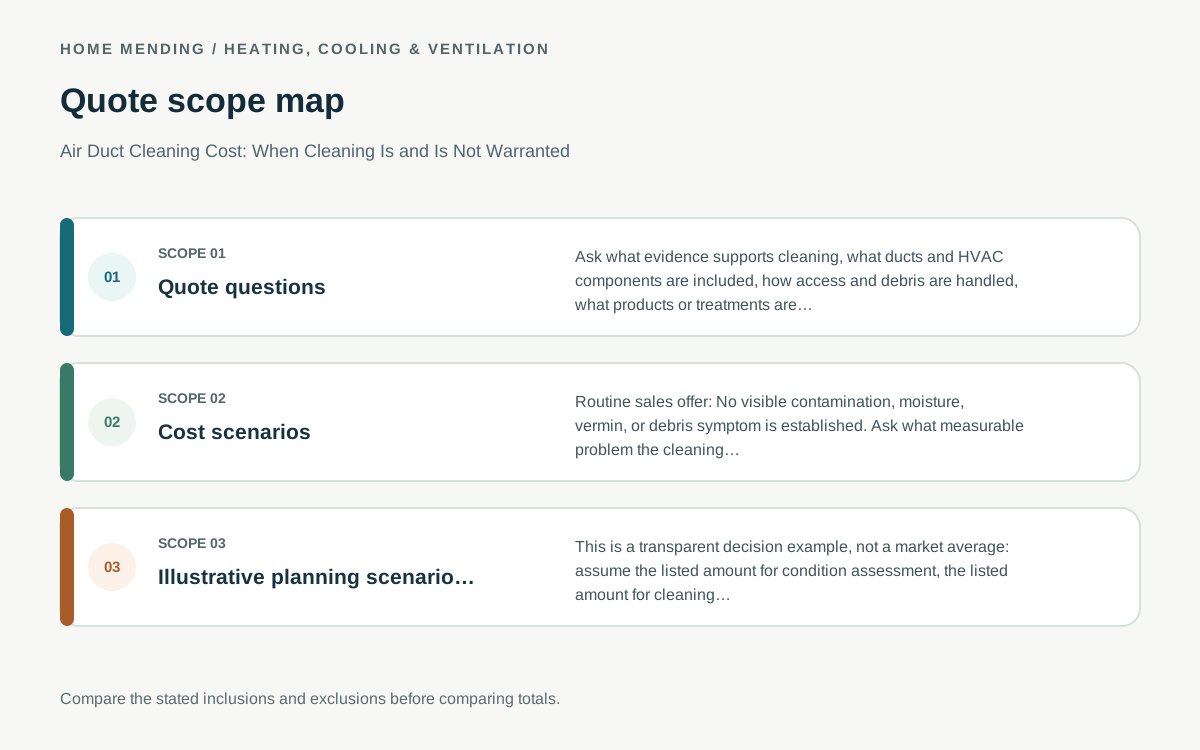
Illustrative planning scenario (U.S. dollars, September 2026)
This is a transparent decision example, not a market average: assume $300 for condition assessment, $900 for cleaning documented hard-surface components, and $1,200 for access, containment, and restoration. The illustrative conditional-cleaning scope is $2,400 before tax; if wet fiberglass or contamination is found, price replacement or remediation rather than assuming cleaning is sufficient.
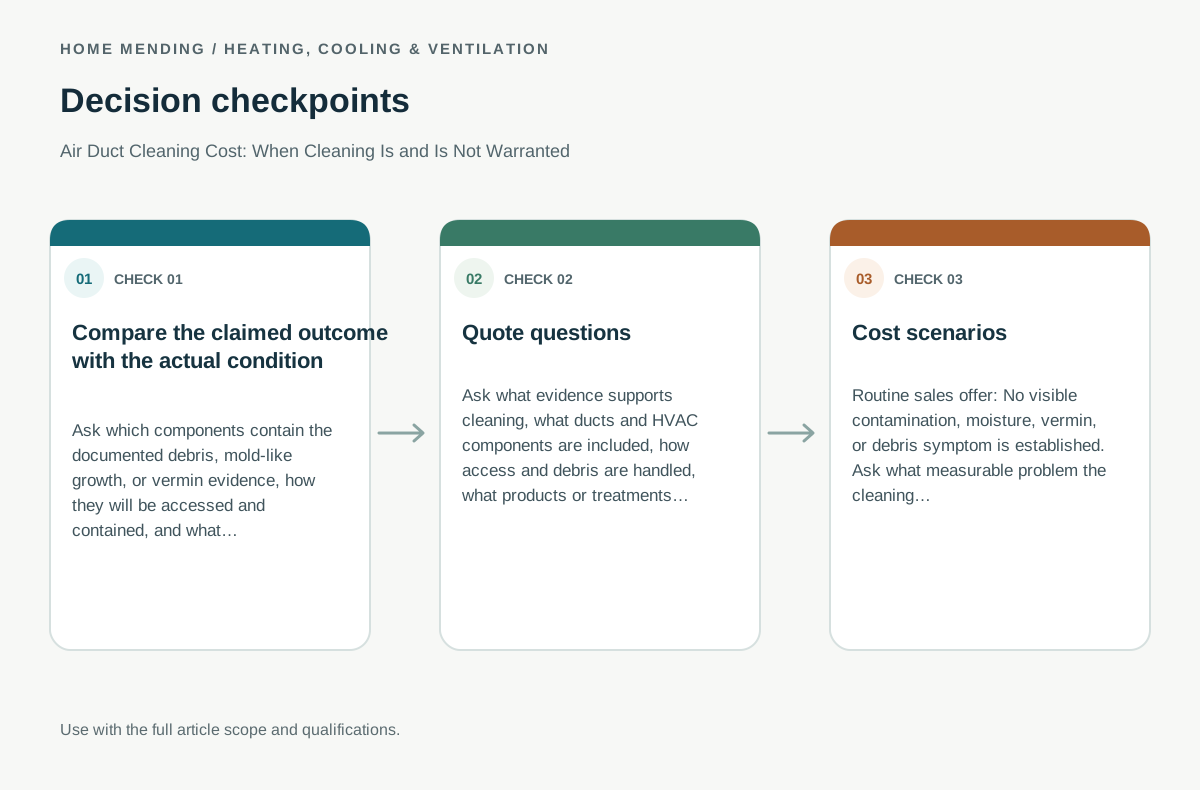
Compare the claimed outcome with the actual condition
Ask which components contain the documented debris, mold-like growth, or vermin evidence, how they will be accessed and contained, and what source correction remains. Cleaning a few accessible registers is a different purchase from cleaning the air handler and connected network. A quote should identify exclusions and avoid converting a conditional service into a routine schedule.
If wet fiberglass, bulk moisture, or a disconnected duct is involved, replacement or source correction may be more relevant. Include openings, protection, disposal, finish restoration, and follow-up in the budget. Cleaning is worthwhile when the condition and outcome are specific; it is weak when the benefit is only a generic promise of healthier air.
Tie the service to a documented condition
The strongest purchase has a specific condition, a defined component list, an access and containment method, and a clear reason cleaning changes the next decision. A weak proposal uses an age-based schedule, counts vents without inspecting the air path, or promises universal health or energy savings. Ask whether the source of debris, moisture, or vermin will also be corrected.
Compare a focused cleaning with source correction, replacement of wet or damaged material, duct repair, or no action when the evidence does not support intervention. Include equipment access, protection, openings, restoration, disposal, and follow-up. EPA guidance makes routine cleaning a conditional decision, not a universal maintenance requirement.
Scope can include access to supply and return ducts, registers, blower or coil surfaces, vacuum equipment, agitation, containment, debris handling, and access restoration. “Whole-house cleaning” is not a standardized service. Ask which components are included, which are excluded, how access will be made, and whether the price changes with the number of runs or condition found.
The active evidence does not establish a universal price or a guaranteed health or efficiency benefit. A specialist market guide may provide a local planning range, but compare scope and not an advertised low entry price.
When investigation may be justified
EPA’s listed circumstances are conditional, not a diagnosis checklist. Visible material should be evaluated; appearance alone does not definitively identify mold. Vermin or excessive debris calls for attention to the underlying cause. Moisture in ducts requires correction of leaks, standing water, or the moisture source. Cleaning without source correction can leave the problem in place.
Wet or moldy fiberglass duct material is a replacement question. Confirmed mold, asbestos, or a health-driven contamination problem may belong primarily to an indoor-environment hazard scope, not ordinary HVAC cleaning.
When cleaning is unlikely to solve the complaint
Cleaning will not repair disconnected, crushed, leaking, undersized, or uninsulated ducts. ENERGY STAR links those conditions with airflow loss, high bills, and uneven comfort. It will not correct equipment sizing, a dirty coil caused by an unresolved filter or airflow problem, water intrusion, or a building-envelope defect.
If the complaint is one cold room, high bills, or weak airflow, compare inspection, duct repair, sealing, insulation, or balancing before buying cleaning. If the system is contaminated, ask what caused it and how that source will be corrected.
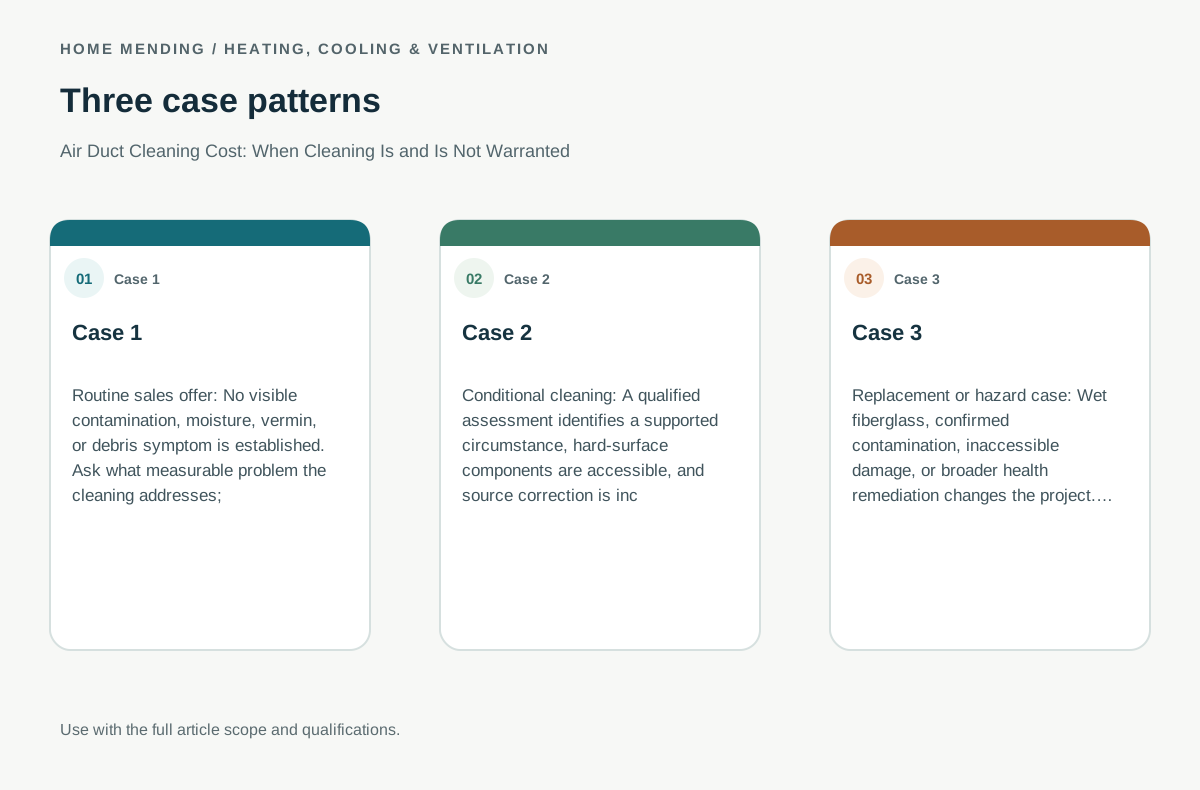
Cost scenarios
Routine sales offer: No visible contamination, moisture, vermin, or debris symptom is established. Ask what measurable problem the cleaning addresses; do not treat it as automatically necessary.
Conditional cleaning: A qualified assessment identifies a supported circumstance, hard-surface components are accessible, and source correction is included or already planned.
Replacement or hazard case: Wet fiberglass, confirmed contamination, inaccessible damage, or broader health remediation changes the project. Price removal, replacement, abatement, or remediation under the appropriate scope.
Quote questions
Ask what evidence supports cleaning, what ducts and HVAC components are included, how access and debris are handled, what products or treatments are proposed, whether biocides or sanitizers are separately priced, what source correction is required, and what result is promised. Be skeptical of universal claims about indoor-air quality, energy savings, or required periodic cleaning.
The right decision may be cleaning, duct repair, source correction, replacement, or no service. EPA’s conditional guidance is valuable precisely because it prevents a generic cleaning price from standing in for a diagnosis.
Compare cleaning with source correction
If moisture is present, ask whether the proposal corrects leaks, standing water, or the source that introduced it. If debris is entering rooms, ask whether the duct is damaged, unsealed, or contaminated upstream. If vermin are suspected, identify the entry and removal responsibility. Cleaning without those answers can produce a clean-looking duct with the same recurring problem.
Do not confuse duct cleaning with HVAC maintenance
Routine filter checks, coil and blower condition, airflow, controls, and annual equipment service are separate maintenance topics. Duct sealing and insulation address air loss and heat transfer, not contamination. A contractor may offer all of them in one package; request separate prices and reasons.
Normalize a cleaning proposal
Ask whether the price covers supply ducts, returns, registers, blower, coil, plenums, access, containment, debris removal, and finish restoration. Request the number of runs and the method, and separate any biocide, sanitizer, deodorizer, or coating. A low advertised price may cover only registers or an initial visit.
If the concern is routine dust, begin with filters and equipment maintenance. If the concern is moisture, pests, or visible contamination, identify the source and decide whether cleaning, material replacement, or hazard remediation is appropriate. EPA’s guidance supports investigation in specified circumstances but does not establish a universal schedule or health benefit.
Ask for before-and-after photographs where possible, the components actually cleaned, access and containment method, products used, debris disposal, exclusions, and any claimed outcome. Avoid a universal “every few years” schedule or guaranteed indoor-air-quality savings. Cleaning is a sensible purchase only when a supported condition and a defined scope justify it.
Decide whether cleaning changes the next action
Cleaning may be relevant when visible mold on hard-surface components, vermin, or excessive debris with release into the home is actually documented. It is not a substitute for correcting moisture, removing wet moldy fiberglass, repairing a disconnected duct, or investigating a source. Ask what condition will exist after cleaning and what work remains.
A focused project may clean identified components with clear access and containment. A broader project may involve difficult access, multiple air-handler parts, insulation, or source correction. The cost comparison should include protection, openings, restoration, disposal, and follow-up—not just a vacuum or per-vent count. If the proposed outcome is only “cleaner ducts,” ask why that outcome matters for this home and what evidence will show the scope was completed.