
Professional HVAC maintenance is usually a recurring service priced by visit, equipment, and local labor market. For planning, an ordinary seasonal visit is often a low-hundreds expense, while a maintenance plan may bundle two seasonal visits or priority service for a higher annual total. Market guides report maintenance, duct sealing, cleaning, and thermostat work as separate scopes; do not assume an advertised tune-up includes all of them.
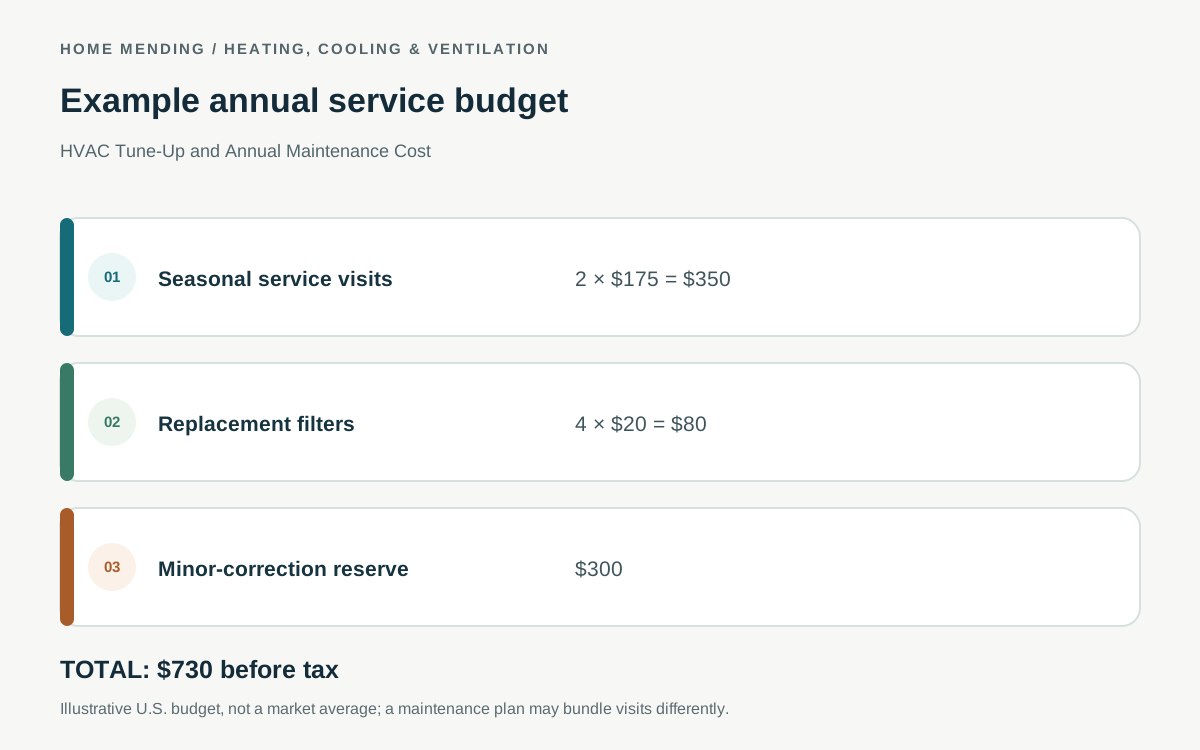
Illustrative planning scenario (U.S. dollars, September 2026)
This is a scope-bounded example, not a market average: budget two seasonal visits at $175 each, four $20 filters, and a $300 reserve for a minor correction. The annual planning total is $730 before tax; a maintenance plan may bundle the visits differently, so compare included work rather than the headline price.
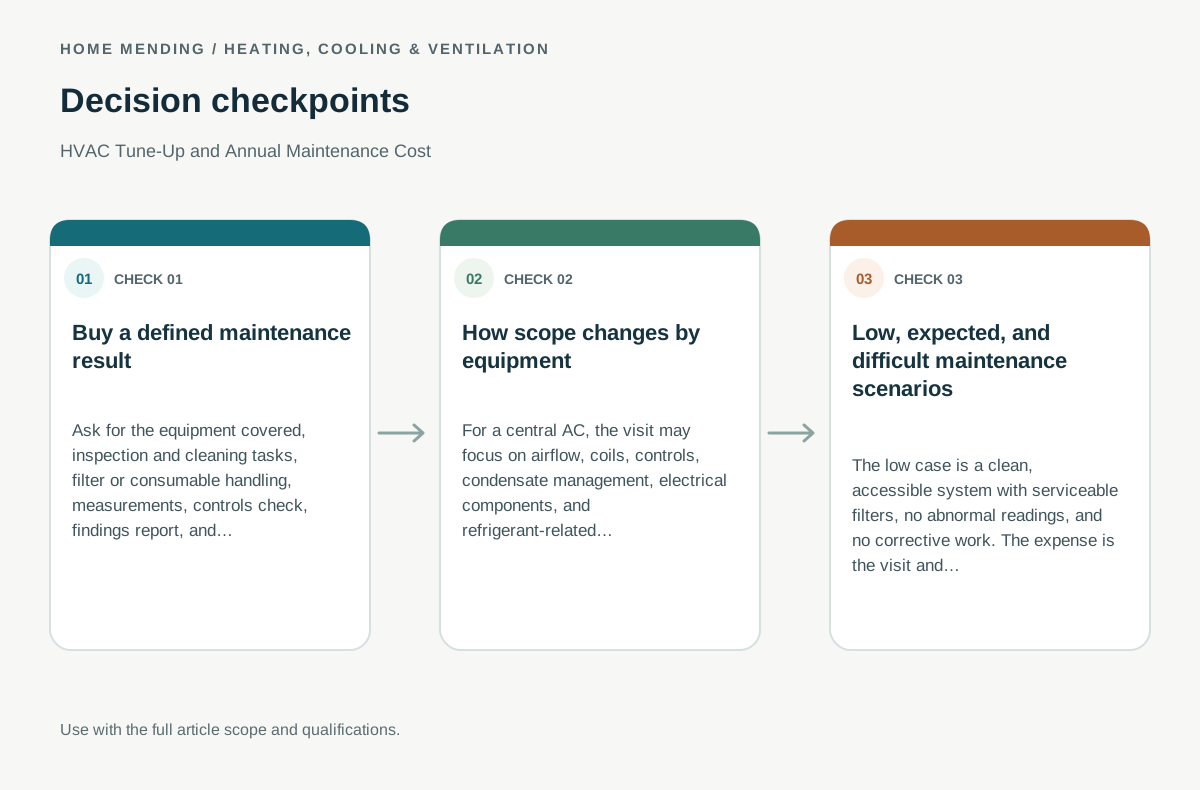
Buy a defined maintenance result
Ask for the equipment covered, inspection and cleaning tasks, filter or consumable handling, measurements, controls check, findings report, and any repair authorization boundary. A maintenance visit should not silently become an unpriced repair or a generic replacement pitch. If the system has uneven comfort or high bills, ask whether ducts, airflow, sizing, or controls are within the visit or need a separate diagnosis.
Compare routine service with a diagnostic visit when a symptom exists. For an older system, use the findings to plan repair, replacement, or deferred work, but do not turn one tune-up into a universal remaining-life estimate. The value is a clear condition record and a better next decision.
A tune-up checks whether the equipment is operating as intended and identifies conditions that merit repair. ENERGY STAR recommends regular filter attention, annual professional tune-ups, duct sealing or insulation where appropriate, and evaluation of older or uncomfortable systems. Those recommendations support preventive decisions, not a guarantee of lower bills or a fixed service interval for every model.
A useful visit should leave you with a description of the equipment, observations made, measurements or checks performed as appropriate, defects found, and recommended next actions. A checklist with no explanation of the system’s condition is less useful than a shorter visit that clearly separates “operating normally,” “monitor,” and “repair now.”
How scope changes by equipment
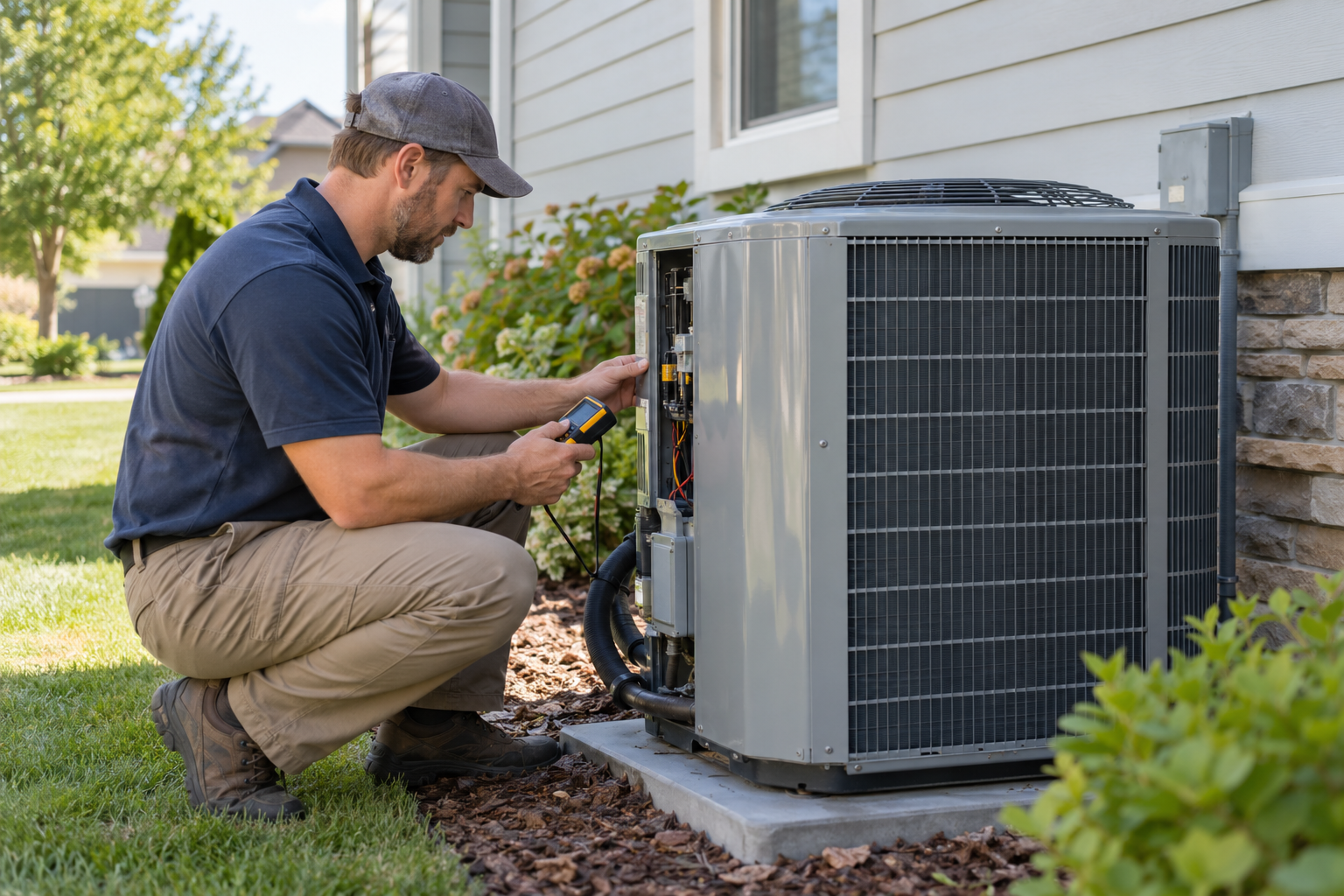
For a central AC, the visit may focus on airflow, coils, controls, condensate management, electrical components, and refrigerant-related operating observations. Refrigerant handling or leak work is not automatically part of routine maintenance.
A furnace visit may address filters, blower operation, controls, burners or ignition, and other model-appropriate checks. Gas, oil, venting, and combustion work have safety and jurisdictional requirements; the maintenance price is not permission to perform those tasks yourself.
Heat-pump maintenance may cover both heating and cooling operation, outdoor coil condition, controls, defrost behavior, airflow, and auxiliary-heat operation. A boiler or hydronic system may require different checks for the boiler, circulators, controls, pressure, and distribution. Steam and hot-water systems should not be priced as if they were the same equipment.
Single visit or maintenance plan
A single visit is easier to compare when you want a condition report or are preparing for a season. A plan may be worthwhile when it includes two genuinely different seasonal checks, priority response, documented measurements, or a defined discount on later service. It is less valuable when “priority” is vague and most repairs, filters, cleaning, and parts remain extra.
Before signing, ask whether the plan renews automatically, what happens if you move, whether unused visits expire, and whether the same technician or documentation is provided. Treat a plan as prepaid service, not an insurance policy against equipment failure.
What normally costs extra
Common add-ons include replacement filters, deep coil or blower cleaning, duct sealing, duct insulation, refrigerant diagnosis or repair, electrical or control replacement, condensate corrections, combustion repairs, drain work, and thermostat upgrades. A tune-up may discover those needs without including them.
Ask for a separate price and explanation for each add-on. A contractor should distinguish a maintenance task that restores specified operation from an optional efficiency upgrade or a replacement recommendation. If a proposed repair is significant, request a written repair scope before authorizing it.
Low, expected, and difficult maintenance scenarios
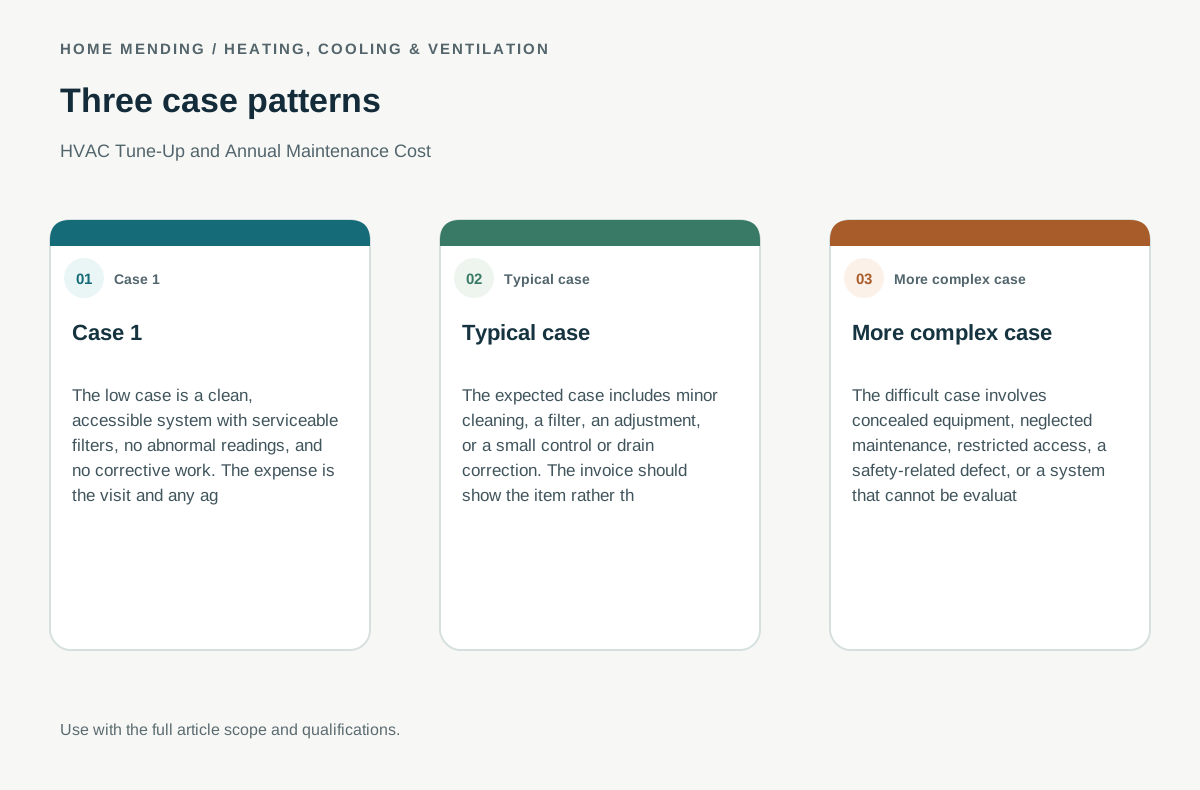
The low case is a clean, accessible system with serviceable filters, no abnormal readings, and no corrective work. The expense is the visit and any agreed plan.
The expected case includes minor cleaning, a filter, an adjustment, or a small control or drain correction. The invoice should show the item rather than hiding it inside a plan renewal.
The difficult case involves concealed equipment, neglected maintenance, restricted access, a safety-related defect, or a system that cannot be evaluated under normal conditions. That can turn maintenance into diagnosis or repair. The right response is a new scope and price, not an assumption that the original tune-up covers unlimited work.
Annual budgeting without a false rule
Budget the recurring visit or plan, replacement filters, and a reserve for likely corrective work separately. Older systems, equipment exposed to dust or weather, homes with difficult access, and properties with multiple equipment types need a larger reserve than a single accessible system. A maintenance plan can smooth payments but does not eliminate the possibility of a major component failure.
Do not promise a percentage savings from maintenance. Good maintenance can preserve airflow and help identify problems early, but energy use also depends on weather, load, insulation, duct leakage, controls, equipment sizing, and occupant behavior. ENERGY STAR’s broader system guidance is more useful than an isolated “tune-up pays for itself” claim.
Warranty and manufacturer boundaries
Use the equipment’s service manual and warranty terms as the source for model-specific maintenance requirements. A contractor’s generic checklist is not a substitute for those terms. Ask who documents required maintenance, what parts or labor the warranty covers, and whether a proposed modification affects the warranty. Warranty interpretation is product-specific and may also depend on installer documentation.
The best maintenance purchase is a defined service with a useful condition report. It should help you decide whether to keep operating, schedule a repair, correct distribution, or start replacement planning before an emergency.
Build a seasonal budget
For a home with heating and cooling, separate a heating visit, a cooling visit, filters, and a reserve for corrective work. A boiler, furnace, central AC, heat pump, or HRV/ERV may need different service scopes, so a plan covering “all HVAC” should list every equipment type. Two visits may be sensible when they check different operating modes; they are not automatically better if the same cursory checklist is repeated.
An older system does not need a guaranteed repair budget, but it does need a more realistic contingency. Use recent history: repeated control, blower, coil, pump, or refrigerant work is evidence that a maintenance-only budget may be too optimistic. Keep replacement planning separate so an urgent failure does not force a rushed purchase.
What a useful condition report says
Look for equipment identification, observed condition, items cleaned or adjusted, abnormal findings, recommended urgency, and the boundary between maintenance and repair. “Passed inspection” is not a warranty that a component will last. Ask whether the technician found a performance issue, merely did not observe a failure, or could not access a component.
Compare a plan’s included labor with equivalent individual visits. Confirm renewal, cancellation, priority-service wording, unused visits, and whether the condition report is included. A discount on a repair you may never need has little value if the plan hides the services you are most likely to buy.