
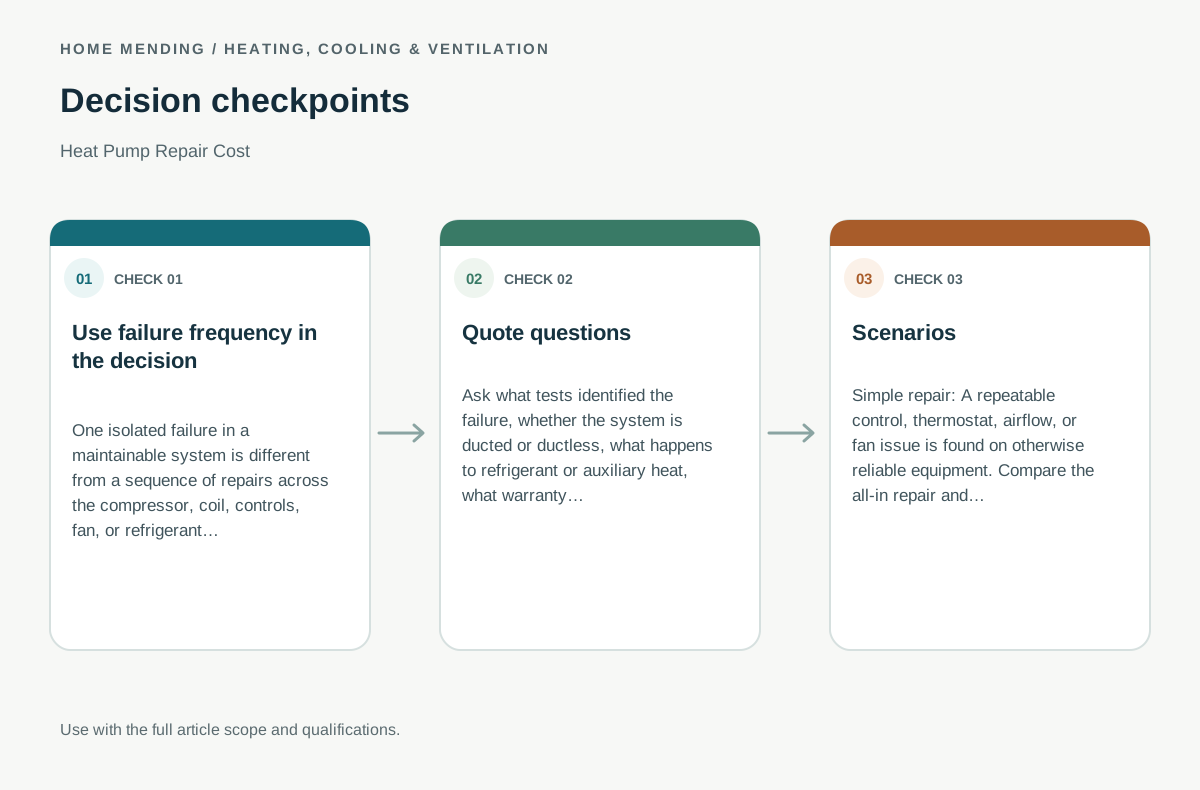
Use failure frequency in the decision
One isolated failure in a maintainable system is different from a sequence of repairs across the compressor, coil, controls, fan, or refrigerant circuit. Record the date and scope of recent work and ask whether the proposed repair addresses a recurring cause. Each additional visit may include diagnosis, access, and lost comfort even when the part itself is inexpensive.
Compare a repair with replacement using the same coverage and installation boundary. Include electrical, line set or ducts, condensate, controls, backup, removal, testing, and commissioning. Repair is stronger when the remaining system is credible; replacement is stronger when major work joins repeated failures or an unresolved design problem.
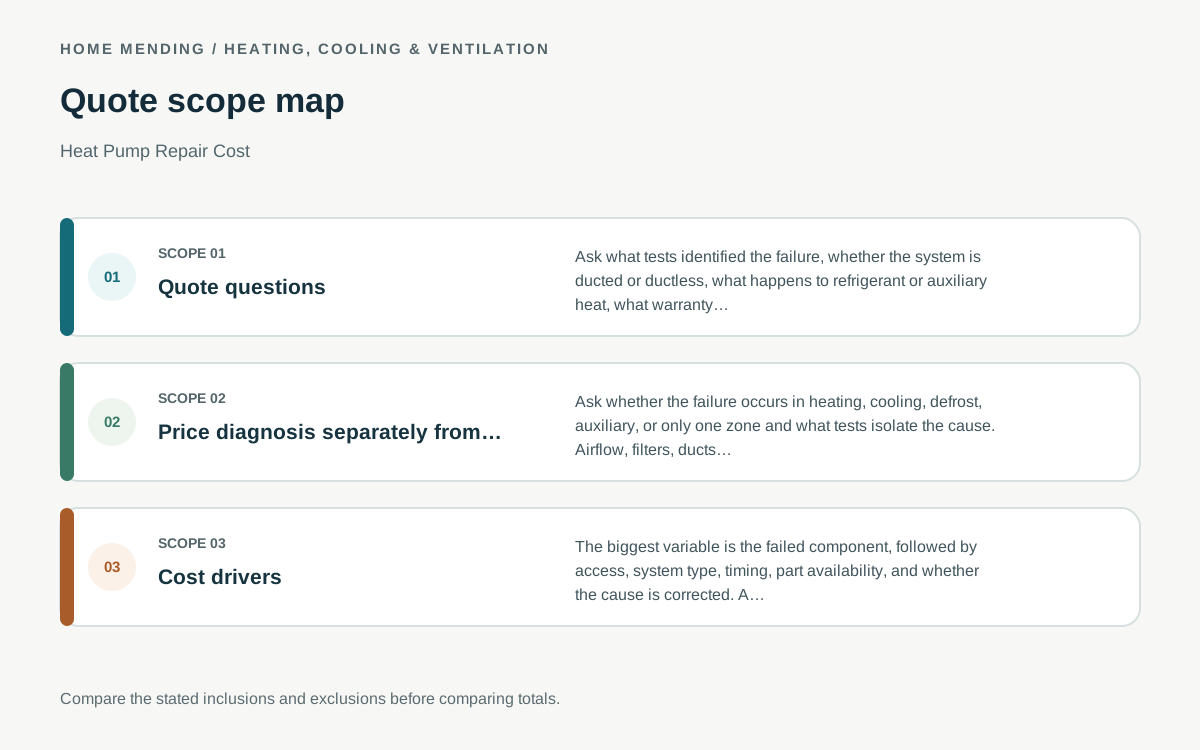
Price diagnosis separately from the part
Ask whether the failure occurs in heating, cooling, defrost, auxiliary, or only one zone and what tests isolate the cause. Airflow, filters, ducts, controls, refrigerant, sensors, coil, outdoor unit, and backup can produce overlapping symptoms. A part estimate without a verified cause is not a complete repair budget.
Compare the repair with a replacement when the system is old, failures repeat, service parts are difficult to obtain, performance has never been good, or the proposed work joins a broader design problem. Include removal, electrical, line set or ducts, condensate, controls, backup, commissioning, and warranty in the replacement option. The economic threshold depends on use and remaining condition, not one universal percentage.
Ask whether the symptom occurs in heating, cooling, defrost, auxiliary heat, or all modes. A system that works in cooling but not heating raises controls, reversing, defrost, or supplemental-heat questions; a system that fails in both modes may involve power, airflow, refrigerant, or a major component.
The repair should state the mode restored and what remains outside scope. For a coil, reversing valve, defrost, or compressor repair, compare a matched replacement with capacity, backup, controls, line set, electrical, condensate, removal, testing, and commissioning.
A U.S. specialist guide reports common heat-pump repairs around $161–$661, but the range is not a guarantee and does not describe every compressor, coil, refrigerant, electrical, or access condition. A heat pump operates in both heating and cooling modes, so the symptom, outdoor temperature, controls, defrost behavior, auxiliary heat, airflow, and system age all affect diagnosis and price.
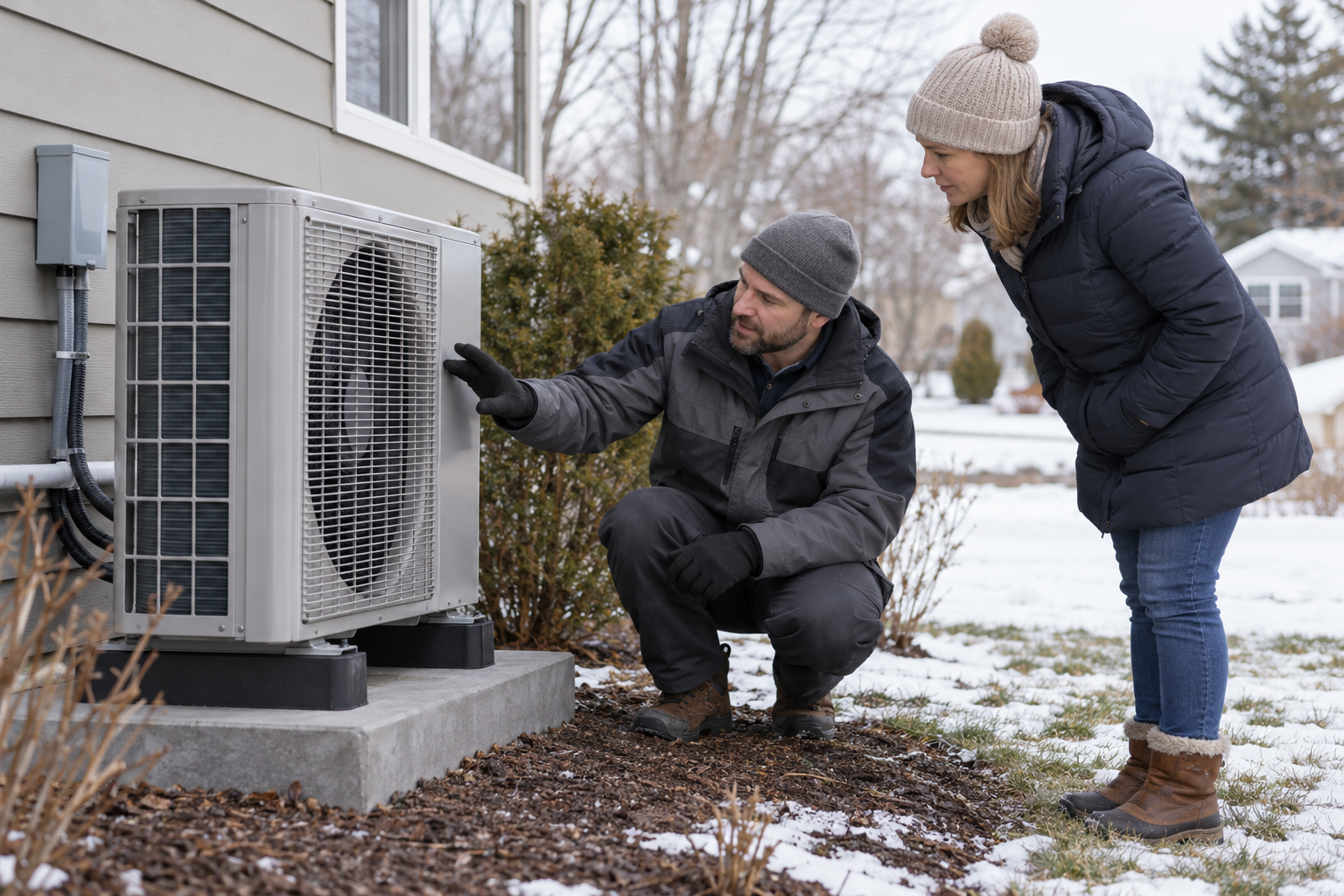
A heat-pump symptom has several causes
No heat, no cooling, icing, short cycling, noise, or high bills can result from controls, thermostat configuration, airflow, outdoor coil condition, fan or motor, reversing valve, compressor, refrigerant circuit, defrost control, auxiliary heat, or duct problems. A cold-climate unit also has operating behavior that must be distinguished from a failure.
DOE distinguishes ducted, ductless, ground-source, and dual-fuel systems. This guide addresses ordinary residential air-source repair; the other system types have different repair boundaries.
Common repair families
- controls, sensors, thermostat, or changeover logic;
- outdoor fan, motor, capacitor, or control;
- indoor blower and airflow;
- reversing valve or defrost components;
- coil, refrigerant leak, or charge-related work;
- compressor or major electrical component;
- auxiliary or supplemental-heat controls;
- duct, condensate, or air-distribution correction.
Refrigerant and electrical work should be handled by appropriately qualified personnel. The diagnostic fee, testing, materials, and return visit may be separate from the failed part.
Cost drivers
The biggest variable is the failed component, followed by access, system type, timing, part availability, and whether the cause is corrected. A compressor or coil quote deserves a replacement comparison. A blower repair will not solve an undersized duct or return-air problem. ENERGY STAR’s quality-installation guidance treats airflow and refrigerant charge as part of system performance.
Scenarios
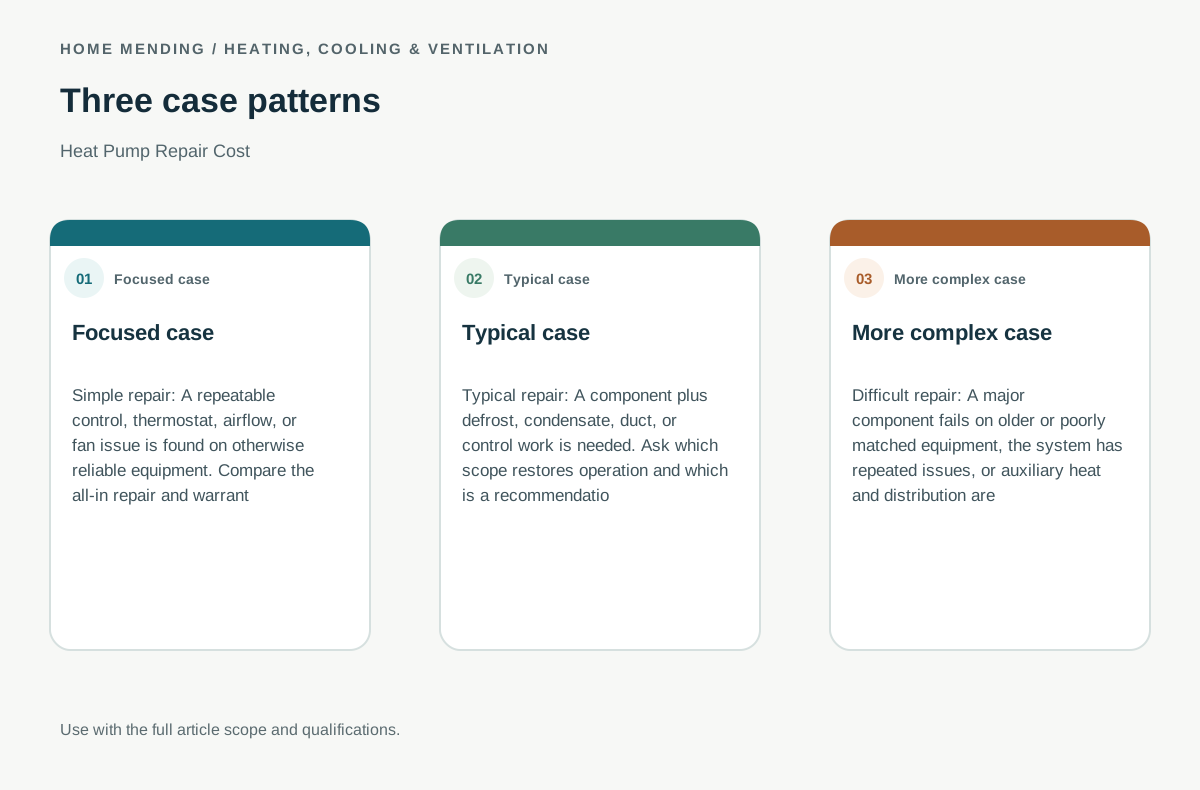
Simple repair: A repeatable control, thermostat, airflow, or fan issue is found on otherwise reliable equipment. Compare the all-in repair and warranty.
Typical repair: A component plus defrost, condensate, duct, or control work is needed. Ask which scope restores operation and which is a recommendation.
Difficult repair: A major component fails on older or poorly matched equipment, the system has repeated issues, or auxiliary heat and distribution are also suspect. Compare repair with a matched replacement, including backup heat, controls, ducts, electrical, line set, removal, and commissioning.
Repair or replace
Repair when the fault is bounded, the equipment has a credible service history, and parts and compatibility are clear. Replace when failures repeat, comfort is poor, a major component fails, service availability is uncertain, or the repair leaves known sizing or distribution problems.
NRCan states that heat-pump costs and operating outcomes depend on system type, existing equipment, ductwork, climate, and energy prices. Use those same factors when comparing replacement rather than assuming a new unit fixes every symptom.
Quote questions
Ask what tests identified the failure, whether the system is ducted or ductless, what happens to refrigerant or auxiliary heat, what warranty applies, what condition remains, and what a complete replacement would include. A useful repair quote explains the system after the repair, not just the component before it.
Check the operating mode
Ask whether the failure occurs in heating, cooling, defrost, auxiliary heat, or all modes. A system that works in cooling but not heating may raise controls, reversing, defrost, or supplemental-heat questions; a system that fails in both modes may involve power, airflow, refrigerant, or a major component. These are diagnostic distinctions, not a homeowner test procedure.
A control, thermostat, fan, or airflow repair on reliable equipment is usually focused. A reversing-valve, defrost, coil, or compressor repair deserves a full replacement comparison. A cold-climate system with frequent auxiliary heat may need a sizing or control review rather than repeated component replacement.
Separate repair from performance review
The repair should say whether it restores heating, cooling, defrost, auxiliary heat, or all modes. A system can operate after a component change while still having poor ducts, incorrect controls, or a load mismatch. ENERGY STAR’s quality-installation guidance supports evaluating airflow and refrigerant charge as part of system performance.
Ask what work is included to verify operation and what remains outside the scope. If a major component fails, add the cost of a replacement alternative with capacity, indoor/outdoor match, controls, backup heat, line set, electrical, condensate, removal, and commissioning.
Repair when the failure is bounded and the system’s remaining condition is credible. Replace when major work joins repeated failures or unresolved design problems.
Compare the repair with a system review
A focused repair makes sense when the failed component is identified, the refrigerant circuit and controls are otherwise sound, parts are available, and the unit performs correctly after testing. A broader review is warranted when the complaint is recurring, the system is noisy or poorly balanced, the indoor and outdoor units are mismatched, or the repair would not address low-temperature performance. Do not turn a repair visit into an automatic replacement recommendation, but do not price an isolated part as if it resolves a system problem.
Ask for operating-mode tests, the failed component, refrigerant or airflow observations where relevant, access assumptions, warranty, and remaining-condition comments. If replacement is proposed, compare removal, electrical, duct or line-set work, controls, condensate, commissioning, and disposal with the repair. The economic threshold depends on age, repeat-work risk, use, and the cost of losing heating or cooling—not one percentage rule.