
Illustrative planning scenario (U.S. dollars, September 2026)
This is a scope-bounded example, not a market average: assume $5,500 for a condensing boiler, $2,000 for venting, condensate, controls, and piping changes, and $1,000 for removal and commissioning. The illustrative retrofit total is $8,500 before tax; confirm whether the existing distribution and vent path are compatible.
Compare the retrofit with a compatible replacement
Ask what temperatures, controls, pumps, piping, venting, condensate, and emitters the proposed boiler assumes. A condensing model may be attractive only when the distribution and controls can use the intended operating strategy; otherwise the owner may pay for equipment capability that the system cannot realize. Keep design verification and local requirements property-specific.
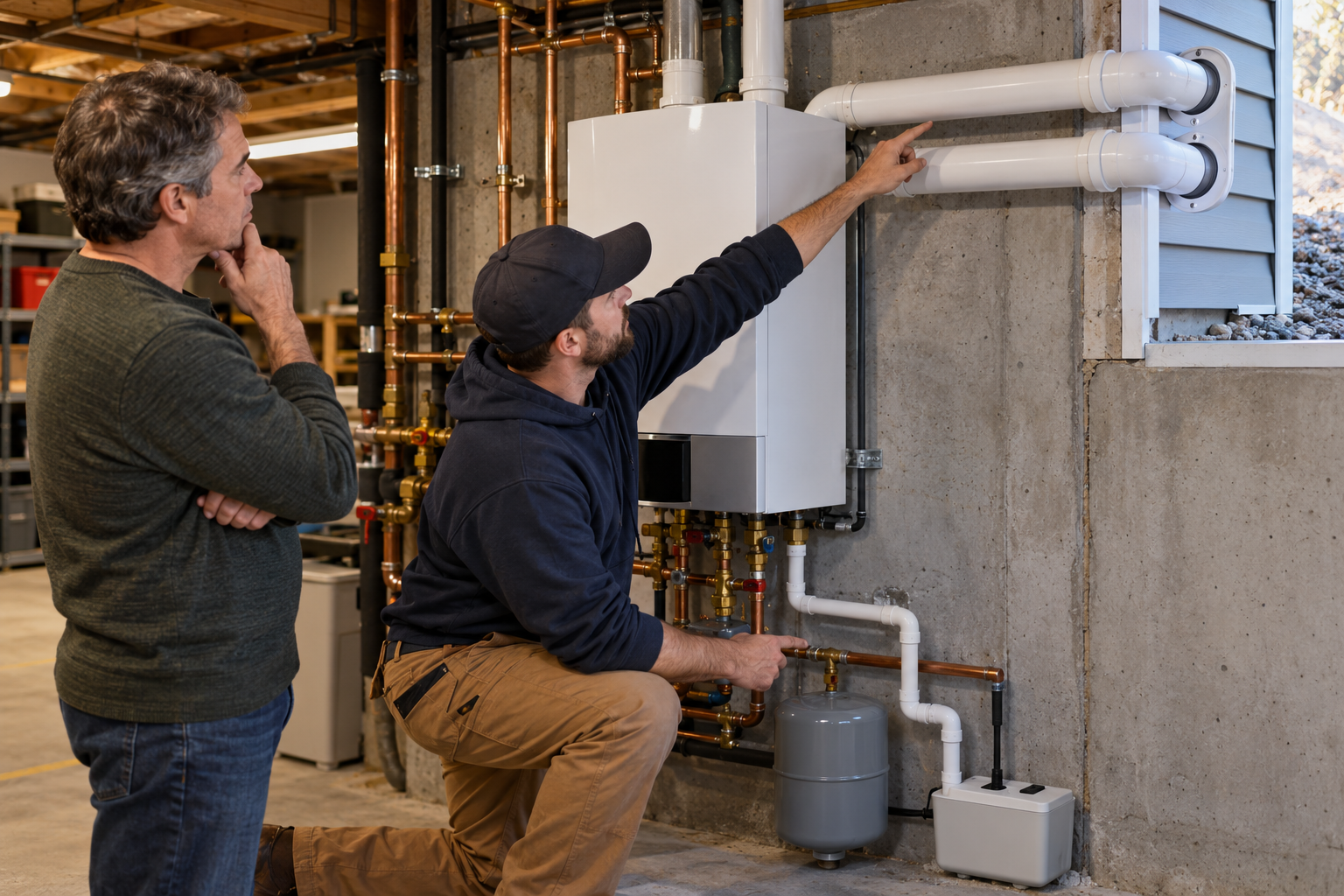
In a simple case, existing zones and connections are compatible. In a difficult case, concealed piping, drainage, controls, venting, access, or balancing expand the project. Compare the installed premium with fuel use, service access, parts, future heat-source plans, and the ownership horizon rather than with a label alone.
Price the system interfaces
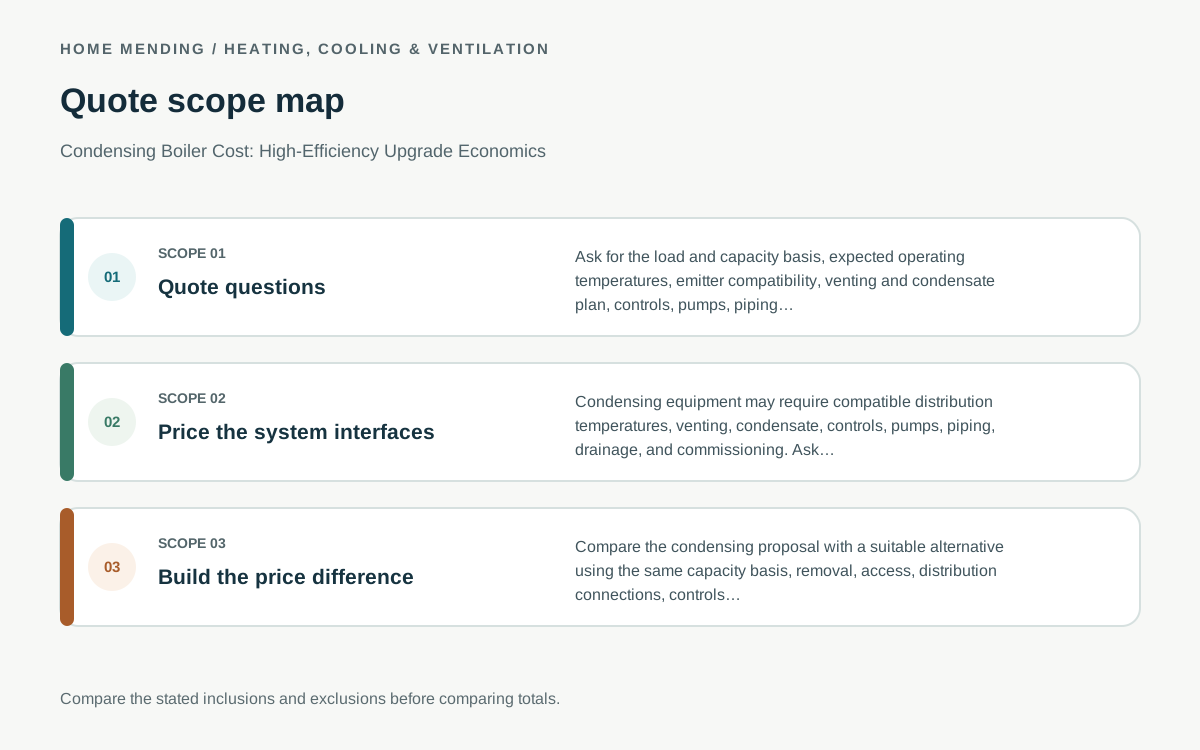
Condensing equipment may require compatible distribution temperatures, venting, condensate, controls, pumps, piping, drainage, and commissioning. Ask which existing radiators, baseboard, zones, valves, expansion components, and controls are being retained and how they will be tested. A boiler cabinet price does not show whether the hydronic system can operate as intended.
Compare the installed premium with the ownership horizon, fuel use, service access, parts availability, and likelihood of future heat-source changes. A straightforward compatible replacement may have a different case from a retrofit that requires concealed piping, drainage, venting, or control work. Keep local requirements and professional design verification separate from unsupported universal claims.
Request the existing emitter type, zone controls, operating-temperature assumptions, and planned adjustment strategy. If the home needs high water temperatures to maintain comfort, the rated condensing benefit may not be realized as often as the label suggests. That is a design question for the qualified installer.
Price the extra boiler, venting, condensate, controls, pumps, and emitter work against a suitable standard replacement. The case is stronger when the boiler is already open for replacement and the owner will stay through the modeled service period.
A condensing boiler may cost more to install than a simpler replacement because the project can involve compatible controls, venting, condensate drainage, and a hydronic design that allows the boiler to condense under useful operating conditions. The active evidence does not support a universal installed premium or payback. The decision depends on the complete retrofit and the home’s heating load, fuel price, distribution, climate, and ownership horizon.
What “condensing” means economically
The boiler’s rated efficiency is only one part of the value. The installation must provide a suitable system connection and controls, and the existing emitters and operating temperatures affect how often the unit can operate in its intended range. A high rating does not guarantee identical field efficiency in an existing system.
Ask the installer to explain the return-water assumptions, emitter compatibility, control strategy, venting route, condensate disposal, and commissioning. These are not optional technical details when they are the reason for the upgrade premium.
Build the price difference
Compare the condensing proposal with a suitable alternative using the same capacity basis, removal, access, distribution connections, controls, testing, and warranty. Then identify the incremental scope:
- boiler and burner configuration;
- venting route and termination;
- condensate drain or pump;
- outdoor reset or other controls;
- pumps, valves, piping, and low-temperature distribution changes;
- electrical and fuel connections;
- access, removal, protection, and commissioning.
If the existing radiators or baseboards require replacement to make the design work, that is a larger hydronic project and should be priced separately.
Ownership scenarios
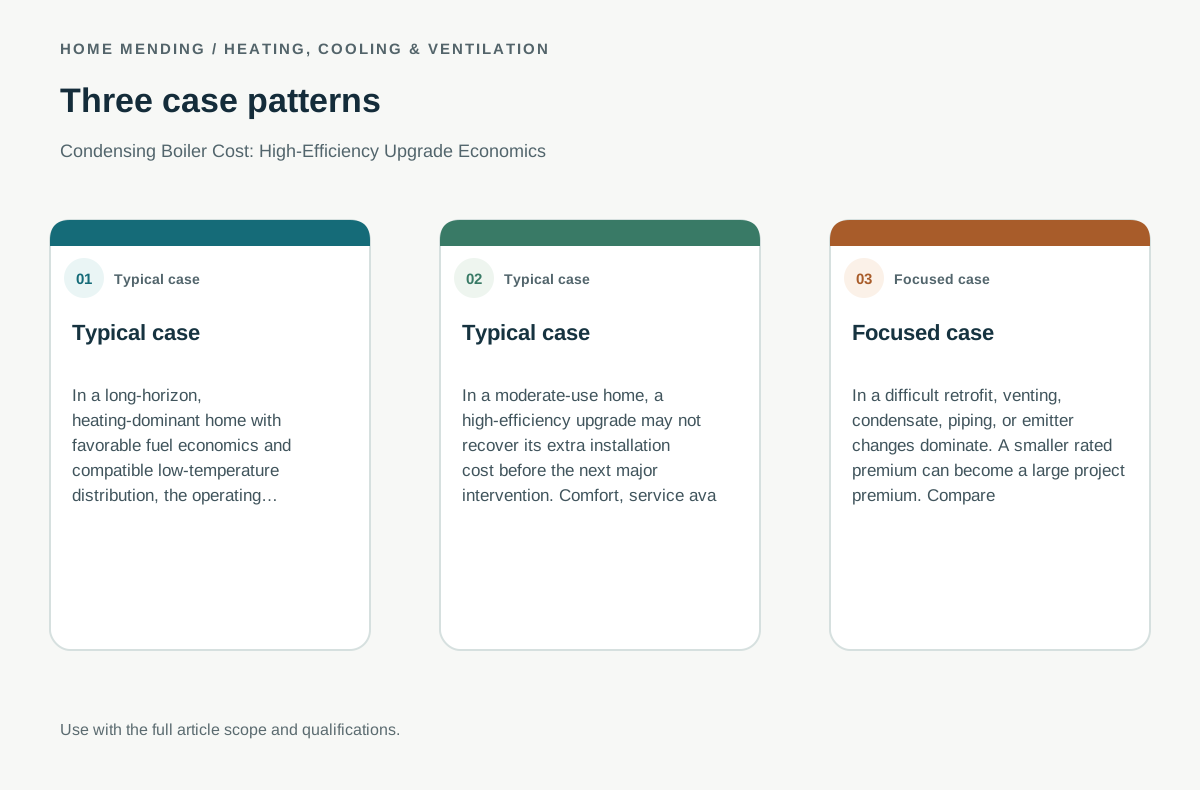
In a long-horizon, heating-dominant home with favorable fuel economics and compatible low-temperature distribution, the operating benefit may justify the premium. Model it using local fuel cost, actual heating demand, current efficiency, proposed efficiency, and expected service years.
In a moderate-use home, a high-efficiency upgrade may not recover its extra installation cost before the next major intervention. Comfort, service availability, noise, controls, and future fuel strategy may be more important.
In a difficult retrofit, venting, condensate, piping, or emitter changes dominate. A smaller rated premium can become a large project premium. Compare that with an efficient but simpler compatible replacement rather than a furnace-like equipment-only number.
Avoid false payback
A transparent model changes one assumption at a time. If fuel price, runtime, or ownership period changes the recommendation, show that sensitivity. Do not promise a fixed savings percentage. ENERGY STAR emphasizes system condition and installation quality; a poorly sized or poorly installed high-efficiency boiler can undermine the expected result.
Repair or upgrade
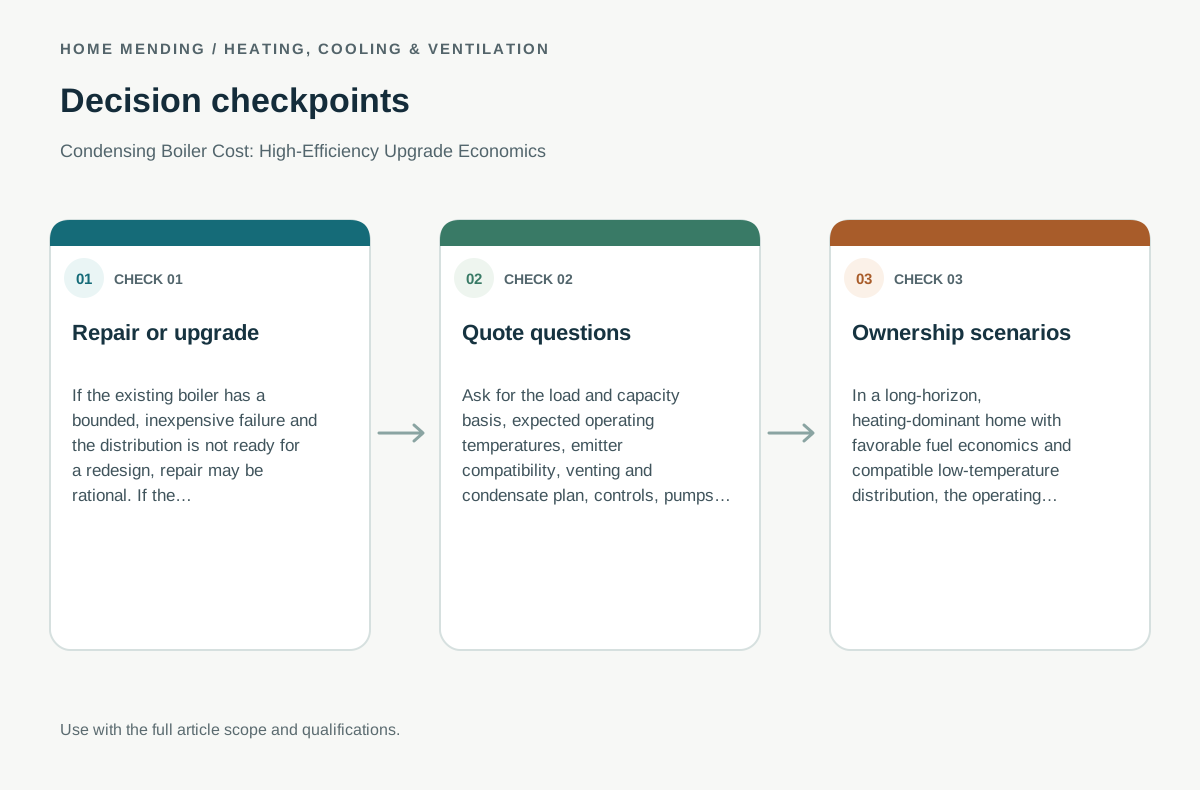
If the existing boiler has a bounded, inexpensive failure and the distribution is not ready for a redesign, repair may be rational. If the boiler is repeatedly failing, the replacement scope is already open, or venting and controls need work anyway, compare the condensing option with the baseline replacement. A high-efficiency boiler is not automatically the right answer when the underlying issue is a leaking radiator, poor balancing, envelope heat loss, or fuel-switch strategy.
Quote questions
Ask for the load and capacity basis, expected operating temperatures, emitter compatibility, venting and condensate plan, controls, pumps, piping, removal, testing, warranty, and modeled operating assumptions. Verify local fuel, combustion, pressure, venting, permit, and inspection requirements with the qualified installer or authority.
The upgrade is economically defensible when the extra scope is explicit, the distribution can use it, the operating model survives realistic assumptions, and your ownership horizon is long enough for the difference to matter. The rating alone cannot answer the question.
Use an incremental-cost test
First price a suitable standard replacement with the same removal, access, piping, controls, testing, and warranty. Then price the condensing alternative and isolate the extra boiler, venting, condensate, controls, pumps, and emitter work. This shows whether the premium is primarily equipment or a retrofit consequence.
If the existing system runs at temperatures that limit condensing operation, ask how the design addresses that condition. Do not infer performance from the boiler’s label. Product documentation and the installer’s design should explain operating assumptions.
Ownership cases
A long-term owner with compatible distribution and substantial annual heating use may have a stronger case. A low-use home, short ownership horizon, or difficult vent and drain route may not recover the premium. A home with poor insulation, leaking emitters, or faulty controls may get more value from correction before an efficiency upgrade.
Ask whether the system can use the upgrade
Request the existing emitter type, zone controls, operating-temperature assumptions, and planned adjustment strategy. If the home needs high water temperatures to maintain comfort, the rated condensing benefit may not be realized as often as the label suggests. That is a design question for the qualified installer, not a reason to invent a universal efficiency penalty.
Keep the upgrade decision separate from unrelated radiator, piping, envelope, and remodeling costs, but show how those conditions affect it. If a condensing boiler requires new venting and condensate while a suitable replacement reuses existing infrastructure, compare the whole project premium.
The case is stronger when the boiler is already being replaced, access is open, distribution is compatible, heating demand is substantial, and the owner expects to stay through the modeled service period.