
Ground-loop work is not priced like an indoor heat-pump repair. A symptom such as poor heating, low flow, pressure loss, or a pump alarm may originate in the indoor unit, circulator, controls, fluid, buried piping, borehole, or loop field. The active evidence does not establish a reliable universal repair range. Cost becomes site-specific as soon as excavation, drilling, flushing, or buried-pipe access is involved.
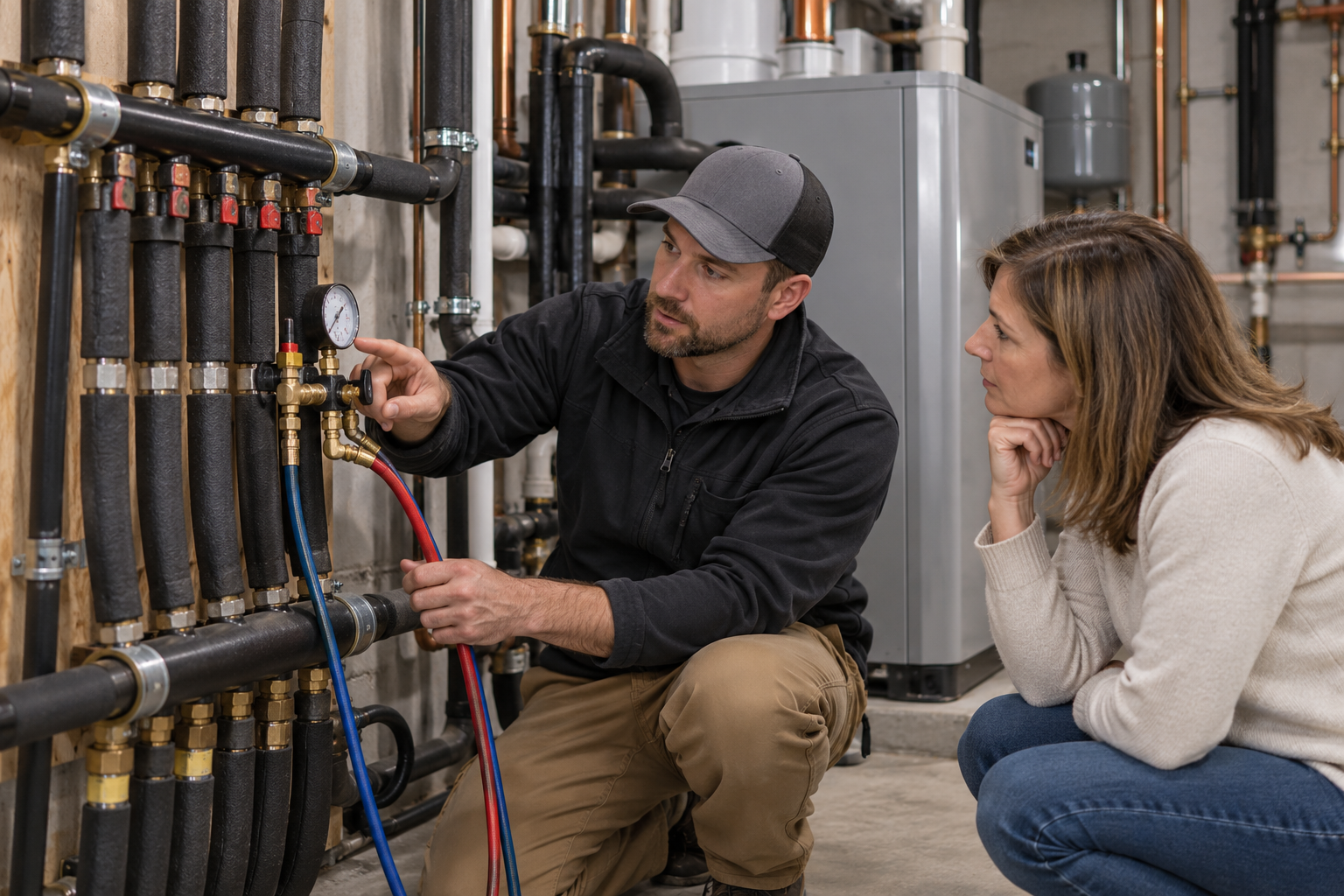
Illustrative planning scenario (U.S. dollars, September 2026)
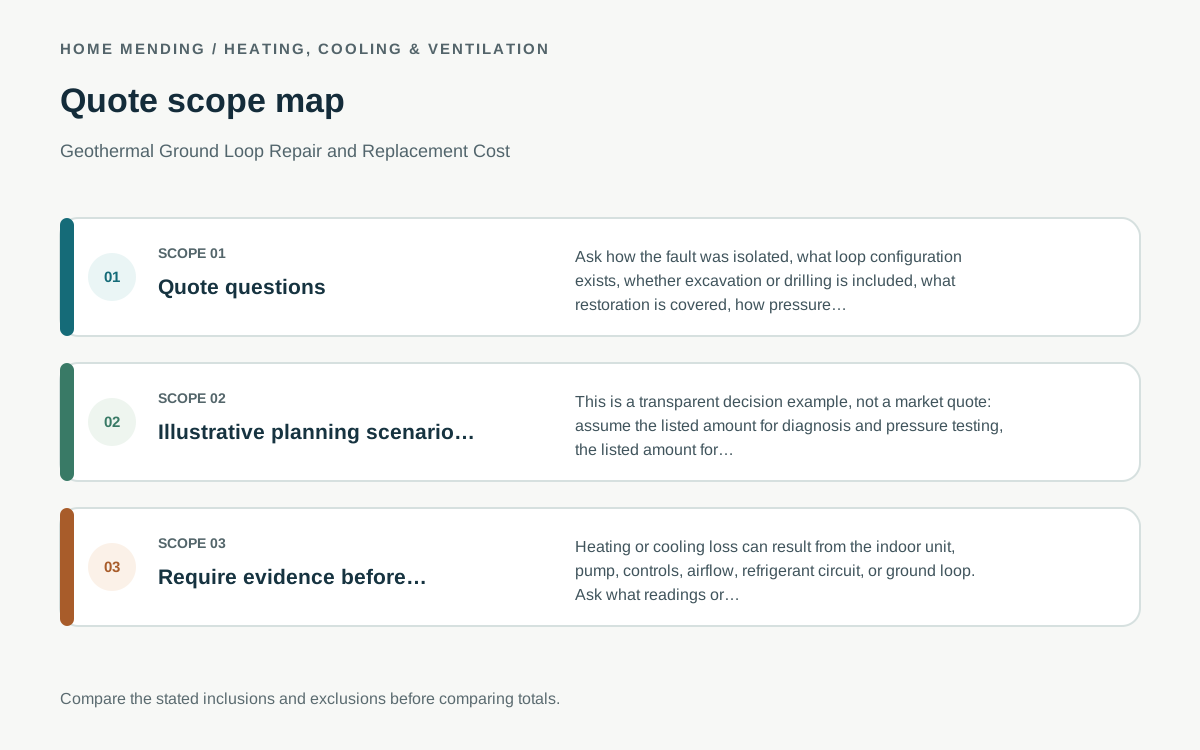
This is a transparent decision example, not a market quote: assume $1,000 for diagnosis and pressure testing, $3,000 for excavation and an accessible repair, and $2,000 for restoration and commissioning. The illustrative exposure is $6,000 before a loop redesign or replacement; do not authorize excavation without locating the failure and defining the repair boundary.
Require evidence before excavation
Heating or cooling loss can result from the indoor unit, pump, controls, airflow, refrigerant circuit, or ground loop. Ask what readings or observations identify the ground side and whether the proposed test distinguishes a loop failure from a system that is merely underperforming. Excavation should follow a defined location and repair rationale; otherwise the homeowner is buying a large investigation with uncertain boundaries.
Compare a localized loop repair, broader loop work, indoor equipment replacement, and an air-source alternative. Include access, drilling or excavation, headers, temporary service, property restoration, testing, warranty, and the condition of the remaining system. Repair is strongest for a long-term owner when the loop and indoor equipment are otherwise credible. It is weaker when the site is difficult and multiple major components are near replacement.
The first scope should identify whether the problem is on the heat-pump side or the ground heat exchanger side. Ask what measurements or observations support a suspected loop problem, what portion is accessible, and what information a staged test will provide. Avoid paying for excavation before the failure boundary is reasonably established.
Ground-loop fluids, pressure, pumps, electrical equipment, and excavation require qualified assessment. This article does not provide a homeowner repair procedure.
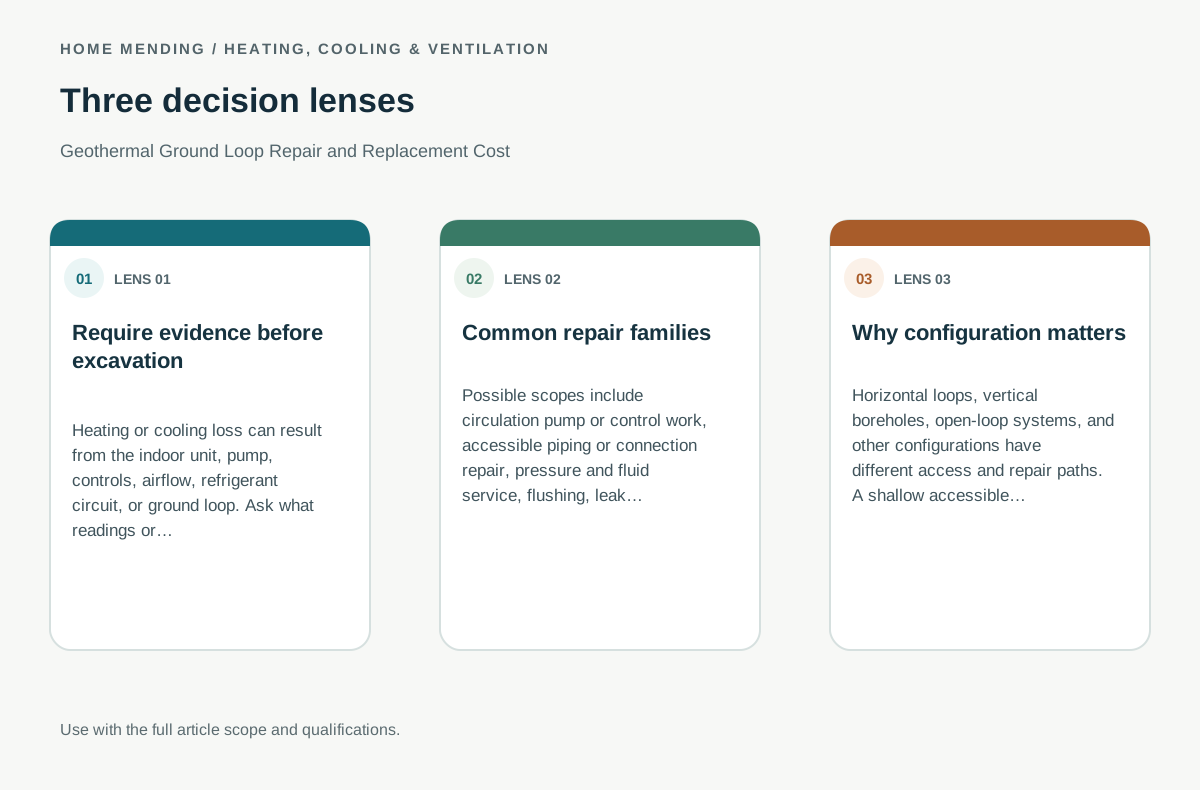
Common repair families
Possible scopes include circulation pump or control work, accessible piping or connection repair, pressure and fluid service, flushing, leak location, excavation to buried pipe, borehole or loop-field intervention, or indoor heat-pump replacement. These are not equivalent costs.
An indoor component can be a conventional HVAC repair. A buried leak can become a site project involving excavation, restoration, and uncertain access. The quote should name the failure location and the assumptions behind the price.
Why configuration matters
Horizontal loops, vertical boreholes, open-loop systems, and other configurations have different access and repair paths. A shallow accessible section may be reachable without disturbing major property features; a borehole or concealed loop may not be. Soil, rock, groundwater, utilities, driveways, landscaping, and weather affect restoration.
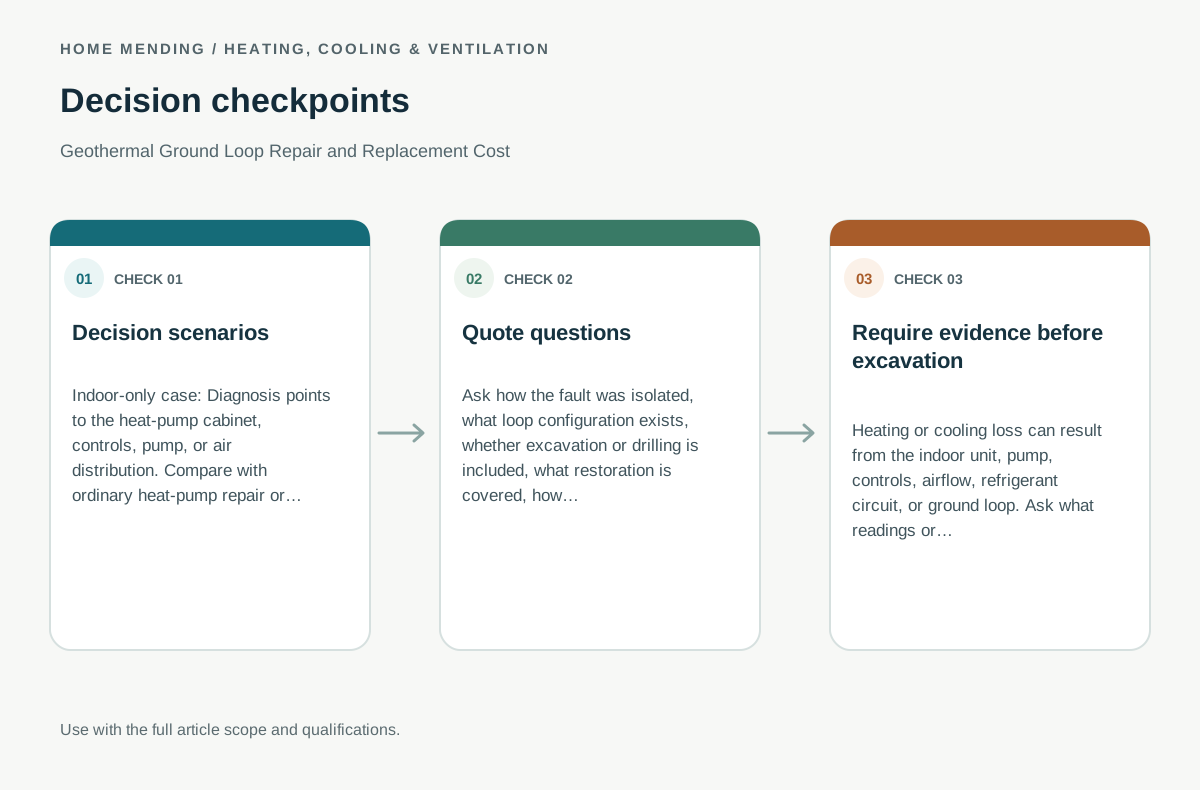
Decision scenarios
Indoor-only case: Diagnosis points to the heat-pump cabinet, controls, pump, or air distribution. Compare with ordinary heat-pump repair or replacement and retain the loop.
Accessible loop case: The fault is confirmed in an exposed connection or pump section. Price repair, fluid handling, testing, and restoration.
Buried-loop case: A leak or loop failure requires excavation or drilling. Obtain a specialist scope with location confidence, access, restoration, temporary operation, testing, and warranty. Compare partial repair with a replacement or redesign rather than authorizing an open-ended dig.
Repair versus replacement
Repair is stronger when the fault is localized, loop configuration is understood, access is reasonable, and the rest of the system has a credible horizon. Replacement or redesign gains weight when the loop field has repeated failures, access is exceptionally costly, or the indoor equipment and distribution are also at end of life.
Quote questions
Ask how the fault was isolated, what loop configuration exists, whether excavation or drilling is included, what restoration is covered, how pressure and performance will be verified, what temporary heating or cooling is assumed, and what warranty applies to buried work. Keep site restoration and major hardscape in their own scope when appropriate.
The correct budget is a staged diagnostic and site-specific repair plan. A generic geothermal repair average would hide the very uncertainty that drives the decision.
Stage the investigation
Start with system history, indoor-unit operation, pump and control observations, pressure or flow information, and the loop configuration. Then decide whether a localized exposed repair, a leak-location effort, excavation, or a broader replacement comparison is justified. Each stage should state what new information it is expected to produce.
Account for property disruption
Excavation or drilling can affect landscaping, irrigation, driveways, patios, utilities, and seasonal access. Ask what protection and restoration are included, how the disturbed area will be left, and whether a temporary heating or cooling plan is needed. Keep major hardscape or landscape restoration separate when it is a distinct project.
Repair versus loop-field replacement
Repair is stronger when the location is known, access is reasonable, and the indoor system has a long service horizon. A loop-field replacement deserves comparison with indoor equipment replacement or a different system when buried failures repeat or the site cost approaches a complete redesign. The decision should reflect the entire remaining system, not only the next excavation.
Require a stopping point for investigation
Before each stage, ask what evidence will justify continuing: a confirmed pressure loss, a located leak, a failed circulation component, or a verified indoor-unit fault. Set authorization limits for excavation and restoration. An open-ended search can cost more than a specialist’s staged diagnostic plan.
If the loop is difficult to access and the indoor unit is also old, compare partial loop repair, complete loop work, indoor equipment replacement, and an air-source alternative. Include temporary service, property restoration, testing, and warranty boundaries. The lowest excavation price is not necessarily the lowest lifecycle cost.
Diagnose the loop without assuming the loop failed
Poor heating or cooling can also come from the indoor heat pump, pump, controls, airflow, refrigerant circuit, or a commissioning problem. Ask what measurements distinguish a ground-loop fault from an indoor-equipment or distribution fault. A pressure or performance concern may justify targeted testing before excavation; excavation should follow a defined finding and access plan.
Compare a focused repair with abandonment, a new loop, indoor equipment replacement, or an air-source system. A difficult property-restoration scope can make a technically successful loop repair a poor short-horizon choice. For a long-term owner, preserving the loop may have value if the rest of the system is sound. Include temporary heating or cooling, landscaping or paving restoration, testing, and future service access in the decision.