
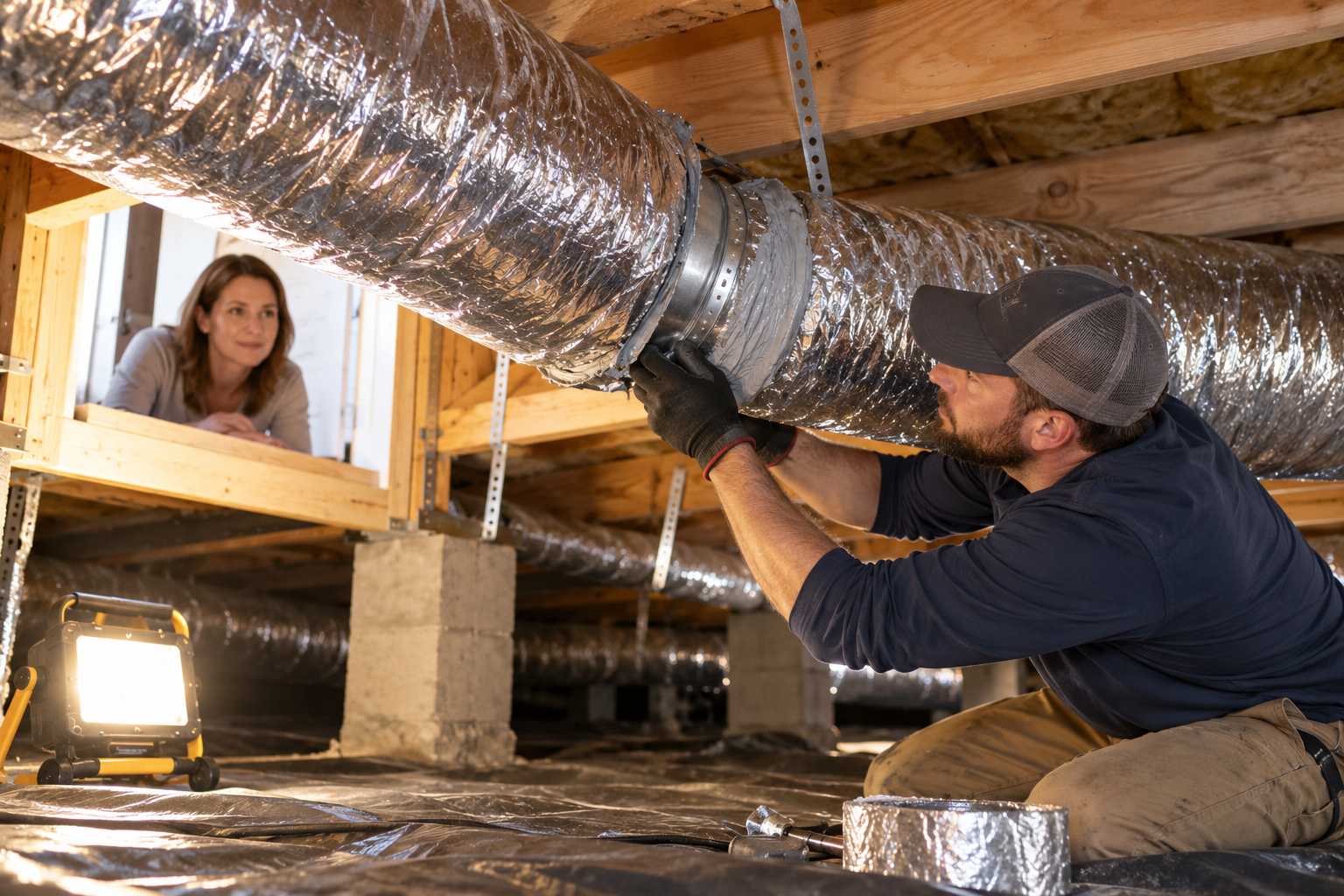
Localized duct repair can address a disconnected joint, crushed flex section, damaged boot, unsupported run, torn insulation, or accessible leak without replacing the whole system. The active evidence does not establish a complete repair price table. Budget depends on duct material, location, access, repair length, sealing, insulation, testing, and whether the original design also needs correction.
Illustrative planning scenario (CAD, September 2026)
This is a transparent planning example using a specialist Canadian repair observation: existing-duct repair is reported at CAD $500–$3,000. A quote near the low end may cover an accessible connection, while concealed damage, insulation, finish opening, and testing can move the scope upward; the source is not a universal price schedule.
Set the boundary before opening finishes
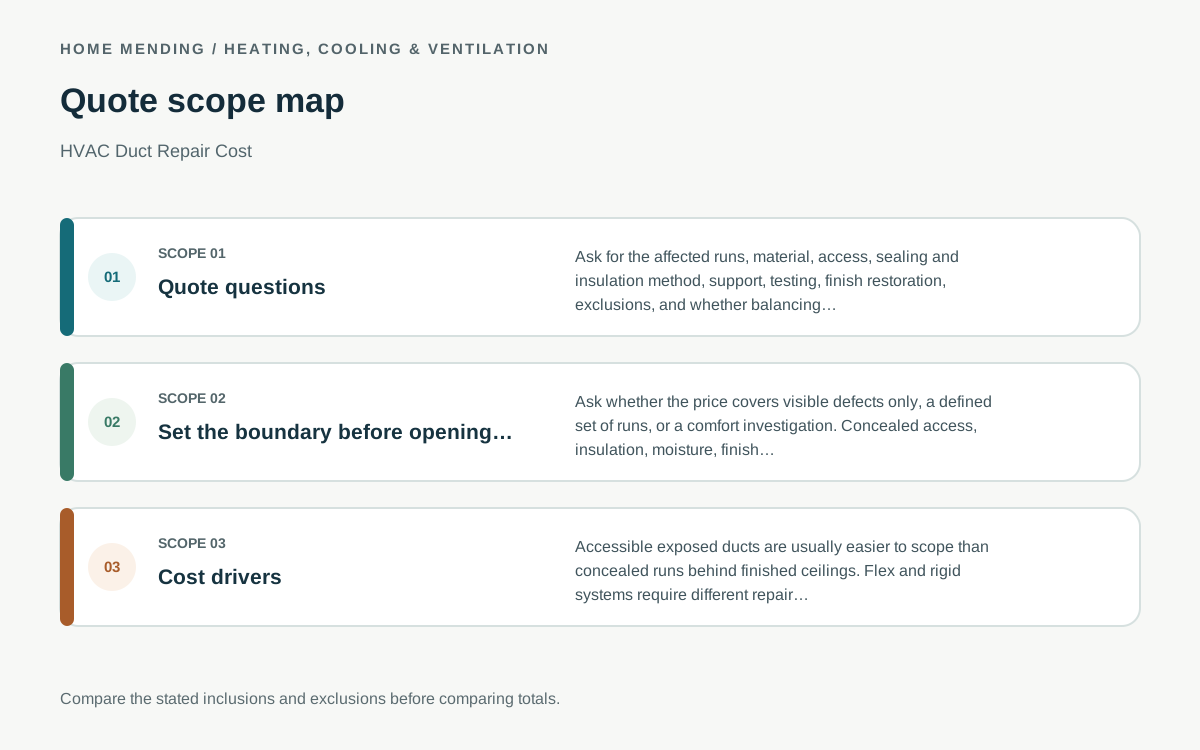
Ask whether the price covers visible defects only, a defined set of runs, or a comfort investigation. Concealed access, insulation, moisture, finish restoration, and follow-up testing can change a small repair into a larger project. Use unit prices and approval limits for genuinely uncertain areas.
Repair is strongest when the defect is isolated and the design works. Compare section replacement or redesign when damage is widespread, repeatedly repaired, inaccessible, or incompatible with new equipment. The quote should state what remains uninspected and what outcome will be tested.
Separate a symptom from a distribution failure
A disconnected joint, torn flexible section, missing insulation, crushed run, or damaged boot can each support a different repair. One cold room may also indicate a return, balancing, sizing, envelope, or equipment problem. Ask what was inspected and what outcome the proposed repair is expected to produce. If the scope cannot reach the suspected cause, say so before treating an accessible patch as the complete fix.
Use a low-cost targeted repair when the defect is visible and the surrounding system is sound. Use a broader package when several defects share a cause. Move toward section replacement or redesign when material is wet, deteriorated, inaccessible, repeatedly patched, or incompatible with new equipment. Include the cost of follow-up testing when comfort, airflow, or equipment performance—not just visible damage—is the goal.
ENERGY STAR links leaky or poorly insulated ducts with high bills, uneven comfort, and airflow loss. Priority locations include attics, crawl spaces, garages, and unfinished basements. A repair may reconnect a joint, replace a damaged section, support a run, seal a boot, or restore insulation.
Use durable materials appropriate to the duct system; ordinary household duct tape is not a durable general sealing recommendation. The work should identify the repaired area and any testing or access restoration included.
Use repair history to choose the next step
One accessible defect may justify a focused repair. Repeated failure in the same run suggests a support, moisture, insulation, access, or installation cause that should be evaluated before another patch. A section replacement may cost more now but reduce repeated mobilization and finish disturbance. Full replacement or redesign is justified only when the network problem is broad enough to support it.
Ask what will be tested after the repair and what remains uninspected. If the homeowner’s goal is comfort or lower equipment stress, visible repair alone is not a complete acceptance condition. Include balancing, duct sealing, return correction, or equipment review only when the diagnosis supports those related scopes.
A sealed duct can still be undersized, poorly routed, badly balanced, or unable to deliver enough air to a room. An uncomfortable room can also reflect insulation, air leakage, windows, solar gain, or equipment sizing. Do not authorize a duct repair as a promise that every comfort complaint will disappear.
Cost drivers
Accessible exposed ducts are usually easier to scope than concealed runs behind finished ceilings. Flex and rigid systems require different repair materials and labor. Damaged insulation, mold or moisture, difficult staging, long runs, and finish restoration can expand the work. Testing and balancing add value when the problem is airflow rather than a visible tear.
Three scenarios
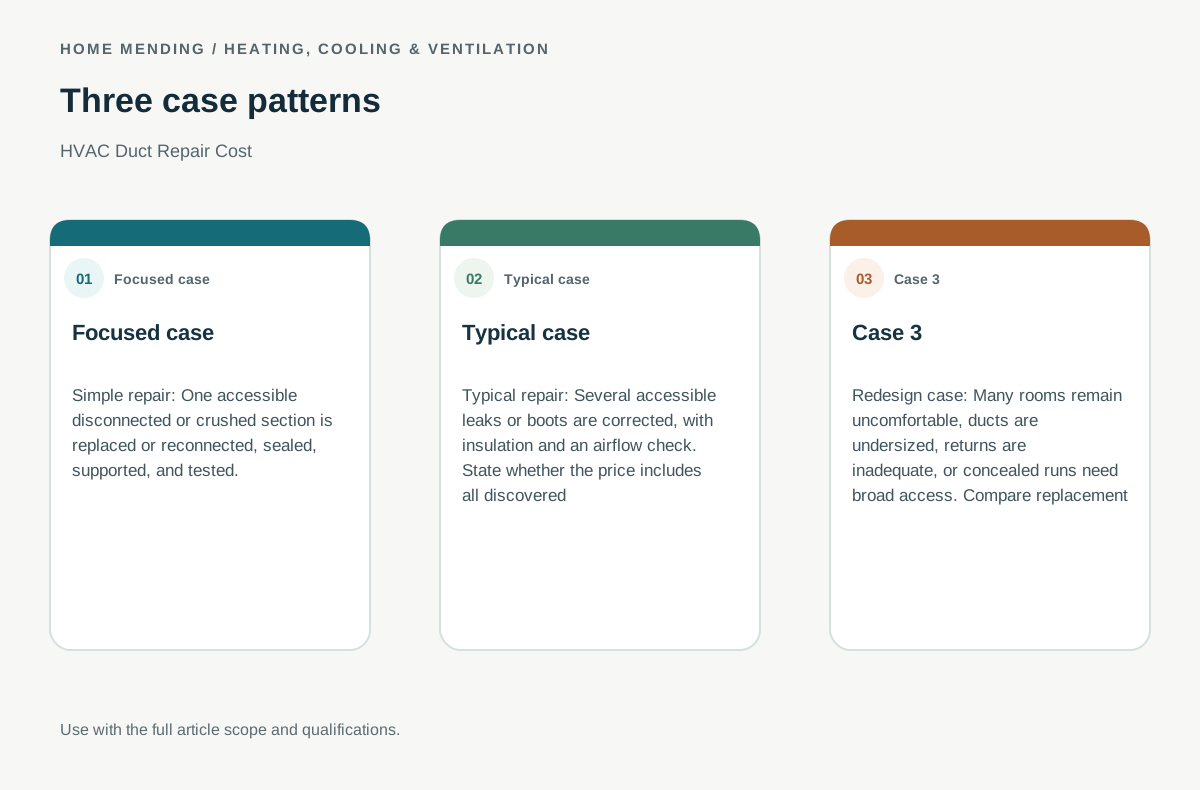
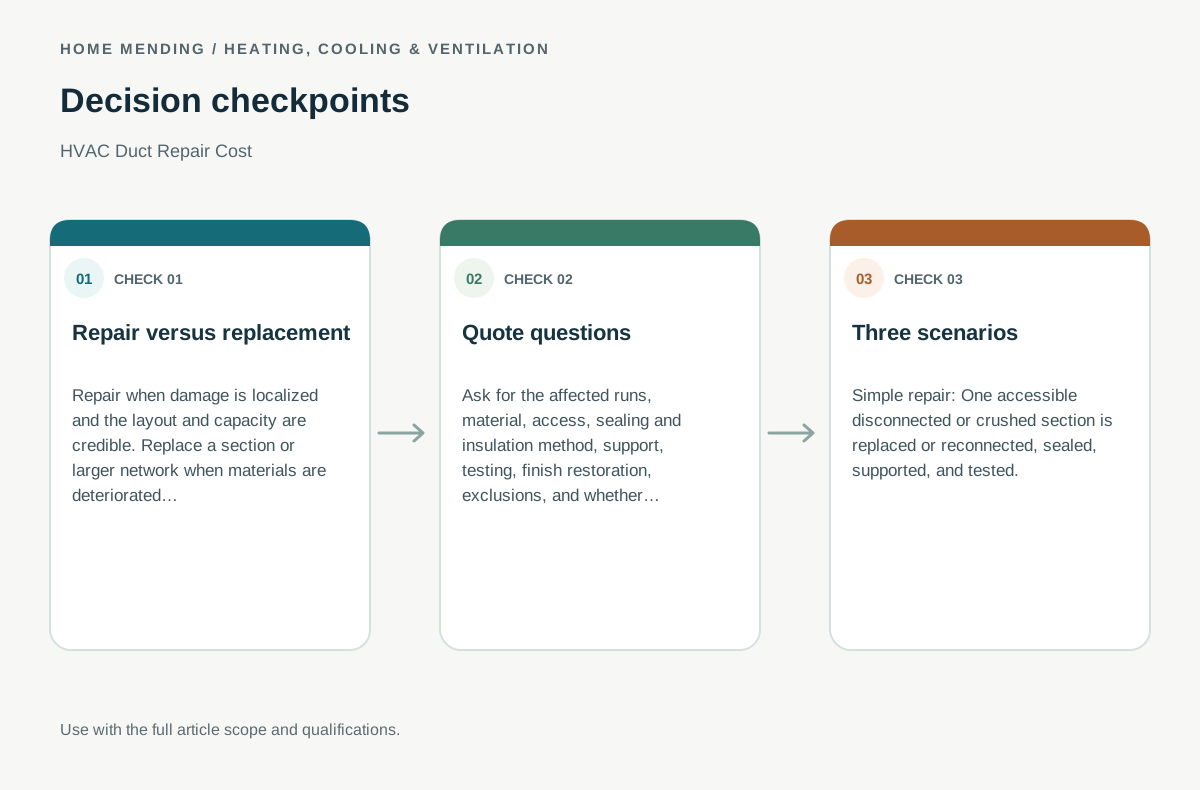
Simple repair: One accessible disconnected or crushed section is replaced or reconnected, sealed, supported, and tested.
Typical repair: Several accessible leaks or boots are corrected, with insulation and an airflow check. State whether the price includes all discovered areas or only a defined sample.
Redesign case: Many rooms remain uncomfortable, ducts are undersized, returns are inadequate, or concealed runs need broad access. Compare replacement or redesign rather than accumulating local repairs.
Repair versus replacement
Repair when damage is localized and the layout and capacity are credible. Replace a section or larger network when materials are deteriorated, repeated repairs are needed, insulation is compromised, or access makes piecemeal work uneconomic. If the whole duct design is deficient, a one-for-one replacement may preserve the problem; involve appropriate design support.
Quote questions
Ask for the affected runs, material, access, sealing and insulation method, support, testing, finish restoration, exclusions, and whether balancing is included. Keep source moisture, attic insulation, and major remodeling separate when they dominate. The right duct-repair budget pays to correct a defined air path, not merely to cover a visible spot.
Separate visible damage from network performance
Ask whether the technician inspected the supply and return path, measured or observed airflow, and checked adjacent connections. A disconnected branch may be the visible failure while a larger leak or restriction remains. If the room is still uncomfortable after repair, the next step may be balancing, sealing, replacement, or envelope correction.
Have the quote identify exposed versus concealed runs, access openings, insulation handling, protection, finish restoration, sealing material, supports, testing, and cleanup. Moisture or contaminated material should not simply be sealed over. If the work requires a crawl-space, attic, or finished-ceiling crew, that labor belongs in the base scope.
Repair when the duct design and surrounding material are serviceable. Replace a section when it is crushed, torn, wet, deteriorated, or repeatedly repaired. Consider full replacement or redesign when defects are widespread, returns are inadequate, or the equipment change alters airflow.
Match the repair to the failure pattern
One disconnected joint or accessible tear can justify a targeted repair. Several failures in the same area may indicate support, insulation, moisture, or installation problems that should be corrected together. Repeated patches can cost more than a section replacement while leaving airflow loss and access problems unresolved. Ask for a condition summary, not just a list of parts.
Compare a focused repair with section replacement when the material is crushed, wet, deteriorated, or repeatedly failing. Compare both with full replacement or redesign when the network has inadequate returns, widespread leakage, or a new equipment match that changes airflow. The quote should make clear whether testing is included and what result would trigger further work.
For a disconnected run, the outcome may be restored connection, support, sealing, and testing. For a crushed or torn section, it may be replacement plus insulation. For a comfort complaint, the outcome may require airflow measurement or balancing. State the intended result so a visible patch is not mistaken for a whole-network correction.
Where access is uncertain, price diagnosis, accessible repairs, and concealed openings as stages. Ask what evidence will justify expanding the work. If moisture, contamination, insulation failure, or a major remodel is discovered, keep that source or construction scope separate while showing its effect on the duct decision.