
Illustrative planning scenario (U.S. dollars, September 2026)
This is a worked example, not a savings claim: assume $600 for leakage testing, $1,200 for accessible sealing, and $900 for insulation in attic or crawl-space runs. The illustrative project total is $2,700 before finish access; expected savings depend on measured leakage, weather, equipment, and operating behavior.
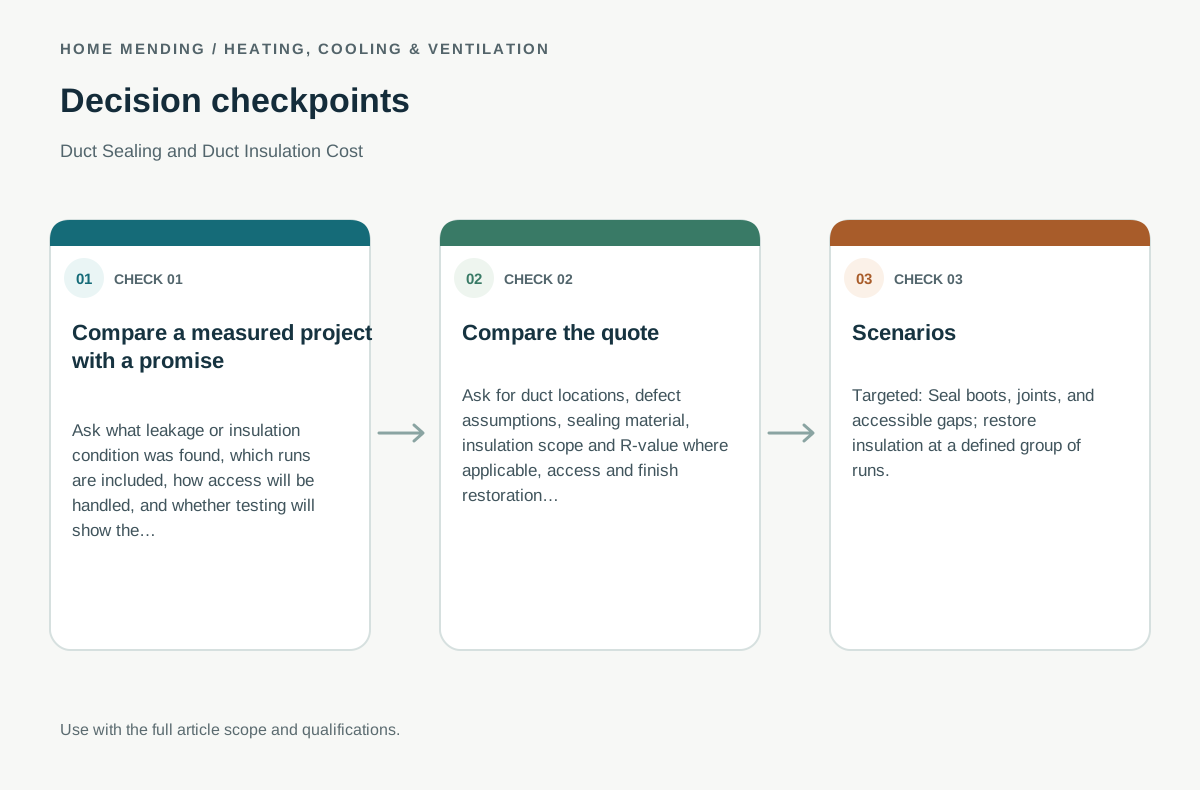
Compare a measured project with a promise
Ask what leakage or insulation condition was found, which runs are included, how access will be handled, and whether testing will show the scope’s effect. A visual application to accessible joints is not comparable with a network-wide program. If the expected benefit is mainly comfort, state that rather than promising a precise energy payback.
Sealing is more compelling when ducts are sound and accessible; insulation is more compelling where unconditioned-space heat transfer matters. Replace or redesign when material is wet, damaged, undersized, or poorly arranged. Keep moisture, envelope, and equipment corrections separate while showing how they affect the decision.
Compare the value of accessible work
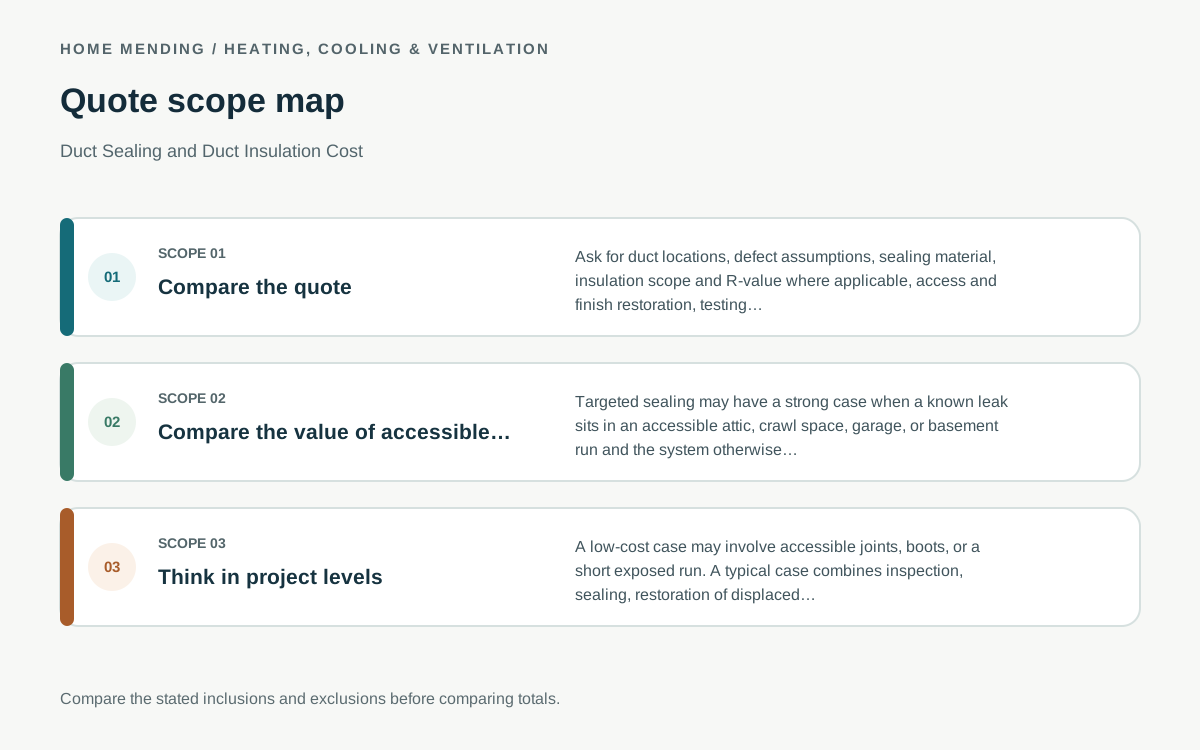
Targeted sealing may have a strong case when a known leak sits in an accessible attic, crawl space, garage, or basement run and the system otherwise fits the home. A broader program may justify testing, sealing, insulation restoration, balancing, and follow-up measurement. Concealed work can add opening and finish costs that make a small expected performance gain uneconomic.
Ask whether the quote covers the defects found or an arbitrary number of joints. Include preparation, material, access, protection, insulation replacement, moisture correction, testing, and warranty. If the system is being replaced soon, compare doing the duct work now with preserving it for the new equipment installation. If the room problem is caused by sizing or the envelope, keep that alternative visible.
The same comfort complaint can lead to different scopes. A cold bedroom may result from a leaking supply branch, missing insulation around a duct in an attic, inadequate return air, an undersized run, or heat loss through the room itself. Sealing is economically attractive only when leakage is a material part of the problem. Insulation helps when temperature transfer through an unconditioned space is the concern. Neither scope substitutes for correcting a poorly designed distribution system.
Ask for the observed defect, the affected runs, and the reason the proposed treatment should address it. If the contractor cannot reach the relevant duct, a limited accessible repair may still be useful, but the quote should state what remains uninspected. This is important when a low bid covers visible joints while the largest losses are concealed.
Think in project levels
A low-cost case may involve accessible joints, boots, or a short exposed run. A typical case combines inspection, sealing, restoration of displaced insulation, and testing across several runs. A difficult case involves concealed ducts, damaged insulation, moisture, asbestos-like or otherwise suspect materials, finish removal, or a network that needs redesign. The last case can move from maintenance into duct repair or replacement.
Savings are not a guaranteed payback. The benefit depends on leakage before the work, runtime, climate, utility rates, and whether the equipment can deliver the recovered airflow. Comfort improvement may be the main value even when a precise energy payback cannot be calculated. Compare the cost with the alternative of correcting the room, duct layout, or equipment problem that the inspection identifies.
Decide what performance loss you are buying back
High bills, cold rooms, and noisy airflow do not identify the same repair. Ask which ducts are affected, whether they run through an unconditioned space, and whether the work targets leakage, heat transfer, or both. If the layout is undersized or a return is missing, sealing alone will not create the needed capacity.
Request the treated runs, material, access method, testing, finish restoration, warranty, and expected outcome. Use an allowance only for inaccessible areas with a defined opening and approval process. A measurable limited project is easier to compare than a promise to “seal the system.”
Duct sealing or insulation can be a better HVAC investment than replacing equipment when leakage or heat loss is the actual problem. ENERGY STAR identifies leaky, poorly connected, and poorly insulated ducts as causes of high bills, uneven comfort, and airflow loss, especially in attics, crawl spaces, garages, and unfinished basements. The active evidence does not support a universal price or savings percentage.
Sealing and insulation are different scopes
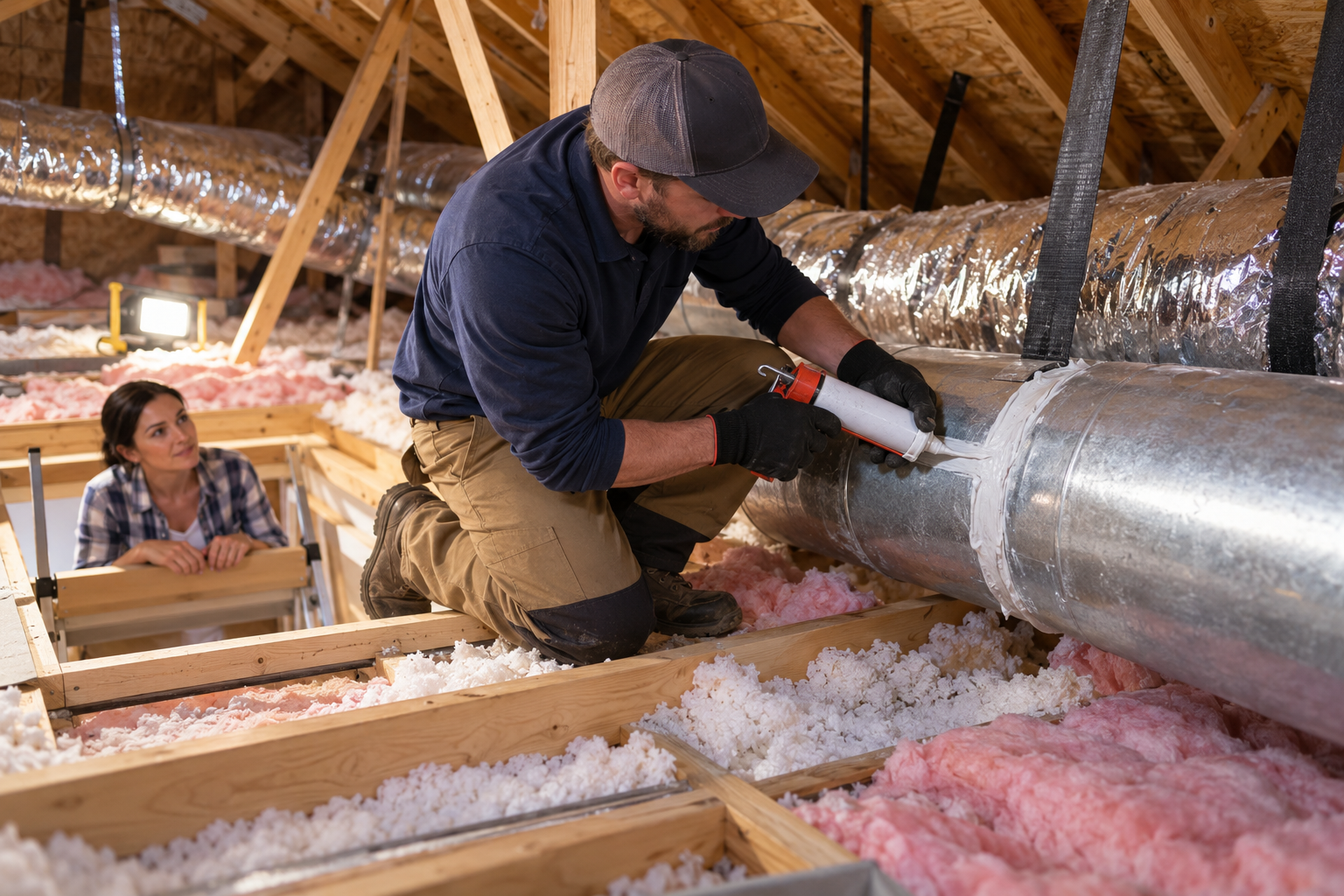
Sealing closes joints, seams, boots, and penetrations. Insulation reduces heat transfer around ducts in unconditioned spaces. A contractor may recommend one or both, but the quote should say which runs and defects are included. Ordinary duct tape is not a durable general sealing recommendation; ask what product and preparation are proposed.
Testing adds value when the objective is to locate leakage or show improvement. A visual seal of a few accessible joints is not the same scope as a measured whole-network program.
Access drives the budget
Accessible basement or attic ducts are easier to inspect and treat than concealed runs behind finished surfaces. Difficult access can require opening and restoring ceilings, moving insulation, protecting contents, or working around moisture and contamination. If ducts are wet or damaged, source correction and replacement may be more appropriate than sealing over the condition.
When the investment may help
The case is stronger when ducts leak substantially, run through unconditioned spaces, rooms are uneven, or the system loses conditioned air before reaching occupants. ENERGY STAR reports that sealing and insulation can materially improve performance, but the result depends on the starting condition, runtime, climate, insulation, utility rates, and installation quality.
The case is weaker when the ducts are already tight, the room problem is an undersized branch, the envelope dominates the load, or the proposed work cannot reach the affected runs.
Scenarios
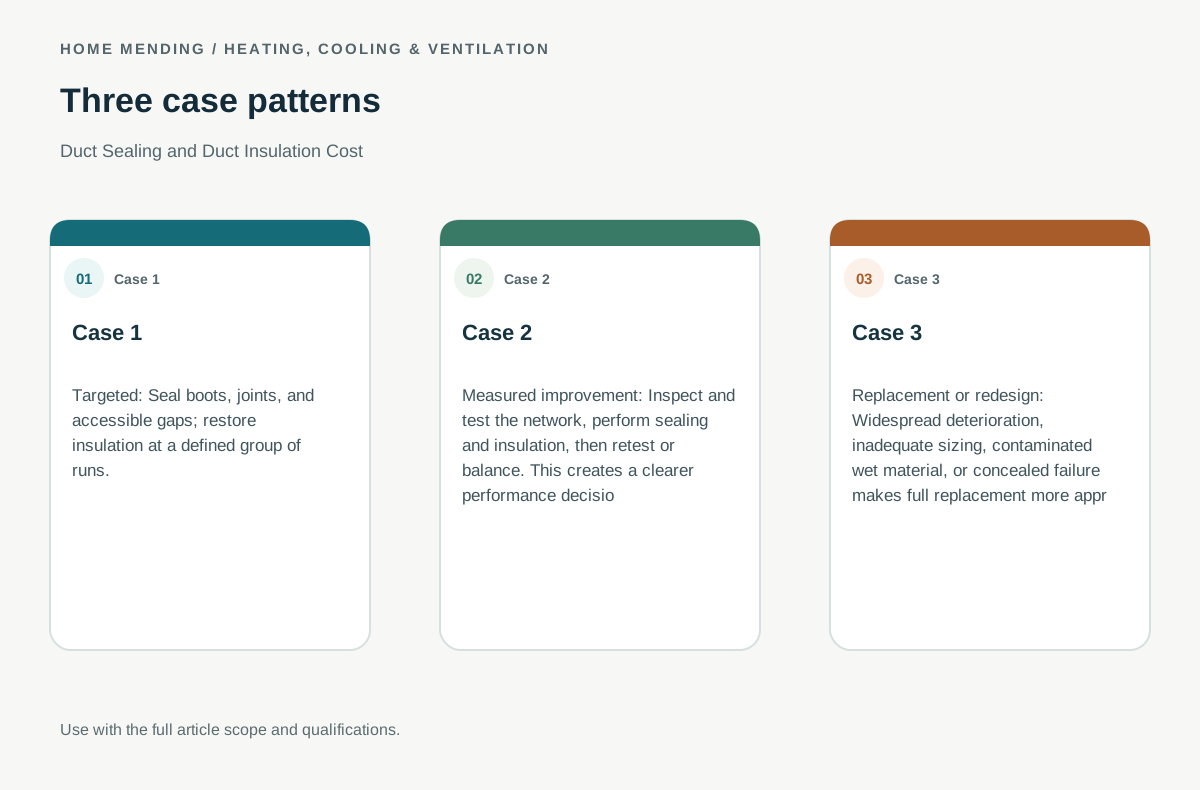
Targeted: Seal boots, joints, and accessible gaps; restore insulation at a defined group of runs.
Measured improvement: Inspect and test the network, perform sealing and insulation, then retest or balance. This creates a clearer performance decision.
Replacement or redesign: Widespread deterioration, inadequate sizing, contaminated wet material, or concealed failure makes full replacement more appropriate. A new heat pump may also require an airflow evaluation.
Compare the quote
Ask for duct locations, defect assumptions, sealing material, insulation scope and R-value where applicable, access and finish restoration, testing, balancing, warranty, and exclusions. Separate envelope insulation or moisture correction when those are the dominant project.
Choose sealing or insulation when it addresses a defined accessible performance loss at lower disruption than replacement. Do not buy a promised payback; buy a documented scope whose comfort and energy outcome remains plausible under your home’s conditions.
Test the starting condition
Ask how leakage or insulation loss was identified and which runs are included. High bills or uneven rooms can have equipment, control, envelope, or distribution causes. A visual inspection may support targeted work, but a measurement-based scope gives a clearer before-and-after decision when savings are important.
Sealing is attractive when ducts are otherwise sound. Insulation matters when ducts run through unconditioned spaces. Section replacement is better when material is damaged or wet. Full replacement or redesign is better when layout, returns, or sizing are the problem. Include access, testing, finish restoration, warranty, and maintenance.