
Roof-truss repair is tied to the installed truss design and exact damage, while available technical guidance does not provide installed market prices. Compare quotes only after the repair or replacement scope, designer or manufacturer involvement, access, weather protection, temporary support, and roof restoration are clear.
Published price context
No broad consumer price guide establishes a comparable installed range for engineered roof-truss repair. Replacement, a manufacturer- or designer-reviewed repair, temporary support, access, and roof-covering work can be separate costs. Require the proposal to state who provides design review, which trusses and connections are included, and what roof opening and restoration are covered.
Why trusses need a different budget
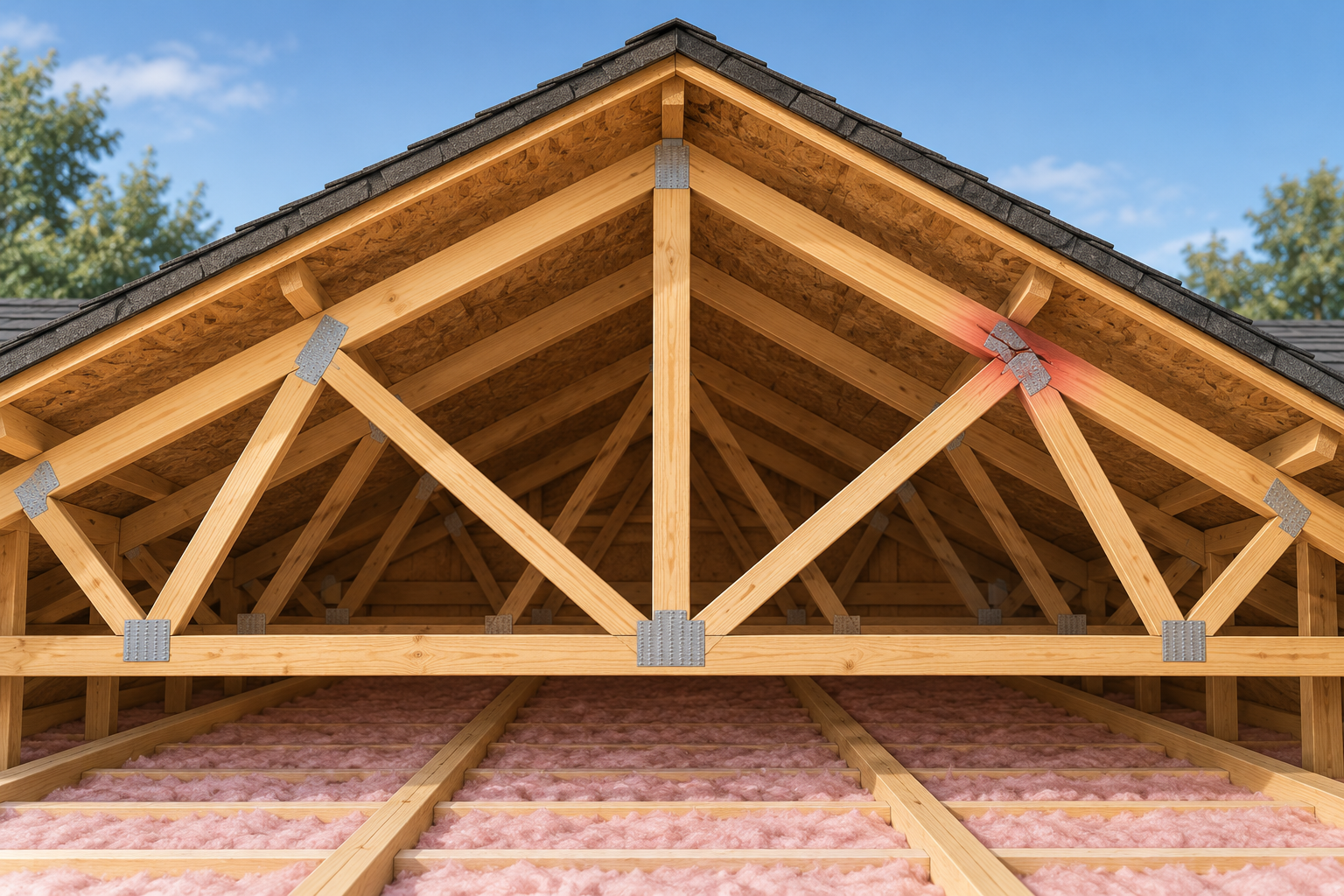
Roof trusses use designed chords, webs, connections, and geometry. A cut, broken member, damaged connector, water-deteriorated area, or improper alteration can change the system’s load path. The repair may require the original design, a truss manufacturer, or a qualified engineer. A rafter-sistering analogy is not enough.
HUD design and inspection guidance supports treating roof members and engineered residential systems as project-specific structural work. This guide intentionally does not reproduce repair details or temporary-support instructions.
Cost layers
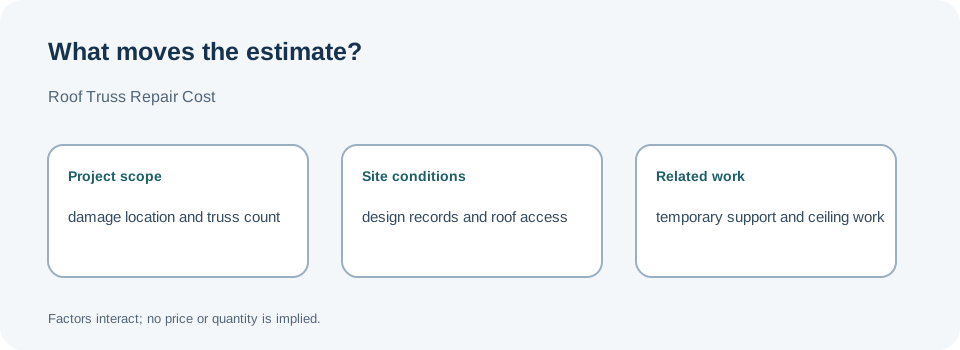
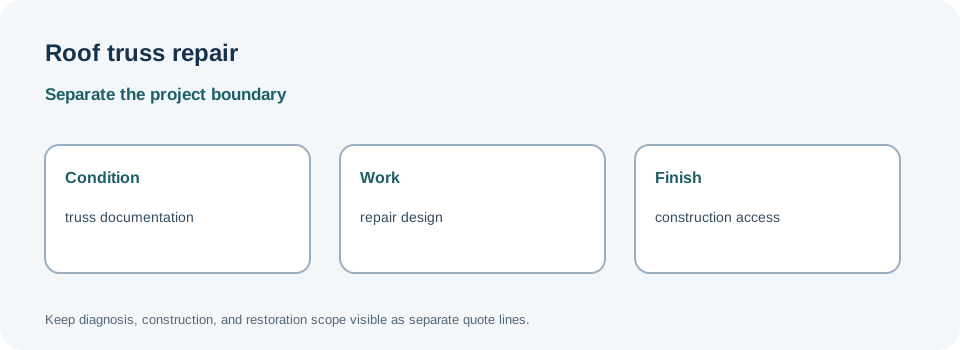 Budget for inspection and design review, temporary support, attic or roof access, covering and deck removal, dry-in, repair materials, connector work, replacement if repair is impractical, insulation and ceiling restoration, disposal, engineering, permits, and monitoring. Missing truss documentation can add investigation time.
The roof covering is a related but separate cost. If the repair opens the assembly, ask whether shingles, membrane, underlayment, flashing, and interior finishes are included or excluded.
Scenarios
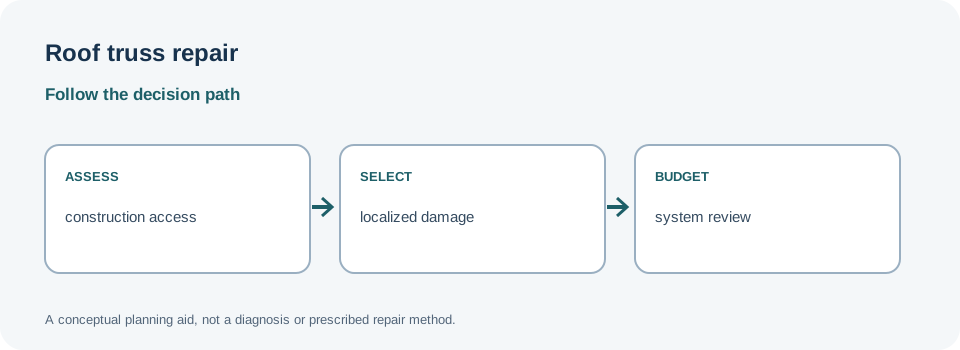 Documented localized defect: One truss and its surrounding condition are accessible, and design information supports a repair. Price the review and finish access explicitly.
Altered or several trusses: A remodeling cut or connector problem affects multiple members. Budget for wider investigation, temporary support, and coordinated roof or ceiling work.
Replacement-level damage: Design is unknown, deterioration is broad, or the roof geometry has changed. Compare repair and replacement with a clear residual-condition allowance.
Compare proposals
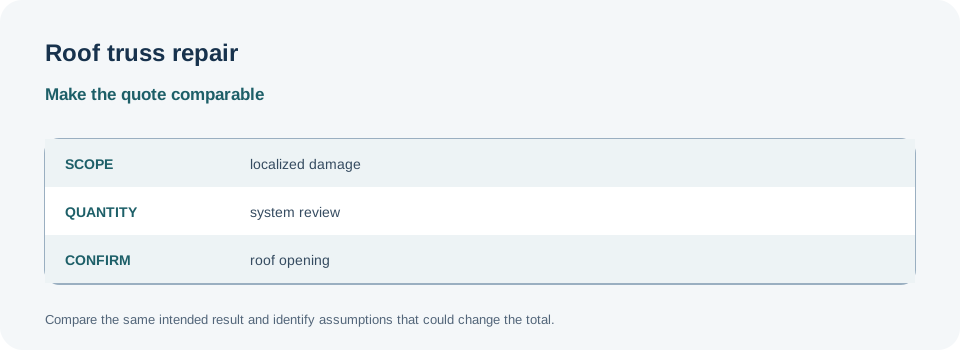 Ask who evaluates the truss, whether manufacturer or engineer documentation is included, which members are affected, what outcome is promised, how temporary support and weather protection are handled, and how concealed damage or missing records changes price. Do not accept a generic field repair detail as proof of compatibility.
Normalize design and access allowances
Ask whether the price includes field documentation, manufacturer or engineer review, repair drawings, temporary support, opening and closing the roof, weather protection, and finish restoration. If a bidder assumes replacement while another assumes repair, compare the residual condition and the construction disruption as well as the totals.
For a short horizon, a documented repair may preserve a serviceable roof when design and access are clear. For a long horizon, include future inspection access, the risk of repeating a roof opening, and the value of keeping the engineered repair record. Do not trade design certainty for a low per-member number.
What a complete project budget should show
Separate the truss assessment, engineering or manufacturer consultation, temporary support, access, opening and closing the roof, dry-in, repair or replacement, disposal, and interior restoration. If the proposal assumes that the covering or ceiling can stay in place, ask how that assumption was checked. If another bid includes removal, compare the resulting inspection opportunity and restoration rather than treating the extra line as waste.
The ownership decision is usually repair versus replacement of the affected design, not repair versus a cheaper material. A localized, documented repair may avoid a second roof opening. Broad or undocumented damage may make replacement or a supplemental support plan more predictable. Ask what future inspection record will be provided and which remaining conditions are excluded.
Before signing a truss quote
Record the truss identification, affected members, design or manufacturer review, temporary support, access, roof protection, repair or replacement, and finish restoration. Ask what is included if the original design record is missing and what evidence triggers additional work. A fixed number without a compatibility path is not a fixed project outcome.
For long-term ownership, keep the repair drawing and preserve future inspection access. For short-term ownership, compare a documented repair with replacement and the cost of opening the roof again. Keep ordinary covering replacement separate from the engineered framing scope.
Budget the boundary between roof and structure
Ask whether the covering, deck, ridge, wall, ceiling, and foundation were inspected or merely assumed. If the roof must be opened, put dry-in, flashing, insulation, interior finishes, disposal, and weather delays into the same comparison. If lower supports are implicated, show that structural work separately.
A useful base case repairs the identified framing; an expected case includes limited concealed damage; a difficult case includes connected support or broad roof replacement. This gives the homeowner a decision threshold without claiming that visible sag alone identifies the cause.
A practical quote comparison
Separate design review, field exposure, temporary support, roof protection, repair or replacement, utilities, disposal, and ceiling restoration. Identify which trusses were inspected and what is assumed about inaccessible members. This makes a broad allowance auditable rather than an invitation to expand the work without a defined discovery.
For a short horizon, a documented repair may be preferable when it preserves a serviceable assembly. For a long horizon, compare future inspection access and repeat roof opening with replacement. Keep ordinary roofing work outside the engineered truss total.
Separate damaged trusses from altered trusses
A truss damaged by moisture, impact, or a failed connection is not the same decision as a truss cut or modified during a remodel. The repair may require different investigation, documentation, and design. Ask what was observed, whether adjacent trusses or bracing were checked, and whether the proposed work restores the original system or accommodates a new load or opening.
Access, temporary support, crane or material handling, roof removal, ceiling removal, and finish restoration can dominate the budget. A proposal should state the number and location of trusses, the repair or replacement sequence, connector details, and the party responsible for design review. If the source condition remains active, price it separately. A credible quote lets you compare a designed repair with replacement or remodel redesign without treating a generic hardware package as an equivalent structural solution.
Identify the truss decision before choosing a repair package
The budget depends on whether the truss is damaged, altered, overloaded, poorly supported, or affected by a broader roof or wall condition. A repair that restores an original member is a different decision from a redesign that accommodates a new opening or load. Ask whether adjacent trusses, bracing, bearings, and the lower support path were reviewed. A single visible defect may not define the whole engineered system.
Original documentation, field measurements, manufacturer review, and engineered repair drawings can be cost layers before construction begins. If the records are missing, price that uncertainty rather than accepting a generic “truss repair” allowance. The quote should state the inspected trusses, inaccessible areas, temporary support, weather protection, roof and ceiling opening, and finish endpoint.
For a short horizon, a documented design-compatible repair may avoid replacement when the assembly remains serviceable. For a long horizon, compare future inspection access, retained records, and the cost of another roof opening. Separate ordinary roof-covering work from the engineered truss decision so a broad roofing package does not hide or inflate the structural comparison.
Make design responsibility and access explicit
An engineered roof-truss quote should identify who reviews the truss, who supplies or approves repair documentation, and who determines whether adjacent trusses, bracing, bearings, and lower supports are adequate. A field repair that fits one truss is not automatically transferable to another. Missing records, altered geometry, or a new opening can shift the job from repair to redesign.
Access can be from the attic, roof, ceiling, or a combination. Include temporary support, dry-in, roof and ceiling removal, insulation, utilities, delivery, disposal, and final restoration. Ask what is known about inaccessible trusses and how the contractor prices added exposure. A “per truss” price without an identified design and access boundary is not comparable with a complete engineered scope.
For long-term ownership, preserve the truss identification, drawings, approvals, and finished access. For short-term ownership, compare the documented repair with replacement or redesign by the same roof and ceiling endpoint. Keep the structural decision separate from optional roof-covering upgrades and from remodeling work that merely creates the opening.
Treat repeated truss symptoms as a system question
If more than one truss shows damage, altered members, unusual deflection, or missing bracing, ask whether the pattern changes the project from a local repair to a roof-system review. Include the bearing walls, supports, connectors, adjacent trusses, and any new loads from mechanical equipment or remodeling. A per-truss allowance can be useful only when the inspected population, design basis, and access conditions are defined.
The finished budget should show the boundary between engineering, temporary support, structural work, roof protection, and restoration. If records or manufacturer information are unavailable, allow for measured field documentation rather than hiding the gap in a generic contingency. For long-term ownership, retain the approved repair package and accessible inspection points. For short-term ownership, compare the bounded repair with replacement or redesign using the same weatherproof and finished-room endpoint.