
Published pricing guides describe foundation systems and repair choices more consistently than they provide comparable installed prices. Build a budget from a confirmed condition, defined method, site access, and restoration, then compare local written proposals; do not treat figures from another market or currency as a local estimate.
Published price context
HomeAdvisor’s U.S. foundation guide, updated June 20, 2026, lists a typical range of US$2,225–US$8,133 and an average of US$5,174. HomeStars’ Canada-facing guide lists a typical $5,000–$15,000 range but does not state whether its dollar symbol means CAD or USD. These publisher estimates use different scopes and methods, so keep them separate; neither is a local quote or a currency conversion.
“Foundation repair” describes several different jobs
A stable crack may need sealing, monitoring, or a structural repair selected after assessment. A wall that is moving sideways may need reinforcement, anchors, tiebacks, straightening, or reconstruction. A settling corner may need support added below the existing foundation, while a badly deteriorated foundation may make replacement or house lifting part of the project.
The first budget question is therefore not “what is the price per square foot?” It is “what condition is being corrected, and is the proposal stabilizing, restoring, or reconstructing the structure?” HUD guidance treats foundation design, drainage, shoring, underpinning, and crack repair as separate technical subjects for this reason.
Quote scope layers
| Work package | What a proposal should identify |
|---|---|
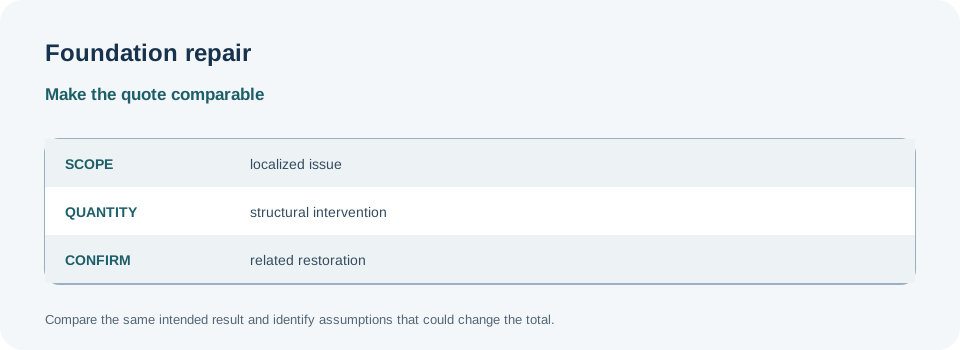
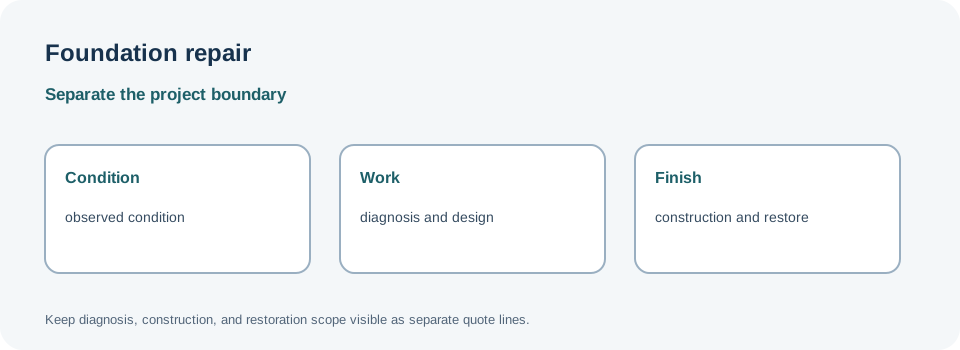
| Assessment and design | The observed condition, investigation needed, design responsibility, and permit or inspection assumptions |
| Structural intervention | The repair or replacement method, affected wall or supports, quantities, and intended result |
| Access and temporary conditions | Excavation, shoring, lifting, utilities, restricted access, and protection of the occupied home |
| Related work and restoration | Soil or water work, disposal, finishes, landscaping, and items assigned to another contractor |
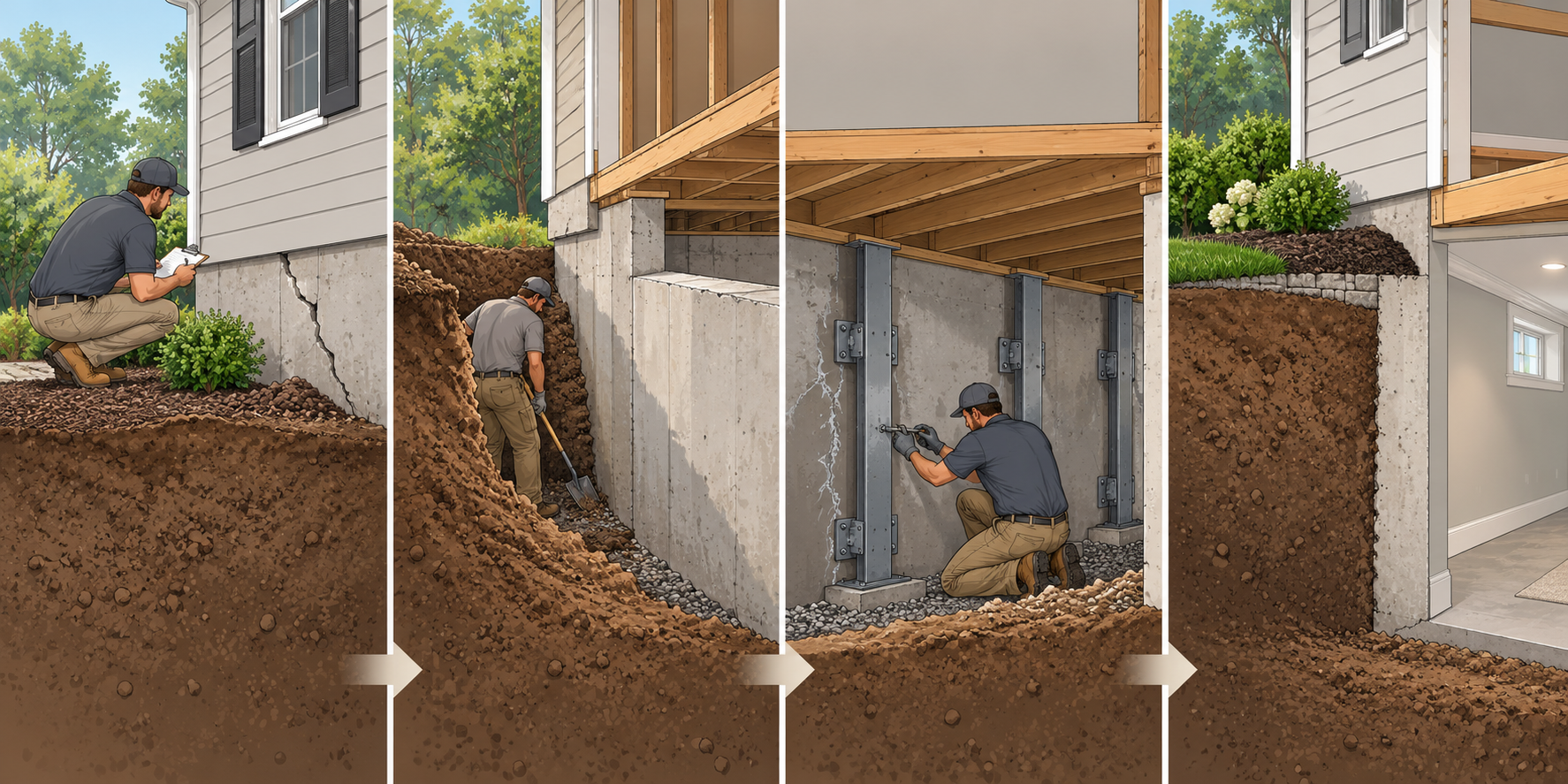
Different proposals may address the same visible problem while ending at different conditions. Compare actual inclusions and exclusions before treating a higher or lower quote as an outlier. Engineering, soil work, access, and restoration can be substantial parts of a complete project.
Cost drivers that matter more than house size
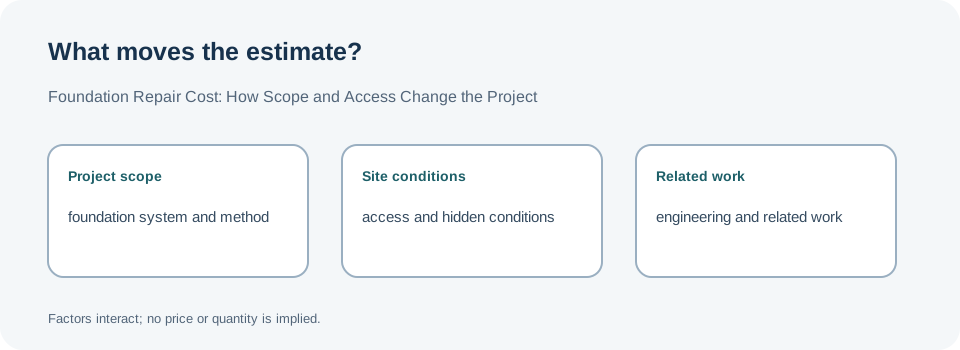 The foundation system determines how a crew reaches the problem. A slab can require interior demolition, selective excavation, or support beneath a structural area. A basement wall may need exterior excavation or interior access. A pier-and-beam system may permit crawl-space access but have many supports, poor clearance, or difficult working conditions.
Other major drivers are the number and location of supports, depth of excavation, groundwater, soil and slope, temporary shoring, lifting versus stabilizing in place, utility conflicts, disposal, and restoration of floors, walls, siding, landscaping, or hardscape. Local labor, travel, seasonal conditions, and permit procedures also matter.
Root-cause work can be a separate project. Grading, roof runoff, below-grade drainage, plumbing leaks, soil stabilization, and pest treatment may be necessary to protect the repair, but they should be named and priced separately so the structural proposal remains intelligible.
Three scenarios to budget
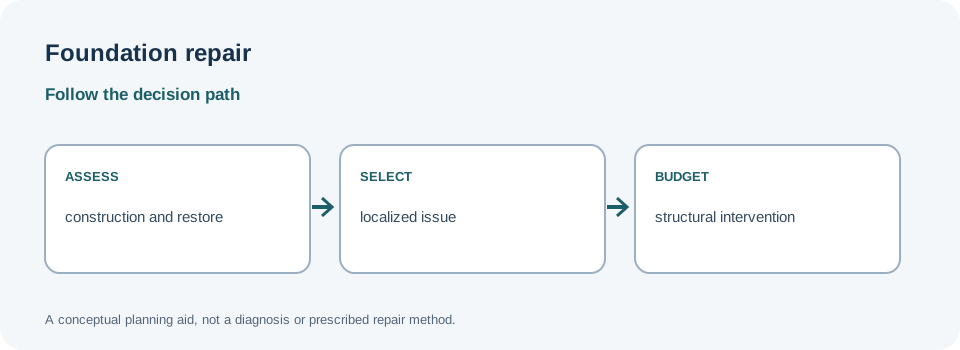 Simple: The condition is localized and stable, access is straightforward, no lifting is needed, and the repair leaves finishes mostly intact. Expect a focused scope, but confirm that the quote is not merely sealing a symptom while leaving documented movement unexplained.
Typical: The contractor must open or excavate a limited area, provide temporary support, repair several related components, and restore finishes. A realistic proposal has allowances for concealed deterioration and states whether an engineer or permit is included.
Difficult: The house is moving, the cause is uncertain, access is restricted, the structure sits on problematic soil or a slope, or several supports need correction. Stabilization, soil work, lifting, utilities, and restoration can push the project into major-construction pricing.
Compare a foundation quote line by line
Request the same information from each bidder: condition assumed, measured repair area, foundation type, proposed method, number of supports, excavation and shoring, engineering, permit and inspection responsibility, drainage or soil exclusions, finish restoration, disposal, warranty terms, and the unit price for hidden work. A low base bid may exclude the items that make the repair durable.
Separate required work from options. A structural stabilization proposal and a drainage correction may be related but are not the same line item. A contractor may also offer cosmetic crack treatment, waterproofing, or basement finishing. Keep those scopes visible without letting them obscure the load-path repair.
When another category owns part of the decision
Below-grade water and crawl-space environmental work belongs with the basement and crawl-space scope. Grading, retaining, and surface drainage belong with site work. Engineering and geotechnical investigation are independent professional services. Pest treatment, historic foundations, disaster restoration, and manufactured-home foundation systems have their own property-specific context.
The right budget is a defined structural scope plus explicit related work—not a single number called foundation repair. If the proposal cannot explain what is being stabilized and what remains unresolved, the price is not ready for comparison.
How to keep the budget honest
Request the observed condition, proposed outcome, foundation boundary, access assumptions, support count or repair length, engineering, permits, excavation, shoring, restoration, and hidden-condition process. If a bidder offers a “standard” repair, ask what property conditions would make that standard scope change.
Use the ownership horizon as a final check. A bounded repair can preserve capital when the surrounding system is sound. Stabilization, lifting, or replacement can be worth more when the same access would be repeated or the residual condition would interfere with a sale, renovation, or future maintenance.
Check material, insurance, and funding questions separately
Some homeowners need a cause-specific decision rather than another general price comparison. For a reported Québec pyrrhotite concern, the assessment and replacement guide explains the material-assessment and project-budget boundaries. If a covered event may be involved, foundation insurance coverage shows how to keep the gross contractor scope separate from an insurer’s written decision. For a conditional grant, loan, or match, use the structural repair assistance guide to check accepted work, owner contributions, repayment, and payment timing. None of these potential cost offsets changes the structural scope or reduces the amount owed until the relevant administrator confirms it.
Decide whether the first visit is diagnostic or corrective
A first contractor visit may produce a useful repair proposal, a limited stabilization, or only a recommendation for further inspection. Those are different deliverables. If movement, settlement, water pressure, soil behavior, or a damaged load path is unresolved, paying for a more specific design or investigation can prevent a cheap cosmetic scope from becoming a second mobilization.
Ask what observation would change the proposed method. For example, an opening that confirms sound surrounding concrete supports a localized repair; evidence of active movement, poor bearing, or broader deterioration changes the project class. Price investigation, monitoring, and corrective construction as separate decision stages when that is how the work will actually proceed. This makes the initial budget more honest and gives you a clear point at which to approve a larger scope.
Map the foundation type to the work pathway
The same symptom can create different work on different foundation systems. A basement wall may be reachable from outside, but excavation can affect drainage, landscaping, utilities, and hardscape. A slab may require interior openings, protection of cabinets and finishes, or a connection review at the perimeter. A pier-and-beam house may offer crawl-space access while adding low-clearance labor, support-count questions, and beam or post interaction. Ask each bidder to identify the system being repaired and the part of that system that carries the affected load.
This matters when comparing a repair proposal with an underpinning or replacement proposal. A defined wall reinforcement is not equivalent to a deep support system; a localized crack repair is not equivalent to correcting differential settlement; and a new foundation section is not equivalent to a surface treatment. The bids can use different terminology while still appearing to answer the same question. Normalize the intended outcome before comparing totals.
Use staged decisions when the cause is still open
Foundation projects often have an information stage, a structural stage, and a restoration stage. The first may include inspection, measurements, selective opening, or monitoring. The second may include stabilization, reinforcement, support, or reconstruction. The third may include drainage, utilities, waterproofing boundaries, finishes, grading, and landscaping. A contractor may combine these stages, but the proposal should still show what each payment buys and what finding would move the project into the next stage.
Ask for a written record of observed conditions, inaccessible areas, assumed causes, and excluded related work. If a quote includes a large contingency, ask what quantity or discovery controls it. If it includes a narrow repair with no provision for concealed conditions, ask how additional work is approved. A transparent staged scope is not necessarily more expensive; it makes the uncertainty visible and prevents a low initial number from hiding a different project.
Separate the property boundary from the structural boundary
Foundation proposals often sit beside work on drainage, waterproofing, grading, utilities, landscaping, pest treatment, basement finishes, or temporary accommodation. Those items may be necessary to complete the project, but they are not all part of the structural repair. Ask for a project map that shows the foundation condition, the enabling work, the related work, and the items deliberately excluded. This makes it possible to compare a focused structural bid with a broader package without assuming that the larger number is waste or that the smaller number is incomplete.
Use the same question for warranty language. A contractor may warrant materials or workmanship while excluding movement, water entry, soil behavior, or work performed by another trade. The exclusion may be reasonable, but it changes what the homeowner is buying. Record the condition at handoff, the expected result, and the next action if the cause persists. A clear boundary is especially valuable when the project will be staged over several seasons or contractors.
For a property being bought or sold, preserve the inspection findings, scope, paid change orders, repaired locations, and unresolved conditions. For an occupied long-term home, compare repeat access and disruption with the value of correcting related work while the area is open. The best foundation budget is a decision map: it tells the homeowner what is known, what is priced, what is still conditional, and what the completed structure should do.