
A visible crack does not determine the repair scope or its price. Sealing, restoring structural continuity, stabilizing a moving wall, and addressing settlement are different jobs; clarify the suspected cause and intended result before comparing local proposals that include the same access and restoration.
Published price context
HomeAdvisor’s U.S. foundation guide, updated June 20, 2026, lists US$250–US$800 for its broad cracking category. HomeStars’ Canada-facing crack guide reports $500–$1,500 per crack injection but does not state the currency; other sections combine crack work with stabilization or water management. These source-reported examples do not diagnose a crack or establish CAD pricing. Compare repair purpose, crack count, access, and included work.
A crack is a symptom, not a repair prescription
 Concrete and masonry crack for several reasons, including shrinkage, thermal movement, settlement, overload, restraint, freeze-thaw action, or moisture-related conditions. A crack may be stable, moving, structural, or primarily a route for water. A photo or direction alone cannot establish which case applies.
The useful first distinction is purpose. Is the proposed work intended to keep water out, restore structural continuity, accommodate movement, or address a wall that is being pushed or displaced? Those purposes can overlap, but they do not have the same price or durability expectation.
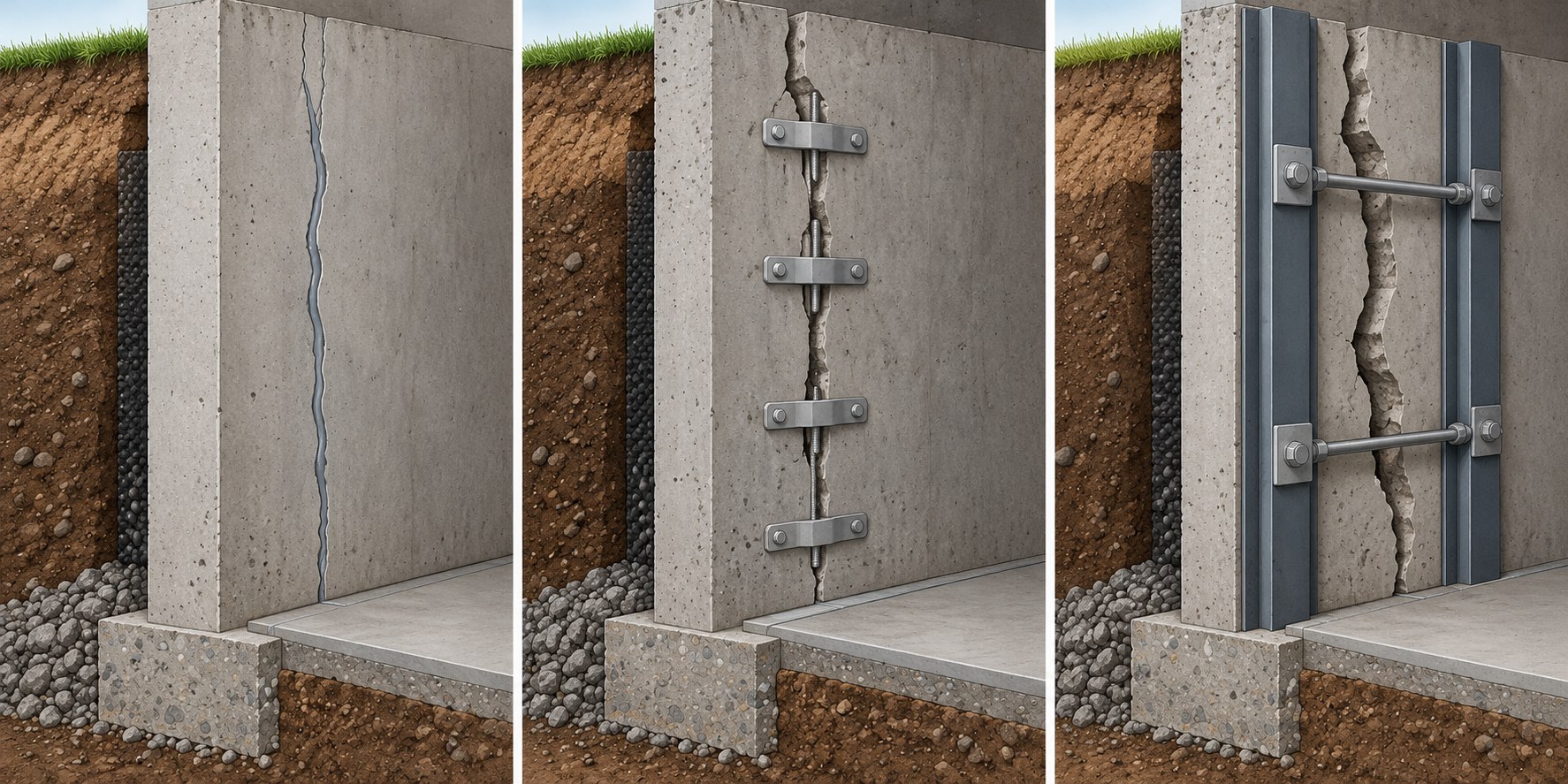
Three repair classes
Limited sealing is usually the smallest scope. It may involve cleaning and filling an accessible crack or sealing an opening from an appropriate side. Government of Canada maintenance guidance lists several products used for moisture exclusion, but it does not establish that a particular product is suitable for every crack or that sealing proves the crack is nonstructural.
Structural crack repair is a different decision. ACI describes epoxy injection as a potential repair procedure whose approach varies with orientation, location, accessibility, and crack width. The suitability depends on the cause and condition. The quote should explain why injection or another structural treatment is being proposed and what continuing movement would mean for the result.
Movement or wall repair is the larger class. If the crack is part of settlement, lateral wall movement, bulging masonry, or a pattern of distress, the work may expand to underpinning, reinforcement, anchors, excavation, drainage correction, or reconstruction. The crack-fill line is then only one part of the budget.
What changes the price
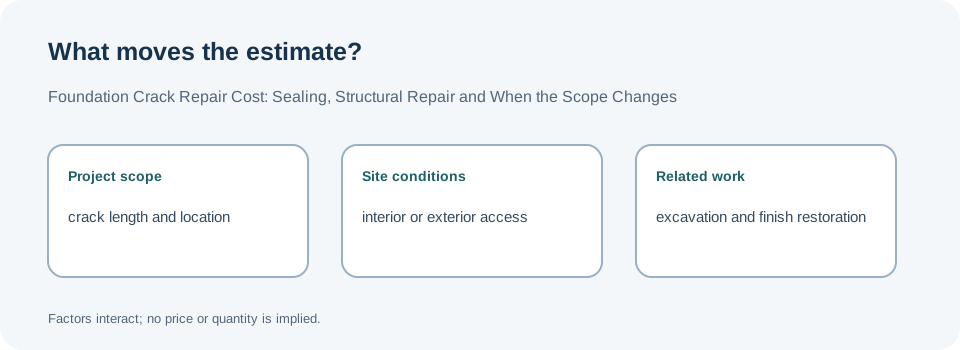 The number, length, width, accessibility, and location of cracks affect labor, but they are not the whole cost. A basement wall accessible from one side is different from a crack behind finishes, utilities, finished flooring, or an exterior hardscape. Interior injection may require protection and patching; exterior work may require excavation, waterproofing, backfill, and restoration.
Continuing movement, displaced wall sections, unknown cause, water pressure, poor drainage, frozen ground, or adjacent structural damage raises uncertainty. Engineering, testing, permits, and selective opening may be separate costs. Ask whether the price includes preparation, ports or materials, surface repair, cleanup, and a defined warranty—or only the visible filling.
Budget by scenario
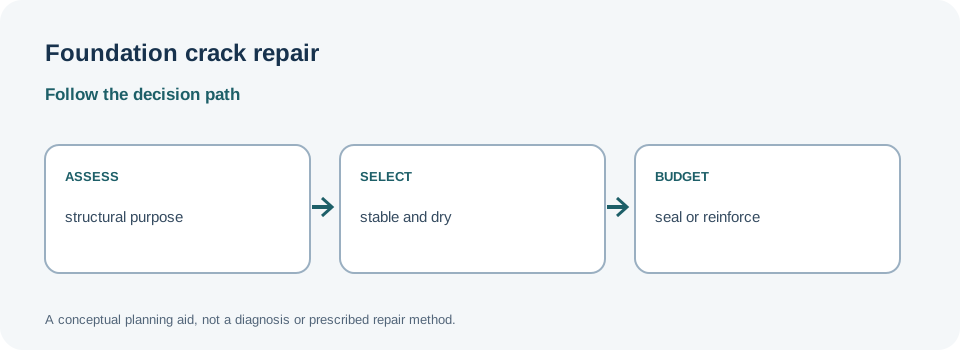 Simple: One accessible, apparently stable crack with no displacement and a clearly limited sealing purpose. The quote should still state what was observed and what is excluded.
Typical: Several cracks or a crack with water entry require inspection, preparation, injection or more substantial sealing, and finish restoration. The proposal should address inside/outside observations and whether movement monitoring or additional assessment is needed.
Difficult: Cracks occur with a bowed wall, sloped floors, sticking openings, settlement, repeated reopening, or broad water pressure. Budget for diagnosis and a structural intervention before comparing repair products. A low-cost seal may be poor value if it delays the actual correction.
Read the quote without mixing scopes
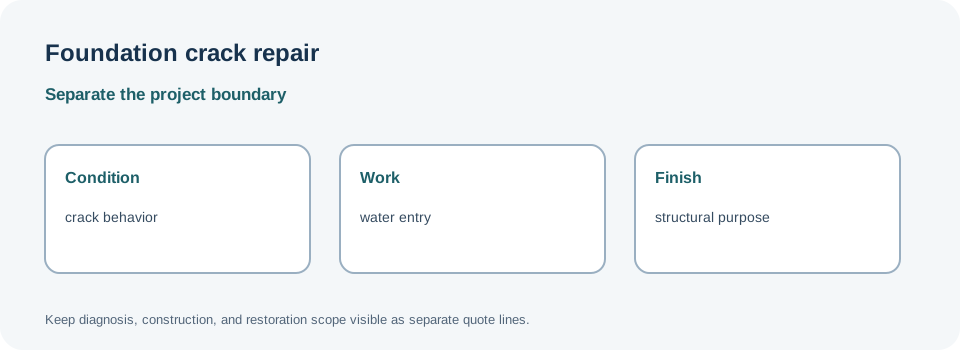
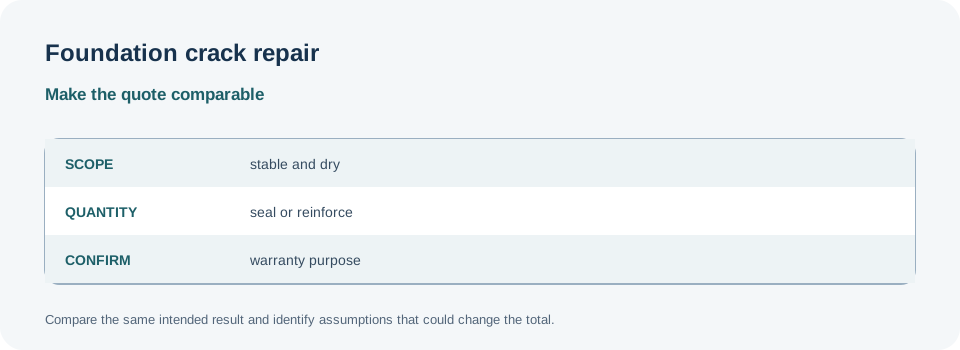 Ask each contractor to separate diagnosis, crack treatment, structural reinforcement, excavation, drainage, waterproofing, engineering, permits, and restoration. “Waterproofing” belongs to a different economic scope from structural crack repair, even if both are discussed during the visit. Likewise, repainting or basement finishing should not be used to make two structural bids look comparable.
Confirm the assumed cause, the side of access, the number of cracks, the treatment purpose, and the response to concealed conditions. If the quote relies on epoxy, polyurethane, hydraulic cement, or another named product, ask what condition makes that product appropriate and what the warranty excludes. Product names are not substitutes for a condition assessment.
When the scope changes
Escalate the decision when cracks widen or recur, walls lean or bulge, floors change level, doors and windows stick along with other symptoms, or several structural elements show distress. That does not prove imminent failure, but it does mean a seal-only price should not be treated as a complete structural budget.
The right comparison is not “which filler is cheapest?” It is “what problem is each proposal solving, how will continuing movement be handled, and what work remains outside the price?”
What makes a crack quote decision-ready
The proposal should identify whether it is sealing water, repairing a structural crack, stabilizing movement, or correcting a wall or foundation condition. Normalize crack count and length, access, preparation, injection or fill material, finish restoration, excavation, drainage, engineering, and warranty exclusions. A low price is not comparable if it solves only water entry while another proposal addresses movement.
If the crack is part of a larger symptom pattern, compare the cost of diagnosis and structural correction with repeated filling. For a longer ownership horizon, account for repeat access and monitoring; for a short horizon, a bounded seal may be reasonable only when its limits are documented.
Use movement evidence to choose the repair class
A crack quote becomes more useful when it states whether the crack is stable, widening, leaking, displaced, or associated with a change in level or alignment. A narrow, stable crack may have a different objective from a crack that is part of a moving wall or a settlement pattern. The repair material is secondary to that diagnosis.
Ask for photos, crack locations, dates, and any monitoring or opening assumptions that support the proposed method. If the quote includes epoxy, polyurethane, mortar, sealant, or reinforcement, ask what each is expected to accomplish and what it does not correct. A water-sealing line should not be presented as structural stabilization, and a structural repair should not promise that every finish crack elsewhere will disappear. That distinction protects both the budget and the decision.
Build a crack record before comparing products
Record the crack’s location, direction, length, visible width if measured by the responsible professional, water entry, adjacent displacement, and whether it has changed. Note whether the crack is in poured concrete, block, brick, a slab edge, or a finish layer. Photographs taken from the same position over time can help document change, but they do not replace an assessment of the structure or cause.
This record helps separate four different outcomes: keeping water out, restoring a structural connection, limiting movement, or repairing the wall or foundation that produced the crack. A contractor who prices only the material may be answering the first question while a homeowner is worried about the third. Conversely, a structural proposal may include engineering or reinforcement that is unnecessary for a stable finish or moisture-only condition. The quote should say which outcome it is designed to achieve.
Treat each repair class as a different economic decision
For a limited seal, compare preparation, access side, material, surface repair, and warranty exclusions. For structural crack repair, compare the assessment basis, treatment purpose, access, and response if movement continues. For a movement-related project, compare the crack work with the larger wall, settlement, support, excavation, or drainage scope. The amounts may overlap, but the residual condition does not.
Ask what will happen if the crack reopens, if water enters from another location, or if an opening reveals a broader pattern. A durable quote does not promise that one material will solve every crack; it explains the condition assumed, the work included, the work excluded, and the next decision if that assumption proves wrong. That framework is more useful than choosing among product names or relying on a single per-crack price.
Make the warranty match the repair purpose
A warranty for a seal, an injection, a structural repair, or a movement-related intervention may cover different things. Ask whether it covers workmanship, water entry at the treated crack, future movement, adjacent cracks, or only the installed material. A limited warranty is not automatically a defect, but it should match the outcome promised. If the contractor cannot warrant movement because the cause is outside the scope, that limitation belongs in the decision rather than being hidden in fine print.
Keep crack repair separate from the condition of the room around it. Interior finishes, insulation, flooring, exterior excavation, drainage, waterproofing, and landscaping can add meaningful cost. Compare bids using the same access side and finish endpoint. If one proposal leaves the wall open for inspection and another restores the room, their totals are not directly comparable until that difference is shown.
For a homeowner deciding whether to act now, the next step may be a focused assessment, monitoring, a water-management correction, or a structural proposal. The article cannot select that path remotely. It can help the homeowner pay for the information that changes the decision and avoid approving a seal-only price when the evidence points to a larger movement or support question.