
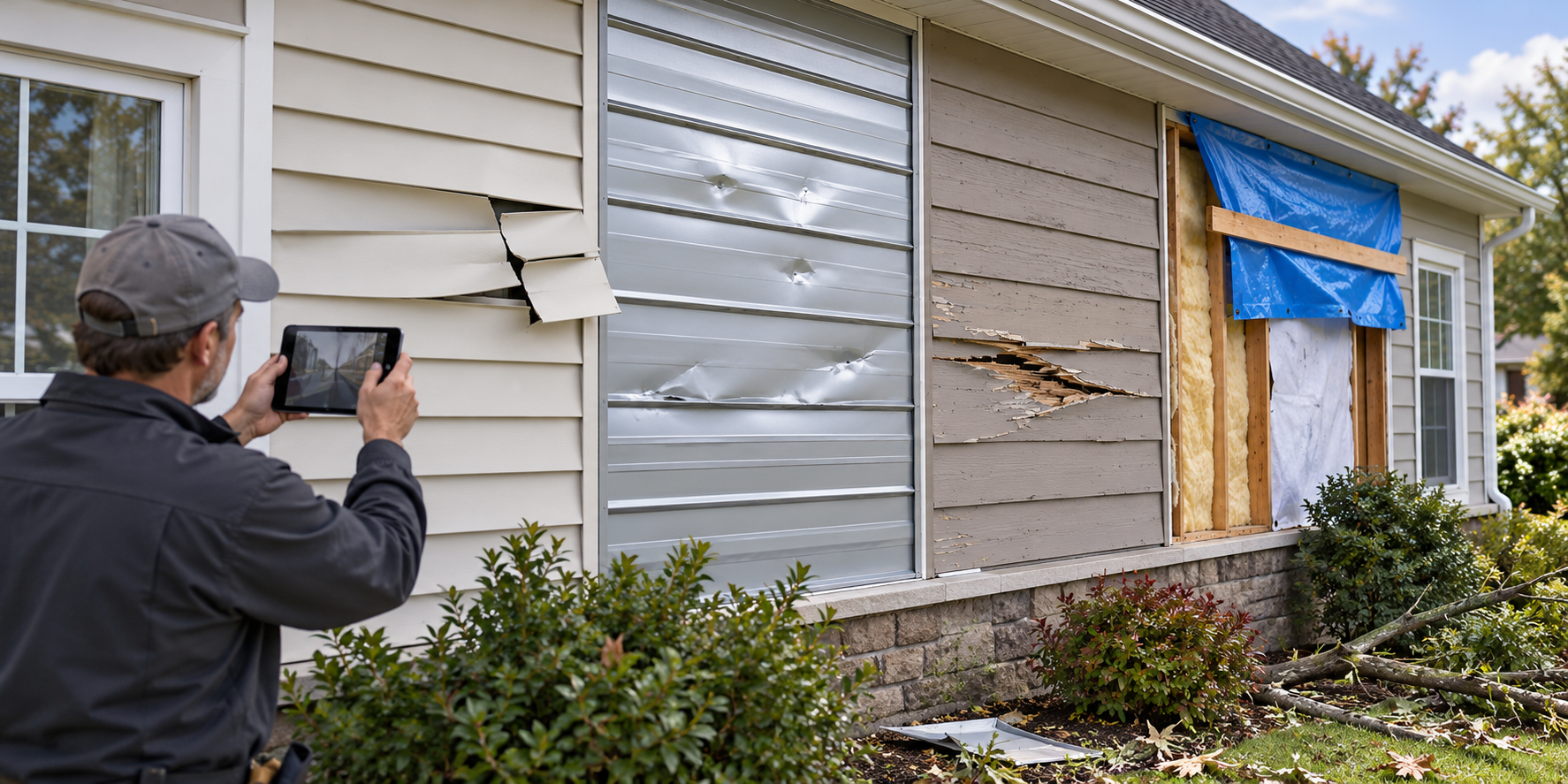
Wind, hail, and flying debris produce different repair scopes by material. Vinyl may crack or detach, aluminum may dent, fiber cement may chip or break, and wood may split or expose end grain. The visible mark is not always the full damage boundary.
Document before repair
Photograph elevations, close-ups, trim, openings, and interior or attic signs of water entry. A contractor should identify whether the storm damaged panels only or also the wall, flashing, sheathing, windows, roof edge, or framing.
Vinyl repairs can involve panels, channels, corners, and aged-color matching. Aluminum may need panel replacement, dent correction, or finish work. Fiber-cement and engineered products require their product documents. Wood may need board, trim, substrate, and finish restoration.
Exterior cladding relies on flashing and drainage layers to manage water behind the face. Storm openings or detached sections should be inspected before a cosmetic patch closes them.
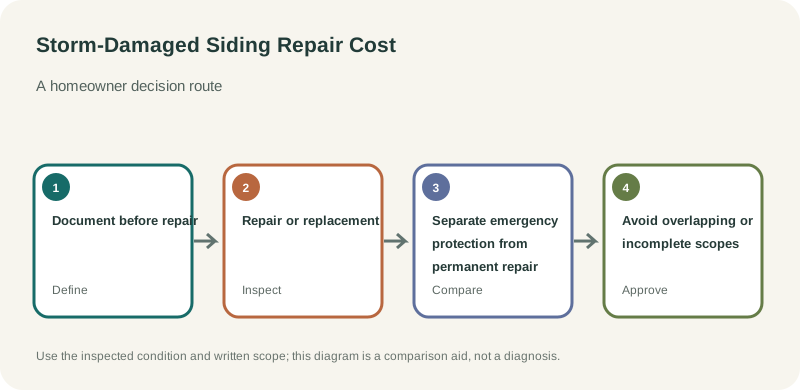
Repair or replacement
Localized damage with a sound substrate can support repair. Widespread impact, repeated loose sections, discontinued material, or hidden water damage may make partial or full recladding more coherent. Ask for a mapped repair scope and a separate broader option.
The sources provide directional replacement context but not a dependable national storm-repair price, Canadian benchmark, or insurance entitlement. Compare local labor, access, material sourcing, disposal, temporary protection, substrate allowances, and cleanup. Insurance matching depends on the policy and jurisdiction. If the loss becomes major reconstruction, use the restoration scope.
Separate emergency protection from permanent repair
After a storm, the first scope may be temporary protection: securing loose material, covering an opening, or preventing additional water entry. Ask for that work to be itemized separately from permanent repair so you can see what was done and what remains. Photograph the damage and keep removed pieces where practical. If an insurance claim is involved, coordinate documentation and insurer requirements without delaying action needed to protect the house from ongoing exposure.
The permanent estimate should identify the affected elevation, panel or shingle count, accessories, access method, and whether adjacent areas will be opened for inspection. Wind can loosen fasteners or disturb laps beyond the most obvious tear. Hail and impact can damage finish without puncturing the cladding. Ask what inspection supports the proposed boundary and whether water staining or soft backing changes the scope.
Avoid overlapping or incomplete scopes
A siding repair may intersect with roofing, windows, gutters, trees, electrical service, or interior drying. Identify which contractor handles each part and who restores items removed for access. For a larger loss, restoration and claim management may fall outside a localized siding repair; use the appropriate recovery process rather than assuming one cladding bid covers the entire event.
Compare the immediate repair with a broader elevation replacement only when there is a defined reason, such as widespread damage, unavailable matching product, or repeated failures. Ask each bidder to distinguish storm-related damage from pre-existing wear and to document exclusions. This gives you a clear record of what the repair price buys and which unresolved conditions need another assessment.
Request itemized documentation for a claim
If a claim is being considered, ask the contractor to separate observed storm damage, pre-existing wear, emergency protection, and code or upgrade work. The insurer may require its own inspection or format, so confirm that process before authorizing non-urgent permanent work. Keep dated photographs, weather information, temporary repair receipts, and a list of damaged elevations. Do not assume that a contractor’s estimate determines coverage or claim value.
A storm repair may require matching material that is no longer sold. Ask for supplier responses or product identification in writing if matching is part of the estimate. When a repair changes only one wall, agree whether color variation is acceptable and whether replacement extends to a natural corner. Larger replacement should be supported by a documented damage boundary, not just a desire for visual uniformity.
Prioritize weather integrity
If a panel is loose or an opening is exposed, address immediate protection promptly with a qualified contractor. Then schedule the permanent repair after the affected assembly and access can be inspected. Ask how a temporary covering will be attached without causing damage and how long it is intended to remain. A temporary measure should have a clear end point and should not be counted as the permanent repair scope.
Separate a localized event from broad damage
A localized case may be a few damaged panels with intact attachment and no water behind the wall. A larger case may involve multiple elevations, unavailable matching material, displaced trim, concealed moisture, or roof and window interfaces. Ask the contractor to document which condition applies and price immediate protection separately. If the claim scope expands, update the written estimate instead of relying on an informal statement that the whole exterior must be replaced.