
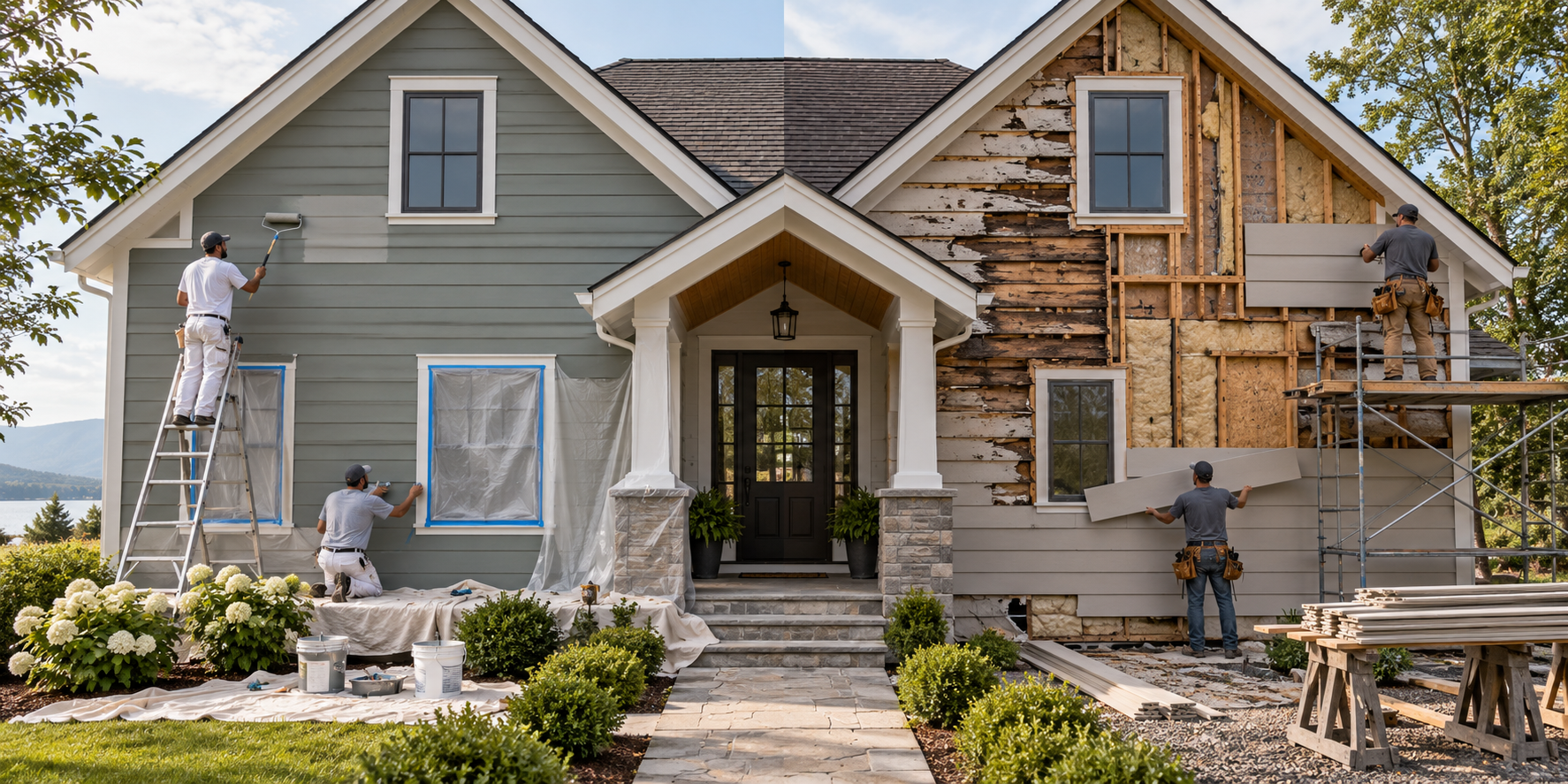
Painting changes the finish. It does not make rotten, warped, cracked, detached, or poorly drained siding sound. Recladding changes the exterior surface and may expose the wall, but it brings demolition, access, and transition work.
Ask what problem you are solving
Painting may fit a sound substrate with faded color, a compatible old coating, or routine renewal. Replacement may be more defensible when boards are warped, cracked, rotten, repeatedly failing, or no longer matchable.
Separate appearance from performance. Peeling can be a coating problem, but it can also reflect moisture, incompatible preparation, or substrate deterioration. A new color does not correct failed flashing or a wet wall.
Material changes the comparison
Wood depends strongly on its finish and exposure. Fiber cement and stucco may need compatible recoating but are not interchangeable. Aluminum may be recoated when preparation is suitable. Vinyl is commonly cleaned rather than painted, subject to the product requirements.
For masonry, paint or stain can change future maintenance and the difficulty of returning to an uncoated appearance. Older or damp masonry deserves specialist input before coating.
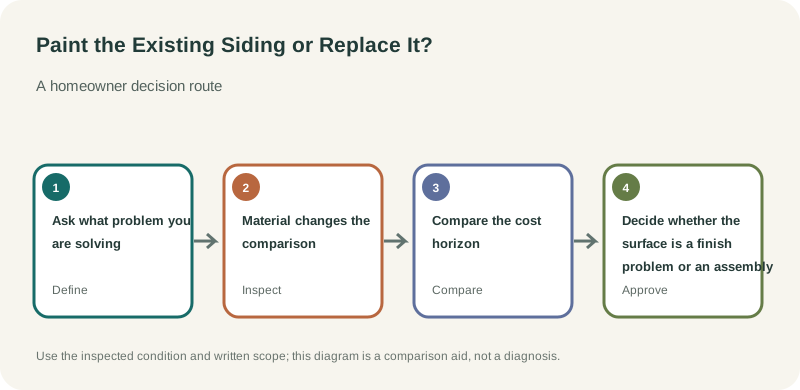
Compare the cost horizon
A painting quote should show preparation, repairs, primer, coats, access, and trim. A replacement quote should show removal, disposal, wall preparation, flashing, drainage layers, trim, and concealed-condition allowances. Compare future touch-up, caulk, repainting, and access too.
Do not rely on an unsupported resale return claim. The stronger economic case comes from matching the work to the condition and avoiding a coating cycle that hides an active failure. If moisture or repeated damage is present, pause for a qualified assessment. If a product defect may be covered, compare the written remedy with the full repair quote and remaining owner cost; siding warranty repair costs is a separate guide to that calculation.
Decide whether the surface is a finish problem or an assembly problem
Painting can refresh a sound, paintable surface. It does not straighten a distorted wall, secure loose cladding, restore failed flashing, or repair wet sheathing. Before comparing prices, list the defects you want to solve and ask whether each option actually addresses them. A painter can price preparation and coating; a siding contractor can investigate attachment, transitions, and concealed layers. For recurring leaks or soft wall areas, establish the cause before treating paint as a remedy.
Then define the same visible result for both estimates: elevations included, trim and accessories, color changes, repairs, and cleanup. A painting quote may exclude board replacement, while a siding quote may include extensive demolition and new trim. Ask for those items separately so a finish-only option is not compared with a complete wall reconstruction.
Account for future work and disruption
Painting usually retains the existing assembly and may require repeated preparation and recoating over time. Re-siding is more disruptive and has a higher initial scope, but it can renew cladding and provide an opportunity to inspect exposed details. Neither option guarantees improved moisture performance unless the water-management work is specifically identified. Ask how each proposal handles openings, roof intersections, decks, and penetrations.
Consider whether either project will need to be repeated after other planned work. Window replacement, roof work, insulation upgrades, or changes to exterior wiring can disturb a new paint finish or siding. Sequencing work can avoid paying to remove or protect a recent finish. If a larger envelope project is being considered, coordinate scope with the relevant contractor before committing to a cosmetic layer.
Compare the cost horizon carefully
A simple total-cost comparison can be misleading when service life and maintenance are uncertain. Use scenarios instead: the painting price plus likely preparation if the current substrate remains sound; the re-siding price plus any exposed-wall repairs; and a higher case if concealed damage is found. Keep assumptions visible and avoid treating an advertised lifespan as a guaranteed outcome. The better choice is the one that addresses the actual defect at a cost and disruption level that fits the home’s condition and your time horizon.
Factor in disruption and access to concealed work
A paint project generally leaves the existing cladding in place, so it creates less demolition and can be completed with less wall exposure. Re-siding may require noise, debris handling, temporary openings, and moving fixtures, but it provides an opportunity to inspect the wall face and correct identified details. Ask each contractor to describe how the household will be affected and how the building is protected at the end of each workday. This is especially important when children, pets, or limited entry access are a concern.
Consider whether the house will undergo other exterior projects soon. If a window, roof, deck, or utility upgrade will disturb siding, painting now may need to be repeated. Conversely, replacing sound siding only to change color may not justify the disruption if coating is suitable. Sequence work so that repair and water-management corrections precede finish work.
Use a decision threshold
Before collecting bids, list the conditions that would make you choose replacement: widespread looseness, repeated water entry, extensive rot, unavailable repair material, or a planned assembly change. Then list what would support painting: sound attachment, dry substrate, acceptable remaining service, and a finish compatible with the material. Share these conditions with bidders and ask them to report what they found. This turns a subjective appearance decision into a comparison grounded in the actual wall.
Apply the comparison to the wall you have
Painting is usually the more relevant estimate when cladding is attached, dry, and structurally serviceable but the finish is worn. Residing deserves a fuller comparison when panels are loose or damaged across several walls, a recurring water path needs correction, matching material is no longer available, or the wall is due for a broader upgrade. These conditions are prompts to investigate; none makes one option automatic. Ask contractors to identify the actual defect and how each proposed scope addresses it.
A paint estimate should describe surface preparation, repairs, primer, finish coats, access, protection, and the area covered. A siding estimate should describe removal or overlay, material, trim, flashing, drainage details, disposal, concealed repairs, and restoration. Compare the same elevations and intended visual result. If one proposal includes carpentry and the other excludes it, add that missing work before judging the totals.
Consider how the options interact with other projects
Window replacement, roof work, insulation changes, decks, and utility upgrades can disturb either finish. Coordinate sequence with those plans. Re-siding may provide access to the wall for inspection, while painting after new windows may avoid repainting disturbed trim twice. If no larger work is planned and the assembly is sound, a coating can preserve serviceable cladding. If a leak or rot problem remains, sequence its correction before any finish option.
Compare the result you will own
Painting retains the existing material and usually requires future surface care. Re-siding changes the cladding and may make later local repair easier or harder depending on product availability and matching. Neither option alone guarantees better insulation, water control, or resale value. Ask for product care documents and keep the project record. Use a stated time horizon and low/likely/high repair scenarios, but leave service life uncertain unless the product and exposure support a defensible estimate.