
Exterior painting is priced by the surfaces and preparation required, not just by the amount of paint. Siding type, trim complexity, height, access, repairs, and the existing coating can change the quote.
A U.S. planning model, not a local bid
Homewyse’s September 2026 U.S.-oriented models put basic siding painting at $2.36–$4.39 per square foot, vinyl siding at $2.89–$5.24 per square foot, and aluminum siding at $2.12–$4.23 per square foot. Each assumes favorable conditions, up to two hours of preparation per 350 square feet, limited loose-paint removal and spot priming, and two coats; trim is separate. A May 2026 model puts basic exterior-trim painting at $2.55–$5.21 per linear foot under its own preparation assumptions. These estimates come from the same calculator, so they are not independent bid ranges. They help define a starting scope, not the total for a particular house or a Canadian price.
What a painting quote should show
Look for separate descriptions of:
- washing and surface preparation;
- scraping, sanding, or stabilization of loose coating;
- spot primer and compatibility;
- number and type of finish coats;
- siding, trim, shutters, soffits, fascia, and doors;
- ladders, scaffolding, lifts, masking, and protection;
- caulk or sealant work;
- rot, crack, dent, or substrate repair;
- cleanup and disposal.
Wood often needs more finish attention than vinyl. Fiber cement and stucco may need compatible recoating. Aluminum may be paintable with suitable preparation. Previously coated masonry has its own adhesion and moisture questions.
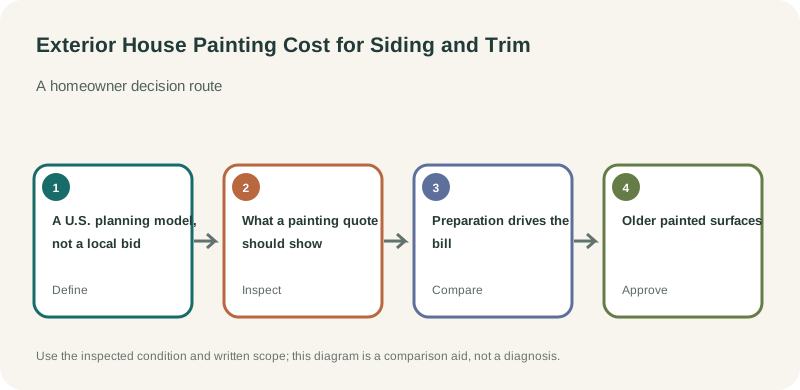
Preparation drives the bill
A sound, well-adhered coating may need limited preparation. Peeling, chalking, corrosion, rot, or recurring failure can require investigation and repairs first. Painting over an active water path may improve appearance without protecting the wall.
Height, narrow access, steep grades, landscaping, and multiple colors add labor. Ask how the painter measured the work and whether the price is based on wall area, floor area, or a fixed project.
Older painted surfaces
Paid work disturbing paint in qualifying pre-1978 U.S. housing can affect contractor certification, training, work practices, and documentation under EPA’s RRP program. EPA also says the rule can apply when newer siding sits over older lead-painted siding. Confirm current project facts and state requirements. Do not treat this as Canadian law or attempt hazardous preparation without qualified direction.
Painting fits a sound substrate and compatible coating. Recladding may fit widespread material failure. Compare the full preparation scope with painting versus residing.
Separate preparation from application
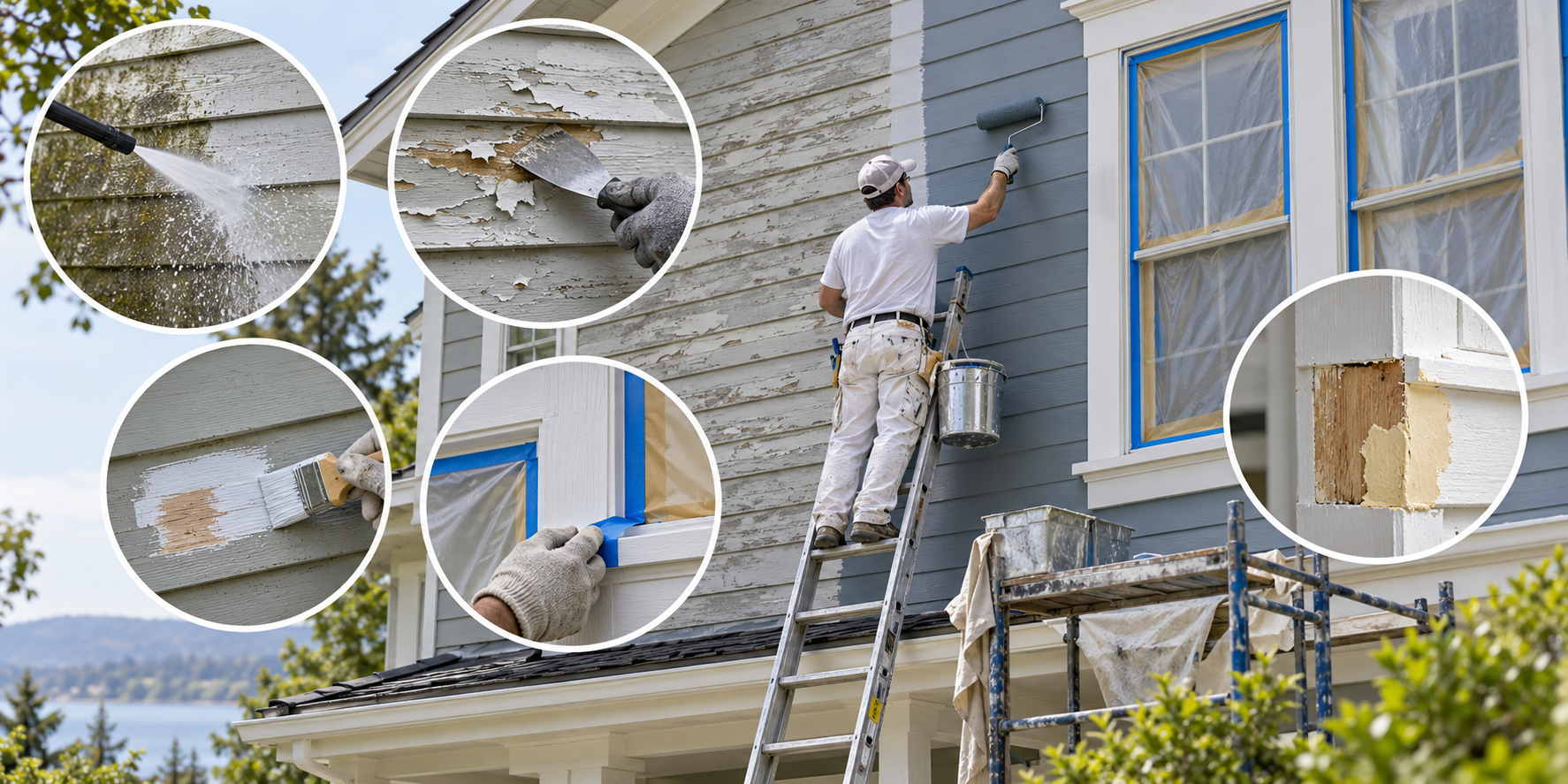
Preparation is often the largest source of difference between painting bids. Ask the contractor to describe washing, scraping, sanding, feathering, caulking, spot priming, full priming, masking, and protection by surface. Specify what happens to loose or failed paint and how damaged boards or trim are handled. “Prep included” is not enough to compare two proposals if one assumes sound paint and the other expects extensive failure.
Clarify the coating system by substrate and location: primer where required, number of finish coats, product line, sheen, and any manufacturer preparation instructions. A single coat over a sound, compatible surface is different from a multi-coat system after bare-wood repairs. Ask how the crew will test adhesion or resolve an incompatible existing coating rather than assuming one product works everywhere.
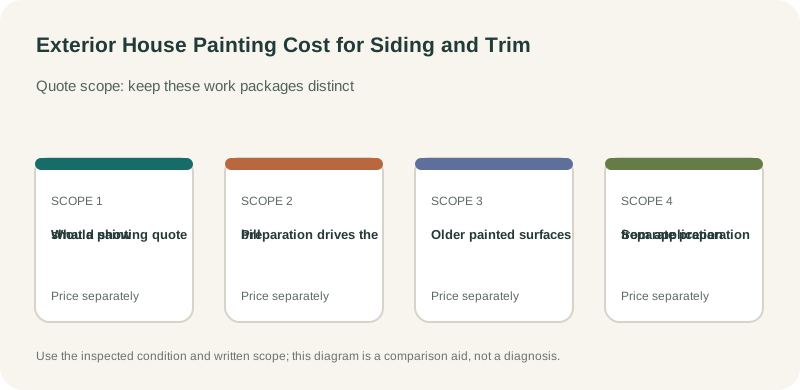
Access, detail work, and repairs
The broad wall area does not capture all labor. Height, roof pitch, narrow side yards, porch roofs, landscaping, nearby utilities, and fragile surfaces can change ladder or lift setup. Detailed trim, shutters, railings, soffits, and many openings create more edge work than a simple wall. Ask whether mobilization for a lift, protection, and setup are included or billed separately.
Painting should not be used to hide a failed substrate. Soft wood, open joints, persistent moisture, loose siding, and damaged masonry need diagnosis and appropriate repair before coating. Request a written separation between carpentry or masonry repair and paint preparation, with unit prices or a change-order process for concealed damage. If the surface is in poor condition, compare the cost of preparation and coating with a repair or re-cladding option using the same elevations and finish boundaries.
Make a maintenance comparison
A lower bid may use less preparation or a shorter coating system, while a higher bid may include repairs and more extensive protection. Compare the expected maintenance instructions and warranty conditions, including exclusions for moisture, peeling substrate, or homeowner cleaning. A paint warranty is not a forecast of how long a coating will last on every exposure. Retain the product names and colors so later touch-ups can be matched and future work can be quoted on a known system.
Compare a paint proposal with a repair proposal
If paint is peeling in the same place repeatedly, ask whether the substrate is damp, incompatible, poorly prepared, or physically deteriorated. Request a contractor’s explanation of the likely cause and whether a moisture or adhesion test is appropriate. Painting over active moisture or soft wood can result in another coating failure. Price the underlying carpentry or flashing correction separately so the decision does not rest on the apparent low cost of repainting alone.
For broad work, ask for elevations and surfaces to be listed individually. A front façade with detailed trim may take more time than a larger, simple side wall. Confirm how the bid treats shutters, doors, soffits, railings, and previously painted masonry. If some surfaces are excluded, make sure the exclusion will not leave an obvious unfinished transition.
Plan access and occupied-home logistics
Discuss vehicle parking, ladder or lift locations, access to doors, pets, and protection of outdoor furniture. Ask whether the crew needs water or power and whether windows may need to remain closed during application. Establish how daily cleanup and overspray prevention are handled around cars, plants, walks, and neighboring property. These arrangements affect whether the project can be completed efficiently and reduce misunderstandings about site restoration.