
Vinyl is often positioned as a relatively economical cladding, but the installed project includes more than panels. Product grade, profile, insulation, trim, access, tear-off, and wall condition determine the quote.
A directional U.S. signal
A 2026 specialist U.S. comparison reports a 2,000-square-foot vinyl example averaging $12,252 and lists about $6.13 per square foot installed in its illustrative table. A separate September 2026 Homewyse model gives $7.59–$12.94 per square foot for basic mid-range Dutch-lap solid-PVC installation in favorable conditions, with removal optional. The two sources use different estimating methods and scopes, so their figures are not directly interchangeable. Neither is a local bid or Canadian benchmark; use them only to frame questions about product, removal, access, and excluded work.
What changes the quote
- profile, color, texture, insulation, corners, channels, and accessories;
- stories, gables, dormers, tight access, and landscaping;
- removal, disposal, and temporary protection;
- flashing, wall preparation, sheathing, rot, and drainage layers;
- windows, doors, vents, lights, decks, and utility penetrations;
- product and fastening details for the property’s wind exposure.
The measured quantity should be exterior siding area or another clearly stated basis. Floor area alone is not reliable.
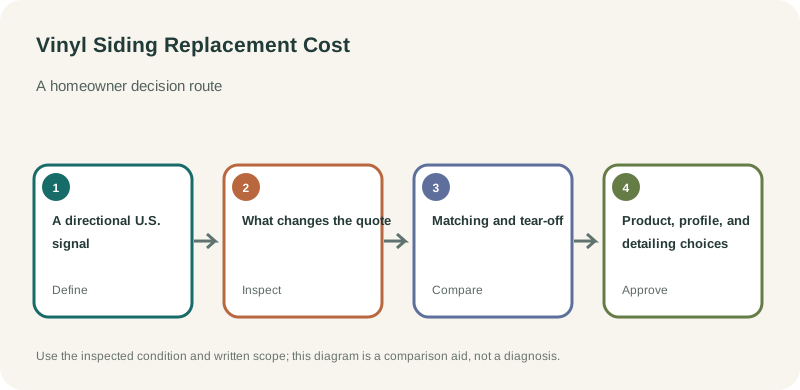
Matching and tear-off
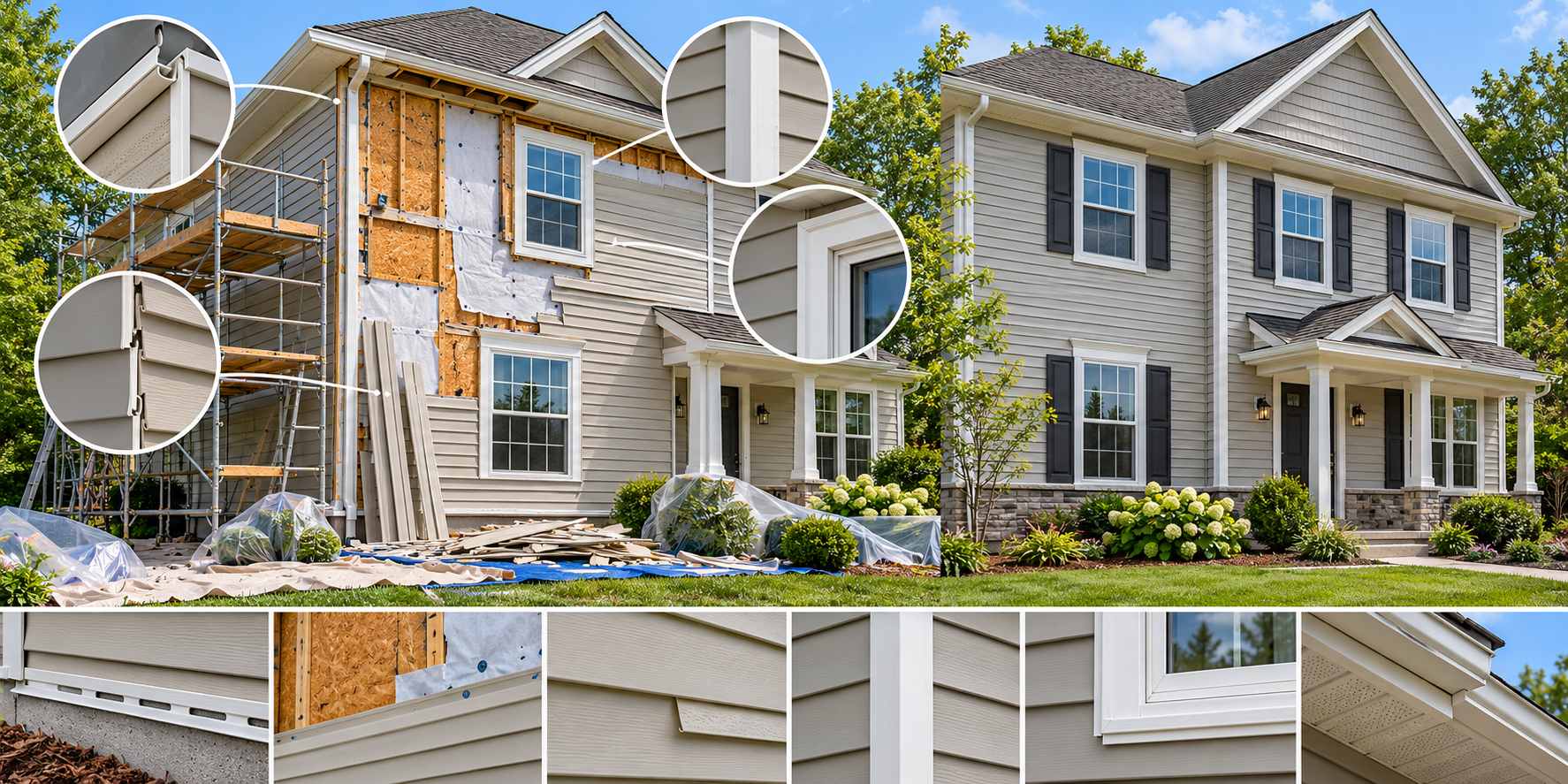
Vinyl can be replaced in sections, but sun exposure changes color and profiles may be discontinued. A contractor should inspect the actual elevation before promising an invisible match.
Tear-off can expose hidden work. An overcladding option must be approved for the exact substrate and should address added thickness at openings and trim. For older U.S. housing, painted surfaces behind newer siding can affect renovation scope.
Compare product, accessories, tear-off, disposal, flashing, wall preparation, access, taxes, cleanup, and change-order terms. Canadian quotes should use local conditions rather than an exchanged U.S. number.
Product, profile, and detailing choices
“Vinyl siding” covers products with different thicknesses, profiles, textures, colors, and accessory systems. Ask the contractor to identify the manufacturer and product line, panel profile, finish, and trim package in the proposal. Confirm that corners, starter strips, J-channels, utility blocks, and other accessories are included and compatible. A sample or product sheet is more useful than a generic color name when bids are compared.
The installed result depends on movement allowances, fastening, and detailing as well as the panel. Vinyl expands and contracts with temperature; the installation must follow the selected manufacturer’s current instructions. Ask how the crew will handle long walls, transitions, penetrations, and areas exposed to unusual heat. Do not accept a promise that a premium panel alone prevents warping if the underlying conditions and installation are not evaluated.
Tear-off and wall preparation
If old cladding is removed, establish what the proposal includes for disposal, trim removal, weather protection, and inspection of the exposed wall. Sheathing, housewrap, flashing, insulation, or framing repairs should be identified separately or covered by clear allowances. If the contractor proposes installation over an existing layer, request the same suitability checks described in the tear-off comparison: attachment, wall flatness, moisture, added thickness, and treatment of openings.
Ask how damaged sections will be documented before they are covered and how you approve extra work. A per-sheet or per-foot schedule can help, but it should say what materials and labor include. Clarify whether the crew will reinstall shutters, lights, meters, hose bibbs, and vents, and who is responsible for electrical or utility disconnection when required.
What to retain after installation
Keep leftover panels and accessories, labeled with manufacturer, profile, color, and purchase information. Store them where heat and sunlight will not distort the pieces. Request closeout photographs of flashing and other details that will be concealed, plus care instructions and warranty documents. A small stock of matching material cannot eliminate fading differences, but it can make a later repair more feasible than searching for a discontinued profile.
Decide whether to replace one wall or the whole exterior
When damage or fading is concentrated on one elevation, ask whether a partial replacement can end at an exterior corner and remain visually acceptable. New vinyl may differ from old panels even when the product line matches because sun exposure changes the existing color. A full replacement increases cost but can provide a uniform finish and one installation sequence. Request prices for the affected elevation and all elevations separately rather than assuming one scope is always better.
If only the front wall is replaced, confirm how corners, starter courses, soffit edges, and trim transitions will connect to retained material. Ask whether replacement panels can be sourced later and how remaining walls will be maintained. Keep a note that color variation is an expected possibility unless the contractor guarantees otherwise in writing.
Review schedule, storage, and weather protection
Ask how long the product order takes, how materials are stored to avoid heat distortion, and how the wall is protected if removal takes more than a day. Confirm whether the home remains weather-tight at the end of each shift and how rain delays affect schedule. Request delivery quantities and a final product list for your records, including any spare panels and accessories.
Understand why project totals spread
A regular one-story wall with common profiles and sound backing is simpler than a multi-story home with dormers, many openings, difficult access, and damaged sheathing. Tear-off and disposal, trim changes, matching, and moving fixtures can add work beyond the panel area. Ask the contractor to identify the main drivers in the specific estimate and separate defined work from allowances. This makes local bids more useful than applying a generic material rate to total wall area.