
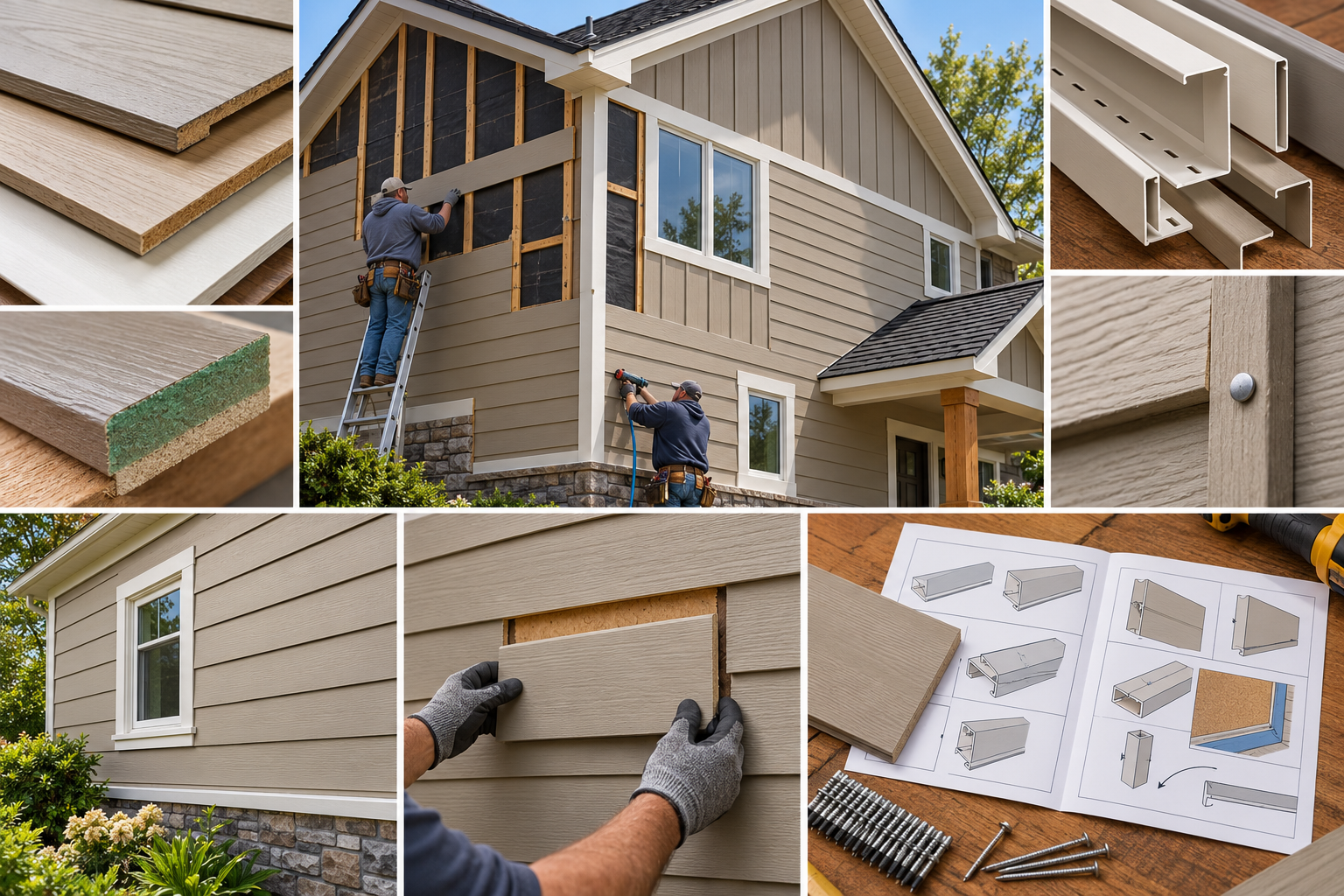
Engineered wood is a product class, not one standardized siding system. Panel and lap profiles, coatings, composition, trim, installation details, and manufacturer requirements can change the price and maintenance plan.
What the installed cost includes
Ask for product, trim and accessories, labor, finishing, tear-off, disposal, access, and wall preparation as separate scope. Gables, corners, openings, decks, stories, narrow side yards, and detailed trim increase labor. Exterior wall area—not floor area—should be the measurement basis.
The evidence does not establish a reliable current national price for every engineered-wood product or a Canadian benchmark. Use a local quote for the exact product rather than applying a wood or fiber-cement number by analogy.
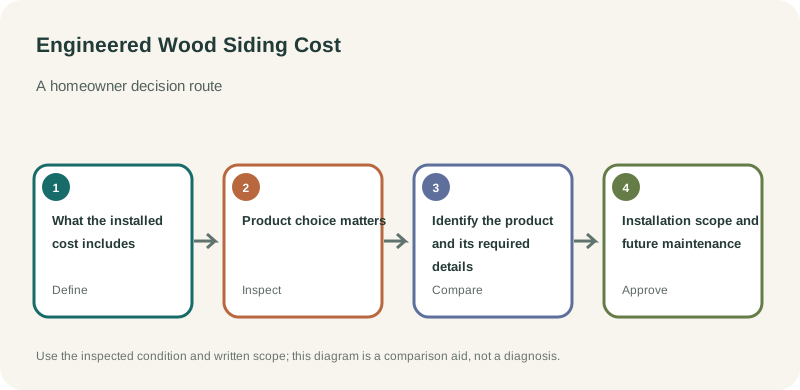
Product choice matters
Confirm the product family, profile, factory finish, exposed cut-end treatment, fasteners, clearances, flashing details, and care instructions. Similar-looking products can have different substrates and limits. Current manufacturer documentation and local requirements control.
Tear-off may expose wet sheathing, rot, failed flashing, or other wall conditions. Those are contingencies, not automatic engineered-wood costs. Include cleaning, finish maintenance, touch-up, trim renewal, and future access in the lifecycle comparison.
Ask which product document and warranty apply, how concealed work is priced, and what details govern openings and roof edges. Compare the complete proposal with siding material cost comparison, not with the panel price alone.
Identify the product and its required details
“Engineered wood” covers specific products with their own dimensions, coatings, trim, fastening, joint, and clearance requirements. Request the manufacturer and product line, board or panel size, exposure, finish, and accessory package in writing. Verify the proposal against current installation instructions rather than assuming details from a different product carry over. A generic estimate can conceal differences in thickness, factory finish, edge treatment, and the amount of field painting.
Ask whether the quoted price includes factory-finished pieces, field-cut treatment, joint flashing or sealant where specified, corner boards, starter details, and painting of cut edges or trim. Clarify how the contractor handles transitions to masonry, roofing, windows, and utilities. These details affect the amount of labor and the durability of the installation, so they belong in the same comparison as the board price.
Installation scope and future maintenance
On replacement, determine whether old siding is removed and disposed of, and how the exposed wall will be checked for moisture or damaged sheathing. If an overlay is proposed, ask how flatness, attachment, drainage, openings, and increased thickness have been evaluated. Identify temporary weather protection and allowances for concealed repairs. The contract should specify how change orders are approved once the wall is open.
Retain product labels, finish information, and leftover material if available. Ask the manufacturer for current cleaning and repainting guidance and what conditions may affect warranty coverage. Maintenance needs depend on exposure, finish, and installation details; do not assume a product label guarantees a fixed service life. A realistic comparison weighs installed scope, future finish work, repair availability, and how easily a damaged board can be replaced.
Compare replacement, repair, and finish work
If an existing wall is partly damaged, request a repair estimate alongside a larger replacement option. Identify whether the product is still available and whether replacement boards can match the weathered finish. A local repair may preserve sound material but leave visible variation; replacing a full wall can create a consistent finish while adding demolition and disposal. The chosen boundary should reflect damage, appearance, and access rather than a default whole-house assumption.
If the siding is sound but the finish needs renewal, ask whether the manufacturer permits repainting, what preparation is required, and whether repainting affects warranty. Product-specific guidance matters. Compare the full finishing scope with replacement, including scraping or cleaning, primer, coats, masking, access, and repairs to adjacent trim. Do not rely on an assumed maintenance interval without checking product and coating instructions.
Verify the estimate before ordering
Request the takeoff by elevation and confirm openings, waste, starter and finish accessories, trim, and color. Ask when product availability and delivery are confirmed and how price changes are handled if the chosen line is discontinued. Keep a small labeled reserve of leftover material if practical. These steps help avoid a later repair that requires replacing a larger area only because matching product cannot be located.
Think in project scenarios
A simple installation with regular walls, standard factory-finished product, and no concealed damage differs from a project with high elevations, numerous corners, custom trim, field finishing, or extensive removal. Ask for separate quantities and access assumptions by elevation. If the product is unavailable or the existing substrate requires repair, request an alternate scope and lead-time estimate before signing. No unsupported installed-price average is used here because the available evidence does not establish one for this product category.