
Natural wood siding is priced by more than species. Grade, profile, waste, fasteners, priming or finishing, trim, access, tear-off, and the maintenance plan shape the installed project.
What to specify
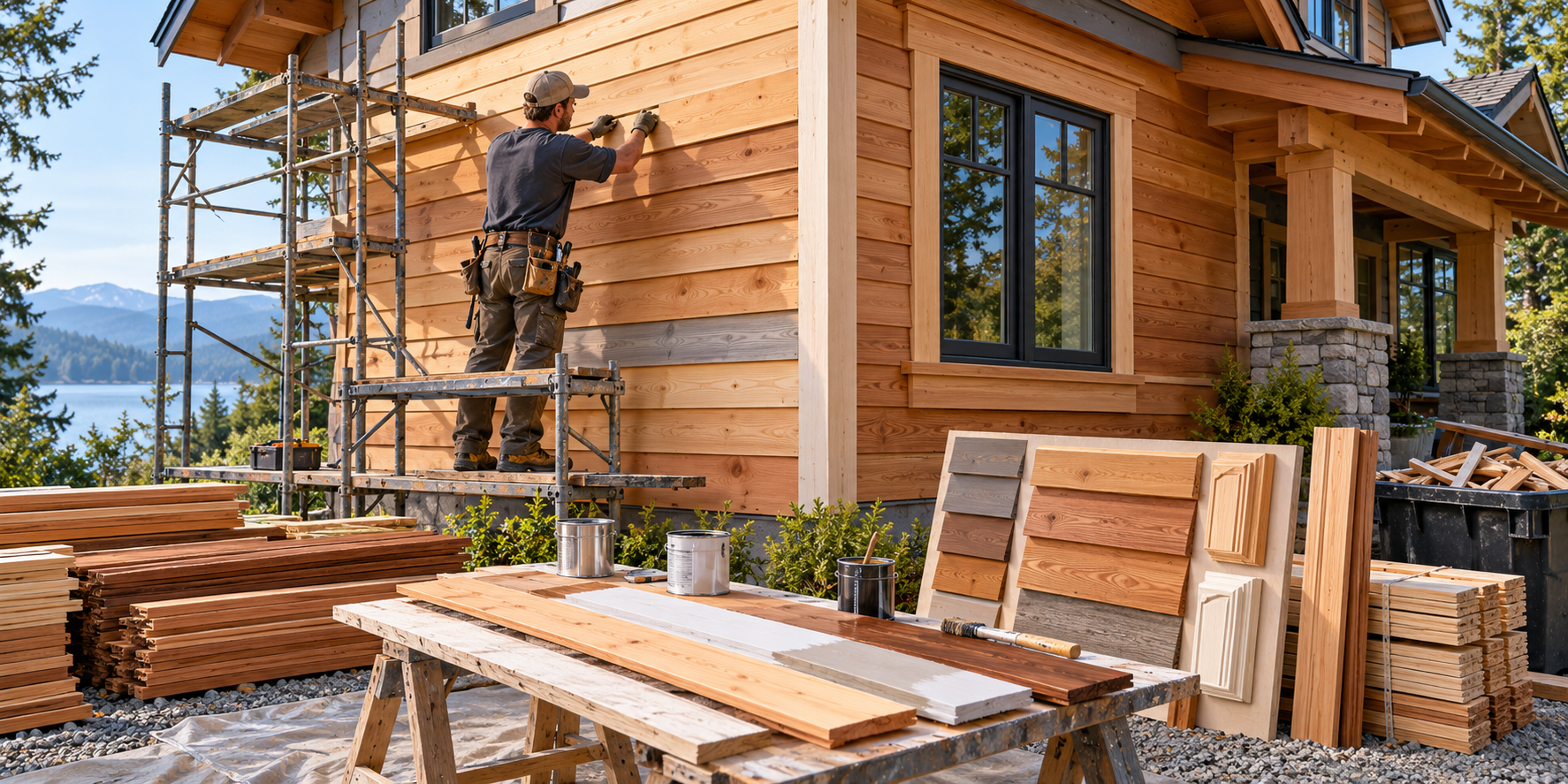
Ask for species, grade, profile, dimensions, finish, exposed and concealed priming, waste, trim, corners, openings, and fasteners. A simple lap profile and a detailed shingle or decorative profile can have very different labor.
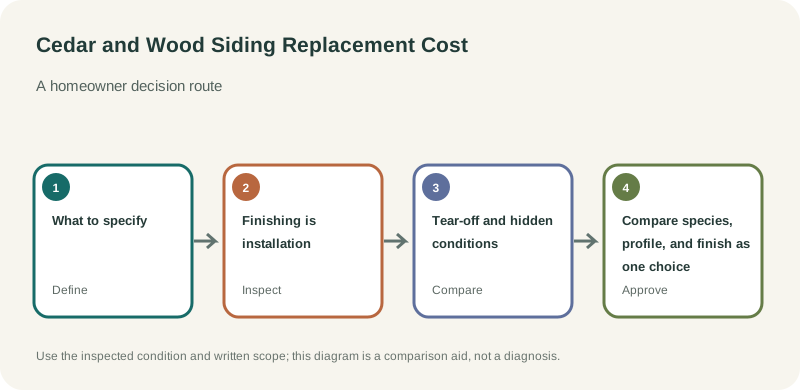
Specialist U.S. research identifies species, grade, profile, and labor as meaningful cedar variables. Homewyse’s May 2026 U.S.-oriented model gives $10.46–$16.40 per square foot for basic primed, paint-grade horizontal wood siding in favorable conditions. The model does not identify cedar species or grade, and removal is a separate option; it therefore provides context for one wood-siding scope, not a cedar price or Canadian benchmark. Use a local quote for the specified species, profile, finish, and wall.
Finishing is installation
Wood is vulnerable to weathering when exposed, and its coating is part of the maintenance strategy. Ask whether priming, staining, painting, cut-end treatment, and finish blending are included. Do not rely on one universal repainting interval; exposure, profile, coating, and workmanship change the cycle.
Tear-off and hidden conditions
Removal can reveal wet sheathing, failed flashing, rot, insect damage, or an uneven wall. These are project-specific contingencies. The bid should state how substrate repair is authorized and how restoration around windows, doors, decks, and utilities is handled.
Wood can suit owners who value profile and finish control and accept recurring maintenance. Include future access and refinishing when comparing materials in siding material cost comparison.
Compare species, profile, and finish as one choice
The bid should state the wood species, grade, dimensions, profile, exposure, and whether boards are clear, knotty, primed, stained, or unfinished. These choices affect appearance, waste, finishing labor, and the visual consistency of later repairs. Ask how the contractor will handle corners, butt joints, end grain, and transitions, and whether the finish will be applied before installation, after installation, or both where required. The word “cedar” alone does not define the product or the preparation included.
Finishing is a separate part of the economics. Clarify how surfaces will be prepared, what coating system is proposed, which faces and cut ends are treated, and whether a second coat or later maintenance visit is included. A factory-finished product and a field-finished assembly are not comparable if one quote omits labor or access for coating. Request care instructions from the product or coating manufacturer and keep product names and colors for future repairs.
Evaluate removal and water management
Tear-off allows a closer look at the wall, especially around openings, roof intersections, and areas where boards have cupped, split, or stained. Ask whether removal, disposal, housewrap or flashing repair, sheathing replacement, and weather protection are included or allowances. If the new boards are installed over existing layers, the proposal should explain how the wall is checked, how fasteners reach adequate backing, and how details accommodate the added thickness.
Wood can show damage where moisture remains trapped or details shed water poorly. Replacement should not simply reproduce the same vulnerable condition with new boards. Have the contractor identify relevant clearances and drainage details using the selected product instructions and local requirements. If the wall has broader moisture issues, coordinate a separate envelope assessment rather than assuming siding replacement alone will address them.
Plan for appearance, waste, and sourcing
Natural wood varies, and a delivered bundle may not look exactly like a small sample. Ask whether the contractor will sort boards for color and grain, how waste is calculated, and whether replacement stock comes from a consistent batch. Confirm when you can review the material before installation and how rejected or damaged boards are handled. For a prominent façade, agree on a sample panel or blending approach so appearance expectations are clear.
Board profile and exposure affect both material quantity and labor. Measure by elevation and include corners, returns, gables, and small dormers, where offcuts can increase waste. Ask whether the quoted quantity accounts for those details and how leftover material will be returned or stored. Custom milling and longer lengths may cost more or require lead time; identify any specialty boards before tear-off begins.
Schedule finishing around weather
Field finishing and installation are weather-sensitive. Ask when boards will be sealed or coated, how they are stored on site, and what temporary protection is used if rain interrupts the project. Clarify whether the quoted coating includes all coats and cut-end treatment. If the new siding will be finished later, agree on timing, access, and price so the exposed material is not left outside its recommended protection period.
Compare standard stock with custom matching
Common dimensions and a stocked species can keep sourcing relatively direct. Special profiles, longer lengths, a particular grade, selected grain, or a hard-to-match stain can increase material cost and lead time. Ask whether the price assumes standard mixed stock or selected boards and what waste factor is included. If only one façade needs replacement, compare the appearance and finish cost with a broader elevation scope before ordering a special batch.