
Aluminum siding replacement cost depends on the profile and finish as much as the metal. Product quality, trim, access, tear-off, corrosion exposure, and the wall behind the siding affect the installed project.
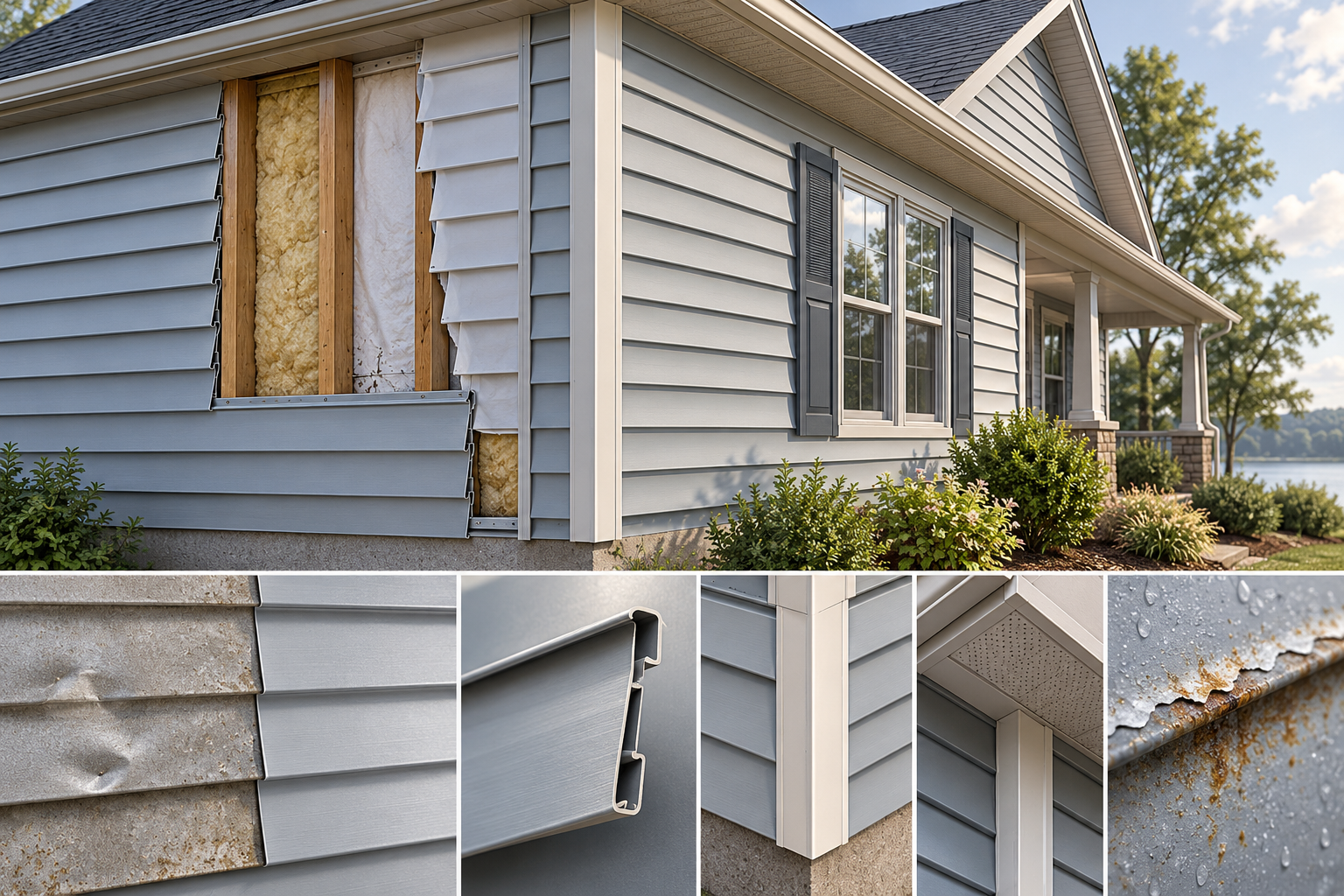
Ask the contractor to identify the panel profile, finish, gauge or product specification, corners, channels, starter details, vents, trim, and accessories. Confirm removal, disposal, protection, wall preparation, flashing, and finishing around openings.
Homewyse’s May 2026 U.S.-oriented model reports $8.87–$14.78 per square foot for basic horizontal lap aluminum siding with a baked finish in favorable conditions. The example includes standard flashing and channels over a vapor barrier; removal is separate, and unlisted work, taxes, permits, inspections, and general-contractor markup are excluded. This model is not a repair estimate, bid distribution, or Canadian benchmark. Price the exact profile, finish, trim, access, and removal locally.
Aluminum can dent, scratch, oxidize, or show aged-color differences. Coastal air, industrial exposure, drainage, fasteners, and dissimilar metals may affect scope. Tie performance claims to the exact product documentation.
Removing old siding can reveal sheathing, flashing, rot, framing, or a failed drainage layer. These conditions are possible but not inevitable. Ask whether concealed repairs are priced by allowance, unit rate, or change order.
Aluminum may fit a project where low weight or a particular profile matters. Compare maintenance, matching, access, and repairability with siding material cost comparison.
Decide whether the goal is performance or appearance
Existing aluminum siding may be serviceable while showing dents, chalking, fading, or an outdated profile. Replacement is easier to justify when the system also has loose sections, recurring water problems, damaged trim, or a planned wall upgrade. If the primary concern is appearance, compare coating or a localized wall refresh with full replacement, while checking that the surface is suitable for preparation and repainting. Do not price a cosmetic coating as a correction for failed flashing or wet sheathing.
Ask the bidder to identify whether the existing material is aluminum throughout and how seams, corners, channels, and trim will be handled. New material may not reproduce an older profile or color, and replacement accessories can make the visual difference more apparent. Request a product sample and keep the material specification rather than relying on a broad “metal siding” label.
Removal, disposal, and attachment
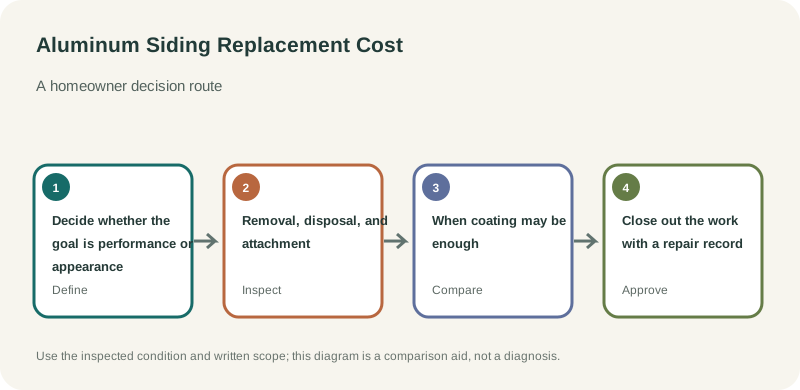
A replacement quote should say whether existing panels and accessories are removed, how metal is handled and disposed of, and whether the wall is inspected after tear-off. Clarify the treatment of housewrap, flashing, sheathing, and trim, along with allowances for concealed damage. If the contractor proposes covering the old siding, ask how it will be fastened, whether the surface is flat and sound, and how the extra layer affects openings, fixtures, and roof edges.
The proposal should also separate cladding from work that may require another trade, such as moving utility equipment or disconnecting electrical fixtures. Compare complete scopes and confirm what restoration is included after that work. An apparently low installation price can omit the transition and finish tasks that make the new wall complete.
When coating may be enough
Before ordering new panels, inspect whether the wall is secure and the deterioration is limited to color, chalking, or minor cosmetic dents. A coating may be worth pricing if the existing metal is sound, preparation can be done safely, and the intended finish is compatible. It will not remove dents or correct a loose lock, failed attachment, or moisture path. Ask for a small test area and a preparation specification that addresses chalk, oxidation, corrosion, and coating adhesion.
Full replacement is more defensible when the assembly has repeated looseness or damage, access is already needed for related work, a wall upgrade is planned, or the existing appearance is no longer acceptable. If only one elevation is replaced, compare how new material will look beside faded walls and whether corners or trim allow a natural stopping point. Ask for both the full-wall and limited-elevation scopes where the boundary is uncertain.
Close out the work with a repair record
Request photographs of the exposed wall, flashing at openings, and any repaired sheathing before new panels cover them. Keep the product name, profile, color, installer details, and leftover pieces. Confirm cleaning instructions and how to obtain compatible replacement material. If the work is intended to improve water performance, identify the particular flashing or drainage corrections in the contract so future inspections can tell what was changed.
Build a low and high project case
The lower case is usually the simplest complete scope: sound backing, straightforward access, a readily available product, and no major trim changes. A higher case may involve extensive tear-off, repair of the exposed wall, difficult roofline access, custom profiles, utility relocation, and full finish coordination. Ask the contractor to show which of those conditions are assumed rather than treating one total as a universal aluminum-siding price. The available evidence does not support a dependable U.S. or Canadian installed range, so local bids should carry the project-specific estimate.