
Flashing connects a chimney to the roof and helps direct water away from the intersection. A nearby leak is not proof that flashing is the only failed component; crown, cap, masonry, roof covering, or wall transitions may also be involved.
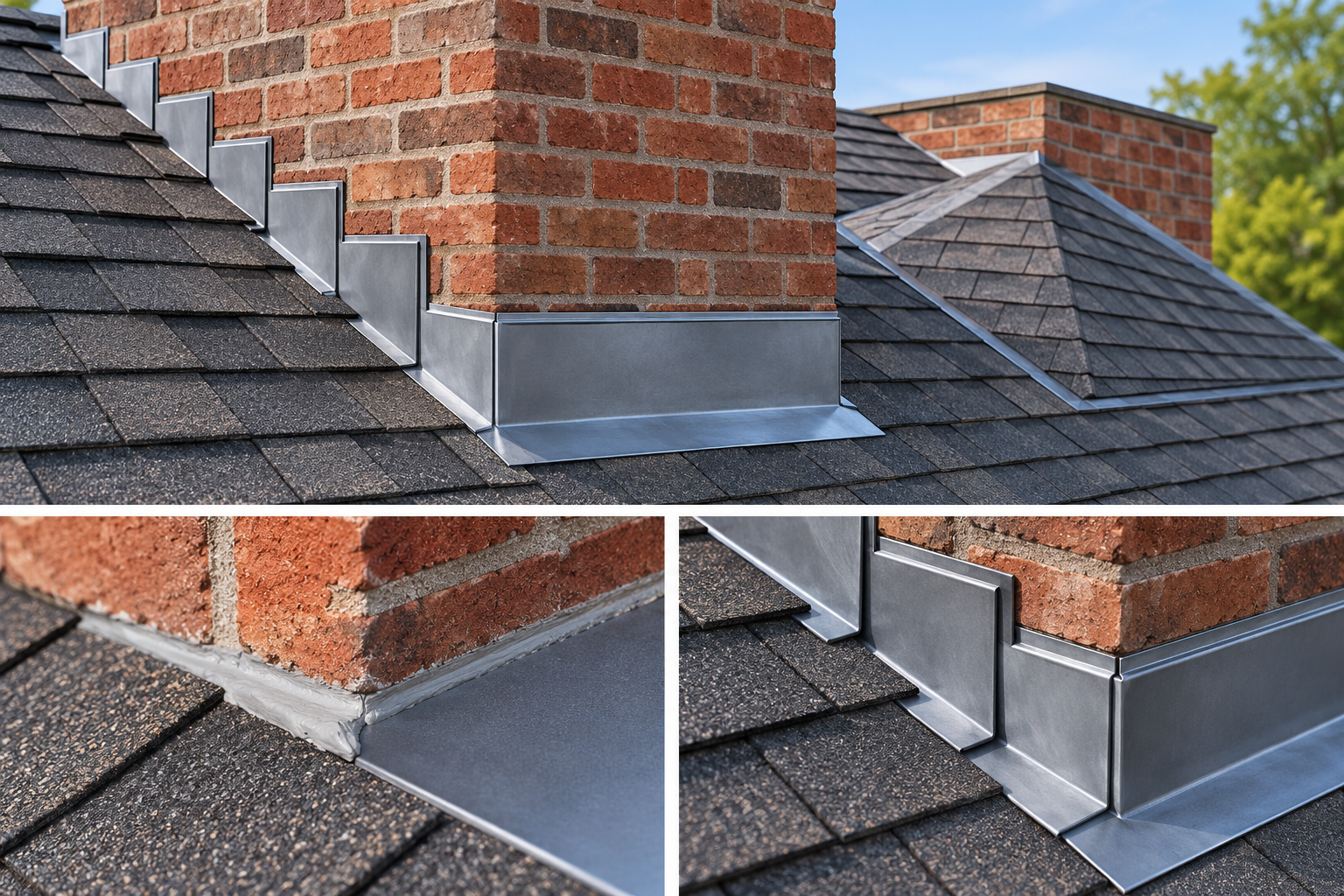
A contractor may propose localized sealant renewal, exposed flashing repair, step and counterflashing replacement, masonry cutting or reglet work, cricket correction, or broader roof work. Sealant-only work can fit a defined joint, but it is not a universal substitute for integrated flashing.
CSIA guidance checks flashing, crown, cricket where present, attic water damage, and the chimney’s connection to the building. Building-science guidance treats flashing and drainage layers as connected water-management components.
Roof pitch, height, roofing material, chimney width, masonry condition, metal, removal, and access affect the bill. HomeGuide’s February 2026 U.S.-oriented guide reports $300–$1,800 for chimney-flashing repair, with minor resealing as low as $200. These publisher estimates are not independent bids or a Canadian benchmark. Ask the contractor to identify the observed failure, show the proposed interface, separate roofing from chimney scope, and state how concealed damage is handled. See chimney leak repair cost.
Define the roof-to-chimney interface
Ask for photographs showing the observed flashing failure and a description of the proposed repair around all sides of the stack. The quote should distinguish step flashing, counterflashing, cricket or saddle work, roofing removal and replacement, and any masonry cuts or reglet details. Confirm whether a chimney-side mortar joint, roof covering, or both will be disturbed. A bead of sealant can be suitable for a specified joint but is not a substitute for correctly integrated flashing where that is the problem.
Roof material and age affect how much surrounding work is needed. Reusing old shingles or tiles may not be practical after they are lifted, and a steep or tall roof changes access and protection. Ask who restores roofing, who performs masonry work, and whether the proposal includes temporary weather protection if rain interrupts the job.
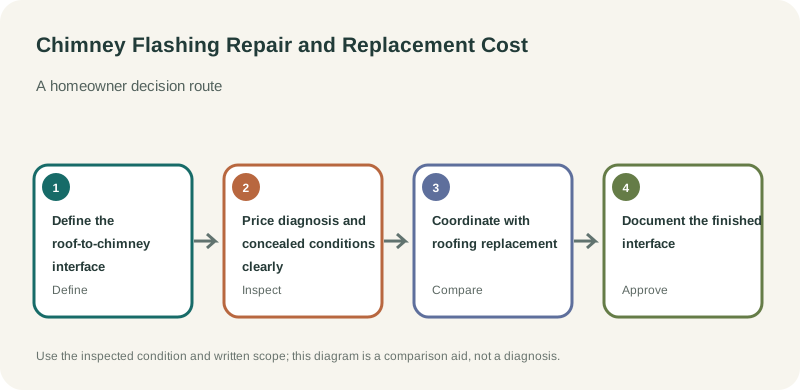
Price diagnosis and concealed conditions clearly
If the leak source is uncertain, request a diagnostic step before broad replacement. The contractor should say what observations or tests would confirm the suspected path and how a larger opening or damaged sheathing will be handled. Establish unit pricing and written approval for concealed repairs. If roof replacement is already planned, coordinate the chimney interface with that contractor so new flashing is not separated from the roof scope.
Coordinate with roofing replacement
If shingles, tiles, or membrane roofing are near the end of service, ask whether flashing work should be coordinated with replacement. Repairing chimney flashing shortly before a roof project can lead to duplicated removal and labor; waiting with active leakage can cause additional damage. A roofer and mason may need to coordinate who cuts, counterflashes, seals, and restores each interface. Put that division in writing.
Where a cricket or saddle is proposed, ask whether the chimney width and roof geometry support the recommendation and whether the work includes roofing and underlayment beyond the masonry. The proposal should show how water is directed around the stack and where the roofing tie-in ends. Avoid approving a cricket as a generic upgrade without understanding the existing defect and local detail.
Document the finished interface
Request photographs of step flashing, counterflashing, and any masonry cut or reglet before the work is concealed by roofing or mortar. Confirm how disturbed roofing and attic insulation or finishes will be restored. The closeout record should identify materials and warranty contacts for both the roof and chimney portions so future leak reports can be routed to the responsible scope.
Compare a sealant repair with integrated flashing work
A narrow sealant repair may fit a defined, intact joint where the flashing itself remains functional. Replacing flashing involves lifting roofing, integrating new metal at the roof and masonry, and restoring both surfaces. Ask the contractor to point to the failure that supports the proposed method and to explain any limitation. If water returns after a sealant repair, the next estimate should revisit the flashing system rather than simply applying another bead.
The quote should record the chimney dimensions, roofing material, access, flashing metals, and restoration area. This makes it possible to compare a localized maintenance task with a full interface renewal and to coordinate either scope with future roof replacement.
Ask how water will be directed after the repair
The completed detail should direct water away from the chimney and back onto the roof covering without leaving an exposed path at the masonry. Ask the contractor to describe the finished laps and termination and to provide photos before they are covered. If the chimney wall is wide or the roof geometry is complex, ask whether a cricket is already present and whether the roof design requires a project-specific assessment. A photo of the finished sealant alone may not show how the integrated flashing performs.