
A stain near a brick wall does not prove that one brick, joint, or flashing is the entry point. Water can travel behind veneer before appearing indoors. Price diagnosis and repair separately.
How the assembly manages water
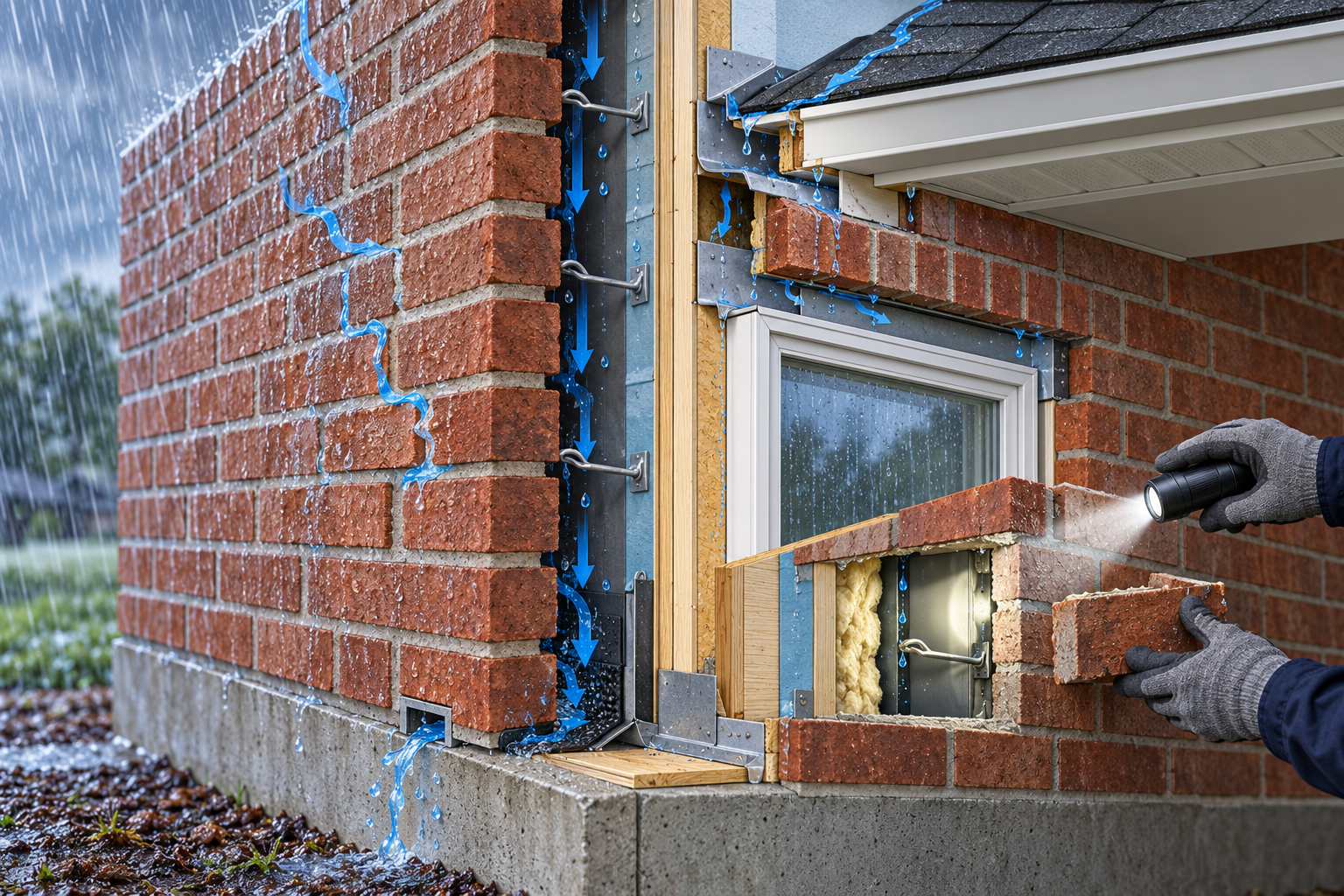
Brick veneer is a cladding layer. Flashing, weeps, mortar joints, sealants, openings, and the drainage plane behind it work together. A defect at a window, roof intersection, parapet, or base can send water to a different interior location.
A contractor may price observation, targeted openings, water testing, repointing, brick replacement, flashing or weep repair, sealant, sheathing or framing repair, drying, and interior restoration. These are different services. Ask what was found and what remains an assumption.
The evidence does not establish a dependable national or Canadian leak-repair price. A local quote should identify access, testing, openings, masonry work, concealed conditions, and whether roof or window scope is included.
Repointing a defective joint may be appropriate, but caulk is not a substitute for missing flashing or drainage. Do not seal weeps simply because they look like gaps. If roof or whole-wall enclosure work dominates, use the appropriate adjacent scope.
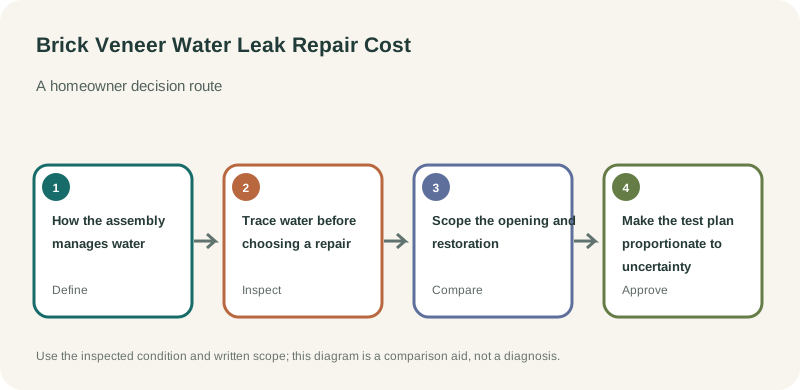
Trace water before choosing a repair
Water appearing on the interior does not identify the point where it entered the wall. It may pass through an opening, roof transition, failed joint, coping, flashing, or another discontinuity and travel before becoming visible. Ask the contractor what observations support the diagnosis and what areas will be tested or opened. A quote to seal a visible crack should not be treated as a complete leak repair unless the source and the role of that crack are established.
Brick veneer typically relies on details behind and around the brick to manage water. Ask whether the investigation includes mortar joints, window and door interfaces, flashings, drainage exits, and any previous repairs. Confirm how testing will avoid causing additional water entry and whether temporary protection is needed. If the source remains uncertain, separate diagnostic work from permanent repairs rather than bundling an unsupported solution into one fixed price.
Scope the opening and restoration
When a wall is opened, the repair may include masonry removal, flashing or drainage correction, damaged sheathing or insulation, interior finishes, and reinstatement of brick. Identify which trade handles each step and whether the estimate includes matching brick, mortar, access, protection, debris handling, and interior restoration. Ask for photographs of concealed conditions and a written change order before additional work.
Repeated leakage, large affected areas, or widespread damage may require a broader envelope assessment beyond localized masonry repair. Keep structural movement and full-wall retrofit decisions in the appropriate specialist scope. A useful bid states what water path it is intended to interrupt, what evidence will be checked afterward, and what remains outside the repair.
Make the test plan proportionate to uncertainty
If the leak is intermittent, a single visit in dry weather may not reproduce it. Give the contractor the timing, wind direction if known, room location, and photographs of the interior mark. Ask whether non-invasive inspection, controlled water testing, or a small exploratory opening is proposed and what each step costs. Testing should be planned so it isolates a detail rather than wetting a large area and creating ambiguous results.
Before any opening, clarify who repairs finishes and how the wall is protected if a permanent fix cannot be completed the same day. The estimate should say whether test cuts are restored immediately, left open for monitoring, or included in the final repair. If materials behind the veneer are wet, agree how the condition will be evaluated and whether drying or replacement belongs to another contractor.
Confirm that the repair can be verified
Ask what observable result will indicate the repair worked and whether a follow-up inspection or test is included. A workmanship warranty may apply to installed flashing but not to unrelated water paths; read its scope. Retain test results, photos, and the exact repaired detail. If the leak persists, that record helps the next professional avoid repeating the same intervention without new evidence.
Compare diagnostic and repair bids fairly
A diagnostic proposal should identify the number of locations, inspection methods, and report delivered. A repair proposal should state whether the price is based on a confirmed defect or a working hypothesis. If one contractor recommends a broad opening and another proposes surface sealant, ask each to explain what evidence supports its method and how the result will be verified. Do not compare totals until both address the same leak concern and restoration boundary.
For insurance, real-estate, or warranty purposes, ask whether photographs, moisture observations, and a written report are included. Keep the raw observations separate from conclusions so another professional can review them. The diagnostic cost can be worthwhile when it prevents payment for a repair that does not address the actual water path.