
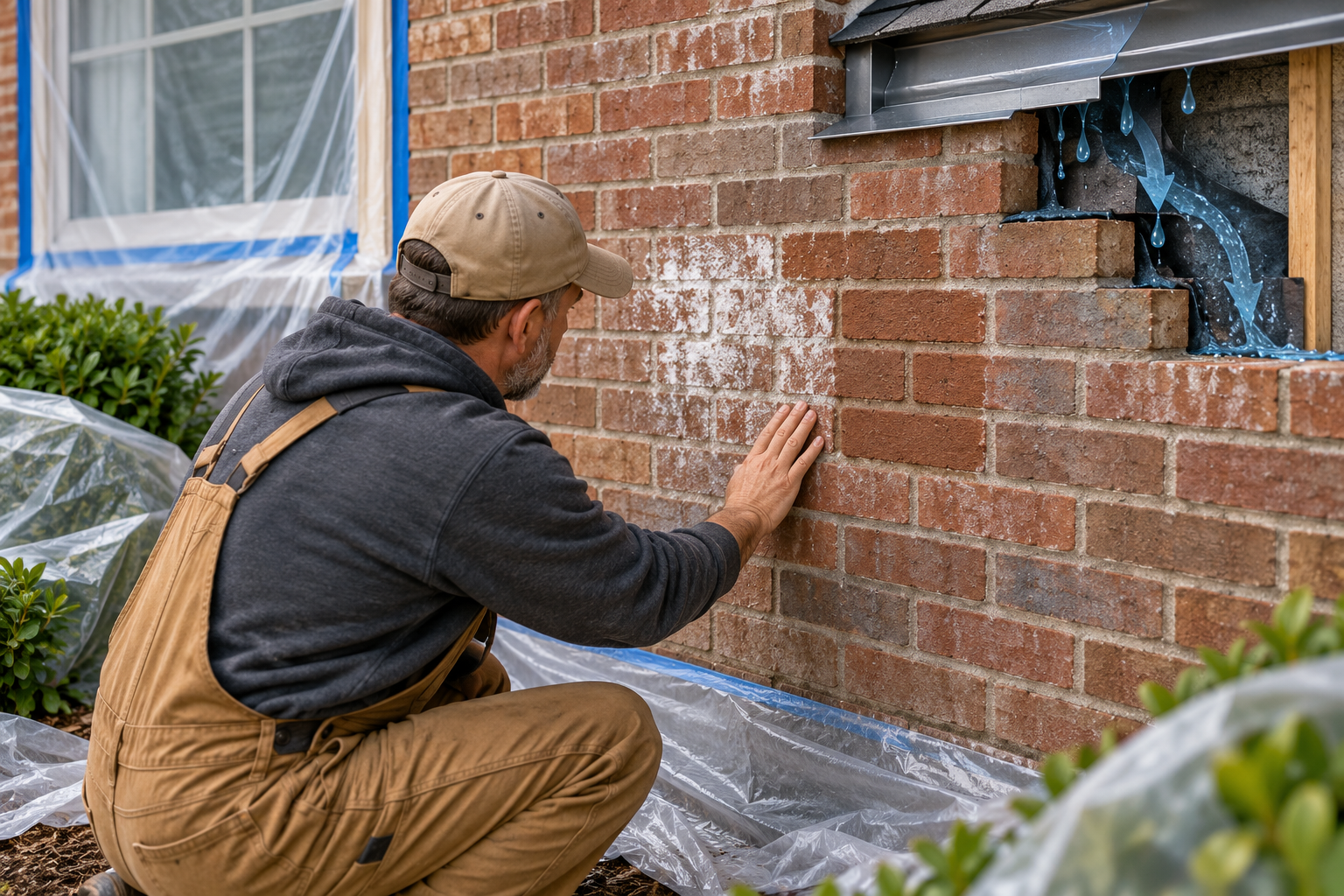
Professional brick cleaning is priced by wall area, access, stain type, testing, protection, and a method suitable for the masonry. Efflorescence is a visible salt deposit associated with moisture movement; removing it may not correct the source.
Define the condition
Dirt, organic growth, rust-like marks, paint, soot, and efflorescence can require different assessment. Ask for a test area and an explanation of how the method protects brick, mortar, windows, landscaping, and adjacent finishes.
Brick Industry Association and BC Housing guidance caution against inappropriate cleaning. High pressure or aggressive chemicals can damage brick, mortar, sealants, or hidden wall components. This guide does not prescribe a chemical recipe.
If efflorescence returns, water may be entering through flashing, joints, openings, or the wall drainage system. If bricks spall or mortar is friable, cleaning may need to follow repair. Homewyse’s September 2026 U.S.-oriented model lists $0.55–$0.69 per square foot for basic brick cleaning in favorable conditions. The example is surface cleaning, not efflorescence treatment, a test-based cleaning method, or a Canadian benchmark.
Get a quote separating testing, setup, access, cleaning, stain treatment, repairs, and final inspection. Ask what happens if the stain does not respond. For recurring moisture, see brick veneer water leak repair cost.
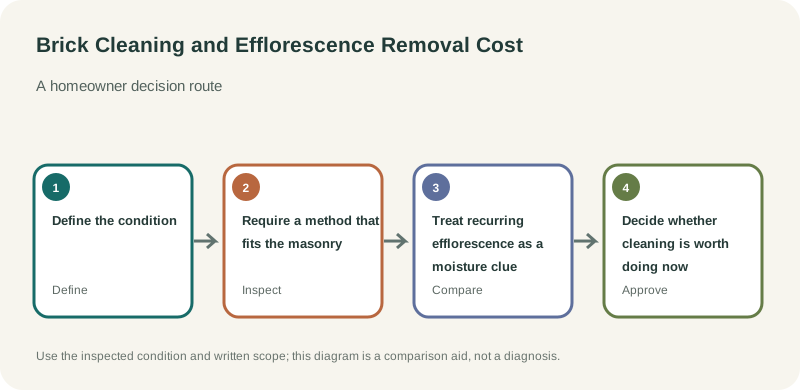
Require a method that fits the masonry
A cleaning proposal should identify the type of deposit or stain it is intended to address, the test area, the method, and the expected limits. Ask how the contractor will protect adjacent glass, metals, landscaping, sealants, and runoff paths. Brick and mortar differ in hardness, porosity, age, and condition, so a method appropriate for one wall may harm another. High pressure or aggressive chemicals can erode faces and joints; the contractor should explain how the chosen method follows applicable masonry guidance and product instructions.
Price setup, access, containment, test cleaning, treatment, rinsing or collection, and cleanup separately where useful. Ask what happens if the test area shows damage or the stain does not respond. A contractor should not promise removal of every stain before testing, especially where color change may be permanent or the deposit is within the masonry rather than on the surface.
Treat recurring efflorescence as a moisture clue
Efflorescence may return if water continues to move through the wall. Before paying for repeated cleaning, inspect possible sources such as leaking caps or flashings, failed joints, poorly directed runoff, or drainage details. The cause may not be visible from the ground, and a stain alone is not a diagnosis. If bricks are spalling or mortar is weak, repair may need to precede cleaning so the treatment does not worsen the condition.
That basic-cleaning model is not a measured market distribution and does not price stain treatment or moisture correction. Local estimates should define area, access, test results, the masonry-appropriate method, and any water-entry repair separately. That scope is more useful than applying a broad rate to every brick stain.
Decide whether cleaning is worth doing now
A test cleaning should answer two questions: whether the deposit responds and whether the process changes the brick or mortar appearance. Ask for the test location to be agreed in advance and for the contractor to let it dry before judging color. A wet test area can look different from the finished wall. If the result is uneven, discuss whether a larger blended area or no further cleaning is preferable before authorizing full coverage.
The cleaning scope should also state who protects neighboring finishes and manages runoff or debris. If windows, metals, plants, or painted surfaces are close to the work, specify them on the protection plan. Ask whether access equipment and minimum mobilization are included, especially for a single stain on a tall elevation. A narrow stain may cost more per square foot because setup is not proportional to the treated area.
Avoid repeat charges for a continuing condition
If efflorescence reappears seasonally, record when it occurs and whether it follows rain, irrigation, or snowmelt. That history may help a qualified mason or envelope professional identify a source. Cleaning can be appropriate after moisture controls or for a deposit that is no longer active, but it is not a substitute for correcting a persistent leak. Ask whether the contractor’s warranty covers workmanship only or also any return of the deposit; those are different promises.
Match the proposal to the reason for cleaning
For a general wash, ask whether the goal is to remove loose dirt, biological growth, or a specific mineral deposit and whether all surfaces will receive the same treatment. A stain-only service should list the target locations and test results instead of charging for a full elevation by default. If cleaning is part of preparation for repair, coordinate the order: damaged mortar and loose units may need correction first, while some treatments should wait until repairs cure.
Ask how the contractor will protect nearby metal flashing and painted trim, and whether wastewater capture or disposal is included where required. If the wall is adjacent to a walkway or planting bed, define the protection and restoration. A quote that includes setup, protection, access, and test work may cost more than a bare cleaning figure but offers a more complete basis for comparison.