
Oil-to-electric conversions often cost more than a simple equipment replacement because the project can combine cold-climate heating design, electrical capacity, tank and line decisions, chimney consequences, and fuel retirement. The right budget depends on the property and jurisdiction. Oil prices also vary by region and season, so operating savings cannot be assumed from one dated figure.
What is being converted
Identify whether oil serves a boiler, furnace, water heater, or more than one load. Record tank location and ownership, oil lines, chimney or vent, distribution system, backup heat, and the equipment’s condition. A heat pump may replace heating but still require distribution, electrical, condensate, controls, or backup decisions. Detailed equipment selection belongs with HVAC professionals; this article covers the whole-home economics around it.
Cost layers beyond the heat pump
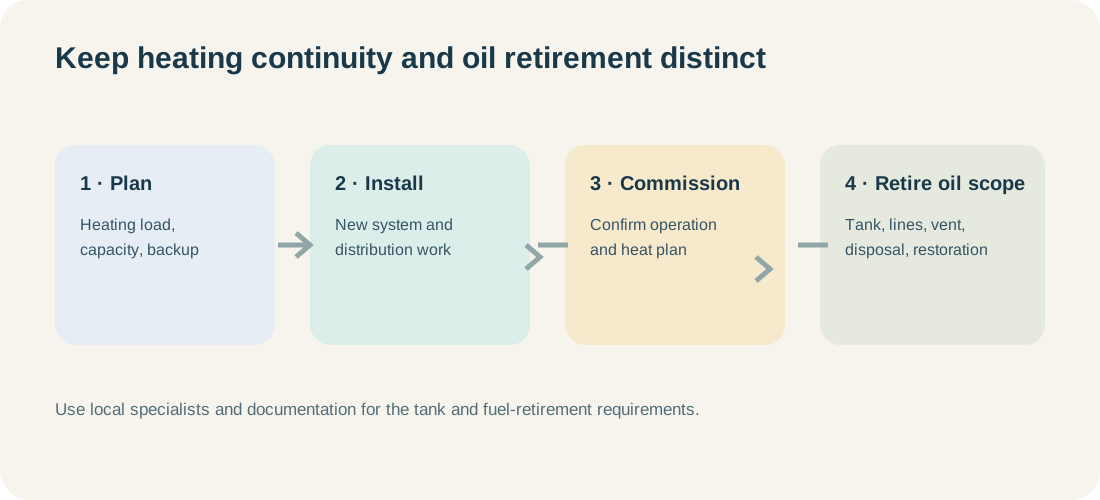
Separate the heating installation from electrical capacity, circuits, controls, removal and disposal, tank handling, oil-line treatment, chimney or venting work, permits and inspections, and restoration. Tank removal or abandonment rules and prices vary by jurisdiction. Do not tell a contractor to leave or remove a tank without confirming the applicable environmental, fire, building, and supplier requirements.
Cold climates may require a low-temperature design, backup heat, larger electrical capacity, or enclosure coordination. NRCan explains that heat-pump performance depends on type and conditions, warns about improper sizing or installation, and notes that electrical upgrades and other renovations may take substantial time in some projects.
Low, typical, and difficult cases
- Limited: oil heating changes in an accessible location, existing capacity is adequate, and tank or vent treatment is simple and documented.
- Typical: new heat-pump distribution or controls, electrical work, oil equipment removal, and a verified tank plan.
- Difficult: buried or uncertain tank conditions, difficult access, chimney or masonry work, service limitations, cold-weather backup, or broad enclosure and distribution changes.
The homeowner should receive an allowance or unit-price method for unknown tank or restoration conditions. A quote that says “remove oil system” without naming the tank, lines, chimney, disposal, and surface repairs is not a complete comparison.
Operating-cost comparison
Use dated local electricity and heating-oil prices, equipment performance, delivered heat, climate, backup use, and fixed charges. The EIA publishes seasonal US heating-oil series; those values are not Canadian prices and should not be converted into CAD. NRCan’s illustrative efficiency comparisons are averages, not a promise of a household bill.
Compare operating cost separately from conversion cost. A project may lower fuel spending but still have a long capital recovery period if the old system is reliable. Conversely, an imminent tank or boiler decision can make proactive conversion more attractive.
US and Canadian planning
Oil is concentrated in particular regions, and rules for tanks, abandonment, disclosure, and disposal differ. Ask the contractor and local authority what documentation is required. Verify incentives by current state, province, territory, municipality, and utility; NRCan directs homeowners to current local programs rather than promising one national benefit.
The conversion is economically clear when the quote defines the heating outcome, capacity, backup, tank and vent scope, operating assumptions, and unknown-condition controls. Do not compare a heat-pump sticker price with an oil-system retirement project and call the difference savings.
Tank and chimney questions to price
Ask whether the tank is aboveground or buried, owned or leased, accessible, and connected to other equipment. Request the proposed handling and the documentation the authority or buyer may require. For the chimney, identify whether other appliances use it and whether the work is masonry, lining, weatherproofing, or simple retirement. These are separate cost lines because their uncertainty is different from the heat-pump installation.
Separate the fuel decision from the heat-pump decision
The heat-pump design must address the building load, distribution, low-temperature output, backup, and service capacity. The oil-retirement decision must address the tank, lines, chimney, disposal, and local documentation. Combining them in one total can hide which uncertainty drives the quote. Request both scopes separately and then compare the complete future state.
Quote normalization
Ask every bidder to price the same heating outcome and to separate the heat-pump installation, electrical capacity, tank and line work, chimney, disposal, restoration, backup, and contingency. A low quote may leave the tank or fuel line to the owner. An expensive quote may include useful enclosure or distribution work that another bidder omitted. Compare the scope before comparing totals.
Timing and ownership horizon
If the boiler is failing before winter, a temporary or dual-fuel path may be safer than rushing a full retirement. If the home is being remodeled or the tank is already a liability, coordinated work may avoid repeat access. Compare fuel bills, maintenance, capital, financing, backup, and tank risk over the time you will own the home. Current incentives can change the net result but require local verification.
Resolve the oil system’s physical end-of-life work
Fuel retirement can be a major uncertainty even when the heat-pump quote is clear. First identify the tank type, location, ownership, age, service history, and whether it is actively supplying another appliance. Determine whether the proposed conversion leaves the tank in place, removes it, or requires cleaning and decommissioning under local rules. A tank in a basement, buried outdoors, or located beneath a deck creates different access and restoration questions. Do not assume that an installer’s phrase “oil system removal” includes every required step.
Ask for separate responsibility and price lines for draining usable fuel, pumping residual material, removing or decommissioning the tank, disposing of it, disconnecting the burner, addressing venting and chimney equipment, and repairing affected finishes. If testing, environmental review, or remediation may be required, identify who decides and whether the quote is an allowance. Property-specific hazards and regulated work should be assessed by qualified local specialists.
Build the project sequence around the home’s heating continuity. Confirm that the new system is operating and commissioned before the old heat source is disconnected unless the design has a documented temporary plan. If electrical capacity or outdoor-equipment placement remains unresolved, the oil system may be needed through another season. Conversely, a remodel that opens the mechanical area may be the least disruptive time to coordinate removal and restoration.
Compare quotes by the final state they leave behind. One bidder may leave a cleaned tank in place and another may include removal, disposal, and patching. Those totals are not comparable without the remaining work. Ask for evidence of what was removed or abandoned, final photographs, any disposal paperwork, and the location of disconnected lines. This close-out record helps prevent a future buyer or contractor from treating an inactive component as an unknown active system.
Preserve continuity and prove the old system is retired
Before scheduling removal, confirm which system will provide heat at every stage. The new equipment should be ready, commissioned, and understood by the homeowner before a working backup is taken out, unless a professional has designed a temporary arrangement. In cold climates, a gap between equipment delivery and electrical approval can be especially costly.
At close-out, record the tank disposition, remaining fuel handling, disconnected piping, removed burner, vent or chimney work, and any restoration. Ask which party submits permits or required notices and where disposal records will be kept. If the tank is left in place, label whether it is decommissioned and who confirmed that status.
These records support later maintenance, insurance questions, property sale, or a future renovation. They also clarify whether an apparently “complete” conversion still has an open environmental, utility, or contractor responsibility.
Tie the economics to the next replacement decision
If the oil furnace is near its expected replacement point, compare conversion with like-for-like replacement now and with a later conversion. The immediate comparison should include the cost of retaining oil equipment and tank work, not just the new heat pump. If the system has substantial remaining life, the value of using it longer may outweigh an efficiency gain, depending on fuel prices and the household’s priorities.
Ask the installer to identify which parts of the existing distribution can remain and which must change for the selected heat pump. This can shift the economics more than the nominal appliance price. Keep the estimate tied to the actual duct or hydronic condition and a stated comfort target.
Keep operating and retirement estimates separate
When asking for bids, request one annual energy estimate using the existing oil system, one for the proposed heat pump, and a separate line for tank and vent disposition. This helps distinguish a favorable operating result from a cheap conversion. If the tank-removal scope is still unknown, identify the inspection or contractor quote needed to resolve it rather than assuming a standard removal fee. If the oil system is retained temporarily, identify who services it and how long it is expected to remain available. Ask whether the new heat pump can operate independently, whether the old system’s controls remain connected, and which fuel or electrical failure each provides backup against. Include any continuing service visit or minimum fuel purchase in the interim case.
This makes the project sequence explicit and prevents a retained system from being treated as free backup when it still needs inspection, fuel, or maintenance.