
Oil and electricity comparisons are highly sensitive to region, season, and cold-weather performance. Use the cost of useful heat rather than raw gallons and kilowatt-hours. Include the oil system’s efficiency and maintenance, the heat pump’s actual seasonal performance, backup heat, electric rates, and the capital cost of conversion.
Build the baseline
Use delivered oil price and annual heating use, not a national average detached from the property. EIA publishes seasonal US heating-oil series; Canadian prices require Canadian regional data. Record the boiler or furnace efficiency and the distribution system. If oil also heats water, separate that load before comparing space heating.
Estimate useful heat from the oil system, then estimate electricity required to provide the same service with the proposed heat pump. A heat pump’s performance changes with temperature and installation. NRCan presents illustrative winter-average comparisons and warns that results are not a household bill guarantee.
Cold-weather and backup sensitivity
At low outdoor temperatures, capacity and efficiency may change and backup heat may run. Include the backup fuel or resistance electricity in the difficult case. Also check whether the electrical service, enclosure, distribution, and equipment location can support the design. A low operating-cost model is not useful if the proposed system cannot meet the building load.
Three economic cases
- Oil-expensive case: high current oil cost, good heat-pump performance, and limited backup make operating savings plausible.
- Balanced case: fuel and electricity rates plus capital cost produce a close result that depends on ownership horizon.
- Cold-weather difficult case: frequent backup, high electricity rates, or unresolved capacity makes the bill benefit smaller.
Run the model with dated prices and state assumptions. Do not use US oil data to represent Canada, and do not exchange-rate a US result into CAD.
Bill cost versus conversion cost
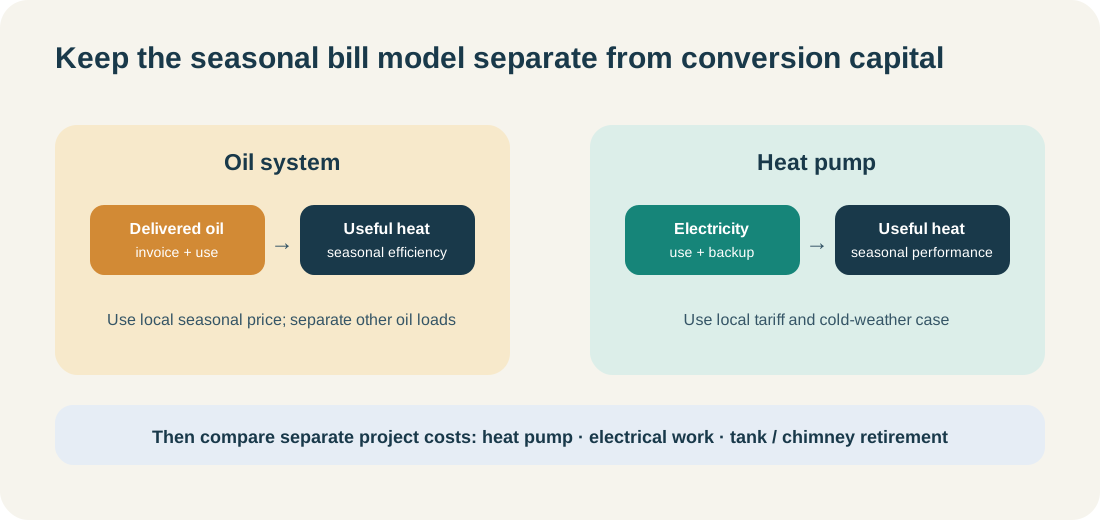
Annual savings are only one layer. Add heat-pump installation, electrical work, tank and oil-line retirement, chimney or vent treatment, restoration, maintenance, financing, and available incentives. If the tank or boiler is already at a decision point, those avoided costs can make conversion more attractive. If the equipment is sound, a lower bill alone may not justify immediate replacement.
Questions to resolve
Ask for the heat-pump performance basis, design load, backup strategy, oil-system efficiency, rate sources, and treatment of tank and chimney. Recalculate if the enclosure changes, the household’s operating pattern changes, or the oil system remains for water heating. The answer is a local operating-cost model, not an automatic winner.
Do not confuse volatility with certainty
Oil is purchased in deliveries and its seasonal price can move materially. Electricity may also have seasonal or time-based pricing. Use a recent local oil invoice and current electric tariff, then test a high-oil, balanced, and high-electricity case. The spread between cases is often more decision-useful than a single payback year.
Distinguish heating cost from ownership cost
Oil-system maintenance, delivery minimums, tank inspection, and emergency-failure risk may continue even when annual fuel cost looks acceptable. The heat-pump path may add electrical capacity, service work, controls, and a different maintenance profile. Put these in a lifecycle table rather than hiding them inside the per-unit fuel calculation.
For a cold-climate home, ask what capacity remains at the design temperature and how the system meets the shortfall. The answer may support all-electric operation, dual fuel, targeted envelope work, or a staged decision. It should not be inferred from an average winter-efficiency comparison.
Quote and model together
Request the annual operating model and the conversion scope as separate attachments, then check that they refer to the same heat pump, backup, tank, and utility assumptions. A bill comparison that assumes the oil tank disappears cannot be paired with an installation quote that leaves it to the homeowner.
Separate the operating decision from the project decision
The heat-pump model answers what operation may cost. The conversion budget answers what it costs to obtain that operation. Include electrical work, tank and chimney treatment, restoration, financing, and the value of keeping a working oil system. A favorable annual result can still be a poor short-horizon investment; an imminent tank or boiler decision can change the threshold.
Include the old system’s next decision
If the boiler, furnace, tank, or chimney needs work soon, include that likely cost in the conversion comparison—but do not invent a universal retirement fee. Ask for a documented allowance. If the oil system is reliable and the home may be sold soon, waiting for a planned replacement point may be rational. If tank risk or winter failure is material, early planning has option value.
Convert oil invoices into delivered heat carefully
Use gallons delivered and gallons actually consumed over a full heating season. If a delivery fills a tank, the purchase date may not match the month the fuel was used; compare beginning and ending tank levels or use several years of invoices where available. Include delivery minimums, annual service, and any fees in the fuel cost. A current retail price without a delivery date or contract terms can misstate the baseline.
For the oil system, estimate useful heat from seasonal fuel input and a realistic seasonal efficiency assumption. For the heat pump, use seasonal performance appropriate to the design temperature and expected backup. Compare cost per unit of useful heat before annualizing. The model should account for oil used by a water heater or another appliance separately, and should not credit all oil consumption as avoidable if the new system replaces only the furnace.
The September 2026 EIA outlook offered a U.S. national residential heating-oil price scenario of USD 5.10 per gallon for 2026 and USD 4.31 for 2027. These are scenario inputs in a national forecast, not a local delivered price, a Canadian value, or the amount on a homeowner’s invoice. Use the homeowner’s actual local deliveries for the central case and use the outlook only as a dated U.S. sensitivity if appropriate. Run the comparison across plausible local oil and electricity prices, not just one forecast path.
This is an operating-cost comparison, not a conversion budget. If the tank needs removal or decommissioning, the chimney needs attention, electrical capacity requires work, or the heat pump needs distribution changes, price those in the capital and retirement sections. A favorable annual energy calculation does not pay for a conversion immediately; compare the savings range over the ownership horizon with the net project cost and the oil system’s remaining service life.
Separate fuel price from the cost of keeping the oil system
The annual operating comparison should include ordinary service and routine maintenance for both systems, but it should not hide tank removal or conversion capital inside the fuel price. If oil remains for hot water or a generator, the tank may need to stay, and not every delivered gallon is avoided. If oil service ends, the tank and chimney work belong in the project-cost comparison.
Look at more than one winter of invoices when weather and delivery timing permit. A tank top-up may make one year appear unusually expensive even though it includes fuel that remains for next season. Track beginning and ending levels or average several seasons to reduce that timing error.
Then present two outputs: expected annual operating cost and the initial cost to change systems. The reader can decide whether a likely annual difference justifies the capital work given the equipment’s remaining life and ownership horizon.
Use a sensitivity range for performance and oil price
The heat pump’s seasonal performance can change with local climate, equipment selection, and how often backup operates. Oil invoices vary with delivery date, supplier, and contract. Show a low, central, and high case for those two inputs while keeping the heat requirement constant. If the operating-cost direction flips in plausible cases, report the result as uncertain rather than selecting the case that best supports one system.
The owner can then focus on the information worth gathering next: a better heating-load estimate, seasonal equipment performance data, or a current fuel quote. This is more useful than a single annual bill forecast presented without its assumptions. For a household using oil for both heat and hot water, identify whether the proposed heat pump serves both loads. If it replaces space heating only, retain the hot-water portion of oil consumption in the comparison. If it replaces both, include the additional heat-pump load and the cost of the water-heating equipment. This system boundary often changes the apparent annual savings more than a small revision to the oil price. Save the fuel price and tariff dates used in the analysis. Oil and electricity prices can change after the quote, and one delivery contract may not represent the next ownership period. If the homeowner will use a fixed-price fuel agreement, show its term and fees; if no contract exists, model a range.
A review after a major rate or equipment change can update the decision without rebuilding the entire comparison. Before deciding, ask whether the existing oil invoices cover the same heated area and service as the proposed heat pump. If a new system also adds cooling or serves previously underheated rooms, show those benefits separately. They may matter to the homeowner even though they are not a direct reduction in the oil bill.