
Propane conversion economics differ from natural gas because fuel is commonly delivered, tank ownership or rental may matter, and rural electrical or contractor access can dominate the project. List the loads being converted and the exit conditions for the propane service before comparing equipment prices.
Define the propane scope
Propane may serve space heating, water heating, cooking, drying, fireplaces, or generators. A household that replaces the furnace but retains a range still has a tank, service, delivery, and safety-management decision. A whole-home plan may include heat-pump capacity, water heating, cooking, electrical work, tank handling, equipment removal, and restoration.
Cost layers
Separate assessment, capacity review, equipment and installation, wiring, controls, fuel-system retirement, tank pickup or removal, remaining fuel, permits and inspections where applicable, disposal, and restoration. Confirm whether the tank is owned, leased, or supplier-controlled. Contract terms can impose notice, pickup, or remaining-fuel issues that are not visible in an installer quote.
Rural access can add travel, mobilization, weather, delivery, and limited-contractor costs. It can also make utility capacity or service lead time more significant. Do not import an urban quote into a rural property without checking the route, trades, and utility response.
Conversion scenarios
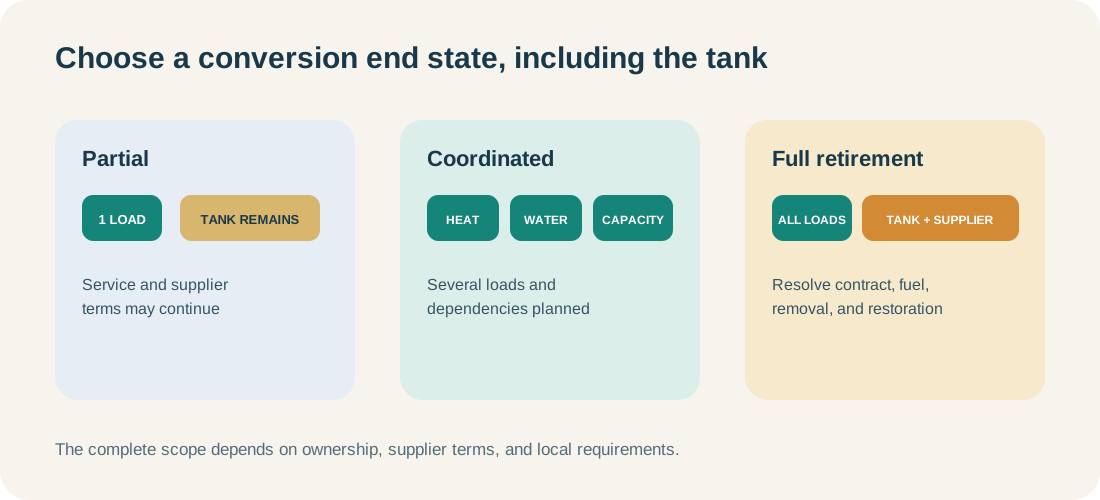
- Partial replacement: one propane appliance changes at end of life while the tank and service remain.
- Coordinated change: heating and water heating move together, capacity is reviewed, and tank obligations are resolved.
- Full retirement: all meaningful propane loads are removed, the tank and lines are handled under supplier and local requirements, and service is closed.
The third case has the highest uncertainty. Ask for an allowance and written responsibility for tank access, residual fuel, line disconnection, disposal, and surface restoration. Requirements cannot be generalized across suppliers or jurisdictions.
Operating economics
Use actual delivered propane prices, electricity tariffs, equipment efficiency or heat-pump performance, climate, backup use, and fixed charges. EIA’s propane series provides US regional and seasonal context, not a Canadian or property-specific price. A heat pump can change energy use without guaranteeing a lower total bill, especially where electricity is expensive or backup resistance heat runs often.
If the proposed package includes utility funding, check whether the offer includes fuel retirement, capacity work, and any propane-related savings in its model. The utility-funded retrofit guide lists the offer terms to compare.
Compare the annual cost of keeping propane service with the cost of replacing the final load and retiring the tank. If the household values fuel backup or a future generator, retaining the service may have option value even if current consumption is small.
Decision and quote questions
Ask who owns the tank and lines, who contacts the supplier, what rules govern removal or abandonment, and whether the quote includes remaining fuel. Confirm the electrical design, cold-weather backup, utility capacity, equipment location, and future EV or solar plans. Rural-property infrastructure and standalone vehicle work may need separate planning.
Conversion is worth proceeding when the future state is clear and the tank, capacity, and operating assumptions are priced. A low equipment total is not a low conversion cost if it leaves the fuel contract and retirement work unresolved.
Treat the tank contract as part of the project
Ask for the supplier’s written status of ownership, lease, pickup, remaining fuel, notice period, and any charge for removal or cancellation. The installer may not be authorized to handle a supplier-owned tank. If the tank stays, identify why, how it is protected, and what future cost remains. Do not assume a disconnected appliance ends the propane account.
Compare the exit paths
Ask for the cost of retaining propane, switching only one load, and retiring the service completely. The first may preserve backup and avoid capacity work; the second may leave fixed charges and a tank contract; the third may simplify the home but require pickup, residual fuel, or removal. Price each future state instead of treating full retirement as the only successful outcome.
Compare costs over the ownership horizon
For a short horizon, tank exit costs and capital may outweigh bill changes. For a long horizon, delivery charges, maintenance, fixed service exposure, and future equipment failure may favor retirement. Run both with separate US or Canadian rate inputs and keep the difficult rural-access case visible.
Access and capacity can dominate
Remote travel, seasonal roads, delivery windows, and limited local trades can make a small electrical or heating project expensive. Start the utility inquiry early and price temporary heat if winter timing is uncertain. Ask whether the service can support heating, water heating, cooking, charging, and backup together.
For a short horizon, retaining propane may preserve flexibility. For a long horizon, retirement may remove delivery and fixed-service exposure. Model both, including the cost of returning later to work easiest during the current access window.
Separate appliance conversion from the tank relationship
A propane conversion may involve a household-owned tank, a rented tank, or supplier-owned equipment under a delivery agreement. Before accepting a removal price, review the contract for tank ownership, minimum purchases, early termination, pickup scheduling, access requirements, and responsibility for residual fuel. A quoted heat-pump installation may exclude all of these. If propane still serves a range, dryer, water heater, fireplace, generator, or pool heater, the account and delivery arrangement may continue after space heating changes.
Ask the supplier what happens if the tank is retained for one appliance, disconnected but left onsite, or removed after every appliance is converted. The answers can change the economics through fixed fees, minimum delivery terms, fuel credit, or a later pickup charge. Put the supplier’s written response beside the contractor scope; do not infer contract rights from the equipment installer’s proposal.
For the conversion bid, list each appliance and its disposition. The heating system may require distribution changes and electrical capacity review; a water heater may have separate venting and plumbing consequences; a range may require circuit, cabinet, and appliance changes. Tank work, gas-line removal, vent closure, condensate routing, electrical circuits, patching, and permit responsibilities should each be explicit. If there is a generator or other emergency load, include it in the capacity plan before retiring the only fuel backup.
Propane price comparisons are especially sensitive to delivery terms and purchase timing. Use actual invoices, including fees and taxes, and distinguish gallons delivered from gallons consumed. For a U.S. reference, the September 2026 Energy Information Administration outlook included a 2026 national residential propane price scenario of USD 2.28 per gallon. That is a forecast input for a national outlook, not a local delivered quote; the report did not provide a 2027 residential propane value in that table. Do not extend it into a trend or convert it into a Canadian estimate.
A useful conversion budget therefore has two independent decisions: what equipment replaces the propane end uses, and how the tank and supplier relationship will end.
Compare complete and partial fuel exit
The least expensive first phase may replace the largest propane use while leaving a tank for another appliance. Compare that partial path with a complete exit. The partial option can defer appliance, wiring, or tank work, but may preserve fixed supplier terms and another future visit. The full conversion can simplify delivery logistics yet require additional circuits, appliance replacement, and tank disposition earlier.
Use the actual delivery record to find which end uses consume propane. A household with a propane furnace and range cannot attribute every gallon to heating without a submeter or another defensible estimate. If the supplier charges an annual tank or account fee, keep it in the retained-fuel case. If the tank is owned, include its future maintenance and storage obligations even when consumption is low.
Ask the supplier for the written tank-return process and ask each installer to price the same final condition. This is particularly important if the project is phased; a tank left for a year may be governed by a different contract or pickup arrangement later.
Keep the contract and the equipment scopes aligned
A tank pickup date may depend on the supplier’s route, account closure, and access. Coordinate it with any excavation, landscaping, or equipment work to avoid paying for a second site visit or repairing the same area twice. If propane is retained for a backup appliance, document who remains the customer and what ongoing inspection or delivery obligation applies.
Ask for one schedule covering the last propane delivery, new equipment commissioning, appliance disconnect, tank work, and final account statement. This sequence helps avoid ordering excess fuel just before retirement and makes the final cost easier to reconcile. A final check is to compare the supplier’s written tank terms with the conversion schedule. Confirm whether the quoted removal includes residual propane handling, tank access, and restoration, and whether another appliance will keep the contract active. The installer, tank owner, and fuel supplier may be different parties. The final budget should state whether unused fuel is returned, credited, consumed, or left in the tank, and who makes that decision. If the homeowner owns the tank, record its condition and future responsibility even if it remains onsite. If the supplier owns it, get confirmation of pickup or continued service.
These items may be small beside heating equipment, but they can decide whether the contract and tank account are truly closed.